
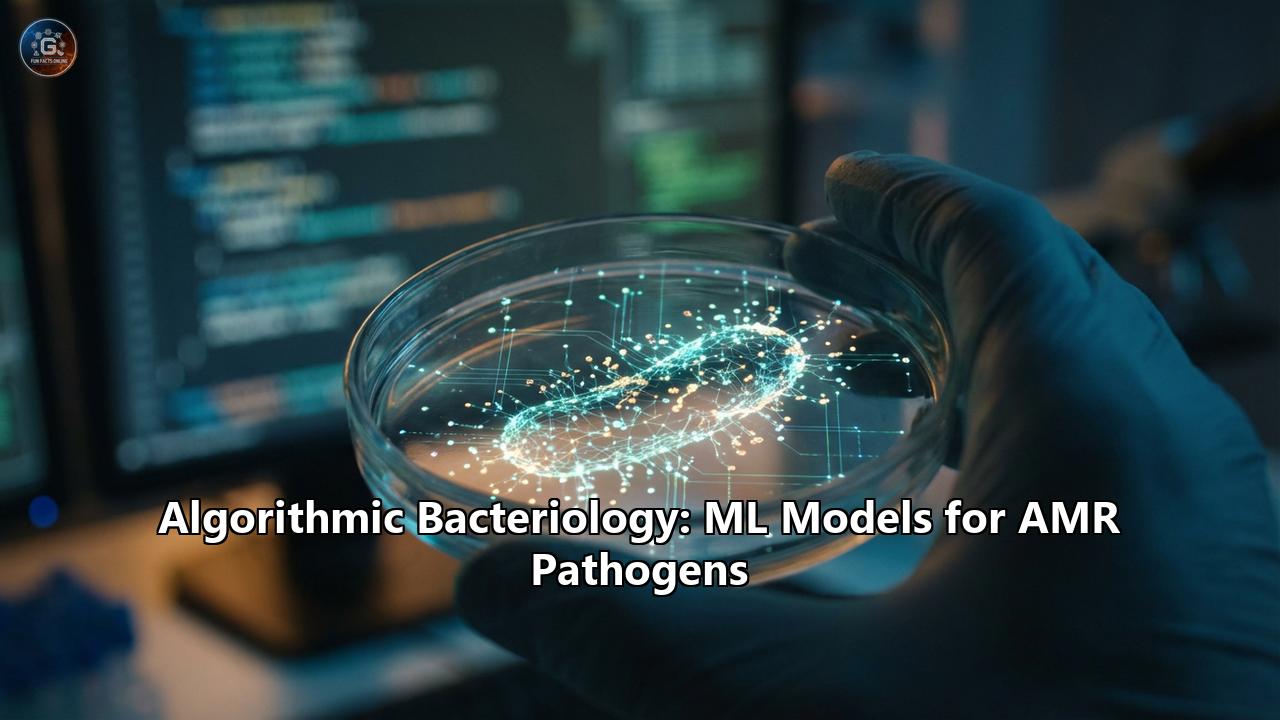
The silent pandemic of Antimicrobial Resistance (AMR) is one of the most profound public health crises in human history. In 2019, AMR was directly responsible for approximately 1.3 million deaths globally—a toll greater than HIV/AIDS or malaria—and if current trends hold, that number is projected to skyrocket to 10 million deaths annually by the year 2050. The core of the problem lies in an evolutionary arms race: pathogens mutate and share resistance genes faster than traditional pharmaceutical pipelines can develop new drugs, and crucially, faster than conventional clinical laboratories can diagnose them.
For nearly a century, clinical bacteriology has relied on the same fundamental principle: growing bacteria in a Petri dish or liquid culture and exposing them to various antibiotics to see what survives. While accurate, this gold-standard Antimicrobial Susceptibility Testing (AST) is agonizingly slow, often requiring several days to yield actionable results. In the intensive care unit, where an infection can cascade into lethal sepsis within hours, doctors do not have days. They are forced to make educated guesses, often prescribing broad-spectrum "shotgun" antibiotics. This overuse of broad-spectrum drugs accelerates the very resistance we are trying to fight.
Enter Algorithmic Bacteriology, a radically new paradigm that merges microbiology, high-throughput sequencing, digital microscopy, and advanced machine learning (ML) architectures. By teaching artificial intelligence to "read" the genetic fingerprints, protein signatures, or physical behaviors of bacteria, scientists are condensing the diagnostic timeline from days to mere minutes.
This comprehensive exploration delves into how machine learning models are fundamentally rewriting the rules of AMR detection, predicting resistance mechanisms, discovering novel therapeutics, and ultimately, saving lives.
The Biological Bottleneck: Why Traditional Methods Are Failing
To understand the revolutionary impact of algorithmic bacteriology, we must first examine the limitations of the status quo. The traditional workflow for diagnosing a bacterial infection involves several time-consuming steps:
- Sample Collection: Blood, urine, or tissue is drawn from the patient.
- Isolation and Culturing: The sample is incubated until the bacteria replicate to a detectable threshold. For slow-growing pathogens like Mycobacterium tuberculosis, this alone can take weeks.
- Phenotypic Testing: The isolated bacteria are exposed to a panel of antibiotics at varying concentrations to determine the Minimum Inhibitory Concentration (MIC)—the lowest concentration of a drug that prevents visible bacterial growth.
This method evaluates the phenotype (the observable behavior of the bacteria). The problem is the sheer biological time penalty of cellular division. While patients wait, they receive empiric therapy—often a highly potent, broad-spectrum antibiotic. If the bacteria are resistant to the empiric choice, the patient's condition deteriorates. If the bacteria are susceptible but could have been treated with a milder, targeted drug, the broad-spectrum antibiotic unnecessarily slaughters the patient's beneficial microbiome and exerts selective evolutionary pressure on all surviving bacteria, breeding new superbugs.
The Rise of Algorithmic Bacteriology
Algorithmic bacteriology bypasses the wait time by analyzing the pathogen's intrinsic data—its DNA, its metabolic output, or its microscopic structural changes—and running that data through predictive algorithms. This interdisciplinary field relies on three primary data streams:
- Genomics: Analyzing the DNA sequence of the bacteria to find resistance genes or mutations.
- Proteomics/Metabolomics: Using mass spectrometry to analyze the molecular composition of the bacteria.
- Microscopy/Imaging: Using high-resolution optics to observe how individual bacterial cells react to antibiotics in real-time.
Machine learning sits at the center of this web. Because biological data is impossibly vast and complex—a single bacterial genome contains millions of base pairs, and a mass spectrometry reading contains thousands of peaks—traditional rule-based software cannot easily parse it. Machine learning models, however, excel at finding hidden patterns in high-dimensional data.
Genomic-Based ML Models: Reading the Blueprint of Resistance
The most prominent area of algorithmic bacteriology involves Whole Genome Sequencing (WGS). As the cost of sequencing has plummeted, it is now possible to sequence a pathogen’s entire genome within hours.
The genomic data is translated into features—such as k-mers (short, fixed-length sequences of DNA), unitigs (assembled sequence fragments), or Single Nucleotide Variants (SNVs)—and fed into supervised machine learning models. These models have been trained on vast databases of known bacterial genomes paired with their laboratory-confirmed resistance profiles.
1. Overcoming the Limitations of Rule-Based Genomics
Historically, genomic AMR prediction used "rule-based" or lookup-table approaches: if a specific resistance gene (like mecA in MRSA) was present, the bacteria was flagged as resistant. However, biological resistance is rarely that simple. Resistance can emerge from the complex interplay of multiple subtle mutations, changes in gene expression, or novel evolutionary adaptations that aren't in any database.
Machine learning algorithms—such as Random Forests, Support Vector Machines (SVMs), Gradient Boosting Machines (GBMs), and Deep Neural Networks—do not rely solely on predefined rules. They independently learn the mathematical associations between genetic sequences and resistance.
2. The Group Association Model (GAM) Breakthrough
A prime example of this evolution is the Group Association Model (GAM) developed by researchers at Tulane University, published in early 2025. The researchers tackled two notoriously difficult pathogens: Mycobacterium tuberculosis and Staphylococcus aureus.
Traditional genomic tools frequently miss rare mutations or falsely flag unrelated genetic quirks as resistance markers. The GAM approach, combined with machine learning, completely bypasses the need for prior expert knowledge of resistance mechanisms. By comparing the whole genome sequences of bacterial populations with varying resistance patterns, the AI learns to identify the exact genetic changes that reliably indicate drug resistance. In clinical validation studies utilizing samples from China, this machine-learning-enhanced model drastically outperformed standard World Health Organization (WHO) prediction methods, especially in forecasting resistance to critical front-line antibiotics.
3. Real-Time Evolution Tracking in S. aureus
Bacteria evolve rapidly, a reality that frequently causes rigid diagnostic models to fail when introduced to new geographic regions or novel strains. In January 2026, researchers from the Okinawa Institute of Science and Technology (OIST) published robust machine-learning models designed specifically to capture the rapid evolution of AMR in Staphylococcus aureus.
Trained on a massive, global database of genomes, the OIST algorithms proved capable of accurately predicting specific AMR profiles even when analyzing messy, incomplete sequence data. More importantly, the models maintained their reliability when confronted with genetically distinct strains they had never encountered during training, demonstrating a level of generalizability critical for real-world clinical implementation.
Phenotypic and Single-Cell ML: The 30-Minute Miracle
While genomic sequencing is powerful, it tells us what a bacterium is capable of doing, not necessarily what it is actually doing in a living host. Sometimes a bacterium possesses a resistance gene, but the gene is "turned off" (unexpressed). To capture the true phenotype without waiting days for a culture to grow, algorithmic bacteriology has turned to computer vision and deep learning.
In a landmark November 2023 study published in Communications Biology, researchers from the Oxford Martin Programme on Antimicrobial Resistance Testing successfully combined fluorescence microscopy with artificial intelligence.
Their approach operates at the single-cell level. When bacterial cells are exposed to antibiotics, they undergo microscopic structural changes—such as alterations to the bacterial chromosome—long before the cell actually dies or stops dividing. The human eye cannot easily quantify these subtle, rapid shifts. However, deep-learning models, particularly Convolutional Neural Networks (CNNs) trained on thousands of bacterial cell images, can.
The Oxford team tested clinical isolates of E. coli against antibiotics like ciprofloxacin. By analyzing the cellular structures, the AI could determine whether the antibiotic was successfully disrupting the cell (indicating susceptibility) or if the cell was ignoring the drug (indicating resistance).
The results were staggering: the AI achieved at least 80% accuracy on a per-cell basis, delivering definitive AMR detection in as little as 30 minutes. This is an order of magnitude faster than current gold-standard methods, transforming a multi-day wait into an immediate, actionable result that can guide emergency room prescribing in real-time.
Mass Spectrometry Meets Deep Transfer Learning
Another massive leap in algorithmic bacteriology is occurring in the realm of mass spectrometry. Matrix-Assisted Laser Desorption/Ionization Time-of-Flight (MALDI-TOF) mass spectrometry is already a staple in clinical microbiology labs for identifying bacterial species. It works by firing a laser at a bacterial sample, creating a spectrum of peaks that acts as a protein fingerprint.
However, using MALDI-TOF to detect antibiotic resistance has historically been incredibly difficult, requiring meticulous, manual pre-processing of data.
Recent advances have applied Deep Neural Networks directly to the raw, unedited spectra. The MSDeepAMR architecture is a prime example. Utilizing the public DRIAMS database—which contains over 300,000 mass spectra and 750,000 antibiotic resistance profiles—researchers trained MSDeepAMR to predict resistance in deadly pathogens like Escherichia coli, Klebsiella pneumoniae, and Staphylococcus aureus.
The deep learning model achieved an Area Under the Receiver Operating Characteristic Curve (AUROC) of over 0.83, improving upon older, traditional machine learning methods by over 10%.
Crucially, the researchers employed Transfer Learning. Machine learning models often suffer a drop in accuracy when moved from the hospital where they were trained to a new hospital with different equipment or local bacterial strains. By allowing the MSDeepAMR model to adapt slightly to a small amount of external data from a new laboratory, its predictive accuracy skyrocketed by up to 20% compared to models trained purely on external data. This proves that AI models can be pre-trained on massive global datasets and then fine-tuned for local, low-resource laboratories that cannot afford massive data-collection operations.
AI as the Ultimate Antimicrobial Steward
Algorithmic bacteriology is not just about laboratory diagnostics; it extends to the patient's bedside through Clinical Decision Support Systems (CDSS). The goal is "precision stewardship"—giving the right drug, to the right patient, at the exact right time.
Researchers at Stanford Health Policy, including Dr. Jonathan Chen and Dr. Mary K. Goldstein, have pioneered the use of AI to generate predictive "antibiograms" based on Electronic Health Records (EHR). A traditional antibiogram is an annual hospital report showing overall bacterial resistance rates, but it is generalized and not patient-specific.
The Stanford team utilized machine learning to analyze the EHR data of thousands of patients—factoring in their medical history, past prescriptions, prior infections, and even geographical data. By synthesizing this vast web of information, the AI predicts the specific antibiotic susceptibility of the infection currently residing in a patient's body.
This predictive capability allows doctors to put down the broad-spectrum "giant shotgun" and pick up the targeted "small scalpel". Furthermore, by geocoding patient data in regions like Dallas-Fort Worth, the Stanford team mapped the social disparities of AMR, discovering that drug-resistant organisms, including life-threatening MRSA, densely cluster in areas with high socioeconomic deprivation. This proves that AI can act not only as a clinical tool but as a highly advanced epidemiological radar, directing public health resources to vulnerable neighborhoods before superbugs spread further.
Beyond Diagnostics: Discovering the Next Generation of Antibiotics
Because of low profit margins and high failure rates, major pharmaceutical companies have largely abandoned antibiotic research and development. The pipeline of novel antibiotics is running dangerously dry, while AMR continues to rise. Here, machine learning is stepping in as an engine for drug discovery.
Traditionally, finding a new antibiotic required screening thousands of soil samples or synthesizing chemicals in a trial-and-error process that took decades. AI models, particularly Graph Neural Networks, can now computationally screen databases of millions of chemical compounds in a matter of days.
In groundbreaking studies, researchers have applied deep learning to massive chemical libraries, such as the ZINC15 database (which contains over 107 million molecules). By teaching the AI what biological features make a molecule toxic to bacteria but safe for human cells, algorithms have successfully flagged entirely new, structurally distinct classes of antibiotics. These AI-discovered drugs operate via mechanisms never before seen by the medical community, bypassing existing bacterial resistance entirely.
Furthermore, ML is being used to design and optimize Antimicrobial Peptides (AMPs). By analyzing the amino acid sequences of natural immune peptides, generative AI models can engineer synthetic, hyper-lethal peptides that punch holes in the cell membranes of drug-resistant pathogens, offering a completely new therapeutic arsenal.
Challenges, Limitations, and the "Black Box" Dilemma
Despite these profound successes, the integration of algorithmic bacteriology into front-line healthcare faces significant hurdles.
1. The Explainability Problem:In medicine, "because the computer said so" is not an acceptable reason to risk a patient's life. Many Deep Learning models are "black boxes"—they provide highly accurate predictions, but the internal logic used to reach those conclusions is opaque to humans. If a model treats genetic mutations as isolated mathematical variables without considering their actual biological function, it risks making errors when novel mutations arise. To earn the trust of clinical microbiologists, researchers are aggressively developing Explainable AI (XAI) that can map its mathematical decisions directly back to known biological and biochemical pathways.
2. Data Bias and Class Imbalance:Machine learning models are only as good as the data they consume. Currently, the vast majority of genomic data comes from wealthy, industrialized nations. If an AI is trained exclusively on bacterial strains from North America and Europe, it may fail catastrophically when deployed in Sub-Saharan Africa or Southeast Asia, where different AMR mechanisms dominate. Furthermore, because highly resistant "superbugs" are statistically rarer than susceptible bacteria, the datasets suffer from class imbalance. If a model is fed 9,000 susceptible genomes and only 1,000 resistant genomes, it may artificially skew its predictions toward susceptibility.
3. Standardization and Regulation:Clinical diagnostics are highly regulated. The Food and Drug Administration (FDA) and the World Health Organization (WHO) require rigorous, standardized proof of efficacy before an AI tool can dictate patient care. Creating theoretical frameworks for the continuous regulatory validation of AI algorithms—which by definition change and update as they learn—is a monumental legal and ethical challenge.
The Road Ahead: Federated Learning and Global Surveillance
As we move deeper into the late 2020s, the future of algorithmic bacteriology relies on hyper-connectivity and collaboration.
To overcome the issues of data bias and patient privacy, researchers are embracing Federated Learning. Instead of sending sensitive hospital data to a central, global server, the machine learning model itself is sent to the hospitals. The model trains locally on the hospital’s private data, learns the new resistance patterns, and then only sends the updated mathematical weights back to the central server. This allows global healthcare systems to collaboratively build an incredibly powerful, diverse AI without ever sharing an individual patient's protected health information.
Furthermore, the integration of AI with Internet of Things (IoT) diagnostic devices and Point-of-Care (PoC) biosensors will democratize this technology. Imagine a handheld device in a rural, low-resource clinic that can analyze a drop of blood, sequence the bacterial DNA, run a lightweight neural network, and prescribe the exact antibiotic needed—all within an hour.
A New Era of Infectious Disease Control
For decades, humanity has been losing ground in the invisible war against antimicrobial resistance. The bacteria have had the advantage of rapid evolution, constantly outpacing our slow, analog diagnostic techniques.
Algorithmic Bacteriology levels the playing field. By harnessing the computational power of Machine Learning, Deep Neural Networks, and Artificial Intelligence, we are transitioning from a reactive, trial-and-error approach to a proactive, predictive science. AI is not replacing the microbiologist or the physician; rather, it is providing them with a biological superpower. From the 30-minute microscopic detection of resistance to uncovering entirely new classes of drugs, ML models have become the vanguard of infectious disease management.
If the promise of precision stewardship is fully realized, we can preserve the miraculous efficacy of our current antibiotics, slow the birth of new superbugs, and prevent the looming specter of a post-antibiotic era. The algorithms are learning—and with them, our capacity to protect human life is evolving.
Reference:
- https://www.ox.ac.uk/news/2023-11-21-oxford-led-study-shows-how-ai-can-detect-antibiotic-resistance-little-30-minutes
- https://pmlive.com/pharma_news/oxford_researchers_find_ai_detects_amr_faster_than_gold-standard_testing_1504190/
- https://pmc.ncbi.nlm.nih.gov/articles/PMC12644248/
- https://healthpolicy.fsi.stanford.edu/news/applying-machine-learning-approaches-antibiotic-resistance
- https://www.the-microbiologist.com/news/new-machine-learning-models-capture-the-rapid-evolution-of-antimicrobial-resistance/7636.article
- https://pmc.ncbi.nlm.nih.gov/articles/PMC11200959/
- https://asm.org/videos/detecting-antibiotic-resistance-with-ai-microbial
- https://pmc.ncbi.nlm.nih.gov/articles/PMC8218744/
- https://medium.com/data-science/building-machine-learning-models-for-predicting-antibiotic-resistance-7640046a91b6
- https://pmc.ncbi.nlm.nih.gov/articles/PMC9491192/
- https://www.mdpi.com/2079-6382/12/3/452
- https://www.news-medical.net/news/20250407/AI-model-enhances-detection-of-antibiotic-resistance-in-deadly-bacteria.aspx
- https://www.frontiersin.org/journals/microbiology/articles/10.3389/fmicb.2024.1361795/full
- https://www.amr-insights.eu/machine-learning-for-antimicrobial-resistance-prediction-current-practice-limitations-and-clinical-perspective/
- https://worldscientificnews.com/advances-in-ai-and-machine-learning-for-antimicrobial-resistance-monitoring-and-healthcare-diagnostics/