
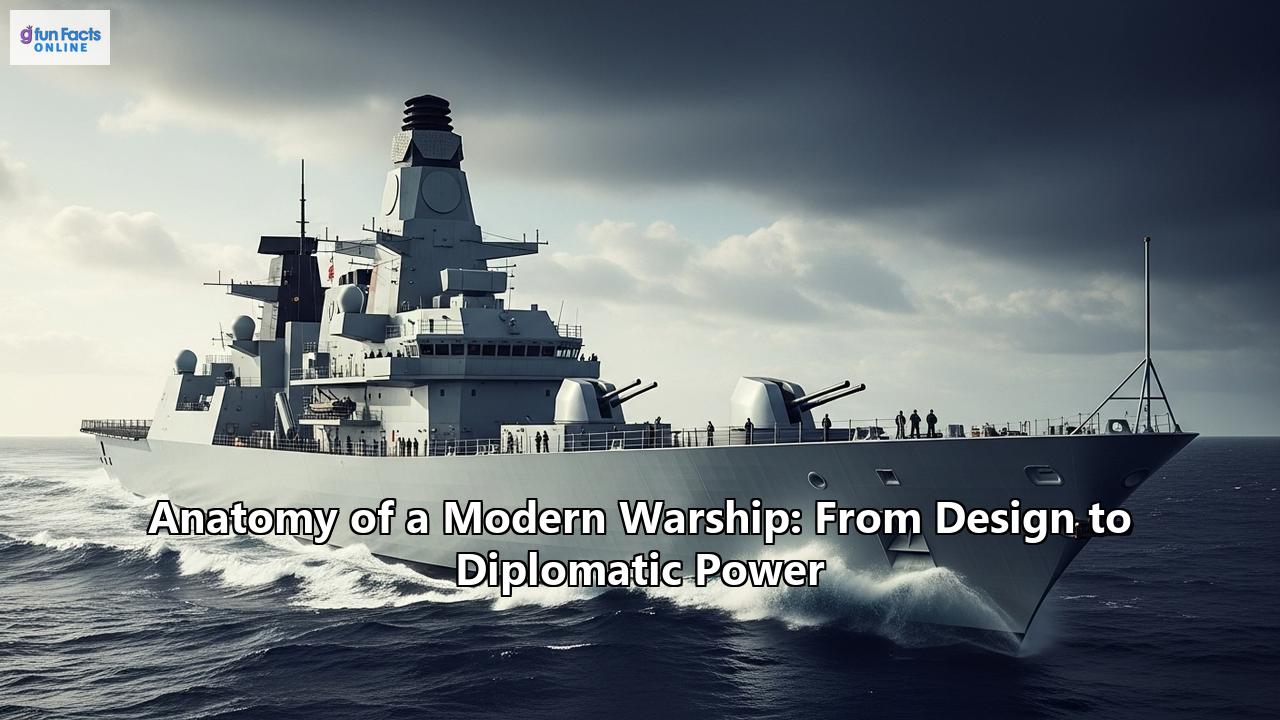
Modern warships are far more than mere vessels of conflict; they are intricate, technologically advanced platforms that represent a nation's industrial prowess, strategic thinking, and global reach. From the initial spark of a design concept to their final role as potent instruments of diplomatic power, these steel titans encapsulate the cutting edge of engineering, warfare, and international relations. This article delves into the detailed anatomy of a modern warship, exploring its creation, its complex systems, and its multifaceted role on the world stage.
The Genesis of a Naval Giant: From Concept to Commission
The journey of a modern warship begins long before the first steel plate is cut. It starts with a strategic need identified by a nation's naval command. This could be the necessity to counter a new threat, patrol vast oceanic territories, project power into a contested region, or support humanitarian efforts. This initial requirement sets in motion a complex and lengthy design process.
Conceptual and Preliminary Design: The first stage is conceptual, where naval architects and engineers translate the operational requirements into a basic design. This involves balancing the fundamental factors of warship design: armament, protection, and speed. These three pillars are in constant tension; a heavily armed and armored ship will likely be slower and more expensive. The desired military characteristics, including the type of ship, its speed, range, armament, and level of protection, are outlined, leading to various potential designs.This phase is followed by a preliminary design stage, which fleshes out the concept with more detail. Computer-aided design (CAD) is extensively used to create and refine the hull form, superstructure, and internal layout. Advanced simulations are run to optimize hydrodynamic performance, reducing drag and improving fuel efficiency. The goal is to create a vessel that is not only effective in its intended role but also stable, seaworthy, and capable of surviving damage.
Detailed Design and Construction: Once the design is finalized, the detailed or contract design stage commences, focusing on the structural elements and the integration of myriad complex systems. Modern shipbuilding heavily relies on modular construction, a technique that significantly speeds up the building process. Large sections of the ship, known as blocks or modules, are fabricated and even pre-outfitted with equipment, wiring, and plumbing in specialized workshops. These massive blocks are then transported to the building dock and welded together to form the complete hull and superstructure.The materials used in modern warships are a testament to advanced materials science. While steel remains the primary material for the hull, specialized high-strength steel alloys like HY-80 and HY-100 are used for critical areas like submarine hulls and the flight decks of aircraft carriers, offering exceptional strength and resilience. Advanced composites, such as carbon fiber-reinforced polymers, are increasingly being used to reduce weight, and absorb and deflect radar waves, contributing to the ship's stealth capabilities.
The construction process culminates in the ship's launch, followed by a period of intensive sea trials. During these trials, every system on board is rigorously tested to ensure it meets the demanding performance specifications. Only after successfully completing these trials is the warship formally commissioned into naval service.
The Beating Heart: Propulsion and Power
The ability of a warship to move with speed and agility is fundamental to its mission. Modern naval propulsion systems are marvels of engineering, designed for reliability, efficiency, and in many cases, stealth. The choice of propulsion system is dictated by the ship's size, role, and operational requirements.
Diesel Engines: For many smaller warships and support vessels, diesel engines are the traditional and widely used choice. They are reliable, fuel-efficient, and have a well-established maintenance infrastructure. These engines can be directly coupled to the propeller shaft or used in a diesel-electric configuration, where they generate electricity to power electric motors that drive the propellers. Gas Turbines: For larger surface combatants like destroyers and frigates that require high speeds, gas turbines are often the preferred option. Derived from jet engine technology, they offer a high power-to-weight ratio, allowing for rapid acceleration. Many warships utilize a Combined Diesel and Gas (CODAG) or Combined Gas and Gas (COGAG) arrangement, using diesel engines for economical cruising and engaging the gas turbines for high-speed dashes. Nuclear Propulsion: The pinnacle of naval propulsion is nuclear power, which provides unparalleled endurance and speed. Utilized primarily in aircraft carriers and submarines, a nuclear reactor generates heat, which creates high-pressure steam to drive turbines connected to the propeller shafts. This allows these vessels to operate for years without refueling, giving them a truly global reach and the ability to remain on station for extended periods. Electric and Hybrid Systems: A growing trend in naval architecture is the adoption of electric and hybrid propulsion systems. These systems offer greater flexibility, improved fuel efficiency, and significantly lower noise levels, a crucial advantage for anti-submarine warfare. In an integrated electric propulsion (IEP) system, the ship's engines generate electricity that powers not only the propulsion motors but also all other onboard systems, from sensors and weapons to the galley.The Fists of the Fleet: Weapon Systems
A warship's primary purpose is to project power, and this is achieved through its array of sophisticated weapon systems. Modern warships are armed with a mix of offensive and defensive weapons designed to counter threats from the air, on the surface, and beneath the waves.
Naval Guns: While the era of massive battleship cannons has passed, naval guns remain a vital component of a modern warship's arsenal. Ranging in caliber from small 20mm cannons to 5-inch (127mm) guns, they are used for a variety of purposes, including shore bombardment, anti-surface warfare against smaller vessels, and as a last line of defense against incoming missiles. The development of advanced munitions, such as precision-guided projectiles, has significantly increased the accuracy and effectiveness of these weapons. Missiles: The dominant weapon in modern naval warfare is the missile. Warships are equipped with a wide variety of missiles, often housed in Vertical Launching Systems (VLS) that can carry dozens of missiles ready for immediate launch. These include:- Anti-ship missiles: These are designed to destroy other warships from long distances.
- Surface-to-air missiles (SAMs): These form a layered defense against enemy aircraft and anti-ship missiles.
- Land-attack cruise missiles: These allow warships to strike targets deep inland with high precision.
- Anti-submarine rockets (ASROCs): These are rockets that carry a lightweight torpedo, allowing a warship to quickly engage a submerged submarine detected at a distance.
The Eyes and Ears: Sensors and Communication
A modern warship is a floating hub of advanced sensors and communication systems that provide it with a comprehensive understanding of its environment and allow it to coordinate its actions with other forces.
Radar: Radar is the primary sensor for detecting and tracking air and surface targets. Modern warships are equipped with a variety of radars, including long-range air search radars, surface search radars, and fire-control radars that guide weapons to their targets. Advanced Active Electronically Scanned Array (AESA) radars can track a large number of targets simultaneously and are highly resistant to jamming. Sonar: To detect, classify, and track submarines, warships rely on sonar (Sound Navigation and Ranging). This can be active sonar, which sends out a "ping" and listens for the echo, or passive sonar, which quietly listens for the sounds made by enemy submarines. Sonar systems can be mounted on the ship's hull, towed behind the vessel in a long array, or deployed on helicopters. Electronic Warfare Systems: Modern warships operate in a dense electromagnetic environment and are equipped with sophisticated electronic warfare (EW) systems. These systems can detect and identify enemy radar and communications signals, and can also be used to jam or deceive enemy sensors and guided weapons. Communication Systems: A comprehensive suite of communication systems is essential for a warship to operate effectively. This includes satellite communications for long-range voice and data transmission, as well as various radio systems for line-of-sight communication with other ships and aircraft. These systems are designed to be secure and resistant to interception and jamming. Combat Management System: The nerve center of a modern warship is its Combat Management System (CMS). This is a highly advanced computer system that integrates the information from all of the ship's sensors, creating a comprehensive tactical picture of the battlespace. The CMS helps the command team to evaluate threats, assign targets, and control the ship's weapon systems.A Spectrum of Power: Classes of Modern Warships
Modern navies operate a variety of warship classes, each designed for specific roles and missions. While the lines between some classes have blurred in recent years, they can generally be categorized as follows:
- Aircraft Carriers: These are the largest and most powerful warships, acting as mobile airbases that can project air power across the globe. A single supercarrier can carry an air wing of over 65 aircraft, including fighter jets, electronic warfare aircraft, and helicopters, giving it the ability to strike hundreds of targets per day.
- Cruisers: Traditionally larger than destroyers, cruisers are multi-mission surface combatants designed for extended operations. In modern navies like those of the United States and Russia, they are often heavily armed with guided missiles and serve as the primary air defense and command-and-control platforms for a carrier strike group.
- Destroyers: These are the workhorses of many modern navies, fast and maneuverable warships intended to escort larger vessels and defend them against a wide range of threats. Modern destroyers are multi-mission platforms, capable of anti-air, anti-surface, and anti-submarine warfare.
- Frigates: Generally smaller and less heavily armed than destroyers, frigates are often specialized for anti-submarine warfare and protecting merchant convoys. In many modern navies, however, the distinction between frigates and destroyers is becoming less clear, with some frigates approaching the size and capabilities of destroyers.
- Corvettes: These are small, lightly armed warships designed for coastal patrol and defense. They are well-suited for operating in littoral (close to shore) environments.
- Submarines: Operating beneath the waves, submarines are the masters of stealth. Attack submarines are designed to hunt and destroy enemy ships and submarines, while ballistic missile submarines serve as a nation's ultimate strategic deterrent, carrying nuclear-armed missiles.
- Amphibious Assault Ships: These vessels are designed to transport and land ground forces, such as marines, on hostile shores. They often resemble small aircraft carriers and can carry a mix of helicopters and vertical/short take-off and landing (V/STOL) aircraft to support the amphibious assault.
More Than a Weapon: The Diplomatic Power of Warships
Beyond their military capabilities, modern warships are potent symbols of national power and influence, playing a crucial role in international diplomacy. The mere presence of a warship in a particular region can send a powerful message to both allies and adversaries.
Gunboat Diplomacy: In its more coercive form, naval diplomacy, often referred to as "gunboat diplomacy," involves the use of naval power to intimidate or influence another state. This can range from a "show of force" to establishing a naval blockade. Cooperative Diplomacy: However, naval diplomacy is not always confrontational. Warships are frequently used to foster cooperation and build relationships with other nations. This includes:- Port Visits: A friendly port visit by a warship can strengthen diplomatic ties and promote goodwill. The 2018 visit of the USS Carl Vinson to Da Nang, Vietnam, for example, signaled warming relations between the two countries.
- Joint Exercises: Participating in joint naval exercises with other countries enhances interoperability and builds trust.
- Humanitarian Assistance and Disaster Relief: In the wake of natural disasters, navies are often among the first responders, providing medical aid, supplies, and logistical support. The ability of a warship to generate its own power and fresh water, and to transport large quantities of supplies and personnel, makes it an invaluable asset in a crisis.
In conclusion, a modern warship is a microcosm of a nation's technological, industrial, and strategic capabilities. From the intricate process of its design and construction to its complex array of propulsion, weapon, and sensor systems, it represents the pinnacle of naval engineering. Yet, its true power lies not just in its ability to wage war, but also in its capacity to shape the international environment, serving as a versatile instrument of diplomacy, a symbol of national resolve, and a guardian of the global commons.
Reference:
- https://www.youtube.com/watch?v=303_Xj8FKJU&pp=0gcJCfwAo7VqN5tD
- https://seer.ufrgs.br/index.php/austral/article/download/113269/66027/501284
- https://www.quora.com/What-weapons-do-modern-warships-use
- https://diplomatmagazine.eu/2023/11/08/naval-diplomacy-a-friendly-tool-for-deterrence-or-a-provocative-act-rooted-in-neocolonialism/
- https://byjus.com/free-ias-prep/types-of-warships/
- https://en.kims.or.kr/issubrief/kims-periscope/peri264/
- https://www.wita.org/blogs/maritime-trade-diplomacy-and-deterrence/
- https://www.kalebooster.com/information/704531.html
- https://en.wikipedia.org/wiki/Marine_propulsion
- https://www.quora.com/What-types-of-weaponry-do-modern-battleships-carry
- http://www.navweaps.com/Weapons/WNUS_Main.php
- https://www.spsnavalforces.com/story/?id=220
- https://www.elbitsystems.com/naval/services-solutions/systems-integration-upgrade/combat-system-suite
- https://www.thalesgroup.com/en/europe/united-kingdom/markets-we-operate/defence-uk/maritime-solutions/maritime-solutions-realise-6
- https://www.saab.com/globalassets/products/surveillance/9lv-cs---combat-system/saab-9lv-catalogue-2025.pdf
- https://moderndiplomacy.eu/2025/01/04/an-overview-of-contemporary-naval-vessels-categorization/
- https://defensetalks.com/types-of-naval-warships-in-21st-century-and-their-functions/
- https://www.cfr.org/backgrounder/sea-power-us-navy-and-foreign-policy
- https://www.routledge.com/Maritime-Diplomacy-in-the-21st-Century-Drivers-and-Challenges/LeMiere/p/book/9781138183667