
A Sunken Ghost of 1906: How a Century-Old Shipwreck is Breathing Life Back into the North Sea
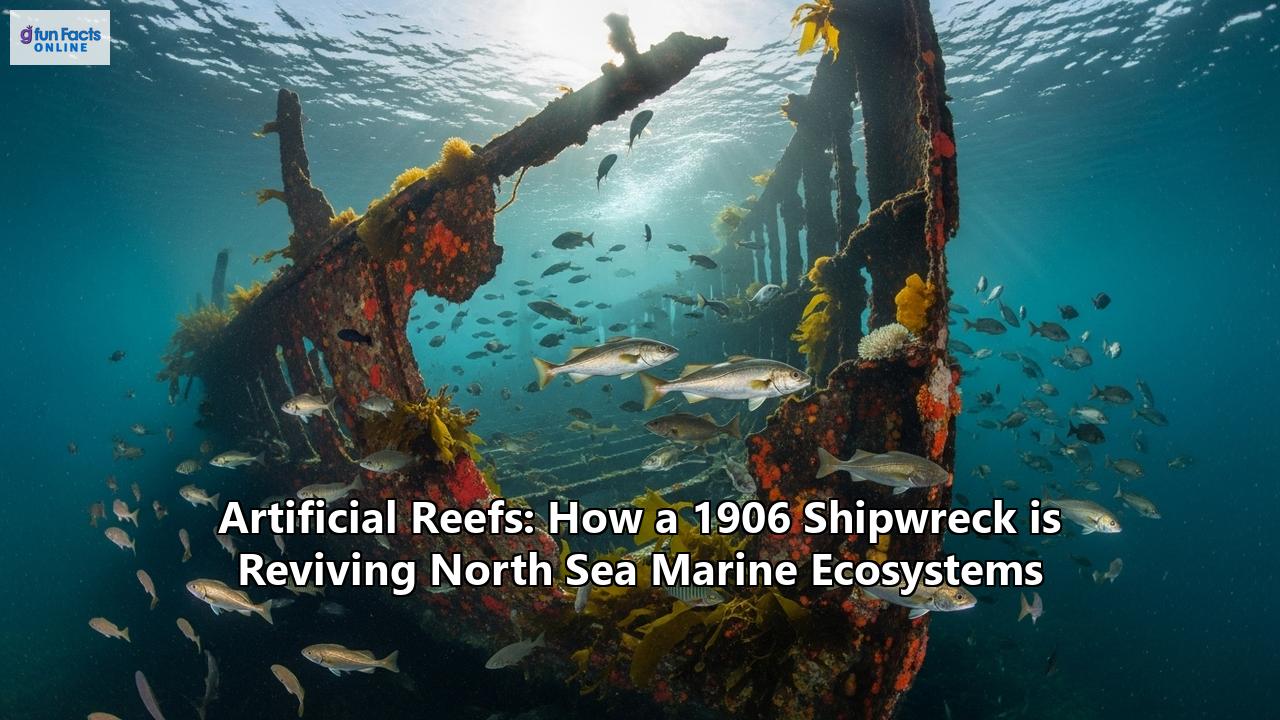
In the murky, cold depths of the North Sea, some 30 kilometers off the Belgian coast, lies a steel behemoth, a ghost of the Edwardian era. The SS Kilmore, a steam-powered freighter, met its end in a maritime collision in 1906, vanishing beneath the waves. For over a century, it has rested in a watery grave, a silent testament to a bygone era of bustling trade and the ever-present perils of the sea. But this is not a story of decay and loss. Instead, the tale of the Kilmore is one of remarkable transformation, of an accidental relic of industrial heritage becoming a vibrant oasis of life and a beacon of hope for the revival of a struggling marine ecosystem.
This sunken vessel, once a carrier of porcelain and other general cargo, is now at the heart of an ambitious environmental project, a testament to the unexpected ways nature can reclaim what was lost and how human ingenuity can partner with it to heal a damaged world. The story of the Kilmore is a window into the complex and fascinating world of artificial reefs and a groundbreaking effort to restore a cornerstone of the North Sea's beleaguered biodiversity.
A Sea Under Siege: The Troubles of the North Sea
The North Sea, a shallow and semi-enclosed sea in Northwestern Europe, has for centuries been a hub of human activity. It's one of the world's most important fishing grounds, a crucial shipping route, and a significant source of oil and gas. But this intense human footprint has come at a steep ecological price. The North Sea's marine ecosystems are under immense pressure from a multitude of threats.
Decades of overfishing have depleted fish stocks, altering the delicate balance of the food web. Pollution from various sources, including nutrient runoff from agriculture and urban areas, has led to eutrophication—an over-enrichment of the water with nutrients that can cause harmful algal blooms and create oxygen-depleted "dead zones". The constant risk of oil spills from shipping and offshore installations looms large, while the specter of climate change brings rising sea temperatures and levels, further disrupting the fragile marine environment. The very seabed, once a diverse tapestry of habitats, has in many areas been transformed into a monotonous, mud-dominated landscape due to centuries of fishing practices.
An Accidental Oasis: The Unplanned Promise of a Shipwreck
In this altered underwater world, any hard structure can become a magnet for life. With natural hard substrata like rocky reefs being scarce in many parts of the North Sea, man-made structures—both intentional and accidental—can play a crucial role in fostering biodiversity. And among the most fascinating of these are the thousands of shipwrecks that litter the seabed, each a time capsule of history and an unplanned sanctuary for marine organisms.
The United Kingdom's North Sea Exclusive Economic Zone alone is estimated to hold over 30,000 known shipwrecks. These wrecks provide a hard, complex substrate that is otherwise missing in vast stretches of the soft-bottomed sea. This solid foundation becomes a haven for a host of species. Microorganisms are the first to colonize, forming a biofilm that attracts the larvae of barnacles, mussels, sea anemones, and sponges. These, in turn, provide food and shelter for more mobile creatures like crabs, lobsters, and a variety of fish. Studies have shown that more structurally complex wrecks support a greater diversity and abundance of marine life, offering more nooks and crannies that serve as ecological niches.
However, the legacy of these sunken vessels is not entirely benign. Many shipwrecks, particularly those from the World Wars, contain hazardous materials like oil, fuel, and munitions. Research on wrecks like the V-1302 John Mahn, a German patrol boat sunk during World War II, has shown that they can leak toxic substances such as heavy metals and explosives into the surrounding environment, impacting the local microbial communities. Yet, even in these cases, the wrecks can also foster unique ecosystems, with some bacteria evolving to use the leaking chemicals as an energy source.
The Story of the SS Kilmore: From Trade Route to Thriving Reef
The SS Kilmore was a product of the late 19th-century British shipbuilding boom. Launched in 1889, this 87-meter-long steel freighter primarily transported goods across the Mediterranean and the Black Sea before being reassigned to the bustling trade routes of the North Sea. Its life was cut short on July 29, 1906, when it collided with the SS Montezuma near the Westhinder lightship while on a voyage from Antwerp to Liverpool. While all crew members were rescued, the Kilmore, with its cargo of porcelain, glass, and copper bolts, sank to a depth of about 32 meters.
For decades, the Kilmore lay largely forgotten. But as diving technology advanced, it became a point of interest for divers and, eventually, for marine scientists. What they discovered was a shipwreck teeming with life. In a 2005 study, before the recent restoration efforts, the Kilmore was found to be dominated by a vibrant community of organisms. The wreck was particularly notable for the high density of the amphipod Jassa herdmani. Intriguingly, researchers also made a significant discovery on the Kilmore: the first recorded presence of the sponge-inhabiting barnacle Acasta spongites in the southern North Sea, a species previously known from more southerly waters. This finding highlighted the potential role of shipwrecks as stepping stones for species expanding their geographical range, a phenomenon that may become more common with climate change.
The BELREEFS Project: A New Chapter for the Kilmore and the North Sea
The Kilmore's story took another remarkable turn with the launch of the BELREEFS project. This pioneering initiative aims to tackle one of the most significant ecological losses in the North Sea: the near-total disappearance of the European flat oyster (Ostrea edulis). Historically, vast oyster reefs were a dominant feature of the North Sea, acting as "ecosystem engineers." These reefs provided crucial habitat for a wide array of marine species, filtered the water, and stabilized the seabed. However, by the mid-19th century, a combination of overfishing and destructive fishing practices had decimated these vital ecosystems. A parasite imported in the 20th century delivered the final blow to the remaining populations.
The BELREEFS project, a collaboration between government, industry, and scientific institutions, is one of the first large-scale offshore efforts to restore these lost oyster reefs. And the SS Kilmore, already a proven hotspot of biodiversity and protected as underwater cultural heritage, was chosen as a key site for this groundbreaking work.
The project utilizes an innovative technique called "remote setting," where oyster larvae are encouraged to settle on a suitable substrate in a laboratory setting before being deployed at sea. This gives the young oysters a head start in a controlled environment. Once they have grown into "oyster seed," the substrate, made of natural and biodegradable materials like bricks and empty oyster shells, is carefully placed on the seabed.
The goal is to create a self-sustaining and thriving oyster reef on and around the Kilmore. The revived oyster population will not only contribute to the genetic diversity of this endangered species but will also enhance the existing ecosystem on the wreck. The oysters will further filter the water, and their reefs will provide even more complex habitats, attracting more fish and invertebrates.
A Glimmer of Hope on the Seabed
The story of the SS Kilmore and the BELREEFS project is a powerful example of how historical shipwrecks can be repurposed for ecological restoration. It demonstrates a shift in perspective, where these sunken relics are viewed not just as maritime heritage or diving attractions, but as vital components of the marine environment with the potential to heal past wounds.
While the challenges facing the North Sea are immense, the tale of this 1906 shipwreck offers a compelling narrative of resilience and hope. It shows that even in a sea heavily impacted by human activity, nature has an incredible capacity to adapt and flourish in unexpected places. And with innovative, science-led conservation efforts, we can work in partnership with these natural processes to revive and restore the rich biodiversity of our oceans for generations to come. The silent, steel ghost of the Kilmore, once a symbol of a maritime accident, is now a living laboratory and a symbol of a brighter future for the North Sea.
Reference:
- https://divingaway.com/en/wreck-447/kilmore
- https://kilmore.gue-be.be/
- https://www.tynebuiltships.co.uk/K-Ships/kilmore1890.html
- https://mass.cultureelerfgoed.nl/kilmore
- https://www.google.com/search?q=time+in+Mitchell+Shire,+AU
- https://itrs-home.org/a-resilient-ecological-network-of-shipwreck-associated-communities-in-the-north.html
- https://www.lifeb4b.be/belreefs
- https://www.hydro-international.com/content/news/unraveling-the-environmental-impact-of-north-sea-shipwrecks
- https://core.ac.uk/download/pdf/29216060.pdf
- https://www.belganewsagency.eu/belgium-greenlights-project-to-restore-oyster-beds-in-north-sea
- https://www.vliz.be/imisdocs/publications/136162.pdf
- https://www.nhm.ac.uk/discover/news/2022/october/world-war-shipwrecks-leaking-pollutants-into-worlds-oceans.html
- https://www.interregnorthsea.eu/our-news/north-sea-wrecks-coming-to-grips-with-the-remnants-of-war
- https://www.jandenul.com/news/belreefs-large-scale-oyster-reef-restoration-belgian-north-sea
- https://norman.tripod.com/shipwrecks_narrative.htm
- https://www.researchgate.net/figure/Photograph-of-Acasta-spongites-sampled-on-the-Kilmore-shipwreck-A-view-of-the_fig1_287708390
- https://www.researchgate.net/profile/Vincent-Zintzen/publication/287708390_The_sponge-inhabiting_barnacle_Acasta_spongites_Poli_1795_Crustacea_Cirripedia_a_first_record_for_the_southern_North_Sea_How_artificial_habitats_may_increase_the_range_of_a_species/links/58cb073092851c31f655228c/The-sponge-inhabiting-barnacle-Acasta-spongites-Poli-1795-Crustacea-Cirripedia-a-first-record-for-the-southern-North-Sea-How-artificial-habitats-may-increase-the-range-of-a-species.pdf
- https://www.4coffshore.com/news/jan-de-nul-and-partners-launch-first-oyster-reef-restoration-project-in-belgian-north-sea-nid29993.html
- https://www.lifeb4b.be/first-project-nature-restoration-belgian-north-sea-approved