
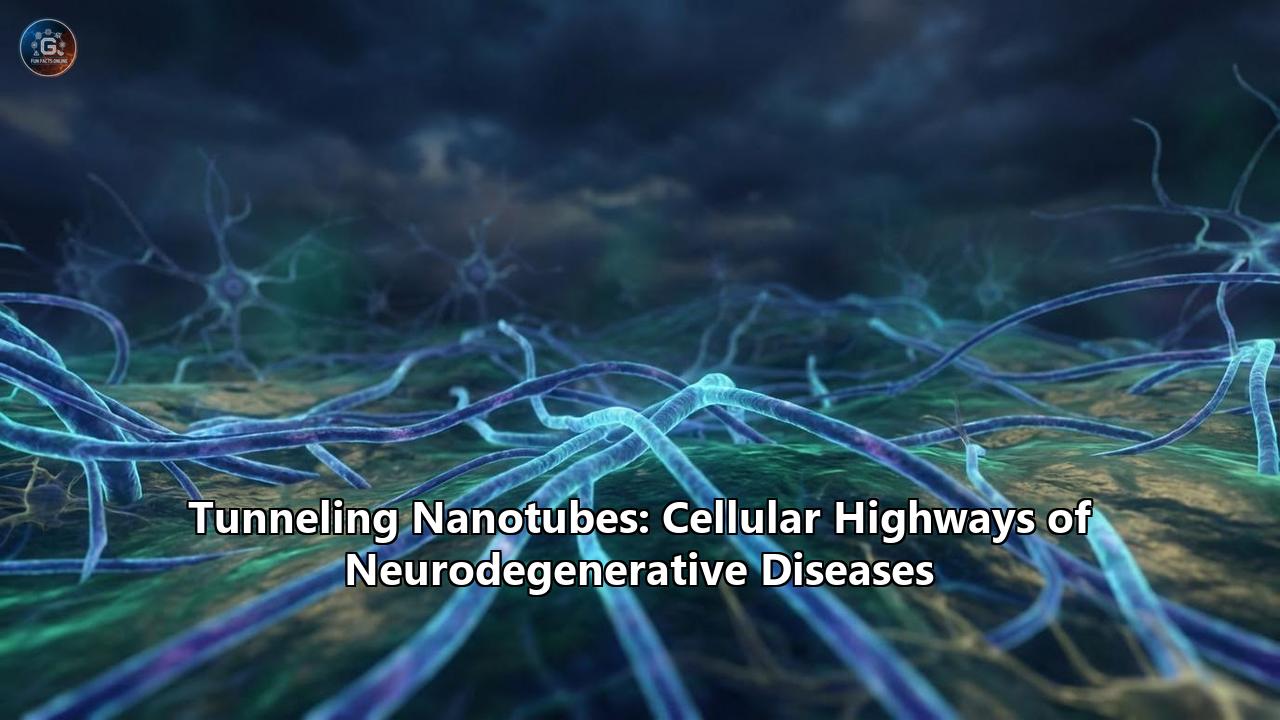
For over a century, the dogma of neuroscience painted a very specific picture of how brain cells communicate. We were taught that neurons speak to one another across microscopic gaps called synapses, tossing chemical messengers back and forth like biochemical baseballs. We knew about gap junctions, tight little pores that allow ions to flow between neighboring cells. We even knew about paracrine signaling, where cells broadcast chemical signals into the extracellular fluid. But it turns out, we were missing a massive piece of the puzzle. Hiding in plain sight, obscured by the limitations of traditional microscopy, was a secret network of cellular highways.
In 2004, a groundbreaking discovery fundamentally altered our understanding of intercellular communication. Scientists observed ultra-thin, highly dynamic, tube-like structures connecting cells over distances that, on a cellular scale, are equivalent to miles. They called them Tunneling Nanotubes (TNTs).
Initially dismissed by some skeptics as mere artifacts of cells being grown in petri dishes, TNTs have since been proven to be very real and profoundly important. These delicate, transient bridges allow cells to directly connect their cytoplasms, opening a private, closed-door channel for the exchange of cellular cargo.
But as with all powerful biological mechanisms, there is a dark side. While TNTs play a vital role in keeping tissues healthy and repairing damage, they have also been unmasked as the "Trojan horses" of the central nervous system. In recent years, an explosion of research has revealed that neurodegenerative diseases—including Alzheimer’s, Parkinson’s, Huntington’s, and Prion diseases—hijack these microscopic highways to spread toxic, misfolded proteins from cell to cell.
Understanding tunneling nanotubes is no longer just a fascinating detour in cell biology; it is at the absolute bleeding edge of finding a cure for the most devastating brain diseases of our time.
The Anatomy of a Secret Highway
To understand how TNTs can be both lifesavers and executioners, we first have to understand how they are built.
Tunneling nanotubes are essentially elongated protrusions of the cell membrane, supported by an internal skeleton made of a protein called filamentous actin (F-actin). Unlike other cellular extensions—such as filopodia, which act like cellular "fingers" feeling around the environment—TNTs actually fuse with or deeply penetrate the membrane of a distant target cell. This creates a continuous, hollow tube between the two cells.
The dimensions of these structures are staggering. A typical TNT has a diameter of just 50 to 800 nanometers—thousands of times thinner than a human hair. Yet, they can stretch for well over 100 micrometers, spanning across multiple other cells and extracellular debris to connect two distant partners.
Because they are not anchored to the extracellular matrix, TNTs hover like suspension bridges. They are also incredibly dynamic. A TNT can form in a matter of minutes, transfer its cargo, and detach or collapse just as quickly. Through these transient tunnels, cells can exchange an astonishing variety of materials: ions, signaling molecules, RNA, and even entire organelles like lysosomes and mitochondria.
The Good: A Lifeline for Ailing Cells
In a healthy brain, TNTs act as a critical emergency response and maintenance network.
The brain is a high-energy, high-stress environment. Neurons are incredibly demanding cells; they require massive amounts of energy (ATP) to fire electrical signals, making them highly dependent on their mitochondria, the cellular powerhouses. When a neuron is injured, starved of oxygen, or overwhelmed by oxidative stress, its mitochondria begin to fail. Without a rescue mechanism, the neuron will die.
Enter the brain's support cells: astrocytes and microglia. Astrocytes, the star-shaped caretakers of the brain, are incredibly generous. When they detect a neuron in distress, they can cast out tunneling nanotubes, physically connecting to the dying cell. Once the bridge is established, the astrocyte will literally pump fresh, healthy mitochondria into the ailing neuron. This TNT-mediated mitochondrial transfer acts as a cellular defibrillator, restoring ATP production, reducing oxidative stress, and pulling the neuron back from the brink of death.
Similarly, mesenchymal stem cells have been observed using TNTs to deliver rescuing packages to damaged tissue. In the context of homeostasis, TNTs are the ultimate expression of cellular altruism. They are the supply lines that keep the intricate society of the brain functioning under pressure.
The Bad: The Trojan Horse of Neurodegeneration
If TNTs are the supply lines of the brain, neurodegenerative diseases are the invading armies that hijack them.
For decades, one of the greatest mysteries in neurology was how diseases like Alzheimer's and Parkinson's spread through the brain. These diseases are characterized by "proteinopathies"—conditions where specific proteins misfold, clump together into toxic aggregates, and slowly kill neurons. But the death of neurons isn't random. The pathology typically starts in one specific brain region and spreads in a predictable, anatomical pattern, almost like an infection moving through a population.
Scientists proposed a "prion-like" hypothesis to explain this. They suggested that misfolded proteins from a sick cell could escape into the extracellular space, float over to a healthy neighboring cell, enter it, and act as a corrupted template, causing the healthy cell's proteins to misfold as well.
While this extracellular spreading does happen, it didn't fully explain the efficiency and speed of the disease progression. The extracellular space is a hostile environment, filled with immune cells and protein-degrading enzymes that should clean up these toxic aggregates. How were the proteins surviving the journey?
The discovery of TNTs provided the chilling answer. The toxic proteins aren't just floating blindly across the hostile extracellular void; they are being smuggled directly through the brain’s private, closed-door tunnels.
Parkinson’s Disease: Hitching a Ride in Lysosomes
In Parkinson's disease, the culprit is a protein called alpha-synuclein. When alpha-synuclein misfolds, it forms sticky aggregates that clump into structures known as Lewy bodies, leading to the death of dopamine-producing neurons.
Groundbreaking research from the Institut Pasteur demonstrated exactly how these toxic aggregates commute. When researchers placed cells loaded with mutant alpha-synuclein next to healthy cells, they watched as the sick cells extended tunneling nanotubes to their healthy neighbors. The toxic alpha-synuclein didn't just travel naked through the tube; it hitched a ride inside lysosomes.
Lysosomes are normally the "stomach" of the cell, designed to break down cellular waste. But alpha-synuclein is notoriously difficult to digest. Instead of being destroyed, the toxic fibrils hijack the lysosome, using it as a protective vehicle to travel across the TNT highway. Once delivered to the healthy cell, the alpha-synuclein escapes the lysosome—a process called lysosomal membrane permeabilization—and begins seeding new toxic aggregates in the recipient cell's cytoplasm.
Alzheimer’s Disease: The Builders of Their Own Roads
Alzheimer's disease is characterized by the accumulation of two major proteins: Amyloid-beta (which forms plaques) and Tau (which forms neurofibrillary tangles). Both of these proteins have been caught red-handed utilizing TNTs.
Amyloid-beta can move bidirectionally through TNTs, allowing a distressed, overburdened cell to quickly dump its toxic load onto its neighbors, accelerating the spread of the disease. But the behavior of the Tau protein is even more insidious.
Studies have shown that not only do exogenous and endogenous Tau aggregates travel through these nanoscopic tunnels, but the presence of mutant Tau actually induces the formation of more TNTs. It is a terrifying biological feedback loop. The toxic protein causes cellular stress, and the cell, perhaps crying out for mitochondrial rescue or attempting to dilute its toxic burden, forms more TNTs. The Tau protein then exploits these new roads to invade more cells, triggering them to build even more roads. The disease effectively paves its own highways across the brain.
Prion Diseases: The Original Shape-Shifters
Creutzfeldt-Jakob Disease (CJD) and other prion diseases are the most infamous of all protein-misfolding disorders, caused by the scrapie prion protein (PrPSc). Unlike Alzheimer's or Parkinson's, prion diseases are infectious and can be transmitted between individuals.
Prions are masters of TNT exploitation. Because the normal prion protein (PrPC) is naturally anchored to the cell membrane via a GPI-anchor, misfolded prions can literally "surf" along the outer surface of the tunneling nanotubes to reach a new cell. Alternatively, like alpha-synuclein, they can be packaged into endosomal vesicles and transported through the hollow core of the tube.
Huntington’s Disease: The Breakthrough of 2026
Huntington’s disease is a devastating, inherited disorder caused by a mutation in the huntingtin gene, leading to the production of mutant huntingtin (mHTT) protein. Like the others, mHTT forms toxic clumps that spread from neuron to neuron.
For years, the exact molecular machinery that allowed cells to build the TNTs used by mHTT remained elusive. However, a major breakthrough was published in March 2026 by researchers at Florida Atlantic University. They discovered a previously unknown cellular partnership that drives the construction of these toxic pipelines.
The researchers found that a protein called Rhes—which was already known to be enriched in the brain regions most affected by Huntington's—acts as the master architect of the TNTs. But Rhes doesn't work alone. Using advanced protein-mapping techniques, scientists discovered that Rhes physically binds to a protein called SLC4A7, a bicarbonate transporter whose normal day job is to regulate the internal pH (acidity) of the cell.
When Rhes and SLC4A7 link up at the cell membrane, they trigger a cascade of intracellular signaling that promotes the rapid polymerization of actin filaments—the very scaffolding required to shoot a tunneling nanotube out toward a neighboring cell. This unexpected partnership between a disease-linked protein and a pH-regulator fundamentally changes our understanding of how neurodegenerative diseases build their infrastructure.
The Vicious Cycle: Stress, Construction, and Spread
When we look at all these diseases together, a unified and tragic mechanism begins to emerge. Tunneling nanotubes are naturally upregulated during times of cellular stress. When a neuron is choked by toxic, misfolded proteins (whether it's Tau, alpha-synuclein, or mHTT), it experiences severe oxidative stress and metabolic failure.
In a desperate bid for survival, the sick cell reaches out, extending TNTs to its healthy neighbors to beg for healthy mitochondria or to offload its toxic garbage. But the "garbage" consists of prion-like proteins that are highly infectious on a cellular level.
The healthy neighbor, connected via the TNT, receives the toxic proteins. These proteins immediately begin corrupting the healthy cell's native proteins, plunging the new cell into oxidative stress. Now sick itself, the newly infected cell builds its own TNTs, reaching out to the next layer of healthy cells.
This vicious cycle transforms a localized mechanism of cellular rescue into a brain-wide mechanism of disease propagation. It explains the steady, relentless march of pathology seen in the brains of patients suffering from these incurable conditions.
Therapeutic Horizons: Roadblocks and New Deliveries
If tunneling nanotubes are the highways of neurodegeneration, can we stop the disease by blowing up the bridges?
This question has birthed an entirely new field of pharmacology aimed at targeting TNTs. Because TNTs rely on the dynamic polymerization of actin, early experimental approaches looked at using actin-destabilizing drugs to prevent their formation. However, actin is essential for countless physiological processes in the human body, from muscle contraction to basic cell division. A systemic drug that destroys all actin filaments would be highly toxic.
The key to treating neurodegenerative diseases via this pathway lies in finding specific regulators of TNT formation that can be targeted without destroying the cell's basic architecture.
This is why the 2026 discovery of the Rhes and SLC4A7 partnership is so monumental. By identifying SLC4A7 as the specific co-pilot for Rhes-mediated TNT formation in Huntington's disease, scientists have uncovered a highly specific, potentially druggable target. In laboratory models, when researchers genetically silenced or pharmacologically blocked SLC4A7, they successfully disrupted the formation of the specific nanotubes used by the mutant huntingtin protein, drastically halting the intercellular spread of the toxicity. Targeting these specific pathways could finally offer a way to freeze neurodegenerative diseases in their tracks, preventing the pathology from spreading to unaffected areas of the brain.
But pharmacology isn't just looking at destroying TNTs; it is also looking at how to hijack them for our own benefit.
Welcome to the frontier of Nanomedicine. If TNTs are so incredibly efficient at delivering large cargo directly into the cytoplasm of adjacent cells—bypassing the blood-brain barrier and the harsh extracellular environment—why not use them to deliver drugs?
Researchers are currently engineering nanoparticles loaded with therapeutic drugs, genetic therapies (like siRNA to silence disease-causing genes), and even healthy mitochondria. The goal is to design these nanomedicines so they are readily taken up by support cells like astrocytes. Once inside the astrocyte, the therapy would be packaged and shipped directly into deep, hard-to-reach, diseased neurons via the natural TNT network. Instead of the Trojan horse delivering a poison, we could use the Trojan horse to deliver the cure.
The Dawn of a New Neurobiology
For over a century, we viewed the brain as a vast network of isolated islands, shouting to one another across the synaptic seas. The discovery and subsequent exploration of tunneling nanotubes have revealed a much more intimate, physically interconnected reality. Brain cells are literally reaching out and touching one another, sharing their organelles, their energy, and tragically, their diseases.
The realization that Alzheimer's, Parkinson's, Huntington's, and Prion diseases all exploit these microscopic highways fundamentally shifts the battleground of neurodegeneration. We are no longer just fighting the toxic proteins themselves; we are fighting the infrastructure that allows them to spread.
As we unravel the molecular blueprints of these secret cellular highways—learning how to build them to deliver life-saving nanomedicines, and how to demolish them to halt the march of dementia—we stand on the precipice of a new era in medicine. The tunnels that have long allowed disease to spread in the shadows may ultimately become the very conduits through which we deliver the cures of tomorrow.
Reference:
- https://www.frontiersin.org/journals/immunology/articles/10.3389/fimmu.2021.680891/full
- https://pmc.ncbi.nlm.nih.gov/articles/PMC12743625/
- https://pmc.ncbi.nlm.nih.gov/articles/PMC5105909/
- https://www.researchgate.net/publication/349975919_Tunneling_Nanotubes_A_Novel_Pharmacological_Target_for_Neurodegenerative_Diseases
- https://pmc.ncbi.nlm.nih.gov/articles/PMC12296451/
- https://journals.plos.org/plosbiology/article?id=10.1371/journal.pbio.3001287
- https://www.mdpi.com/1422-0067/25/19/10797
- https://www.pasteur.fr/en/research-journal/news/tunneling-nanotubes-between-neurons-enable-spread-parkinson-s-disease-lysosomes
- https://encyclopedia.pub/entry/49921
- https://www.fau.edu/newsdesk/articles/tiny-cell-tunnels-huntingtons-disease
- https://bioengineer.org/fau-researchers-uncover-tiny-cellular-tunnels-revealing-new-approach-to-slow-huntingtons-disease/
- https://nationaltoday.com/us/fl/boca-raton/news/2026/03/21/fau-researchers-discover-cell-tunnels-spreading-huntingtons-disease/
- https://pmc.ncbi.nlm.nih.gov/articles/PMC8878036/