
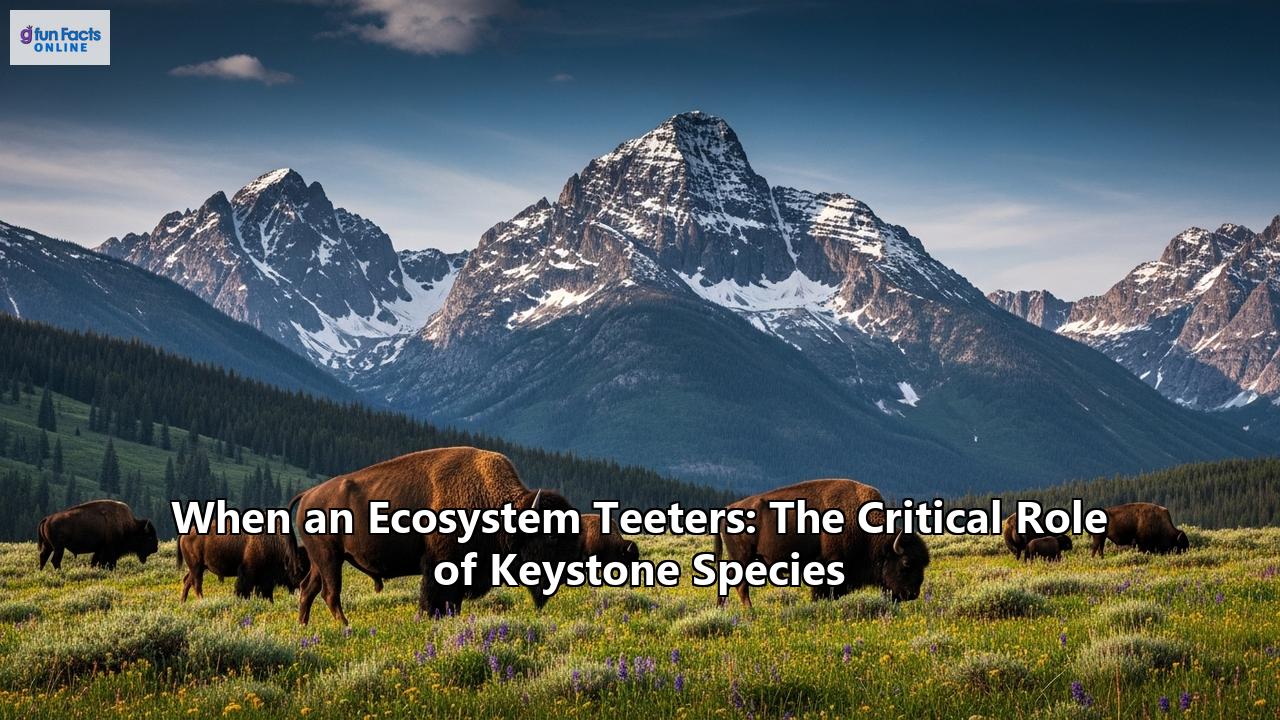
An ecosystem is a breathtakingly complex tapestry, woven from innumerable threads of life interacting with their physical environment. It is a world of constant flux, of growth and decay, of predation and pollination, all contributing to a dynamic equilibrium. For much of history, we viewed this intricate web as a system where every species contributed more or less equally to the whole. But what if some threads are more important than others? What if a single thread, if pulled, could cause the entire tapestry to unravel?
This is the very essence of a keystone species. In the world of architecture, a keystone is the central, wedge-shaped stone at the apex of an arch. Though it bears the least pressure of any stone, its removal leads to the immediate collapse of the entire structure. In the 1960s, a visionary zoologist named Robert T. Paine saw a powerful analogy between this architectural element and the dynamics of life he was observing in the turbulent tide pools of the Pacific Northwest. This conceptual leap would forever change our understanding of ecology and conservation.
Paine’s work gave birth to the keystone species concept, a term that describes a species whose impact on its environment is disproportionately large relative to its abundance. These are not necessarily the largest or most numerous organisms in an ecosystem, but they are the linchpins, the central players that hold the community together. Their presence dictates the structure of the ecosystem, influencing the populations of numerous other species and maintaining the overall biodiversity. To remove a keystone species is to trigger a cascade of secondary extinctions and environmental changes, fundamentally altering the character and stability of the ecosystem, or even causing its complete collapse.
This article will delve deep into the world of these critical organisms. We will explore the groundbreaking experiment that first defined the concept and examine the different "types" of keystone species, from the fearsome apex predator to the industrious ecosystem engineer. We will witness the dramatic and often devastating consequences of their removal and celebrate the remarkable recoveries seen when they are restored. Finally, we will confront the modern threats that place these vital species in peril and underscore the urgent, global importance of their conservation. Understanding the role of keystone species is not merely an academic exercise; it is fundamental to preserving the stability, diversity, and resilience of the natural world that sustains us all.
The Architect of the Arch: Defining a Keystone Species
The story of the keystone species concept begins on the wave-battered rocky shores of Washington's coast. Here, in the 1960s, a young ecologist, Robert T. Paine, conducted an experiment that was elegantly simple in its design but revolutionary in its implications. The intertidal zone he studied was a vibrant community of life, a mosaic of barnacles, mussels, limpets, and algae, all vying for a foothold on the limited real estate of the rocks. Looming over this community was a top predator: the ochre starfish, Pisaster ochraceus.
Paine was a student of the "Green World Hypothesis," a then-radical idea which proposed that predators played a crucial role in regulating ecosystems from the top down, preventing herbivores from devastating the plant world. He decided to put this to the test. In a controlled section of the shoreline, he began the laborious process of prying every single Pisaster starfish off the rocks and flinging them back into the sea. What followed was a dramatic and rapid transformation of the ecosystem.
Freed from their primary predator, the population of mussels (Mytilus californianus) exploded. They began to outcompete all other organisms for space, growing in thick, monopolizing mats that smothered other species. The diversity of the tide pool plummeted. Within a few years, an area that had once supported 15 different species was dominated almost entirely by one: the mussel. The removal of a single species had triggered a systemic collapse. Paine had proven that not all species are created equal; the Pisaster starfish exerted a disproportionate influence, maintaining the community's structure and diversity. In his seminal 1969 paper, he coined the term "keystone species" to describe this critical role.
It is essential to distinguish a keystone species from other ecological classifications. They are not the same as "dominant species," which are simply the most abundant organisms in an ecosystem by mass, like the trees in a forest or the grass in a prairie. They are also distinct from "foundation species," such as coral or kelp, which create the very habitat that other species live in. The defining characteristic of a keystone species is not its size or number, but the significance of its function. Its impact is immense and far exceeds what one would expect based on its biomass alone.
The keystone concept quickly became a cornerstone of conservation biology. It provides a powerful lens through which to understand the intricate interconnectedness of ecosystems and highlights a crucial reality: to preserve biodiversity, we must prioritize the protection of the species that matter most. The concept isn't without its critics, who argue it can oversimplify complex ecological webs, but its value in communicating the profound impact of certain species to both scientists and policymakers is undeniable. Identifying these species—whether they are predators, engineers, or mutualists—is a fundamental first step in understanding how to protect and restore our planet's teetering ecosystems.
Types of Keystone Species
The keystone role is not limited to a single type of animal or a specific ecological function. Ecologists have identified several categories of keystone species, each influencing their environment in unique and powerful ways. These roles often overlap, but they can be broadly grouped into predators, ecosystem engineers, and mutualists.
1. Keystone Predators: The Guardians of Balance
This is the classic and most well-understood category, exemplified by Paine's starfish. Keystone predators exert top-down control on their ecosystems, primarily by regulating the populations of other species. By keeping herbivores or other dominant competitors in check, they prevent any single species from monopolizing resources, thereby allowing a greater variety of life to flourish.
- Sea Otters: Perhaps the most famous example of a keystone predator is the sea otter. In the kelp forests of the North Pacific, sea otters are a crucial check on the population of sea urchins. Sea urchins are voracious grazers of kelp. When sea otter populations were decimated by the fur trade, urchin numbers exploded, and they mowed down the vast kelp forests, creating what are known as "urchin barrens." This had a catastrophic cascading effect. Kelp forests are vital ecosystems that provide food and shelter for hundreds of species, from fish to seals to seabirds. Their disappearance led to a massive loss of biodiversity. The recovery of sea otter populations in many areas has, in turn, allowed the kelp forests to regrow, demonstrating the otter's critical role as the guardian of this underwater world.
- Gray Wolves in Yellowstone: The reintroduction of gray wolves to Yellowstone National Park in 1995 is one of the most celebrated and studied examples of a trophic cascade initiated by a keystone predator. For 70 years, wolves were absent from the park. In their absence, the elk population soared. This led to severe overgrazing, particularly of young willow and aspen trees along riverbanks. The loss of these trees had far-reaching consequences. Songbird populations declined, and beavers, which rely on willows for food and building materials, nearly vanished. Without beaver dams to slow the water and create ponds, the very hydrology of the rivers changed, leading to increased erosion.
When wolves returned, they began to prey on the elk. But their impact was more than just numerical. They changed the behavior of the elk, which began to avoid valleys and gorges where they could be easily hunted. This created a "landscape of fear" that allowed the ravaged vegetation to recover. Willows and aspens rebounded, providing habitat for songbirds and materials for a resurgent beaver population. The beavers, in turn, engineered the ecosystem with their dams, creating ponds and wetlands that benefited a host of other species, from amphibians to fish to moose. The rivers stabilized, and the entire ecosystem became more diverse and resilient. The wolves, as the apex predator, had re-established the ecological balance.
2. Ecosystem Engineers: The World-Shapers
Ecosystem engineers are species that actively create, modify, or maintain habitats. Their actions build the physical framework that other species depend upon, making them a powerful type of keystone species when their influence is disproportionately large.
- Beavers: Often called "nature's hydrologists," beavers are quintessential ecosystem engineers. By felling trees and building dams, they transform free-flowing streams into complex mosaics of ponds, wetlands, and meadows. These alterations have profound effects. The dams slow water flow, raising the water table and creating extensive wetlands that become biodiversity hotspots. These new habitats support a wide array of species, including fish, amphibians, waterfowl, and insects. The dams also improve water quality by trapping sediment and filtering pollutants. By creating and maintaining these vital wetland ecosystems, beavers play a keystone role that benefits a vast community of life.
- Prairie Dogs: On the grasslands of North America, prairie dogs are masters of subterranean engineering. They live in vast colonies, or "towns," that can span for miles, consisting of elaborate networks of burrows. Their activities have a huge impact on the prairie ecosystem. Their burrowing aerates the soil, allowing more water to penetrate, and their nutrient-rich droppings fertilize the plains. Their constant grazing trims taller grasses, encouraging a wider diversity of plant species to grow. Most importantly, their burrows provide ready-made homes for a suite of other animals, including burrowing owls, black-footed ferrets (whose diet consists almost exclusively of prairie dogs), rattlesnakes, and amphibians. Prairie dog towns create a unique habitat that supports a level of biodiversity far greater than the surrounding prairie, making them a clear keystone species of the plains.
- Elephants: In the African savanna, elephants are keystone engineers that shape the very structure of the landscape. Through their feeding habits, they prevent the encroachment of forests, maintaining the open grasslands that countless other species depend on. They create trails that act as firebreaks and pathways for other animals. They dig waterholes in dry riverbeds, providing a critical resource for all wildlife during droughts. Their seed dispersal is also vital; they consume fruits and deposit the seeds miles away in their dung, which acts as a natural fertilizer, helping to regenerate the landscape and maintain genetic diversity in plants. Their immense impact on the physical environment solidifies their status as a keystone species.
3. Keystone Mutualists: The Critical Connectors
Mutualism is a relationship where two species benefit each other. A keystone mutualist is a species whose interaction with others is so critical that its absence would cause a cascade of failures in the ecosystem. These roles often revolve around pollination and seed dispersal.
- Hummingbirds and Bees: Pollinators are essential for the reproduction of a vast number of plants. While many plants have multiple pollinators, some ecosystems rely heavily on a few key species. In certain desert and mountain environments, specific species of hummingbirds are the primary pollinators for entire groups of plants. Their unique ability to hover and their long beaks are perfectly adapted for certain flower shapes. Without them, these plants would be unable to reproduce, affecting the herbivores that feed on them and, in turn, the carnivores that feed on the herbivores. Similarly, bees are keystone pollinators in countless terrestrial ecosystems, responsible for the pollination of a huge percentage of flowering plants, including many of the crops that form the basis of human agriculture.
- Fig Trees and Fig Wasps: The relationship between fig trees and fig wasps is a classic example of obligate mutualism that has a keystone effect. Each species of fig tree is typically pollinated by only one or a few species of tiny wasp. The wasp, in turn, can only lay its eggs inside the fig's fruit. They are completely dependent on each other for survival. What elevates this relationship to keystone status is the role figs play in many tropical forests. Figs produce fruit year-round, providing a reliable and crucial food source for a vast array of animals—monkeys, birds, bats, and more—especially during seasons when other food is scarce. By sustaining these fruit-eaters, the fig-wasp partnership supports the entire community, making both the tree and its pollinator keystone species.
- Cassowaries: In the rainforests of New Guinea and Australia, the large, flightless cassowary is a vital keystone seed disperser. This bird is one of the only creatures capable of consuming the large fruits of over 70 different tree species. It then travels long distances, depositing the seeds, unharmed, in its droppings. This process is essential for the regeneration and spread of these trees. Without the cassowary, the composition of the forest would fundamentally change, as these large-seeded trees would have no effective means of dispersal, leading to a decline in forest diversity and health.
From the wolf that reshapes rivers to the bee that underpins the food supply, keystone species demonstrate a fundamental ecological truth: the health and stability of an ecosystem often hinge on the contributions of a few critical players. Their influence radiates outward, touching every level of the food web and shaping the physical world in which they live.
When the Keystone Crumbles: The Devastating Consequences of Loss
The removal of a keystone species from an ecosystem is not a quiet event. It is a profound disruption that triggers a chain reaction, a domino effect that can dismantle the entire ecological structure. This process, known as a trophic cascade, is one of the most dramatic phenomena in ecology, illustrating the immense power wielded by these critical species. The consequences of their loss are often severe and multifaceted, leading to a precipitous decline in biodiversity, the degradation of habitats, and the loss of vital ecosystem services.
The Trophic Cascade Unleashed
A trophic cascade is an ecological phenomenon triggered by the addition or removal of a top predator, resulting in reciprocal changes throughout the food web. As we saw with the wolves of Yellowstone and the sea otters of the Pacific, these cascades flow down through the trophic levels, altering the abundance and behavior of species far removed from the initial change.
When a keystone predator is lost, the most immediate effect is often "mesopredator release." Mesopredators are mid-ranking predators (like foxes, coyotes, or raccoons) that are normally controlled by the larger apex predator. Without the top predator to keep their numbers in check, mesopredator populations can explode. This can have devastating consequences for their prey, which are often smaller animals like songbirds, rodents, and reptiles. For example, the decline of cougars in parts of the western United States has been linked to a surge in raccoon populations, which in turn has led to a steep decline in bird and amphibian populations that are preyed upon by raccoons. The entire system is thrown out of balance.
The cascade continues downward. The loss of a keystone predator leads to an unchecked herbivore population. This is the classic scenario seen in Yellowstone with elk and on the Pacific coast with sea urchins. The herbivores, now free from their primary predator, overgraze the dominant plant life. This over-browsing doesn't just reduce the amount of food available; it fundamentally alters the physical structure of the habitat. The loss of willows in Yellowstone meant the loss of habitat for beavers and birds. The loss of kelp forests meant the disappearance of a complex, three-dimensional underwater habitat that served as a nursery and a refuge for hundreds of species. In both cases, the ecosystem becomes simpler, less structured, and far less diverse.
Ecosystem Collapse and Loss of Resilience
An ecosystem's resilience is its ability to withstand disturbances—like fires, droughts, or disease—and recover. Biodiversity is a key component of this resilience. An ecosystem with a wide variety of species has more "insurance" because different species can respond to disturbances in different ways, allowing the system as a whole to adapt.
Keystone species are the guardians of this biodiversity. By preventing any single species from becoming overly dominant, they maintain the complexity and richness of the community. When a keystone species is lost, the result is a less diverse and therefore less resilient ecosystem. The mussel-dominated rock faces studied by Paine were a simple, homogenous environment. Such a system is highly vulnerable. If a disease specific to mussels were to sweep through, the entire ecosystem could be wiped out in one fell swoop. In a diverse community, the loss of one species might be compensated for by another. In a simplified one, there is no backup plan.
This loss of resilience can lead to what is known as a "regime shift," where the ecosystem flips into a completely different and often less desirable state. The transition from a vibrant kelp forest to a barren, urchin-dominated seascape is a classic example of such a shift. Once this flip occurs, it can be incredibly difficult to reverse, even if the initial cause is addressed. The system has lost its internal stability and settled into a new, impoverished equilibrium.
The Loss of Ecosystem Services
Beyond the intrinsic value of biodiversity, healthy ecosystems provide a suite of "ecosystem services" that are crucial for human well-being. The loss of keystone species can directly compromise these services.
- Water Filtration and Flow Regulation: The disappearance of beavers from many North American and European watersheds led to the loss of their dams and the wetlands they create. This resulted in faster water runoff, increased soil erosion, more severe flooding during wet periods, and lower water levels during droughts. The natural water purification service provided by the wetlands was also lost.
- Pollination and Food Security: The global decline in bee populations, a keystone mutualist group, poses a direct threat to global food security. A huge percentage of the world's food crops rely on bee pollination. Their loss would not only have catastrophic ecological consequences but would also lead to massive economic disruption and potential food shortages.
- Disease Regulation: In some cases, keystone predators can help regulate the spread of disease. By preying on the sick, old, and weak individuals in a herd, wolves help maintain the overall health of the elk population, potentially limiting the spread of illnesses like Chronic Wasting Disease. The decline of a predator can allow diseases to spread more easily through a dense and unhealthy prey population.
- Carbon Sequestration: Healthy ecosystems play a vital role in capturing and storing carbon. The kelp forests maintained by sea otters are highly productive ecosystems that absorb significant amounts of CO2 from the atmosphere. When these forests are lost, that carbon sequestration capacity is diminished, contributing to the broader problem of climate change.
The message is clear: when a keystone crumbles, the arch falls. The loss of these critical species is not an isolated event. It sends shockwaves through the entire ecosystem, simplifying complex food webs, eroding biodiversity, destabilizing habitats, and diminishing the essential services upon which all life, including our own, depends. The silence left by a vanished keystone species is the sound of an ecosystem in distress.
A Planet Under Pressure: Modern Threats to Keystone Species
While natural ecosystems have always faced disturbances, the modern era has introduced a barrage of unprecedented threats, driven primarily by human activity. These pressures are endangering species across the globe, but they pose a particularly grave risk to keystone species. Because their influence is so disproportionate, their decline or extinction has a multiplying effect, jeopardizing entire ecosystems. The primary threats facing these vital species today are habitat destruction, climate change, overexploitation, pollution, and the spread of invasive species.
Habitat Destruction and Fragmentation
This is overwhelmingly the single greatest threat to biodiversity worldwide. The conversion of forests, wetlands, and grasslands for agriculture, urban development, logging, and mining relentlessly shrinks the space available for wildlife. For keystone species, which often require large territories, this is a direct existential threat.
- Large Predators: Apex predators like wolves, jaguars, and tigers require vast ranges to hunt and maintain healthy populations. As human development fragments their habitats into smaller, isolated patches, these animals are squeezed into ever-shrinking areas. This leads to several problems: increased conflict with humans and livestock on the periphery of their territories, a reduced prey base, and genetic bottlenecks. Isolated populations suffer from a lack of genetic diversity, making them more vulnerable to disease and less able to adapt to changing conditions.
- Ecosystem Engineers: The damming and channelization of rivers by humans directly destroy the habitat needed by beavers. The conversion of prairies to farmland has eliminated over 99% of the original tallgrass prairie, devastating the prairie dog towns that once sprawled across the American West.
Climate Change
The rapid warming of the planet is fundamentally altering the environmental conditions to which species have adapted over millennia. This disruption poses a profound threat to keystone species by creating mismatches in their ecological relationships and degrading their habitats.
- Aquatic Keystone Species: Coral reefs, which are considered keystone ecosystems created by foundation species (coral polyps), are acutely sensitive to rising ocean temperatures. Warmer water causes "coral bleaching," where the coral expels the symbiotic algae living in its tissues, leading to its death and the collapse of the incredibly diverse reef ecosystem it supports. Similarly, the sea otter-kelp forest dynamic is threatened. Kelp thrives in cold, nutrient-rich water. As oceans warm, kelp growth can be stunted, affecting the entire food web that depends on it, regardless of the sea otter's presence.
- Shifting Ranges and Phenology: Species are shifting their geographic ranges in response to warming temperatures, but not all species can move at the same pace. A keystone pollinator might shift its range to follow a preferred climate, but the plants it pollinates may be unable to move as quickly, leading to a "phenological mismatch." The timing of natural events is also changing. Flowers may bloom earlier before their key pollinators have arrived, or prey may hatch before their predators are ready to feed, disrupting the finely tuned interactions that hold ecosystems together.
Overexploitation and Persecution
This involves harvesting a species at a rate that is unsustainable, driving its population into decline. This can happen through direct hunting, poaching, or as bycatch in fisheries.
- Sharks: As apex predators in many marine ecosystems, sharks play a crucial keystone role in regulating fish populations and maintaining healthy coral reefs. However, tens of millions of sharks are killed each year for their fins, meat, or as accidental bycatch. This massive overfishing has decimated shark populations globally, leading to trophic cascades in the ocean, including the decline of coral reefs and seagrass beds due to an overabundance of herbivores that sharks would normally prey upon.
- Elephants and Wolves: Historically, many keystone predators were seen as direct competitors or threats to humans and were actively persecuted. Elephants were poached to near extinction for their ivory. Wolves were systematically exterminated from much of North America because they preyed on livestock. While conservation efforts have helped these species recover in some areas, the threat of poaching and human-wildlife conflict remains a constant pressure.
Pollution
The introduction of harmful contaminants into the environment can have lethal and sublethal effects on keystone species, affecting their reproduction, behavior, and survival.
- Pesticides and Pollinators: The widespread use of certain pesticides, particularly neonicotinoids, has been strongly linked to the decline of bee populations. These chemicals can impair bees' ability to navigate, forage, and reproduce, weakening or killing entire colonies. Given the keystone role of bees as pollinators, this has alarming implications for both natural ecosystems and agriculture.
- Marine Pollution: The accumulation of plastics, heavy metals, and persistent organic pollutants like PCBs in the marine food web has a severe impact on top predators. Sea otters, orcas, and polar bears accumulate high levels of these toxins from their prey. These chemicals can disrupt their immune and reproductive systems, making them more susceptible to disease and reproductive failure.
Invasive Species
When a non-native species is introduced into an ecosystem, it can outcompete, prey upon, or spread disease to native species. Invasive species can sometimes disrupt the role of a native keystone species or usurp its position with devastating consequences. For example, the introduction of the brown tree snake to Guam after World War II led to the extinction of most of the island's native forest birds. These birds were the keystone pollinators and seed dispersers for the island's flora, and their loss has led to a catastrophic failure of forest regeneration, demonstrating how an invasive predator can completely dismantle an ecosystem.
These modern threats rarely act in isolation. A keystone species is often facing a combination of these pressures simultaneously. Its habitat is shrinking due to development, while the climate within that habitat is changing, its food sources are contaminated with pollutants, and it may be competing with an invasive species. This compounding effect creates a formidable challenge for conservation and underscores the fragility of the ecosystems that depend on these critical players. Protecting keystone species requires a holistic approach that addresses the full spectrum of human-induced pressures on the planet.
The Science of Identification and Restoration: A Story of Hope
While the threats facing keystone species are daunting, the story is not one of inevitable decline. The fields of conservation biology and restoration ecology are filled with remarkable accounts of scientific discovery and hard-won success. Identifying which species play a keystone role and actively working to protect or restore them are among the most powerful tools we have for healing our damaged planet. These efforts represent a story of hope, demonstrating that with knowledge, commitment, and intervention, we can help ecosystems mend themselves.
Identifying the Linchpin: A Scientific Detective Story
Pinpointing a keystone species is not always straightforward. Their defining feature—a disproportionate impact relative to abundance—means their importance isn't obvious from a simple species census. Ecologists must act like detectives, piecing together clues to understand the intricate web of interactions within a community.
- Experimental Manipulations: The gold standard for identifying a keystone species is the type of removal experiment pioneered by Robert Paine. By carefully removing a suspected keystone species from a controlled area and comparing it to an untouched control area, scientists can directly observe the consequences. These experiments are powerful but can be difficult and ethically challenging to conduct, especially with large, wide-ranging, or endangered animals.
- Natural Experiments and Comparative Studies: Often, scientists take advantage of "natural experiments," where a species has been historically removed from or added to an area due to human activity. The study of Yellowstone before and after the wolf reintroduction is a prime example. By comparing ecosystems where a species is present to similar ecosystems where it is absent, researchers can infer its role. For instance, comparing the health of coral reefs with and without healthy shark populations can reveal the sharks' keystone function.
- Modeling and Technology: Modern technology offers new tools for this detective work. Ecologists can use sophisticated computer models to simulate food webs and predict which species might have the most significant impact if removed. Technologies like GPS tracking and genetic analysis help scientists understand the diet, movement, and interactions of animals in unprecedented detail, providing crucial data to underpin these models.
However, context is everything. A species that is a keystone in one ecosystem may not be in another. Paine himself noted that his Pisaster starfish was only a keystone in areas where mussels were the dominant competitor for space; in other environments, it was "just another sea star." This highlights the need for careful, place-based research to inform effective conservation strategies.
Stories of Restoration: Bringing Back the Balance
The true power of the keystone concept is realized when it is put into action. Restoration projects centered on keystone species are among the most inspiring stories in conservation, showcasing the remarkable resilience of nature when given a chance.
- The Return of the Wolf: The reintroduction of gray wolves to Yellowstone is the poster child for keystone species restoration. As detailed earlier, their return did more than just control elk populations; it initiated a trophic cascade that revitalized the entire ecosystem. Rivers changed their course, forests of willow and aspen regenerated, songbird and beaver populations rebounded, and the overall biodiversity of the park increased. It is a powerful testament to the idea that restoring a single, critical component can trigger a system-wide recovery.
- Sea Otter Sanctuaries: The recovery of the sea otter from the brink of extinction is another triumph. After being hunted to just a few thousand individuals for their pelts, legal protections like the Marine Mammal Protection Act and dedicated conservation efforts allowed their populations to rebound in parts of their former range. As they returned, the urchin barrens that had replaced the kelp forests began to recede. The otters, by resuming their keystone role as urchin predators, facilitated the regrowth of the vast, vibrant kelp forests, bringing back the rich biodiversity that depends on them.
- Relocating Beavers: Recognizing their role as keystone engineers, wildlife managers are now actively relocating "nuisance" beavers from agricultural or urban areas to degraded watersheds that need restoration. These relocated beavers get to work immediately, building dams that restore wetlands, improve water quality, recharge groundwater, and create habitat for countless other species. This strategy is an increasingly popular and cost-effective form of ecological restoration, using the beaver's natural engineering skills to heal landscapes.
The Path Forward: A Shared Responsibility
These success stories underscore a critical lesson: conservation focused on keystone species can have an enormous return on investment. Protecting or restoring a single keystone species can be more effective than trying to manage dozens of other species individually. This is the essence of an "umbrella species," a concept that often overlaps with keystone species, where protecting the vast habitat needs of one species (like a jaguar or grizzly bear) automatically protects all the other species living under that "umbrella."
However, these efforts are not without challenges. They require robust legal frameworks like the Endangered Species Act and international agreements like CITES to provide protection. They demand long-term scientific monitoring to understand and adapt to the complex changes that occur. Crucially, they depend on public support and the involvement of local communities. The success of wolf reintroduction, for example, required navigating complex social and economic issues with ranchers living near the park.
Ultimately, the restoration of keystone species is about more than just saving an animal; it's about restoring the integrity, stability, and function of entire ecosystems. It is an act of recognizing the intricate connections that bind the natural world together and our own role within that web. These stories of hope show that we are not merely passive observers of ecological decline; we can be active agents of recovery, using scientific knowledge to help put the keystone back in the arch.
Conclusion: The Call of the Wild - Our Role in Protecting the Arch
The journey into the world of keystone species takes us from the tide-swept shores of the Pacific to the vast plains of the Serengeti, from the intricate architecture of a coral reef to the verdant canopy of a tropical rainforest. It is a journey that reveals a fundamental truth about the nature of life on Earth: ecosystems are not democracies where every member has an equal vote. They are intricate structures, held together by the profound and disproportionate influence of a few key players. The keystone species, like the central stone in an arch, ensures the integrity and stability of the entire edifice.
We began with Robert T. Paine's revolutionary experiment, a simple act of removing a starfish that toppled a whole community, forever changing our understanding of ecological power dynamics. We have seen how this power manifests in various forms: in the predatory prowess of the wolf and the sea otter, who sculpt landscapes by controlling their prey; in the tireless work of ecosystem engineers like the beaver and the elephant, who build and shape the physical worlds that others inhabit; and in the vital connections forged by mutualists like bees and cassowaries, who weave the web of life through pollination and seed dispersal.
Just as we have witnessed their power to create, we have also seen the devastation wrought by their absence. When a keystone crumbles, the arch collapses. The resulting trophic cascades simplify complex habitats, erode biodiversity, and diminish the resilience of ecosystems, leaving them vulnerable to collapse. This is not a distant, abstract concept. The loss of these species directly impacts human well-being by compromising the essential ecosystem services—clean water, pollination for our crops, and stable climates—that we so often take for granted.
The immense pressures of the modern world—habitat destruction, climate change, overexploitation, pollution, and invasive species—have placed these critical species in the crosshairs. Their precarious position is a barometer for the health of our planet. Their decline is a warning, a clear signal that the ecological arches that support life are weakening.
Yet, this is not a eulogy. It is a call to action, buoyed by the genuine hope offered by science and restoration. The inspiring stories of the wolves returning to Yellowstone or beavers re-engineering degraded streams prove that positive change is possible. They demonstrate that by focusing our conservation efforts on these pivotal species, we can achieve outsized results, restoring not just a single population but the function and vitality of an entire ecosystem. These efforts are the pinnacle of applied ecology—a partnership between human ingenuity and nature's inherent resilience.
Protecting the world's keystone species is a profound responsibility. It requires us to look beyond individual species and see the intricate connections that bind them together. It demands that we acknowledge the far-reaching consequences of our actions and take decisive steps to mitigate our impact. It calls for a shift in perspective, from viewing nature as a collection of resources to be exploited to seeing it as a complex, interconnected system of which we are a part, and on which our own survival depends. The fate of the keystone species is inextricably linked to our own. By working to protect them, we are not just saving a wolf, an otter, or a bee; we are reinforcing the arches of the living world, ensuring they remain strong and stable for generations to come.
Reference:
- https://www.britannica.com/science/keystone-species
- https://earth.org/harmony-in-nature-the-vital-role-of-keystone-species-in-human-wildlife-coexistence/
- https://en.wikipedia.org/wiki/Keystone_species
- https://guloinnature.com/what-is-a-keystone-species/
- https://beforest.co/blogs/the-key-role-of-keystone-species-in-ecosystem-survival/
- https://www.weforum.org/stories/2024/11/what-is-a-keystone-species/
- https://www.pbslearningmedia.org/resource/nat38-discovery-of-keystone-species-vid/the-serengeti-rules-media-gallery/
- https://daily.jstor.org/how-the-keystone-species-concept-transformed-ecology/
- https://www.youtube.com/watch?v=hRGg5it5FMI
- https://planetwild.com/blog/keystone-species
- https://nautil.us/the-ecologist-who-threw-starfish-235831/
- https://ecologyandsociety.org/vol7/iss1/resp11/
- https://www.doc.govt.nz/documents/science-and-technical/sfc203.pdf
- https://www.geeksforgeeks.org/biology/keystone-species-role-in-conservation/
- https://www.biologicaldiversity.org/programs/biodiversity/elements_of_biodiversity/
- https://en.wikipedia.org/wiki/Ecological_stability
- https://fse.studenttheses.ub.rug.nl/11309/1/Does_Ecosystem_Stability_Depen_1.pdf