
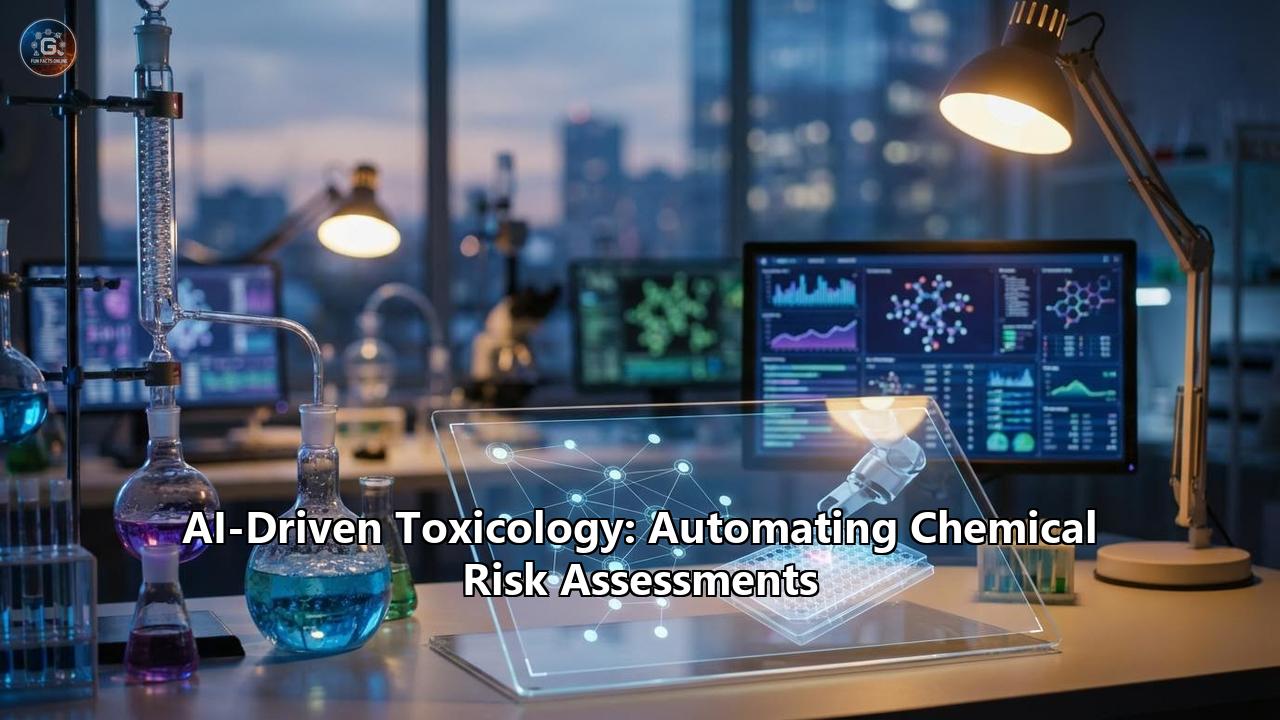
The intersection of artificial intelligence and chemical safety is no longer a distant frontier; it is the present reality. For decades, the global chemical industry and regulatory bodies have operated under a profound bottleneck. With tens of thousands of chemicals already in commerce and hundreds of new synthetic compounds entering global supply chains every year, the traditional methods of evaluating environmental and human health risks have proven unsustainable. Relying on decades-old in vivo (animal) testing paradigms has historically meant that evaluating a single chemical could take years, cost millions of dollars, and raise significant ethical concerns.
Today, artificial intelligence (AI), machine learning (ML), and computational toxicology are fundamentally dismantling this bottleneck. By automating chemical risk assessments, AI is ushering in an era of Predictive Toxicology—a paradigm shift that promises to make chemical governance faster, more accurate, highly scalable, and ultimately, cruelty-free.
This comprehensive exploration delves into how AI-driven workflows are automating chemical risk assessments, the underlying technologies powering this revolution, the latest global regulatory shifts up to 2026, and the profound implications for the future of human and environmental health.
The Historical Bottleneck: Why Traditional Toxicology is Obsolete
To understand the magnitude of the AI revolution in toxicology, one must first understand the limitations of the traditional paradigm. Frameworks like the European Union’s REACH (Registration, Evaluation, Authorisation and Restriction of Chemicals) and the United States’ Toxic Substances Control Act (TSCA) were designed to protect the public and the environment. However, the foundational testing methods relied heavily on animal models—such as rodents or fish—to observe endpoints like acute toxicity, carcinogenicity, developmental toxicity, and ecotoxicity.
The traditional approach suffers from three critical flaws:
- Low Throughput and High Cost: Animal testing requires extensive breeding, housing, dosing, and observation periods. A comprehensive two-year rodent carcinogenicity study can cost upwards of $2 million to $4 million per chemical. With over 80,000 chemicals in the US TSCA inventory alone, testing every compound is economically and practically impossible.
- Species Translation Failures: The physiological differences between humans and test animals often result in poor predictive validity. A chemical that causes liver damage in a rat may not affect a human in the same way, and vice versa.
- Ethical Concerns: The global push towards the "3Rs" (Replacement, Reduction, and Refinement of animal testing) has driven consumer and regulatory demand for non-animal New Approach Methodologies (NAMs).
Because of these limitations, thousands of chemicals have historically been allowed into the market with little to no toxicity data, creating a vast "data gap." AI bridges this gap by transforming toxicology from an observational science into a highly predictive, data-driven discipline.
Decoding the Core Technologies in AI-Driven Toxicology
The automation of chemical risk assessment is not powered by a single algorithm, but by an ecosystem of advanced computational tools. These technologies synthesize vast amounts of chemical, biological, and epidemiological data to predict how a novel compound will interact with biological systems.
1. Machine Learning and Next-Generation QSAR
Quantitative Structure-Activity Relationship (QSAR) models have been used for years to predict a chemical's toxicity based on its molecular structure. The underlying premise is that chemicals with similar molecular structures will exhibit similar biological activities. However, traditional QSAR models were often linear and struggled with complex biological mechanisms.
Enter AI-powered QSAR. Modern machine learning algorithms—such as Random Forests, Gradient Boosting Trees (e.g., XGBoost), and Deep Neural Networks (DNNs)—can uncover complex, non-linear relationships between molecular descriptors and toxicological endpoints. By utilizing molecular fingerprints (such as MACCS, Morgan, or RDKit fingerprints), AI algorithms analyze the structural features of a chemical and instantly predict its likelihood to cause genotoxicity, endocrine disruption, or aquatic toxicity.
A breakthrough evolution of this is the Read-Across Structure-Activity Relationship (RASAR). RASAR algorithms automate the "read-across" process, where the properties of a well-tested "source" chemical are used to predict the properties of an untested, structurally similar "target" chemical. AI-driven RASAR has been shown to achieve balanced accuracy rates exceeding 87% across numerous OECD test guidelines, frequently outperforming the reproducibility of the animal tests themselves.
2. Natural Language Processing (NLP) for Data Mining
One of the most labor-intensive aspects of chemical risk assessment is the literature review. Toxicologists must comb through thousands of peer-reviewed papers, clinical trial reports, and regulatory submissions to gather "Weight of Evidence" (WoE) for a chemical's safety.
Natural Language Processing (NLP) and Large Language Models (LLMs) have fully automated this data extraction phase. AI tools can instantly scan millions of PubMed articles and open-source databases to identify key events, molecular initiating events, and adverse outcomes related to specific chemical exposures. This allows regulatory agencies and industrial chemists to build comprehensive risk profiles in a matter of hours, rather than months.
3. Toxicogenomics and Multi-Omics Integration
AI excels at finding patterns in massive, multi-dimensional datasets. In the realm of toxicogenomics, AI algorithms analyze data from genomics, transcriptomics, proteomics, and metabolomics to understand how a chemical alters gene expression or protein function at the cellular level. By integrating high-throughput in vitro screening data (such as the EPA’s ToxCast and Tox21 programs) with AI mapping, scientists can predict the cascading biological failures a chemical might trigger long before any physical symptoms manifest.
4. Generative AI for De Novo Safe Chemical Design
While predictive AI assesses the risk of existing chemicals, generative AI is actively designing new chemicals that are intrinsically safe. By reversing the predictive models, chemists can ask an AI to generate a molecular structure that retains specific commercial properties (e.g., a highly effective industrial solvent or a fire retardant) but lacks the structural features known to cause bioaccumulation or human toxicity. This "safe-by-design" approach is revolutionizing the R&D pipelines of major pharmaceutical, agricultural, and consumer goods companies.
Automating the Workflow: How AI Risk Assessments Actually Work
The modern AI-driven chemical risk assessment workflow is a highly orchestrated, automated pipeline that spans from virtual screening to regulatory submission.
Step 1: In Silico Virtual ScreeningBefore a chemical is ever synthesized in a lab, its digital representation is fed into an AI model. The system evaluates the compound against massive databases of known chemicals (like eChemPortal, ChEMBL, and PubChem). It flags potential hazards, such as whether the chemical has a high binding affinity for estrogen receptors (indicating potential endocrine disruption) or if its structure suggests it will resist environmental degradation (indicating a "forever chemical" risk like PFAS).
Step 2: Automating Adverse Outcome Pathways (AOPs)If a chemical raises red flags, the AI maps its potential biological impact using Adverse Outcome Pathways (AOPs). An AOP is a conceptual framework that traces a chemical's toxic effect starting from a Molecular Initiating Event (e.g., a chemical binding to a specific protein) through a series of Key Events (e.g., cell inflammation, tissue degradation) leading to an Adverse Outcome (e.g., liver failure or cancer). AI automates the construction and quantitative analysis of these AOP networks by synthesizing existing biomedical data, enabling a deeply mechanistic understanding of how a chemical causes harm.
Step 3: Quantitative In Vitro-to-In Vivo Extrapolation (QIVIVE)If laboratory cell tests (in vitro) are conducted, AI bridges the gap between the petri dish and the human body. Through Physiologically Based Toxicokinetic (PBTK) modeling and QIVIVE, machine learning algorithms simulate human metabolism, predicting how a chemical will be absorbed, distributed, metabolized, and excreted (ADME). The AI calculates the exact human exposure dose that would trigger the toxic effects observed in the lab, establishing precise safety thresholds without ever testing on a living organism.
Step 4: Real-Time Environmental and Epidemiological ModelingOnce a chemical is in commerce, AI does not stop working. Machine learning models integrated with environmental sensors predict how pollutants will disperse in ecosystems, soil, and waterways. In epidemiology, AI algorithms continuously process real-time health surveillance data to detect subtle spikes in disease outbreaks or adverse health outcomes that may correlate with specific chemical exposures in a population.
Global Regulatory Shifts: 2025–2026 Milestones
The technological feasibility of AI in toxicology has recently triggered massive regulatory shifts globally. Agencies are not just accepting AI-backed predictions; they are actively institutionalizing them.
The US EPA and the AI Infrastructure Boom
In late 2025 and early 2026, the intersection of AI-driven toxicology and AI infrastructure created a fascinating regulatory feedback loop. As the demand for massive AI data centers surged, operators required novel cooling fluids, fire suppressants, and chemical additives to manage unprecedented heat loads. However, under TSCA Section 5, the US Environmental Protection Agency (EPA) historically struggled to evaluate new chemicals within the statutory 90-day window, creating a bottleneck for AI infrastructure development.
To resolve this, the EPA, aligning with new Executive Orders, established a priority review track to expedite the assessment of chemicals used in data centers and semiconductor manufacturing. To meet these accelerated timelines, the EPA heavily leaned on machine learning tools like the Open (Quantitative) Structure-activity/property Relationship App (OPERA) and automated read-across algorithms to conduct rapid screening-level assessments. Furthermore, the EPA has aggressively modernized its ToxCast and Tox21 computational toxicology systems, utilizing deep learning to fill data gaps for hazard prediction. In late 2025, the EPA also completed a structural reorganization to streamline these efforts, creating a new Office of Applied Science to better integrate computational advances.
The OECD and Global Standardization
For AI models to replace animal testing globally, they must be validated under international agreements. The Organisation for Economic Co-operation and Development (OECD) manages the Mutual Acceptance of Data (MAD) system, ensuring that a chemical test accepted in one country is accepted across over 40 member nations.
Recently, massive strides have been made in applying AI to OECD Test Guidelines (TG). In comprehensive 2025 studies, researchers systematically developed hundreds of machine learning models trained on robust OECD TG data extracted from the eChemPortal. By evaluating models across five algorithms and four types of molecular fingerprints, scientists validated AI performance for endpoints ranging from acute toxicity (TG 420, 402, 403) and developmental toxicity (TG 414) to carcinogenicity (TG 453) and ecotoxicity.
European Initiatives and "Non-Animal" Frameworks
The European Food Safety Authority (EFSA) published its extensive AI4NAMS (Artificial Intelligence for New Approach Methodologies) framework to standardize how AI should be used in regulatory decision-making. Similarly, international research teams, such as collaborations between the Chinese Research Academy of Environmental Sciences and Beijing Normal University, unveiled advanced non-animal assessment frameworks in late 2025. These frameworks merge high-throughput screening, AI-enabled toxicity mapping (like the ToxACoL models), and PBTK modeling to predict ecological and human risk thresholds with unprecedented speed.
The Concept of "E-Validation"
One of the most profound paradigm shifts occurring right now is the move toward "e-validation". Historically, for a new predictive test to be accepted by regulators, it had to undergo years of physical validation studies to prove it was as accurate as an animal test. This physical validation process is notoriously slow and expensive.
E-validation leverages AI to validate AI. It is a computational framework that simulates toxicological studies, automates reference chemical selection, and rapidly benchmarks the performance of new predictive models against vast historical datasets. Through e-validation, the scientific community can deploy tiered approaches and uncertainty quantification to prove an AI model's robustness. Furthermore, "companion AI post-validation agents" are being conceptualized to continuously monitor and refine these models as new chemical data enters the public domain, ensuring that regulatory tools are never static but dynamically evolving.
Challenges and Bottlenecks in the AI Transition
Despite the massive potential, the complete automation of chemical risk assessment faces several critical hurdles that the scientific and regulatory communities are actively working to resolve.
1. The "Black Box" Problem and Explainable AI (XAI)
Deep learning models are notoriously opaque. An algorithm may accurately predict that a chemical is carcinogenic with 95% accuracy, but if it cannot explain why or how it reached that conclusion, regulators are hesitant to restrict a multi-million-dollar chemical product based on that output. The lack of model interpretability is a primary barrier to regulatory acceptance. To combat this, the field is rapidly pivoting toward Explainable AI (XAI). XAI techniques map the algorithm’s decision-making process back to specific molecular substructures or biological pathways, allowing toxicologists to verify the machine's "reasoning" against established scientific principles.
2. The FAIR Data Imperative
An AI model is only as good as the data it is trained on. Historically, toxicological data has been siloed across proprietary pharmaceutical databases, diverse regulatory filings, and disjointed academic publications. Much of this data is unstructured, biased toward positive findings, or formatted inconsistently.
For AI to achieve its ultimate potential, the global toxicology community must adhere to FAIR principles—ensuring data is Findable, Accessible, Interoperable, and Reusable. Collaborative initiatives like the Accelerating the Pace of Chemical Risk Assessment (APCRA) project are pushing for standardized data architectures to feed the next generation of LLMs and neural networks.
3. Algorithmic Bias and the "Gold Standard" Fallacy
A unique challenge in AI toxicology is that the models are often trained on historical animal data. Because animal data itself is sometimes a flawed predictor of human health, an AI model perfectly trained on animal data will merely become perfectly adept at predicting a flawed metric. Overcoming this requires training new models explicitly on human-relevant data, such as human organ-on-a-chip responses, epidemiological data, and human cell line transcriptomics.
The Future Horizon: Digital Twins, Quantum Computing, and Beyond
As we look toward the end of the decade, the convergence of AI with other exponential technologies promises to rewrite the rules of biological and chemical sciences entirely.
Organ-on-a-Chip and AI IntegrationMicrophysiological systems, commonly known as "organ-on-a-chip," use human cells to replicate the mechanical and chemical functions of human organs (like a beating heart or a breathing lung on a microchip). When these chips are linked to AI-driven image analysis tools, machine learning algorithms can detect microscopic morphological changes in the cells, identifying subtle indicators of toxicity that human researchers might overlook.
Digital Twins and Personalized ToxicologyThe concept of a "Digital Twin"—a virtual replica of a physical system—is moving from engineering into human biology. In the future, predictive toxicology will become highly personalized. By integrating an individual’s genetic data, microbiome composition, and lifestyle factors, AI could simulate a patient's digital twin to predict exactly how a specific pharmaceutical compound or environmental pollutant will affect them specifically.
Quantum Computing in Computational ChemistryWhile current AI operates on classical computers, the advent of quantum computing will act as an ultimate catalyst. Chemical interactions are fundamentally quantum mechanical in nature. Quantum-powered AI will be able to simulate molecular interactions at an atomic level with zero approximations, mapping the precise binding affinity of a chemical to a human protein in seconds. This will unlock predictive accuracies that are physically impossible to achieve today.
Conclusion: A Safer, Smarter World
The automation of chemical risk assessment through AI-driven toxicology is one of the most consequential scientific advancements of the 21st century. We are moving from a reactive system—where we wait for chemicals to cause environmental damage or disease before restricting them—to a proactive, predictive system.
By synthesizing vast troves of global data, mapping intricate adverse outcome pathways, and standardizing computational models across international borders, AI is allowing society to innovate without sacrificing safety. It protects consumers, expedites the development of crucial industrial technologies, and represents the final, decisive step toward completely eliminating the need for animal testing in chemical safety evaluations.
The transition is complex, requiring the harmonization of international policy, the cultivation of massive open-source databases, and the continuous refinement of algorithmic transparency. Yet, the trajectory is clear. As machine learning models grow more sophisticated and regulatory bodies integrate these tools into their daily operations, the chemical industry is being held to a new, infinitely higher standard. AI-driven toxicology ensures that the building blocks of our modern world are designed, from their very molecular conception, to be safe.
Reference:
- https://pmc.ncbi.nlm.nih.gov/articles/PMC12897483/
- https://www.frontiersin.org/research-topics/72505/harnessing-artificial-intelligence-for-next-generation-predictive-toxicology
- https://colab.ws/articles/10.1016%2Fj.comtox.2025.100369
- https://ehsleaders.org/2025/10/epa-prioritizes-tsca-review-of-new-chemicals-for-data-center-projects/
- https://www.datacenterknowledge.com/regulations/epa-prioritizes-data-center-chemical-reviews-amid-tsca-debate
- https://pure.johnshopkins.edu/en/publications/challenges-and-opportunities-for-validation-of-ai-based-new-appro/
- https://www.mavenrs.com/blog/AI-in-Toxicology-The-Power-of-QSAR-Based-Toxicity-Prediction
- https://www.lawbc.com/environmental-ai-in-2025-adoption-accelerated-but-policy-still-lagging-behind/
- https://www.researchgate.net/publication/374799138_Artificial_intelligence_as_the_new_frontier_in_chemical_risk_assessment
- https://www.mdpi.com/3042-8637/1/1/9
- https://edepot.wur.nl/637875
- https://thecarlsoncompany.net/toxicology-test-innovation-with-ai/
- https://www.adhesivesmag.com/articles/102200-using-ai-for-chemical-risk-assessment
- https://alternative-project.eu/wp-content/uploads/2025/02/white-paper_ai_epid.pdf
- https://www.gacities.com/articles/epa-data-center-prioritization-chemical-risk-reviews-and-structural-changes