
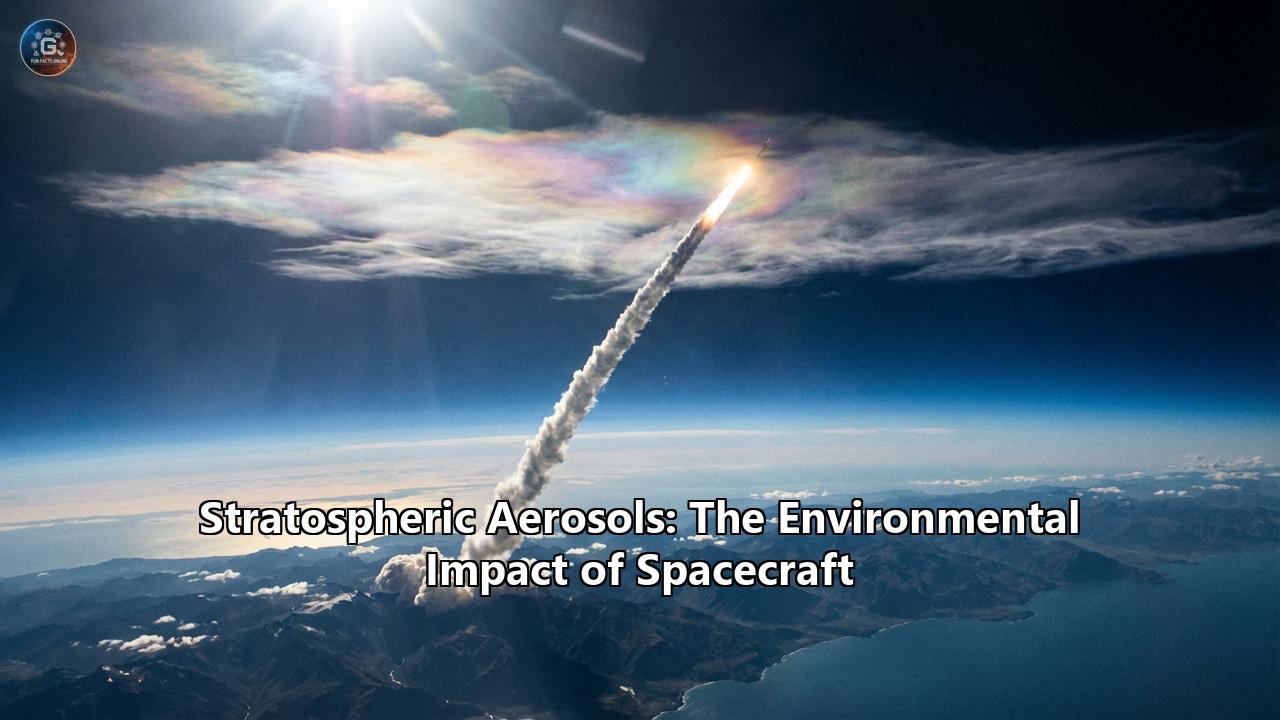
When we look up at the night sky today, the celestial tapestry is no longer purely the domain of stars, planets, and the occasional passing comet. Instead, the steady, rhythmic march of artificial satellites—often moving in bright, linear "trains" shortly after launch—has become a permanent fixture of the twilight hours. We are firmly entrenched in the era of the satellite megaconstellation. For the billions of people who will receive high-speed, low-latency internet access from the most remote corners of the globe, this is a triumph of modern engineering. Yet, hidden miles above the Earth’s surface, a silent and invisible environmental crisis is unfolding.
The life cycle of every spacecraft begins with a violent, fiery ascent and ends with an equally fiery descent. For decades, the environmental impact of spaceflight was considered negligible, a statistical rounding error compared to the immense greenhouse gas emissions of terrestrial aviation, agriculture, and heavy industry. But the math is changing rapidly. As the commercial space industry targets launch cadences of multiple rockets per week, and as tens of thousands of satellites are engineered to intentionally burn up in the atmosphere at the end of their short lifespans, we are injecting unprecedented volumes of black carbon, alumina, and vaporized exotic metals directly into the Earth's stratosphere.
The consequences of this continuous metallic rain—from ozone depletion to the alteration of global atmospheric circulation—are only just beginning to be understood. We are conducting a massive, uncontrolled chemistry experiment in the most fragile layer of our atmosphere.
The Stratosphere: Earth’s Fragile Vault
To understand why spacecraft emissions are so uniquely dangerous, one must first understand the architecture of the Earth's atmosphere.
We live in the troposphere, the dense, weather-rich layer that extends from the surface to about 10 kilometers (6 miles) high. In the troposphere, pollution is relatively short-lived. Rain, wind, and convection currents act as a planetary washing machine, scrubbing soot, smog, and aerosols from the air within days or weeks.
Above the troposphere lies the stratosphere, extending from roughly 10 to 50 kilometers (6 to 31 miles) above the surface. The stratosphere behaves entirely differently. It is characterized by a "temperature inversion"—the air gets warmer the higher you go, largely because the ozone layer absorbs ultraviolet radiation from the sun. Because warm air sits on top of cold air, the stratosphere is highly stratified (hence the name) and profoundly stable. There is no rain, no weather, and virtually no vertical mixing.
When pollutants are injected into the stratosphere, they do not wash away. They become trapped, lingering for years. In this pristine environment, even microscopic quantities of aerosols can exert an outsized influence on the global climate and atmospheric chemistry. It is within this delicate vault that rockets deliver their payloads, and it is here that the remnants of dead satellites come to rest.
Lighting the Candle: The Chemical Footprint of Rocket Launches
Rockets are the only anthropogenic (human-made) pollution source that injects combustion products directly into all layers of the atmosphere, from the troposphere through the stratosphere, mesosphere, and into the thermosphere. The chemical footprint of a rocket launch depends entirely on its propellant, but none are completely benign.
Black Carbon and KeroseneMany of today's workhorse orbital launch vehicles, such as SpaceX’s Falcon 9, rely on a highly refined form of kerosene known as RP-1, burned with liquid oxygen. The combustion of RP-1 produces vast quantities of black carbon, commonly known as soot.
While commercial aviation also produces soot, airplanes cruise at the very bottom of the stratosphere or the top of the troposphere. Rockets, by contrast, leave a continuous plume of black carbon vertically through the entire stratosphere. Particle for particle, black carbon injected by rockets in the upper atmosphere is nearly 500 times more efficient at warming the Earth than soot from surface or aviation sources. This is because stratospheric black carbon absorbs incoming solar radiation, heating the surrounding upper atmosphere while simultaneously cooling the Earth's surface—a process that creates an overall positive radiative forcing (climate warming). Studies have indicated that as launch rates increase, the warming effect from rocket soot could soon rival that of the entire global aviation industry.
Solid Rocket Motors and AluminaOther launch systems rely heavily on Solid Rocket Motors (SRMs). When solid propellants burn, they emit heavily destructive cocktails of chlorine gas and aluminum oxide (alumina) particles. Chlorine is a highly efficient ozone-depleting substance. In the stratosphere, a single chlorine atom can destroy up to 100,000 ozone molecules through a catalytic cycle before it is finally neutralized.
Compounding this damage, the alumina particles expelled by SRMs provide an ideal surface area for these chemical reactions to take place. Alumina acts as a catalyst, supercharging the chlorine-based chemistry that strips away the ozone layer. Furthermore, unlike highly reflective sulfur aerosols that cool the Earth, alumina particles emitted by rockets have been found to absorb upwelling longwave terrestrial radiation, resulting in a net positive radiative forcing, further warming the climate.
The Megaconstellation Paradigm Shift
Historically, humanity launched only a handful of satellites each year. These satellites were large, expensive, and designed to operate in high orbits for decades. Today, the paradigm has fundamentally shifted.
Companies like SpaceX (Starlink), Eutelsat (OneWeb), and Amazon (Project Kuiper) are building "megaconstellations" consisting of thousands to tens of thousands of satellites operating in Low Earth Orbit (LEO). To provide low-latency broadband internet, these satellites must orbit close to the Earth. Because LEO features a slight atmospheric drag, satellites here require constant station-keeping.
To prevent the dreaded "Kessler Syndrome"—a theoretical scenario where space debris continuously collides, creating an impassable cloud of shrapnel—regulations require that LEO satellites be safely disposed of at the end of their operational lives. For megaconstellation satellites, which are built cheaply and designed to last only about five years, "disposal" means intentionally deorbiting them so they burn up in the atmosphere.
With the number of LEO satellites projected to grow from around 5,500 in 2022 to potentially over 60,000 by 2040, we are facing an era where an obsolete satellite will plunge into the atmosphere every single day. This creates a massive, continuous influx of human-made material. Researchers calculate that the mass of artificial spacecraft reentering the atmosphere is rapidly approaching, and will soon exceed, the natural influx of cosmic dust and meteoroids that have bombarded Earth for billions of years.
Reentry Physics and the Metallic Rain
What happens when a 250-kilogram satellite hits the mesosphere (the layer above the stratosphere) at 27,000 kilometers per hour? It does not simply disappear.
The intense kinetic friction of reentry generates extreme heat, causing the spacecraft's metallic hull, solar panels, and internal electronics to melt and ablate. The satellite is entirely vaporized into superheated gases. As these gases cool in the upper atmosphere, they condense into metallic nanoparticles—primarily aluminum oxides, but also a complex alloyed mixture of other metals.
Because these particles are microscopic, they do not fall quickly. Gravity pulls them down at an agonizingly slow pace. It can take up to 30 years for the byproducts of a vaporized satellite to settle from the top of the mesosphere down into the stratospheric ozone layer.
For years, the atmospheric fate of these vaporized spacecraft was purely theoretical. But recent high-altitude scientific missions have provided startling empirical proof of this metallic rain. During the Stratospheric Aerosol processes, Budget and Radiative Effects (SABRE) mission in 2023, NOAA scientists flew a specialized ER-2 high-altitude research aircraft deep into the Arctic stratosphere. Utilizing a custom-built instrument called the Particle Analysis by Laser Mass Spectrometry (PALMS), they analyzed the chemical "fingerprint" of individual stratospheric aerosols.
The findings were unprecedented. The researchers discovered that 10% of the sulfuric acid particles in the stratosphere currently contain traces of metals originating exclusively from vaporized spacecraft. They detected over 20 distinct elements, including lithium, aluminum, copper, lead, beryllium, and zinc. Crucially, they found elements that do not occur naturally in meteoric dust, such as niobium and hafnium (refined metals used in superalloys for rocket engine nozzles), and silver (a marker for melted satellite electronics). The ratios of these metals perfectly matched the alloys used in aerospace engineering, definitively linking stratospheric pollution to the space industry for the first time.
By 2040, as megaconstellation deorbits peak, scientists estimate that up to 50% of all stratospheric aerosols will be contaminated with these spacecraft metals.
Furthermore, ground-based technologies are now detecting these distinct chemical signatures immediately following reentry events. In early 2026, atmospheric physicists operating a resonance fluorescence lidar in northern Germany detected a massive, invisible cloud of lithium atoms hovering in the mesosphere at an altitude of 96 kilometers. The spike in lithium—a metal rarely found in natural cosmic dust—was recorded just 20 hours after the uncontrolled reentry of a SpaceX Falcon 9 rocket stage over Europe. The rocket's aluminum-lithium alloy hull had dumped approximately 30 kilograms of vaporized lithium into the upper atmosphere, causing a localized atmospheric spike 10 times the natural background level.
Chemical Warfare: Ozone Depletion and Ice Nucleation
The introduction of vast quantities of aluminum, lithium, and copper into the stratosphere is a severe threat to the ozone layer, which protects all terrestrial life from deadly ultraviolet solar radiation.
A typical 250-kilogram megaconstellation satellite can generate around 30 kilograms of aluminum oxide nanoparticles during demise. If projections hold true, the routine replacement of satellite megaconstellations could inject upwards of 360 to 10,000 metric tons of aluminum oxides into the upper atmosphere every single year.
Aluminum oxide is a known catalyst for ozone destruction. When these nanoparticles settle into the stratosphere at an altitude of about 40 kilometers, they alter the local chemistry, strongly promoting the activation of chlorine. Once activated, chlorine shreds ozone molecules. Decades of painstaking global cooperation under the 1987 Montreal Protocol, which banned terrestrial chlorofluorocarbons (CFCs) to heal the ozone hole, could be significantly undermined by the unregulated injection of space-debris alumina.
Furthermore, the introduction of novel metallic elements affects the formation of Polar Stratospheric Clouds (PSCs). During the dark, freezing polar winters, trace amounts of water vapor and nitric acid freeze around aerosol particles to form PSCs. These clouds act as massive chemical processing plants; their icy surfaces accelerate the conversion of benign chlorine compounds into ozone-destroying radicals. Research indicates that metals from spacecraft act as highly efficient "ice nuclei," potentially increasing the frequency and density of PSCs, thereby supercharging ozone depletion over the Earth's poles.
Climate Forcing and Mesospheric Heating
Beyond ozone depletion, the continuous deposition of satellite debris promises to alter the fundamental thermal dynamics of the Earth's upper atmosphere.
A landmark 2025 study led by researchers at NOAA’s Chemical Sciences Laboratory modeled the impact of 10,000 metric tons of alumina continuously deposited by falling LEO satellites. The models revealed shocking potential climate anomalies. The accumulation of these metallic aerosols absorbs and scatters radiation, creating localized temperature variations. The study found that this specific volume of alumina could heat up sections of the mesosphere by as much as 1.5 degrees Celsius.
Even more alarmingly, the localized heating in the upper atmosphere is projected to alter the speed and circulation patterns of the polar vortex—the massive swirl of freezing air that dictates winter weather patterns across the Northern Hemisphere. We are effectively conducting unintentional geoengineering. In fact, some scientists have drawn direct parallels between satellite reentry pollution and "Stratospheric Aerosol Injection" (SAI), a controversial climate engineering proposal to artificially cool the Earth by spraying reflective particles into the sky. While SAI aims to reflect sunlight, spacecraft debris consists of different materials whose radiative, chemical, and thermal properties are highly unpredictable and currently uncontrolled.
The Regulatory Void and the Path Forward
Despite the mounting scientific evidence, the environmental impact of spaceflight on the Earth's upper atmosphere remains largely unregulated.
Current international space law, anchored by the 1967 Outer Space Treaty, mandates that countries are liable for direct, physical damage caused by their space objects (for instance, if a piece of satellite debris crashes into a house). However, the treaties were written in an era when space was entirely the domain of sovereign governments, and the idea of launching 60,000 commercial satellites was pure science fiction. There is currently no unified framework holding corporations liable for cumulative, invisible chemical damage to the stratosphere.
How do we govern the sky? Legal scholars and environmental policy experts are beginning to seek solutions outside traditional space law. A 2025 analysis published in Environment: Science and Policy for Sustainable Development argued persuasively that the Vienna Convention and the Montreal Protocol offer the ideal legal frameworks to govern stratospheric aerosols emitted by rockets and reentering satellites. Because the Montreal Protocol has a proven track record, a science-based precautionary approach, and a direct mandate to protect the ozone layer, it could be adapted—either through a protocol amendment or non-binding guidance—to regulate the commercial space industry's emissions.
To preserve access to space while protecting the Earth, the aerospace industry must pivot toward "Design for Demise" protocols that account for chemical, not just physical, outcomes. Currently, satellites are engineered to guarantee that their components physically melt to avoid injuring people on the ground. Moving forward, materials science must focus on utilizing alloys and composites that do not catalyze ozone depletion or cause significant radiative forcing upon vaporization.
Additionally, the propulsion sector must continue its shift away from solid rocket motors and heavily polluting kerosenes, toward cleaner alternatives like liquid methane or liquid hydrogen, which, while still emitting water vapor and some nitrogen oxides, eliminate the catastrophic black carbon and alumina footprints.
Conclusion
The space age has brought humanity immeasurable benefits. The new wave of satellite megaconstellations promises to bridge the digital divide, connect remote communities, and revolutionize global telecommunications. But this progress must not come at the expense of the very atmospheric shield that makes life on Earth possible.
For too long, we have treated the upper atmosphere as an infinite, empty void—a vast cosmic trash can capable of absorbing limitless amounts of exhaust and debris. The discovery of lithium clouds, the detection of niobium and hafnium in stratospheric aerosols, and the stark climate models predicting altered polar vortexes all point to a singular truth: the sky has a limit.
As we push further into the final frontier, we must recognize that space exploration does not begin in the vacuum of orbit. It begins and ends in our atmosphere. Ensuring the sustainability of space means ensuring the sustainability of the skies above our heads. If we fail to recognize the environmental impact of our spacecraft, we risk trading the protection of the ozone layer for the convenience of global broadband—a price far too steep for future generations to pay.
Reference:
- https://earthsky.org/space/too-many-satellites-earths-orbit-headed-for-catastrophe/
- https://www.ucl.ac.uk/social-historical-sciences/news/2024/oct/first-database-pollutant-and-co2-emissions-satellite-megaconstellations
- https://pmc.ncbi.nlm.nih.gov/articles/PMC9287058/
- https://csl.noaa.gov/news/2025/427_0428.html
- https://payloadspace.com/the-space-industrys-climate-impact-part-2/
- https://downloads.regulations.gov/FAA-2024-1395-0037/attachment_1.pdf
- https://www.silverlining.ngo/paper-cuts/004
- https://sciencepolicyreview.org/wp-content/uploads/securepdfs/2022/08/MITSPR-v3-191618003013.pdf
- https://www.anthropocenemagazine.org/2022/07/soot-from-rockets-500-times-climate-impact-soot-from-airplanes/
- https://www.ccacoalition.org/resources/radiative-forcing-caused-rocket-engine-emissions
- https://www.youtube.com/watch?v=vvcfVFCqMMY
- https://www.resilience.org/stories/2023-03-12/despoiling-the-final-frontier-satellite-mega-constellations-threaten-ozone-layer/
- https://archive.iaa.csic.es/seminars/laboratory-research-atmospheric-impact-spacecraft-re-entry-debris-perspectives-and-future
- https://www.rdworldonline.com/scientists-find-lithium-cloud-left-by-reentry-of-spacex-rocket/
- https://www.pnas.org/doi/10.1073/pnas.2313374120
- https://research.noaa.gov/noaa-scientists-link-exotic-metal-particles-in-the-upper-atmosphere-to-rockets-satellites/
- https://indico.esa.int/event/493/timetable/?view=standard_numbered