
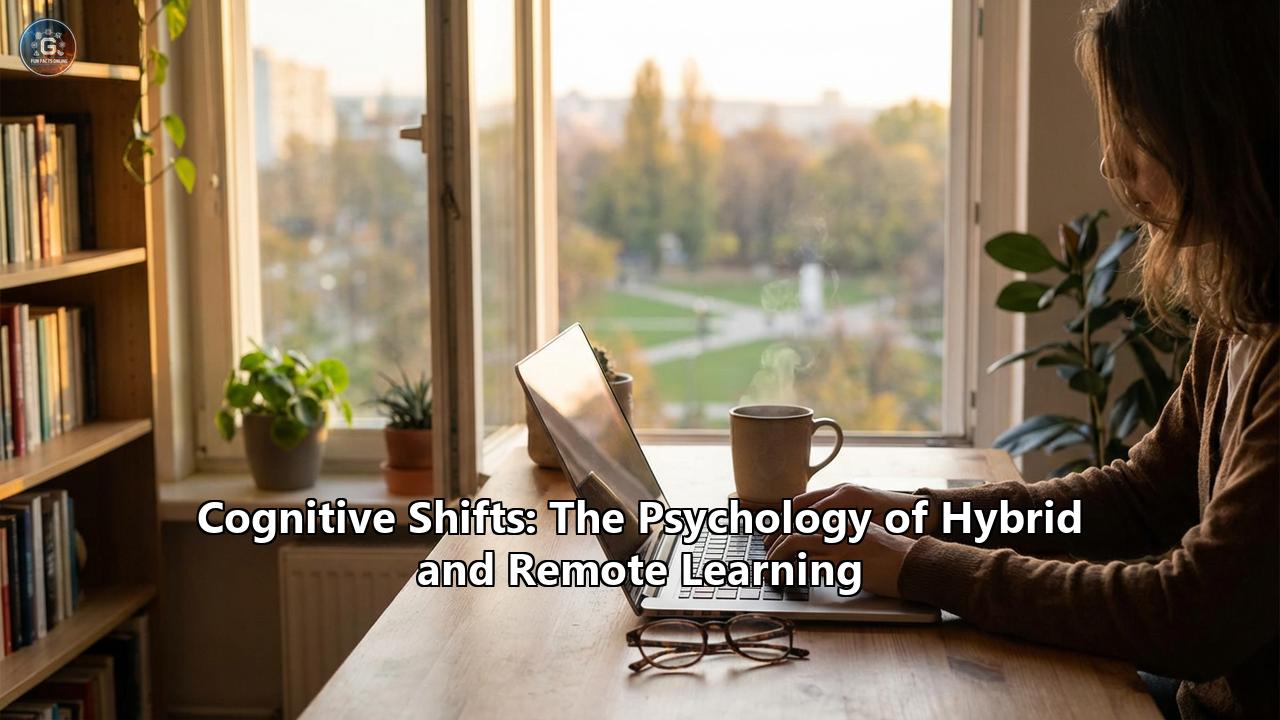
Introduction: The Silent Revolution of the Mind
The year 2020 did not merely change where we work; it fundamentally altered how we think. While the headlines focused on the logistical triumphs of the great remote migration—the Zoom stock prices, the empty office towers, the migration from cities to suburbs—a far more quiet, yet profound revolution was taking place inside our skulls. We are currently living through one of the most significant mass psychological experiments in human history. Millions of brains, evolved over millennia to navigate physical landscapes and decipher rich, analog social cues, were suddenly transplanted into a two-dimensional, hyper-connected digital ether.
This is not just a story about productivity metrics or employee engagement scores. It is a story about neuroplasticity—the brain's remarkable ability to rewire itself in response to its environment. When the environment shifts from a bustling, sensory-rich office or classroom to a silent room lit only by the blue glow of a screen, the brain adapts. Neural pathways associated with deep focus, social decoding, and memory retention are being pruned and repaved. We are trading the "deep reading" brain for the "skimming" brain; we are offloading our memory to the cloud; and we are navigating a social world where eye contact is simulated by staring at a camera lens.
As we settle into the era of hybrid work and learning, we must ask: What has this done to our cognitive architecture? Are we becoming more efficient processors of information but less capable of deep, synthesized thought? This article delves into the "Cognitive Shifts"—the subtle but seismic changes in our attention, memory, creativity, and social intelligence—and offers a roadmap for reclaiming the human mind in a digital age.
Part I: The Neurobiology of the Digital Workspace
To understand the psychology of remote learning and work, we must first look at the hardware: the human brain. Our cognitive machinery was not designed for the sustained digital intensity we now demand of it. Three primary mechanisms are under siege in the hybrid model: Cognitive Load, Context Switching, and the Mirror Neuron System.
1. The Burden of the Invisible: Cognitive Load Theory
In the 1980s, educational psychologist John Sweller developed Cognitive Load Theory (CLT), which posits that our working memory is a finite resource. Think of it as a bucket that can only hold a certain amount of water. In a traditional physical environment, much of the information we process is intuitive. We read body language effortlessly; we navigate physical space without thinking.
In the digital realm, however, the "extraneous cognitive load"—the mental effort required just to access and process information—spikes dramatically.
- The Interface Tax: Every glitch, every "Can you hear me?", every struggle to find the "share screen" button adds a micro-tax on our working memory.
- The Split-Attention Effect: In a physical meeting, you look at the speaker. In a Zoom meeting, you are often looking at the speaker, the chat window, your email notifications in the corner, and—most taxingly—your own face.
- Continuous Partial Attention: We rarely do one thing anymore. We are in a meeting, but we are also Slack-ing a colleague and editing a document. This state of constant, low-level multitasking prevents the brain from entering "flow states," the deep neurological grooves where complex problem-solving happens.
The result is a brain that is chronically "full." When working memory is maxed out by extraneous load (navigating the tool), there is little room left for "germane load"—the energy required to actually learn, understand, and store new schemas in long-term memory. This explains the "Zoom Zombie" phenomenon: you spend eight hours in meetings but end the day feeling like you accomplished—and remember—nothing.
2. The High Cost of Context Switching
A study by the University of California, Irvine, famously found that it takes an average of 23 minutes and 15 seconds to get back on track after an interruption. In a remote setting, interruptions are not just frequent; they are architectural. We do not just switch tasks; we switch contexts.
You might pivot from a deep spreadsheet analysis (analytical brain) to a Slack empathy check-in with a distressed report (emotional brain) to a chaotic All-Hands meeting (social brain) within the span of ten minutes. This rapid toggling creates what computer scientists call "thrashing"—where a system spends more energy swapping data in and out of memory than actually processing it.
In the hybrid world, this is exacerbated. The "switching cost" now includes physical context. On Tuesday, you are in the office, relying on physical cues and spatial memory. On Wednesday, you are at home, relying on digital tools. The brain must constantly re-calibrate its "default mode network," leading to a unique form of exhaustion that is less about physical tiredness and more about metabolic depletion in the prefrontal cortex.
3. The Mirror Effect and "Zoom Fatigue"
Perhaps the most fascinating cognitive shift relates to how we perceive ourselves and others. Stanford researchers have identified the "mirror effect" as a primary driver of digital fatigue. In the real world, you do not see your own face when you speak. In a video call, you are constantly confronted with your own reflection.
This triggers a hyper-active "self-monitoring" mechanism. You are subconsciously critiquing your lighting, your expression, your posture. It is the cognitive equivalent of someone following you around with a mirror all day. It drains the brain's resources that should be focused on the conversation.
Furthermore, our brains are starved of synchrony. In face-to-face interaction, we rely on millisecond-level micro-expressions and breath patterns to synchronize with others. Video transmission introduces a tiny, often imperceptible latency (lag). Our subconscious brain detects this delay and interprets it as a lack of rapport or authenticity. We have to work ten times harder to "read" a person through a screen than we do across a table. We are literally pouring cognitive energy into a void, trying to bridge a gap that technology has not yet closed.
Part II: The Death of Deep Work?
As the medium changes, so does the message—and the mind that processes it. The shift to digital-first learning and working has fundamentally altered our relationship with information itself.
The Skimming Brain vs. The Deep Reading Brain
Maryanne Wolf, a cognitive neuroscientist at UCLA, argues that we are moving from a "literate brain" to a "digital brain." The literate brain, cultivated over centuries of reading books, is linear, focused, and capable of "deep reading"—a state where we internalize, critique, and empathize with complex arguments.
The digital brain is non-linear. It scans. It spots keywords. It scrolls. This is an adaptive response to information overload. If you tried to "deep read" your entire Twitter feed or email inbox, you would be paralyzed. So, the brain adapts by becoming a hunter-gatherer of snippets.
The danger, Wolf warns, is that "you don't know what you don't read." When we skim, we lose the ability to understand complexity, nuance, and the "truth value" of information. We become susceptible to fake news not just because of algorithms, but because our brains have lost the patience to verify sources or follow long logical chains. In remote education, this manifests in students who can find the answer on Google in seconds but cannot write a coherent essay explaining why it is the answer.
Cognitive Offloading: The Google Effect
Why memorize a fact when it is always a thumb-tap away? This phenomenon is known as Cognitive Offloading. We are increasingly treating the internet as an external hard drive for our brains.
While this frees up processing power for other tasks, it comes with a hidden cost: the atrophy of semantic memory. Research suggests that when we know information is saved externally, we are less likely to encode it into our own neural networks. We remember where to find the information, but not the information itself.
In a hybrid work context, this creates a dependency on digital tools. If the Notion page goes down, does the team still know the strategy? If the WiFi cuts out, does the student still possess the knowledge? We are building a "just-in-time" cognitive architecture that is efficient but fragile. True expertise requires internal knowledge structures (schemas) that allow for intuition and creativity. You cannot have a "lightbulb moment" about two concepts connecting if those concepts are stored in the cloud, not in your neurons.
Part III: The Hybrid Paradox—Productivity vs. Innovation
One of the most contentious debates in the post-pandemic world is the trade-off between individual productivity and collective innovation. The data reveals a fascinating paradox.
The Short-Term Productivity Spike
Early in the pandemic, organizations were shocked to see productivity metrics rise. Without the commute, the water cooler chat, and the long lunches, people worked more. They processed more tickets, wrote more code, and sent more emails.
From a cognitive perspective, this makes sense. Remote work allows for a controlled environment. You can (theoretically) eliminate the "extraneous load" of the open-plan office—the noise, the visual distractions. For "convergent" tasks—tasks with a clear goal and a single answer (e.g., filing a report)—remote work is often superior.
The Long-Term Innovation Debt
However, a landmark study of over 60,000 Microsoft employees published in Nature Human Behavior revealed the dark side. While short-term output remained high, cross-group collaboration plummeted by 25%. The networks within the company became more "siloed." People talked more to their immediate teams and less to people in other departments.
This is catastrophic for innovation. Innovation is rarely the result of a lone genius; it is the result of "weak ties"—the casual acquaintance from accounting you bump into while getting coffee, who gives you a fresh perspective on a marketing problem.
Cognitive science tells us that creativity is associative. It thrives on random, chaotic inputs. The remote environment is "curated." We only schedule meetings with people we need to talk to. We remove the serendipity. The result is a cognitive tunnel vision. We become very efficient at doing what we already know how to do, but we lose the ability to imagine what we should be doing next.
Part IV: Individual Differences—Who Thrives and Who Dives?
The impact of these cognitive shifts is not uniform. It passes through the filter of personality. The "Big Five" personality traits offer a predictive lens for understanding why some people love remote work while others spiral into depression and dysfunction.
The Conscientiousness Advantage
Conscientiousness—the trait associated with self-discipline, organization, and goal-directed behavior—is the single strongest predictor of remote work success. In the office, external structures (the boss walking by, the clock on the wall) act as "prosthetic" executive functions for those with lower conscientiousness. At home, those prosthetics are removed.Individuals with high conscientiousness naturally create their own structure. They time-block; they have a dedicated workspace. Those with low conscientiousness (or high impulsivity) find themselves at the mercy of their environment—the laundry that needs doing, the Netflix tab that is open. The "cognitive load" of self-regulation becomes too high, leading to procrastination and burnout.
The Introvert/Extrovert Inversion?
The early narrative was that introverts would thrive in the quiet of home, while extroverts would wither. The reality is more nuanced.
- Introverts often do report lower fatigue from lack of social stimulation. However, they are also more prone to "social inertia." Without the forced interaction of the office, they may retreat entirely, leading to isolation and the "echo chamber" effect in their own minds.
- Extroverts initially struggled, but many adapted by becoming "digital socialites"—scheduling back-to-back Zooms. However, they face a specific cognitive dissonance: the "empty calorie" interaction. They get the quantity of social interaction via Zoom, but not the quality (the oxytocin hit of physical presence), leaving them chronically unsatisfied, like eating junk food when you are starving for a nutritious meal.
Neurodiversity in the Hybrid World
For neurodivergent individuals (ADHD, Autism Spectrum), remote work has been a double-edged sword.
- For ADHD: The lack of "body doubling" (working alongside others) can be disastrous for motivation. However, the ability to control sensory input (lighting, noise) is a godsend.
- For Autism: The reduction in ambiguous social chit-chat and the ability to communicate via text (which allows for processing time) has been a massive cognitive relief. The hybrid model, if flexible, offers the first workplace in history that can truly accommodate diverse neural processing styles.
Part V: The Educational Frontier—A Generation in Flux
The cognitive shifts in the workplace are mirrored, and often amplified, in the classroom. For students, whose brains are still actively developing (myelinating), the impact of remote learning is structural.
The "Attention Economy" in the Classroom
University case studies, such as those from the University of California and Brazilian institutions, show a consistent trend: engagement is redefined. In a lecture hall, "attention" is performative—you look at the professor. In a Zoom class, attention is a war against the entire internet.
Research shows that students in online classes switch tabs an average of every 5 minutes. This is not just distraction; it is a rewiring of the dopamine reward system. The lecture (low dopamine) is competing with TikTok (high dopamine). The brain, seeking efficiency, chooses the high-dopamine path.
The result is a degradation of sustained attention span. We are seeing a generation that struggles to watch a 20-minute video without 2x speed or scrolling comments. This impacts the ability to grapple with complex, slow-unfolding concepts in philosophy, physics, or literature.
The "Lost Generation" of Social Skills?
Perhaps more concerning than the academic slide is the social-emotional one. Schools are not just fact-factories; they are social laboratories. It is where we learn to read a room, to negotiate status, to resolve conflict, to flirt, to apologize.
Remote learning robbed a cohort of students of these "micro-interactions." We are seeing reports of "arrested social development" in university freshmen who display the social maturity of middle schoolers. They are terrified of phone calls, struggle with eye contact, and lack conflict resolution skills because they could always just "mute" or "block" discomfort in the digital world.
The Promise (and Peril) of VR and AI
Technology offers a potential antidote. Virtual Reality (VR) is showing incredible promise in restoring "experiential learning." A study with students in El Salvador showed a 35% increase in retention using VR compared to traditional methods. Why? Because VR engages the episodic memory (memory of experience) rather than just semantic memory (memory of facts). You don't just read about the Roman Colosseum; you stand in it. This utilizes the brain's spatial navigation systems, which are evolutionarily ancient and robust.
AI Tutors offer another shift: personalized cognitive load management. An AI can detect when a student is struggling (measuring response time or error rates) and adjust the difficulty in real-time, keeping the student in the "Zone of Proximal Development." This prevents the cognitive overload that leads to checking out.However, the risk is dependency. If an AI summarizes every article for you, do you lose the ability to synthesize? If VR visualizes every concept, do you lose the ability to visualize internally (imagination)? We must use these tools as scaffolds, not crutches.
Part VI: Re-Wiring for Resilience—Strategies for the Hybrid Mind
We cannot put the genie back in the bottle. The digital/hybrid world is here. We must stop fighting our biology and start designing our workflows to support it. Here are evidence-based strategies for individuals and organizations to "re-wire" for resilience.
1. For the Individual: Cognitive Hygiene Protocols
- The "Context Preservation" Rule:
To combat the cost of context switching, create "modalities." Have a specific physical location or even a specific hat/playlist for "Deep Work" vs. "admin work." This provides a sensory cue to the brain to load the correct neural schema.
Strategy: Do not check email in the same chair you use for creative writing.
- Attention Restoration Rituals:
Use Attention Restoration Theory (ART). The brain's directed attention is a battery that drains. Nature is the charger.
Strategy: The "20-20-20" rule is insufficient. You need "soft fascination." Take a 15-minute walk without a phone. Look at trees (fractal patterns reduce cortisol). Do not listen to a podcast. Let the Default Mode Network engage.
- Reclaiming Deep Reading:
You must retrain the linear brain like a muscle.
Strategy: Commit to 30 minutes of physical book reading a day. No phone in the room. Use a pen to annotate. The physical act of writing connects motor neurons to memory centers, deepening encoding.
- The "Anti-Mirror" Protocol:
Strategy: Turn off "self-view" on Zoom immediately. You will instantly feel your cognitive load drop. You are not an actor on a stage; you are a participant in a conversation.
2. For the Organization: Designing Psychological Safety
- Asynchronous by Default:
Stop demanding immediate responses. Immediate response culture forces everyone into a reactive, shallow-work state.
Strategy: Move status updates to written docs (Notion/Google Docs). Use meetings only for "Divergent Thinking" (brainstorming, decision making) and emotional bonding. This respects the difference between "focus time" and "collaboration time."
- Intentional "collision" Engineering:
Since serendipity is dead, you must manufacture it.
Strategy: Donut pairings on Slack (random 15-min chats). But more importantly, structure hybrid days so that everyone is in the office on the same days (e.g., Tues/Thurs). An empty office is the worst of both worlds (commute cost + isolation cost).
- Re-Skilling Social Cues:
Acknowledge that we are "socially rusty."
Strategy:* Leaders must model vulnerability and "explicit empathy." In a digital world, you cannot rely on a furrowed brow to signal confusion. You must ask: "I am sensing some hesitation, am I right?" We must verbalize what used to be non-verbal.
Conclusion: The Future of Human Cognition
We are at a crossroads. One path leads to a "Cognitive feudalism"—where a small elite who have mastered their attention and leverage AI do all the deep thinking, while the masses are relegated to being "human routers," simply moving data from one app to another, distracted and skimming the surface of life.
The other path is one of Cognitive Evolution. We can use the hybrid model to build a "Balanced Brain." We can use remote work to reclaim our time for deep, uninterrupted thought (which was famously impossible in the open-plan office). We can use in-person time to prioritize true human connection, unburdened by the need to just "sit in a seat" for 8 hours.
The shift is not just about where we work; it is about respecting the biological limits and potential of the human mind. The most successful learners and workers of the next decade will not be the ones who are the most "tech-savvy." They will be the ones who are the most "mind-aware"—the ones who understand their own cognitive load, who fiercely protect their deep attention, and who know that in a world of artificial intelligence, authentic human connection is the ultimate competitive advantage.
The revolution has already happened inside your head. The question is: who is in charge of the rewiring—the algorithm, or you?
Reference:
- https://lifeat.io/blog/the-hidden-cost-of-context-switching-reclaiming-your-focus-in-a-distracted-world
- https://gitikasharma.com/cognitive-cost-context-switching-multitasking/
- https://insight.rwabusiness.com/blog/posts/2021/june/re-learning-social-skills-in-the-post-pandemic-era/
- https://saima.ai/blog/cognitive-load-theory
- https://robinweser.com/blog/the-hidden-cost-of-context-switching
- https://reconfigured.io/blog/hidden-tax-of-context-switching-your-brain-pays-for-multitasking
- https://insideclassicaled.com/treating-your-brain-well-in-a-digital-age/
- https://kappanonline.org/reading-digital-age-washington-view-ferguson/
- https://www.cpduk.co.uk/news/the-role-of-social-learning-in-remote-and-hybrid-work-environments
- https://jenf3rr.medium.com/from-chaos-to-calm-applying-attention-restoration-theory-to-your-digital-workspace-aedc35e5ad1d
- https://bonlinelearning.com/applying-cognitive-load-theory-in-elearning/
- https://www.burnedouttechie.com/articles/reducing-distractions-remote-work-focus-habits/
- https://sbanimation.com/how-immersive-vr-enhances-learning-and-memory-retention/
- https://ace-ed.org/study-finds-virtual-reality-improves-students-knowledge-retention-and-motivation/
- http://arno.uvt.nl/show.cgi?fid=179629
- https://www.bcm.edu/news/knock-the-rust-off-your-social-skills-after-pandemic-setbacks
- https://www.inc.com/debra-roberts/interpreting-social-cues-in-a-hybrid-world.html
- https://asiaeducationdigest.com/success-toolkit/emotional-intelligence/emotional-intelligence-in-remote-and-hybrid-work-environments