
Part I: The Shattered Illusion of the White Continent
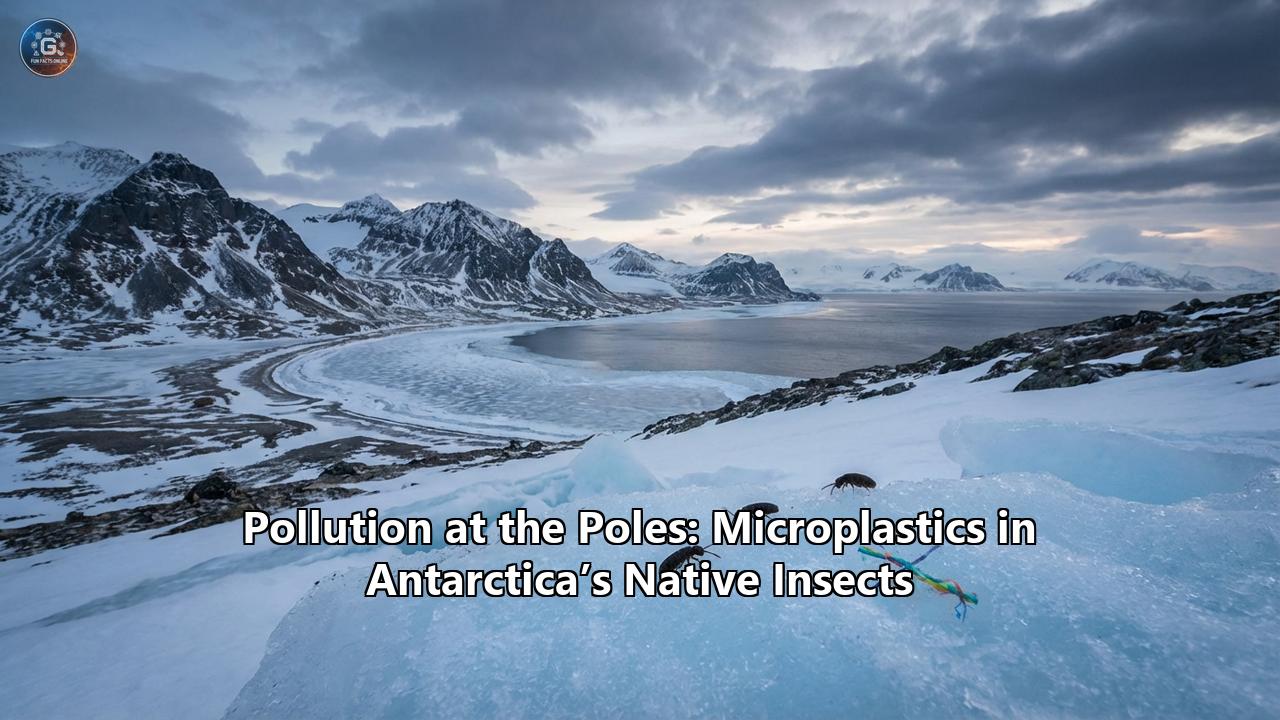
Antarctica has long held a unique place in the human imagination. It is the Terra Australis Incognita, the Unknown Southern Land, a place defined by what it lacks: no indigenous human population, no cities, no war, and—for a long time, we believed—no pollution. It is the world’s last great wilderness, a continent of blinding white ice, towering blue glaciers, and a silence so profound it can be felt in the marrow of one’s bones. In this frozen sanctuary, the air was thought to be the purest on Earth, a baseline against which all other pollution was measured.
For decades, scientists have flocked to this frozen laboratory not just to study the ice, but to study the past. The ice cores drilled from the Antarctic plateau are time machines, trapping bubbles of ancient atmosphere that tell us the story of Earth’s climate over hundreds of thousands of years. We looked to Antarctica as a pristine control group, a place apart from the messy, industrial churn of the rest of the planet.
But that illusion has been shattered. The pristine white has been stained, not by oil spills or black soot, but by something far more insidious and pervasive: the invisible dust of our modern civilization. Plastic.
It is not the plastic of floating bottles and tangled fishing nets that is the primary ghost haunting the Antarctic soil, though those certainly exist on its coastlines. It is the plastic that has vanished from sight, broken down by wind, waves, and ultraviolet light into microscopic fragments smaller than a grain of rice, smaller than a speck of dust. These are microplastics, and they have conquered the globe. They have been found in the deepest trenches of the Mariana, on the highest peaks of Everest, in human blood, and in the placentas of unborn infants.
And now, they have been found in the bellies of the only true masters of the Antarctic continent: its native insects.
This discovery is not merely a footnote in the catalogue of environmental disasters. It is a profound violation of biological boundaries. The terrestrial animals of Antarctica—tiny, flightless, ancient survivors—have lived in isolation for millions of years, evolving physiological miracles to survive the deepest freeze on Earth. That they are now consuming the synthetic refuse of a civilization thousands of miles away is a grim testament to the reach of the Anthropocene.
This article delves into the heart of this invisible crisis. We will explore the biology of these tiny titans, the groundbreaking research that exposed their contamination, the atmospheric and oceanic highways that transport this pollution, and the terrifying implications for an ecosystem that hangs by a thread. This is the story of how the plastic age finally claimed the last wilderness.
Part II: The Tiny Titans of the South
To understand the magnitude of this pollution, one must first understand the victims. When we think of Antarctic animals, we think of emperor penguins huddling against the gale, or Weddell seals singing beneath the sea ice. But these are marine animals; they feed in the ocean and only rest on the ice. The true terrestrial residents of Antarctica—the ones who live, feed, breed, and die on the infinitesimal patches of ice-free rock and soil—are much, much smaller.
The ecosystem of terrestrial Antarctica is one of the simplest on the planet. There are no trees, no shrubs, no land mammals, no reptiles, no amphibians. In the few areas where the snow melts in summer—mostly along the Antarctic Peninsula and the scattered archipelagos—the landscape is dominated by mosses, lichens, algae, and two groups of tiny arthropods: springtails (Collembola) and midges (Diptera).
*The Springtail: Cryptopygus antarcticus---
Cryptopygus antarcticus, the Antarctic Springtail, is a creature of humble appearance but heroic constitution. Measuring only 1 to 2 millimeters in length, it looks to the naked eye like a speck of black dust. But under a microscope, it reveals itself as a dark, segmented hexapod with short antennae and the characteristic "furcula" or jumping fork folded beneath its abdomen—a spring-loaded lever that allows it to launch itself into the air to escape danger.These creatures are the decomposers of the Antarctic. In a land where decomposition is agonizingly slow due to the cold, springtails are the engine of the soil. They graze on algae, fungi, and lichens, breaking down organic matter and releasing nutrients back into the primitive soil, allowing the mosses to grow. Without them, the terrestrial cycle of life in Antarctica would grind to a halt.
They are incredibly abundant. In a single square meter of moss, you might find tens of thousands of them. They huddle together in massive aggregations to conserve moisture, utilizing potent antifreeze compounds in their blood (hemolymph) to survive temperatures that would turn most other animals into ice crystals.
*The Midge: Belgica antarctica---
If the springtail is the worker of the soil, the Antarctic midge, Belgica antarctica, is the king. It holds the title of the largest purely terrestrial animal in Antarctica. It is a giant among dwarfs, reaching a staggering length of 2 to 6 millimeters.
Belgica antarctica is an evolutionary marvel. It is a fly that has lost its wings. In the howling winds of the Antarctic Peninsula, flight is a liability; a flying insect would simply be blown out to sea to die. So, over millions of years, Belgica grounded itself. It spends the vast majority of its two-year life cycle as a larva, a worm-like creature burrowing through the moss and penguin guano, eating detritus and algae.Its survival mechanisms are nothing short of science fiction. The larvae can survive the freezing of their body fluids. They can lose up to 70% of their body water and survive. They can go without oxygen for weeks. They are the toughest insect on Earth, forged in the crucible of the cryosphere.
For millions of years, the only threats these creatures faced were the cold, desiccation, and perhaps a predatory mite or two. They never evolved a defense against plastic. They never evolved the instinct to distinguish a fragment of polystyrene foam from a patch of lichen, or a fiber of polyester from a strand of moss.
Part III: The Smoking Gun — The Springtail Discovery
The realization that plastic had entered this isolated food web did not happen overnight. It was the result of meticulous detective work, driven by a growing unease among polar researchers who were seeing more and more human debris on the shores of the Southern Ocean.
In 2020, a landmark study published in Biology Letters sent shockwaves through the Antarctic research community. The study, led by Dr. Elisa Bergami from the University of Siena, Italy, along with colleagues Tancredi Caruso and Emilia Rota, provided the first field-based evidence that microplastics were entering the Antarctic terrestrial food web.
The Polystyrene Foam IncidentThe discovery began on the shores of King George Island, in the South Shetland Islands, just off the tip of the Antarctic Peninsula. This area is the "busy" part of Antarctica, home to numerous research stations from different nations.
The researchers found a large piece of polystyrene foam (styrofoam) stranded on the shore of the Fildes Peninsula. This foam, likely debris from a fishing vessel or a research station’s insulation, had been lying there long enough to become part of the landscape. It was covered in a green film of microalgae, moss, and lichens.
To a hungry springtail, this overgrown trash looked like a buffet.
The researchers collected the springtails (Cryptopygus antarcticus) that were crawling on the foam. They didn't just want to know if the animals were on the plastic; they wanted to know if the plastic was in the animals.
The µ-FTIR BreakthroughDetecting microplastics in an animal as small as a springtail is incredibly difficult. You cannot simply dissect them with a scalpel and look with a magnifying glass. The plastic fragments are microscopic, often indistinguishable from organic matter to the naked eye.
The team used a sophisticated technique called Fourier Transform Infrared Microspectroscopy (µ-FTIR). This technology uses infrared light to create a chemical "fingerprint" of a material. Every type of plastic—polystyrene, polyethylene, PVC—absorbs infrared light in a unique way.
By analyzing the springtails, the researchers found the smoking gun: spectral signatures of polystyrene inside the guts of the animals.
The springtails were not just walking on the foam; they were grazing on the algae that grew on it. As they scraped the algae off the rough surface of the styrofoam, they were scraping off tiny invisible bits of plastic as well. The researchers found fragments smaller than 100 micrometers—less than the width of a human hair—packed into the digestive tracts of these tiny decomposers.
This was a watershed moment. It proved that plastic was no longer just a passive pollutant littering the beach. It had crossed the biological barrier. It had been eaten. The line between the "natural" environment and the "synthetic" pollutant had been erased in one of the most remote ecosystems on Earth.
Part IV: The Escalation — The Midge Study (2025/2026)
If the springtail discovery was the opening salvo, the research that followed in 2025 and 2026 was the heavy artillery. The scientific community realized that if springtails grazing on a specific piece of trash were contaminated, what about the rest of the soil animals? What about the animals living in the "wild," far away from obvious visible trash?
Enter the team from the University of Kentucky, led by Ph.D. student Jack Devlin and entomologist Nicholas Teets, collaborating with Italian experts including Elisa Bergami. Their target was the Antarctic midge, Belgica antarctica.
Their study, published in Science of The Total Environment, escalated the crisis from a localized incident to a systemic threat.
Background ContaminationUnlike the springtail study, which focused on animals found directly on a piece of plastic debris, Devlin’s team looked for microplastics in midges collected from the "wild"—from soil and moss banks that looked pristine.
They collected larvae from various sites along the Antarctic Peninsula. The process was fraught with difficulty. In the world of microplastic research, contamination is the enemy. A single fiber from a researcher's bright red fleece jacket, or a speck of dust from the air inside the lab, can ruin a sample. The team had to work with extreme rigor, using cotton clothing, glass tools, and air-filtered environments to ensure that any plastic they found came from the midge, not the scientist.
The results were sobering. They found microplastics in the wild-caught larvae. The numbers were low—about two fragments found in a sample of 40 larvae—but the significance was high. These animals were not eating off a piece of styrofoam. They were eating natural moss and soil. This meant the microplastics were in the soil, ubiquitous enough that a blind, burrowing larva would accidentally ingest them.
The Hidden Cost: The Fat Reserve CrisisFinding the plastic was one thing; understanding what it did to the insect was another. The team brought live midges back to the laboratory and conducted controlled exposure experiments. They fed the larvae food spiked with varying concentrations of polystyrene microbeads and fibers.
The good news, initially, was that the plastic didn't kill them immediately. Belgica antarctica is, after all, a survivor. It didn't choke, and it didn't die of toxic shock. The larvae continued to grow and seemingly function.
But when the researchers looked closer, analyzing the physiological state of the larvae, they found a disturbing trend. The larvae exposed to high levels of nanoplastics and microplastics showed significantly reduced lipid reserves.
In the context of Antarctica, fat is life.
The life cycle of the midge is a race against time. They spend two years as larvae, accumulating energy reserves to fuel their metamorphosis into adults. The adults do not have mouthparts; they cannot eat. They live for only 7 to 10 days, burning through their stored larval fat to mate and lay eggs before they die.
Furthermore, the larvae need those fat stores to survive the brutal Antarctic winters. Fat provides the metabolic fuel to keep their systems running during the long, frozen hibernation. It is also the raw material for the cryoprotectants (sugar alcohols) that keep their cells from bursting when they freeze.
A midge with reduced fat is a midge with a lower chance of surviving the winter, and a lower chance of successfully reproducing if it does. The plastic wasn't killing them quickly; it was starving them slowly, sapping the energy budget they needed to survive the harshest climate on Earth.
Devlin’s team hypothesized that the physical presence of the plastic in the gut might be triggering an immune response, costing energy, or simply displacing real food, reducing the efficiency of their digestion. In an environment where every calorie counts, this "energy tax" imposed by plastic could be the difference between extinction and survival for a population.
Part V: The Invisible Highway — How Plastic Gets There
How does a microscopic bead of polystyrene end up in a patch of moss on a rock in Antarctica, thousands of miles from the nearest city? The answer lies in the global interconnectedness of our planet’s fluid dynamics. Antarctica is surrounded by the Southern Ocean and the Polar Vortex, systems that were once thought to isolate the continent. We now know they act as conveyors.
1. The Atmospheric River of PlasticPerhaps the most startling revelation of recent years is that it is raining plastic in Antarctica.
Research published by Aves et al. (2022) in The Cryosphere analyzed fresh snow samples from the Ross Ice Shelf. They found microplastics in every single sample. The average concentration was 29 particles per liter of melted snow.
Atmospheric modelling suggests that microplastic fibers—which are light and aerodynamic—can travel thousands of kilometers in the upper atmosphere. They are lifted by winds from South America, Australia, or even from the open ocean where bubbles burst and eject plastic particles into the air. These fibers ride the jet streams, traveling through the "plastic cycle" much like the water cycle, before settling out as dust or falling with snow onto the Antarctic ice sheet.
Shape matters here. The study by Chen et al. (2023) on long-range transport found that fibers travel much more efficiently than spherical fragments. Their irregular shape increases drag, allowing them to stay suspended in the air longer, drifting like tiny paragliders until they reach the poles.
2. The Oceanic ConveyorThe Southern Ocean is a violent, churning moat protecting Antarctica. But the Antarctic Circumpolar Current is not an impermeable wall. Eddies and deep-water currents transport water masses southward.
Microplastics floating in the oceans (the "plastic smog") are colonized by algae and bacteria (biofouling), which makes them heavier. They sink. Deep ocean currents can then transport these particles southward. Upwelling currents near the Antarctic continent bring nutrient-rich water to the surface—and with it, likely, the plastic load.
3. The Local Footprint: The "Tourist and Science" FactorWe cannot blame it all on distant continents. A significant portion of the plastic found in the Antarctic terrestrial environment comes from us—the visitors.
There are over 70 permanent research stations in Antarctica. In the summer, thousands of scientists and support staff live there. Add to that the growing cruise ship industry, which brings tens of thousands of tourists to the Antarctic Peninsula every year.
Every time a fleece jacket is worn, it sheds thousands of microfibers. Every time a plastic crate is dragged over rocks, it scrapes off micro-fragments. Every time a styrofoam insulation board on a base weathers in the wind, it releases dust.
The study by Bergami et al. linked the springtail contamination directly to a piece of stranded foam. This is "macro-plastic" breaking down into "micro-plastic" in situ. The harsh Antarctic environment—high UV radiation due to the ozone hole, freeze-thaw cycles, and abrasive winds—accelerates the fragmentation of plastic debris. A single lost styrofoam cup can fragment into millions of microplastics in a matter of seasons, creating a localized "hotspot" of pollution that persists for centuries.
Part VI: The "Plastisphere" — A New Microbial Ecosystem
The plastic invading Antarctica is not biologically inert. It carries its own ecosystem. This is known as the Plastisphere.
When a piece of plastic enters the water or soil, it is immediately coated by organic molecules and then colonized by bacteria and fungi. In Antarctica, where life clings to every available surface, plastics offer a durable, long-lasting home.
Research on the Antarctic plastisphere has shown that the microbial communities living on plastic are distinct from those in the surrounding water or soil. They are often dominated by specific groups of bacteria like Proteobacteria, Bacteroidetes, and Cyanobacteria.
Why does this matter?
- The Trojan Horse Effect: Plastics can act as rafts for invasive species. A pathogenic bacterium or a fungal spore that might not survive drifting free in the ocean could survive in the biofilm on a piece of plastic, hitching a ride from South America to Antarctica. This could introduce diseases to Antarctic wildlife that have no immune defense against them.
- Altered Geochemistry: The biofilm on plastics changes the chemical environment. Some bacteria found on Antarctic plastics are known hydrocarbon degraders. While this sounds good (they eat pollution), it also changes the carbon and nitrogen cycling in the immediate vicinity.
- The Lure: The biofilm smells like food. Antarctic krill and other grazers are chemically attracted to the smell of dimethyl sulfide (DMS), a compound released by algae. Algae growing on plastic release DMS. This "olfactory trap" tricks animals into eating the plastic, thinking it is food.
Part VII: The Ripple Effect — Ecological Consequences
The contamination of the Antarctic midge and springtail is the "canary in the coal mine" for the wider ecosystem.
The Soil Food WebAntarctic soil ecosystems are fragile. They lack the redundancy of temperate ecosystems. If a key species like Belgica antarctica or Cryptopygus antarcticus suffers a population crash due to the energy costs of processing plastic, the entire soil system suffers. Nutrient cycling slows down. The growth of mosses and lichens is affected.
Furthermore, these insects are prey. In the Antarctic Peninsula, there are predatory mites (Gamasellus racovitzai) that feed on springtails. If the springtails are full of plastic, the mites are eating plastic too. This is biomagnification. The plastic moves up the food chain, potentially accumulating in higher concentrations in the predators.
The Marine ConnectionWhile this article focuses on the terrestrial, the land and sea in Antarctica are inextricably linked. Penguins and seals fertilize the land with their guano, bringing nutrients from the sea. If the marine food web is contaminated—as we know it is, with microplastics found in krill (Euphausia superba) and salps (Salpa thompsoni)—then the guano is likely contaminated too.
The insects eating the guano-enriched soil are thus hit by a double whammy: plastic from the air (atmospheric deposition) and plastic from the sea (via guano).
The Physical Blockage vs. Chemical ToxicityThe danger of microplastics is twofold.
- Physical: As seen in the midge study, the plastic takes up space in the gut. It provides no calories but requires energy to pass. It can cause blockages or abrasion of the delicate gut lining.
- Chemical: Plastics are not pure polymers. They contain additives—plasticizers, flame retardants, UV stabilizers. These chemicals can leach out into the animal's tissues. Furthermore, plastics act as sponges for persistent organic pollutants (POPs) like PCBs and DDT from the environment. An insect eating a piece of plastic may be receiving a concentrated dose of toxic chemicals.
Part VIII: A Call from the Ice — The Future of the White Continent
The discovery of microplastics in Antarctica’s native insects is a somber milestone. It signifies the end of the concept of "remote." There is no place left on Earth that is apart from us. Our waste has outpaced our exploration; we are polluting organisms we have barely begun to understand.
The Governance ChallengeAntarctica is governed by the Antarctic Treaty System, a unique international agreement that sets the continent aside for peace and science. The Protocol on Environmental Protection (the Madrid Protocol) designates Antarctica as a "natural reserve."
But the Treaty was written in a time before microplastics were understood. While it bans the disposal of waste in Antarctica, it has little power to stop plastic arriving via the wind and waves from other continents. It also struggles to regulate the microscopic shedding of gear from the very scientists sent to protect the place.
What Can Be Done?- Local Mitigation: Research stations are tightening their protocols. Better wastewater treatment (using membrane bioreactors to catch microfibers), restrictions on the types of clothing allowed (avoiding high-shedding fleece), and stricter waste management during field expeditions are crucial.
- Standardized Monitoring: Scientists are calling for a coordinated global effort to monitor plastic in the poles, using standardized methods (like µ-FTIR) so that data can be compared year over year.
- Global Action: Ultimately, Antarctica cannot be saved in Antarctica. The pollution is a symptom of a global disease. Only by reducing plastic production and consumption worldwide—through treaties like the proposed UN Global Plastics Treaty—can we stem the tide of particles flowing south.
The Antarctic midge, Belgica antarctica, is a creature of resilience. It has survived ice ages, it survives being frozen solid, it survives the dark and the wind. It is a testament to life’s tenacity. But it did not evolve to survive us.
When we look at the spectral image of a tiny midge larva, glowing with the false-color signature of polystyrene in its gut, we are looking at a mirror. We see our own choices reflected in the belly of an animal living at the end of the world.
The pollution of the poles is a warning. If the most isolated, hostile, and protected environment on Earth cannot escape our plastic footprint, then truly, nowhere is safe. The white continent is no longer white; it is speckled with the microscopic confetti of our convenience. Preserving what is left requires more than just local cleanup; it requires a fundamental shift in how humanity relates to the materials it creates. Until then, the tiny titans of the south will continue to fight a silent war against an enemy they cannot see, cannot eat, and cannot escape.
Reference:
- https://www.oreateai.com/blog/insect-technologies-pioneering-research-on-microplastics-in-antarctica/a530e31345f8288c4e80aa63930928eb
- https://www.thecooldown.com/outdoors/antarctica-insect-microplastics-landfill/
- https://www.sciencedaily.com/releases/2026/02/260212234214.htm
- https://pubs.acs.org/doi/abs/10.1021/acs.est.3c08209
- https://isciencemag.co.uk/features/plastispheres-the-plastic-based-micro-ecosystems-that-menace-antarctica/
- https://communities.springernature.com/posts/oceanic-regions-shape-the-composition-of-the-antarctic-plastisphere
- https://pubmed.ncbi.nlm.nih.gov/38036501/
- https://www.researchgate.net/publication/392697292_Oceanic_regions_shape_the_composition_of_the_Antarctic_plastisphere
- https://pmc.ncbi.nlm.nih.gov/articles/PMC11000645/
- https://www.ceric-eric.eu/2025/12/02/press-release-even-antarctica-toughest-insect-ingests-microplastics-but-for-now-with-low-risk/
- https://www.areasciencepark.it/en/even-antarctica-toughest-insect-ingests-microplastics/