
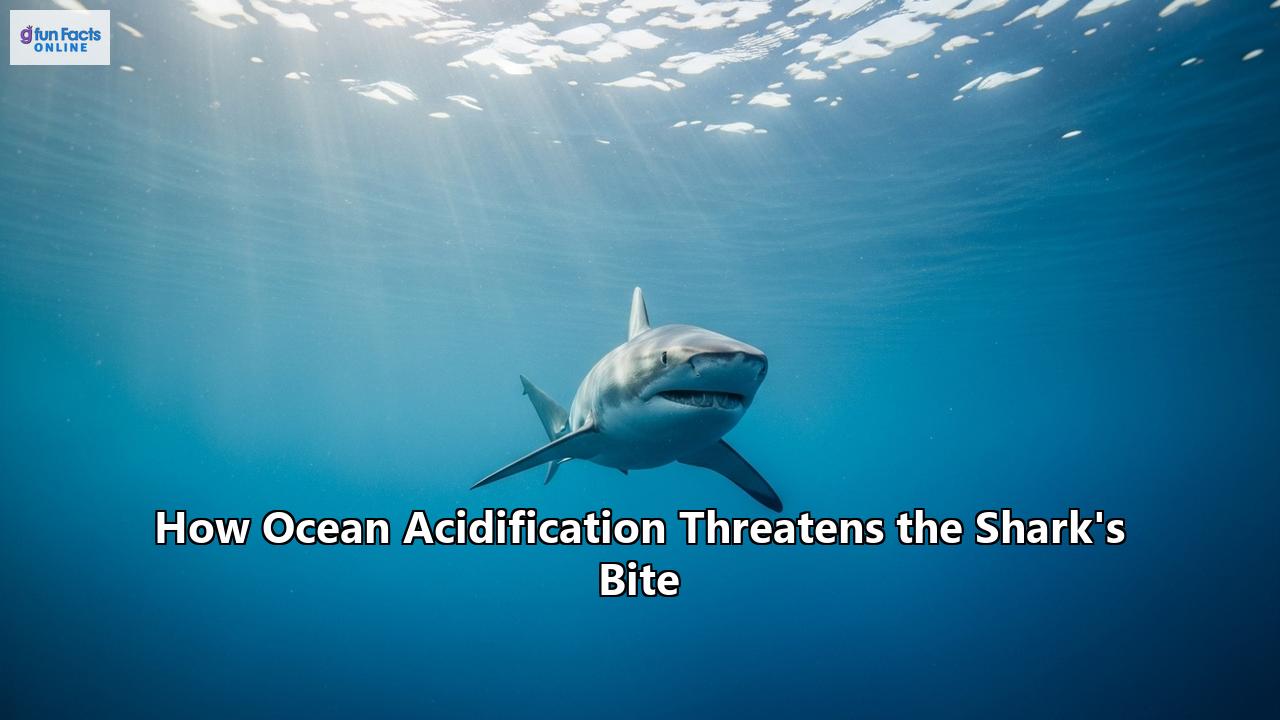
An Unseen Threat: How Ocean Acidification Is Silently Eroding the Shark's Bite
The image of a shark, with its rows of razor-sharp teeth, is one of nature's most formidable and enduring symbols of predatory power. For millions of years, these apex predators have roamed the oceans, their success intrinsically linked to their incredible ability to hunt. Central to this success is their bite, a finely tuned weapon perfected by evolution. But a silent and pervasive threat, one that is invisible to the naked eye, is now jeopardizing this crucial tool and, with it, the very survival of sharks. Ocean acidification, the ongoing decrease in the pH of the Earth's oceans caused by the absorption of carbon dioxide from the atmosphere, is proving to be a formidable adversary to these ancient mariners.
The world's oceans are becoming more acidic at an alarming rate as they absorb a significant portion of the excess carbon dioxide pumped into the atmosphere by human activities. This absorption sets off a chain reaction of chemical changes, the most significant of which is the reduction of carbonate ions, a crucial building block for many marine organisms that form shells and skeletons. While the initial focus of research on ocean acidification was on calcifying organisms like corals and shellfish, a growing body of evidence now reveals that sharks, once thought to be resilient to this global change, are also in the line of fire. The very water they swim in is becoming corrosive, threatening to dull their senses, weaken their defenses, and, most critically, compromise their legendary bite.
The Double-Edged Sword: Corroding Teeth and Weakened Armor
A shark's mouth is a marvel of evolution. Unlike humans, who have a single set of permanent teeth, sharks possess multiple rows of teeth that are constantly being replaced throughout their lives. This conveyor belt of dentition ensures they always have a sharp set of weapons at their disposal. However, this remarkable adaptation may not be enough to counter the insidious effects of increasingly acidic waters.
Recent scientific studies have painted a concerning picture of what the future holds for a shark's primary hunting tool. Researchers in Germany conducted experiments on the teeth of blacktip reef sharks, exposing them to water with a pH level predicted for the oceans by the year 2300. The results were startling. After just eight weeks, the teeth in the more acidic water showed significantly more damage than those in present-day ocean conditions. This damage included visible cracks, holes, and increased corrosion of the root, leading to structural degradation.
One of the lead authors of the study, Maximilian Baum, a biologist at Heinrich Heine University Düsseldorf, starkly summarized the findings: "Shark teeth, despite being composed of highly mineralized phosphates, are still vulnerable to corrosion under future ocean acidification scenarios. They are highly developed weapons built for cutting flesh, not resisting ocean acid. Our results show just how vulnerable even nature's sharpest weapons can be."
The study found that the surface of the teeth became more irregular in the acidic water, which, while potentially increasing cutting efficiency in the short term, also made the teeth structurally weaker and more prone to breaking. This trade-off could have dire consequences for sharks, as a broken tooth is an ineffective one. If ocean acidification accelerates tooth loss beyond the sharks' natural replacement rate, they could find themselves with a perpetually compromised bite, hindering their ability to feed efficiently. This dental stress is an additional burden on shark populations that are already facing threats from overfishing and prey shortages.
The threat of corrosion is not limited to a shark's teeth. Their skin, which is covered in tooth-like scales called dermal denticles, is also at risk. These denticles are not like the flat scales of other fish; they are structurally similar to teeth and play a crucial role in a shark's survival. They provide a tough, protective armor and, perhaps more importantly, their unique design reduces drag and allows sharks to swim with remarkable efficiency and stealth.
A study on puffadder shysharks exposed to acidified seawater revealed significant damage to their denticles. After several weeks, the sharks in the acidic water had damage to approximately 25 percent of their denticles, compared to less than ten percent in the control group. This corrosion can make a shark's skin smoother, limiting its swimming ability and potentially impairing its capacity to hunt effectively. The researchers also speculated that since denticles and teeth have the same structure and composition, similar corrosion is likely to occur in their teeth, impacting their feeding.
A Muffled Sense of the World: The Impact on Smell
A shark's bite is not just about the physical act of chomping down on prey; it is the culmination of a sophisticated hunting process that relies heavily on a keen sense of smell. Sharks are renowned for their ability to detect the faintest scent of blood in the water, allowing them to locate prey from great distances. However, ocean acidification threatens to dull this vital sense, effectively blindfolding them in their own environment.
Research has shown that elevated carbon dioxide levels in the water can impair a shark's ability to track prey by odor. In one study, smooth dogfish were exposed to water with CO2 levels predicted for the end of the century. The sharks in the high-CO2 environment showed a significant avoidance of odor cues and were less likely to attack a food source compared to the sharks in water with today's acidity levels. This suggests that the ability of sharks to properly respond to the scent of prey is damaged by increased CO2. If a shark is unable to effectively smell its prey, its hunting expeditions may become far less fruitful, leading to a decline in their overall health and fitness.
This sensory deprivation could have severe consequences for shark populations. Reduced hunting efficiency can lead to lower growth rates, diminished reproductive success, and a greater struggle to compete for resources. For apex predators that play a crucial role in maintaining the balance of marine ecosystems, this diminished capacity to hunt could have a cascading effect on the entire food web.
The Ripple Effect: Ecological Consequences and the Fight for Survival
The threats posed by ocean acidification to sharks' teeth, skin, and senses are not isolated issues. They represent a significant challenge to the survival of these magnificent creatures and the health of the oceans they inhabit. A shark with a weakened bite and a dulled sense of smell is a less effective predator. This can lead to a decline in shark populations, which in turn can have profound impacts on marine ecosystems.
Sharks, as apex predators, play a vital role in regulating the populations of other marine species. By preying on the weak and the old, they help to maintain the health and genetic diversity of their prey populations. A decline in shark numbers can lead to an overpopulation of their prey, which can then lead to the degradation of important habitats like coral reefs. The intricate balance of the marine food web, which has been shaped over millennia, is at risk of being disrupted by the silent erosion of a shark's ability to hunt.
While some studies have shown that sharks possess a physiological mechanism to regulate their blood pH, preventing it from becoming more acidic, this adaptation may come at a high energy cost. This means that even if they can internally buffer the effects of ocean acidification, the energy expended to do so could be diverted from other essential functions like growth and reproduction.
Furthermore, the effects of ocean acidification are not happening in a vacuum. Sharks are also contending with the impacts of a warming ocean, which can alter their distribution and the availability of their prey. The combined pressures of ocean acidification, warming waters, overfishing, and habitat loss create a perfect storm of threats that is pushing many shark species to the brink.
A Call to Action: The Future of Sharks and Our Oceans
The scientific evidence is clear: ocean acidification is a direct threat to the survival of sharks. The corrosion of their teeth and skin, coupled with the impairment of their senses, strikes at the very heart of what makes them such successful predators. The image of a toothless shark may seem like a far-fetched nightmare, but the reality is that the very functionality of their bite is being slowly and steadily eroded.
The fate of sharks is inextricably linked to the health of our oceans, which in turn is dependent on our actions on land. Reducing our carbon dioxide emissions is the only way to mitigate the ongoing acidification of our seas and protect the incredible diversity of life they hold. The plight of the shark serves as a powerful reminder that the consequences of climate change are far-reaching and can impact even the most formidable of creatures.
The future of the shark's bite, and indeed the future of these ancient and vital predators, hangs in the balance. It is a future that will be determined by our willingness to address the root causes of ocean acidification and to act as responsible stewards of the blue planet that we all share. Without concerted global action, the silent and invisible threat of ocean acidification could leave one of the ocean's most iconic predators with a bite that is no longer a match for the challenges of a rapidly changing world.
Reference:
- https://news.mongabay.com/short-article/sharks-risk-losing-their-bite-as-oceans-turn-acidic-study/
- https://envirobites.org/2020/04/29/smooth-skinned-sharks-ocean-acidification-proofs-harmful-to-top-predator/
- https://www.sciencefocus.com/news/shark-teeth-acid-ocean
- https://www.smithsonianmag.com/smart-news/acidifying-oceans-could-corrode-tooth-scales-shark-skin-180973839/
- https://www.eurekalert.org/news-releases/553596
- https://pmc.ncbi.nlm.nih.gov/articles/PMC5377027/
- https://www.theguardian.com/environment/2025/aug/27/ocean-acidification-erodes-sharks-teeth-affecting-feeding
- https://www.irishexaminer.com/news/arid-41694608.html
- https://www.sciencedaily.com/releases/2025/08/250827010714.htm
- https://www.newsweek.com/sharks-teeth-dissolve-future-oceans-experts-warn-2119297
- https://www.the-express.com/news/science/181685/ocean-acidification-toothless-sharks-teeth-science-study
- https://news-oceanacidification-icc.org/2020/01/10/ocean-acidification-is-damaging-shark-scales/
- https://sharkangels.org/ocean-acidification-changing-the-biology-of-sharks/
- https://www.ewadirect.com/proceedings/tns/article/view/21270
- https://www.climatecentral.org/news/climate-change-sharks-19221