
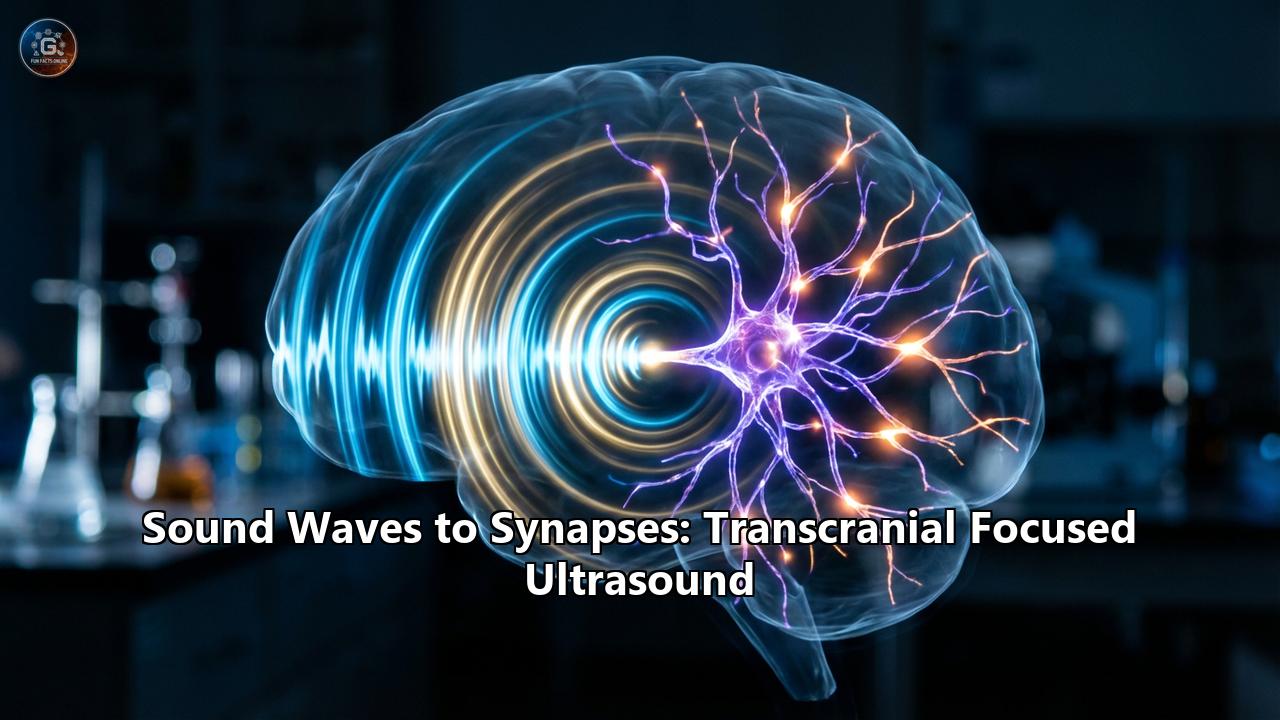
The invisible symphony of the brain is about to get a new conductor. For decades, the notion of manipulating the human mind with sound waves was the stuff of science fiction—or conspiracy theories. Yet, today, in high-tech laboratories from Zurich to California, a quiet revolution is underway. It is not powered by pills, scalpels, or electrodes, but by the precise, focused power of Transcranial Focused Ultrasound (tFUS).
This is not the ultrasound of grainy fetal images. This is a technology that concentrates acoustic energy with the precision of a magnifying glass focusing sunlight, passing harmlessly through the skull to ignite—or silence—specific clusters of neurons deep within the brain. From erasing the tremors of Parkinson’s disease to potentially "waking up" patients from comas, and even decoding human thought for brain-computer interfaces, tFUS represents a fundamental shift in how we interact with the most complex organ in the known universe.
Welcome to the age of Ultrasonic Neuromodulation.
Part I: The Physics of the Impossible
The Skull Barrier: Breaking the Sound Wall
To understand the marvel of tFUS, one must first appreciate the fortress that is the human skull. For millions of years, the cranium has evolved to be an impenetrable shield, protecting the delicate jelly of the brain from physical trauma. For neuroscientists, this shield has been a frustration. It blocks light, deflects electrical fields, and scrambles magnetic pulses. But it is particularly hostile to sound.
Bone is a chaotic medium for acoustics. It varies in thickness, density, and curvature. When a sound wave hits the skull, three things usually happen: it reflects, it gets absorbed (turning into heat), or it refracts (bends). In the early days of ultrasound research, trying to focus a beam through the skull was like trying to see the moon through a frosted glass brick. The wave would scatter, and the focal point would blur into useless noise.
The breakthrough came with Phased Array Technology and Adaptive Aberration Correction. Imagine a choir of 1,000 singers standing in a circle. If they all sing a note at the exact same time, the sound reaches the center simultaneously, creating a loud peak. But if the air between them is uneven—thicker in some spots, thinner in others—the sound waves will arrive at different times, canceling each other out.
To fix this, you need a conductor who tells the singer behind the "thick air" to start singing a fraction of a millisecond earlier than the others. This is exactly what a modern tFUS transducer does. It consists of hundreds, sometimes thousands, of individual piezoelectric elements. Before the treatment begins, a CT scan maps the patient's skull, calculating the density and thickness at every millimeter.
High-performance computers then run a simulation, determining exactly how much the skull will delay the sound wave at every single point. The system then fires the elements with precise time delays—inverse to the skull's distortion. The result is a physics miracle: thousands of distorted waves travel through the bone, but as they exit the inner table of the skull and enter the brain, they realign perfectly. They converge at a single, millimeter-sized point deep in the thalamus or hippocampus, creating a zone of high energy while the surrounding tissue remains untouched.
The Piezoelectric Heart
At the core of every tFUS machine is the piezoelectric effect, a phenomenon discovered by the Curie brothers in the 19th century. Certain crystals, when squeezed, generate electricity. Conversely, when you pump electricity into them, they vibrate.
In a tFUS transducer, rapid electrical pulses force these crystals to expand and contract hundreds of thousands of times per second (typically 250 kHz to 700 kHz). This vibration pushes against the air (or coupling gel), sending a pressure wave traveling at 1,500 meters per second into the head.
Crucially, this is Low-Intensity Focused Ultrasound (LIFUS). Unlike the high-intensity versions used to burn away uterine fibroids or prostate cancer, LIFUS does not cook tissue. It nudges it. The pressure exerted on the neurons is roughly equivalent to the weight of a dime, but because it vibrates at ultrasonic frequencies, it imparts a unique mechanical force on the cellular membrane.
Part II: The Biological Interface – From Wave to Synapse
How does a sound wave translate into a thought, a memory, or a motor command? The answer lies in the mechanosensitivity of life itself.
The Squeeze of the Membrane
For a long time, we believed neurons only spoke the language of electricity and chemistry. But biology is also physical. Cells can "feel" touch. When the focused ultrasonic wave hits a neuron, it creates a rapid cycle of compression and rarefaction (stretching). This mechanical stress affects the lipid bilayer of the cell membrane.
Embedded in this membrane are specialized proteins known as Mechanosensitive Ion Channels. Think of them as trapdoors that are locked not by a key, but by a spring. When the membrane stretches under the pressure of the ultrasound wave, the spring pulls the door open.
Research has identified specific culprits in this process, notably the TRP (Transient Receptor Potential) family of channels—specifically TRPP1, TRPP2, and TRPC1—and the Piezo1 channel. When these channels are mechanically pried open by the acoustic wave, they allow ions like Calcium (Ca2+) and Sodium (Na+) to rush into the cell.
The Calcium Key
Calcium is the universal "go" signal for neurons. A sudden influx of calcium depolarizes the cell, pushing its electrical potential toward the threshold. If enough channels open, the neuron fires an action potential. It sends a signal.
But tFUS is subtle. It doesn't always force the neuron to fire immediately. Instead, it often modulates the excitability of the neuron. It raises or lowers the baseline voltage, making the neuron more likely to fire in response to other signals (facilitation) or less likely (inhibition). This is neuromodulation in its purest form: tuning the instrument rather than just banging on the keys.
Recent studies have shown that this effect is robust. In mouse models, silencing the gene for the TRPP2 channel renders the neurons "deaf" to the ultrasound, proving that this is a specific, molecular interaction, not just a general jarring of the brain.
Part III: Rewiring the Mind – Neuroplasticity & Learning
If tFUS only caused a neuron to fire once, it would be a fancy toy. The real power lies in its ability to change the brain permanently. This is the domain of Neuroplasticity.
LTP and LTD: The Alphabet of Memory
The brain learns through two primary mechanisms: Long-Term Potentiation (LTP), which strengthens the connection between two neurons, and Long-Term Depression (LTD), which weakens it. This is how we form memories and how we forget irrelevant details.
Remarkably, tFUS can artificially induce both.
By pulsing the ultrasound at specific rhythms, scientists can trick the brain into rewiring itself. A 3 kHz pulse repetition frequency (PRF), for instance, has been shown to induce sustained LTD in the hippocampus of rats. The ultrasound triggers a specific type of calcium influx that activates protein phosphatases (like calcineurin), which then strip receptors off the synapse, weakening the connection.
Conversely, different pulse patterns can increase the levels of BDNF (Brain-Derived Neurotrophic Factor), the "fertilizer" of the brain. BDNF encourages the growth of new synapses and the strengthening of existing ones.
This means tFUS is not just a temporary "switch" but a writing tool. It could theoretically be used to strengthen the neural circuits associated with memory in Alzheimer's patients or weaken the overactive fear circuits in patients with PTSD, effecting a cure that lasts long after the machine is turned off.
Part IV: The Clinical Frontier
The transition from petri dishes to patients is already underway. The clinical applications of tFUS are exploding, targeting conditions that have resisted traditional medicine for decades.
Alzheimer’s Disease: The Plaque Scrubber
One of the most promising—and surprising—applications of tFUS is in the treatment of Alzheimer’s. The disease is characterized by the accumulation of toxic amyloid-beta plaques and tau tangles that choke neurons.
The brain has a natural waste-clearance system, but it is protected by the Blood-Brain Barrier (BBB). The BBB is a tightly woven net of capillaries that prevents toxins (and drugs) from entering the brain. In Alzheimer's, this barrier prevents the immune system from clearing the plaque effectively.
Scientists have developed a technique using tFUS combined with microbubbles. Microscopic gas bubbles are injected into the bloodstream. When they reach the brain capillaries targeted by the ultrasound, the sound waves cause the bubbles to oscillate. This vibration gently prying apart the tight junctions of the BBB for a few hours.
This "opening" allows two things:
- Drug Delivery: Therapeutic drugs that were previously too large to cross the barrier can now slip through.
- Immune Activation: The temporary breach alerts the brain's immune cells (microglia). These cells rush to the site and, in the process, begin to gobble up the amyloid plaque.
Clinical trials have shown that this "cleaning" process can reduce plaque load and, in some early cases, improve cognitive scores. It is a physical therapy for the brain's plumbing.
Parkinson’s Disease: The Non-Invasive Knife
For Parkinson’s patients with severe tremors, the traditional last resort is Deep Brain Stimulation (DBS), which requires drilling a hole in the skull and implanting electrodes.
tFUS offers a non-invasive alternative. By increasing the intensity slightly (using High-Intensity Focused Ultrasound or HIFU), doctors can perform an incision-less thalamotomy. They focus the beam on a tiny part of the thalamus responsible for the tremor and thermally ablate (burn) it. The patient is awake, lying in an MRI machine. They go in shaking, and an hour later, they come out still.
But the newer, low-intensity approach aims to stop the tremor without destroying tissue, by simply "jamming" the error signal. This could allow for reversible treatments that can be adjusted as the disease progresses.
Mental Health: Resetting the Mood
Depression and anxiety are often disorders of connectivity—certain circuits are "stuck" in negative loops. The Right Ventrolateral Prefrontal Cortex and the Amygdala are key targets.
Pilot studies have shown that tFUS can modulate mood in healthy volunteers and depressed patients. By inhibiting the overactive "worry" centers of the brain, tFUS acts like a precise, chemical-free antidepressant. Unlike Electroconvulsive Therapy (ECT), which shocks the whole brain and causes memory loss, tFUS hits only the mood regulation centers, sparing the rest of the mind.
Disorders of Consciousness: The Wake-Up Call
Perhaps the most dramatic application is in the treatment of coma and disorders of consciousness. In 2016, a team at UCLA used tFUS to stimulate the thalamus of a 25-year-old man recovering from a coma. The thalamus is the brain's central hub, the "switchboard" of consciousness.
Before the treatment, the patient showed minimal signs of awareness. Days after the procedure, he was awake, reaching for objects, and attempting to walk. While this is not yet a guaranteed cure, it suggests that tFUS can provide the "jump start" needed to re-engage the stalled engine of a conscious mind.
Part V: Beyond Therapy – The Era of Brain-Computer Interfaces
While doctors use ultrasound to heal, engineers are using it to read.
The Ultimate Mind Reader?
Traditional Brain-Computer Interfaces (BCIs) like Neuralink require implanting chips into the brain. Non-invasive ones like EEG caps are safe but offer low resolution—they hear the "roar" of the stadium, not the individual conversations.
Functional Ultrasound (fUS) is changing the game. It works on the principle of Doppler imaging—the same tech used to track blood flow in the heart. When a cluster of neurons becomes active, it needs more energy. The body instantly shunts more blood to that specific spot (neurovascular coupling).fUS is so sensitive it can detect blood flow changes in vessels the width of a human hair, deep inside the brain.
In landmark studies at Caltech, researchers implanted small "acoustic windows" (replacing a piece of skull with a sound-transparent material) in primates. They then used fUS to watch the Posterior Parietal Cortex, the area responsible for planning movement.
The computer didn't just see "activity." It decoded intent.
The system could predict—seconds before the animal moved—whether it was going to move its eyes left or right, or reach for a lever.
This "Ultrasonic BCI" is a paradigm shift. It offers the high resolution of an implant without the damage of penetrating electrodes. In the future, a wearable "ultrasound helmet" could allow paralyzed patients to control exoskeletons, computers, or robotic avatars simply by imagining the movement, with the ultrasound detecting the subtle blood flow shifts of their intentions.
Part VI: The Sound of Silence – Challenges & Skepticism
No technology is without its hurdles. The field of tFUS is currently grappling with the "Auditory Confound."
When you blast ultrasound at the head, even if it is inaudible to the ear, the mechanical wave can travel through the bone to the cochlea. This creates a "click" or a high-pitched tone that the subject can hear (via bone conduction).
Critics have pointed out that some of the "brain activation" seen in early studies might just be the brain reacting to this sound—a "startle response"—rather than direct neuromodulation.
The community has responded with rigorous science.
- Deaf Mouse Models: Studies on genetically deaf mice (who have no functioning cochlea) show that tFUS still triggers motor responses, proving the direct neural effect.
- Smoothed Waveforms: Engineers have found that the "click" comes from the sharp rise of the square wave pulse. By "smoothing" the edges of the pulse (ramping the sound up and down gently), they can eliminate the auditory click while maintaining the pressure needed to activate neurons.
- Off-Target Controls: Targeting the white matter (which shouldn't react) vs. the gray matter helps isolate true effects from general sensory inputs.
These challenges are healthy. They are forcing the technology to mature from a cool experiment into a precise clinical tool.
Part VII: The Ethical Horizon
As tFUS moves from "fixing" to "enhancing," we face profound ethical questions.
If we can use ultrasound to suppress the "worry" circuits in a depressed patient, could we also use it to suppress fear in a soldier before battle?
If we can strengthen memory circuits for Alzheimer's, could students use a "focus helmet" to learn a new language in half the time?
If fUS can decode intent, does it threaten the privacy of thought?
Unlike a pill, which takes hours to leave your system, tFUS can be turned on and off in milliseconds. It is spatially precise. This raises the specter of "neuromodulation as a service"—or a weapon. The same technology that could cure addiction could theoretically be used to manipulate desire.
However, currently, the technology is bounded by the laws of physics. It requires coupling gel, precise navigation, and large machinery. We are far from a "thought ray." But as the tech shrinks to wearable sizes, society will need to define the boundaries of "cognitive liberty."
Conclusion: The Symphony of the Future
We stand at the precipice of a new era in neuroscience. For centuries, we have treated the brain as a chemical soup, flooding it with drugs that affect the whole body to treat a localized problem. Or we have treated it as a structure to be cut and stitched.
Transcranial Focused Ultrasound treats the brain as what it truly is: an electric, mechanical, vibrating orchestra. It offers us a baton to conduct this orchestra with a precision we never dreamed possible.
From the silent pulses that scrub away the plaque of dementia to the invisible beams that steady a trembling hand, sound is no longer just something we hear. It is becoming the medicine that heals us, the interface that connects us, and the key that unlocks the deepest mysteries of the mind. The future of medicine is here, and it is vibrating at 500,000 cycles per second.
Reference:
- https://www.semanticscholar.org/paper/a4f8f3d9f51f9cb5beb4e8bd74b9d11b8940cc34
- https://iconeus.com/science/what-is-fus/
- https://www.sciencedaily.com/releases/2021/03/210322143320.htm
- https://openlib.tugraz.at/download.php?id=668bbe352d07c&location=browse
- https://pmc.ncbi.nlm.nih.gov/articles/PMC12366799/
- https://www.researchgate.net/publication/331584321_Elimination_of_peripheral_auditory_pathway_activation_does_not_affect_motor_responses_from_ultrasound_neuromodulation