
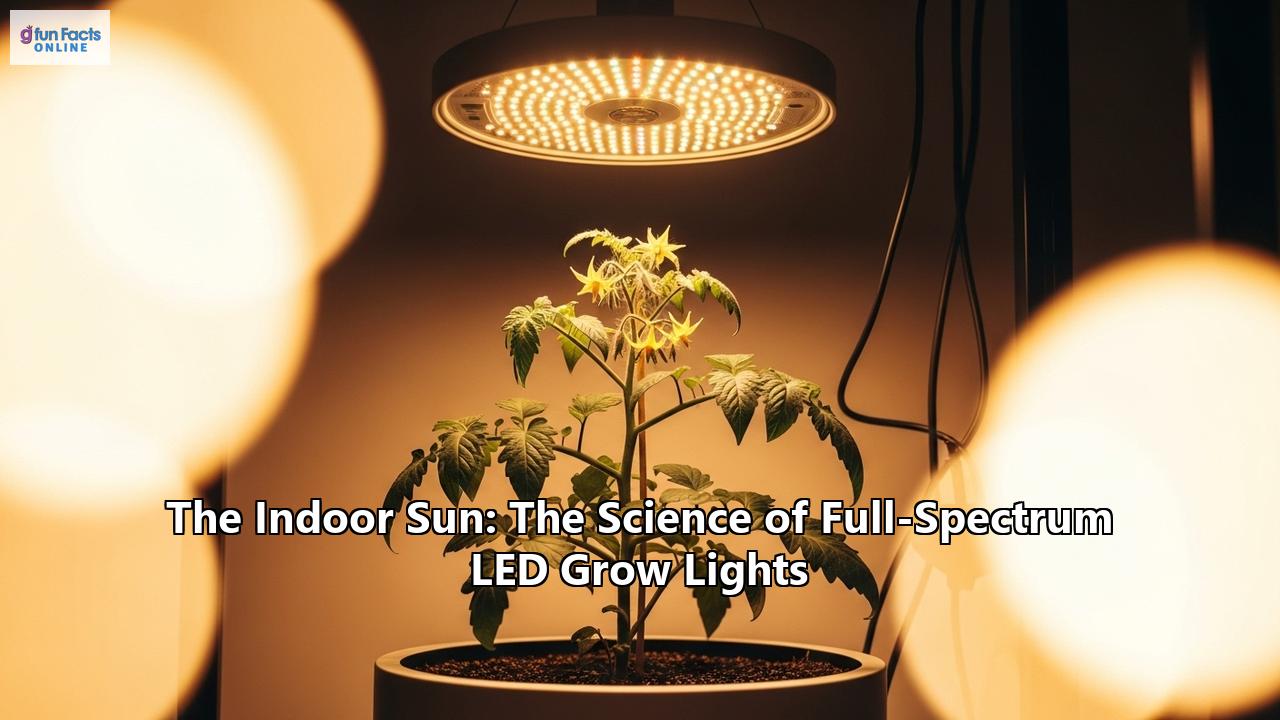
In the quest for year-round cultivation and mastery over the elements, humanity has long sought to bring the life-giving power of the sun indoors. This ambition has fueled a century of innovation in horticultural lighting, a journey that has led us from the simple incandescent bulb to the sophisticated technology of today: full-spectrum LED grow lights. These marvels of engineering are more than just lamps; they are miniature suns, capable of providing the precise nourishment of light that plants need to not just survive, but thrive, in the absence of natural daylight. This comprehensive exploration delves into the science, technology, and practical application of full-spectrum LED grow lights, illuminating their path from a novel concept to an indispensable tool for modern agriculture and horticulture.
The Genesis of Indoor Sunlight: A History of Horticultural Lighting
The story of grow lights is a testament to human ingenuity and our enduring connection to the plant kingdom. The earliest forays into artificial lighting for plants date back to the late 19th century, a period of burgeoning electrical discovery. As early as 1861, experiments were underway to see if electric lamps could supplement or even replace sunlight for plant growth. These pioneering efforts, however, were rudimentary, often employing inefficient and sometimes hazardous technologies like open carbon arc lamps, which were also being tested for street lighting.
The 20th century saw a more systematic approach. Incandescent lamps, championed by Thomas Edison, became a common tool in controlled environment research in the 1920s and 30s. While revolutionary for their time, these bulbs were far from ideal, emitting a reddish light high in far-red and infrared radiation, which often led to excessive heat and unnaturally elongated stems.
The mid-20th century heralded the age of gaseous discharge lamps. Fluorescent lights, with their lower heat output, became a favorite for indoor growers, allowing for closer placement to plants without the risk of scorching. High-Intensity Discharge (HID) lamps, including Metal Halide (MH) and High-Pressure Sodium (HPS), emerged in the 1950s and 60s, offering high-efficiency, long-lasting, and broad-spectrum light suitable for a wider range of plants. For decades, HPS and MH lamps were the gold standard in commercial horticulture, despite their own set of drawbacks, including high energy consumption, significant heat generation, and the presence of hazardous materials like mercury.
The true revolution, however, began quietly in 1962 with the invention of the first light-emitting diode (LED) by Nick Holonyak Jr. Initially, these were low-power, single-color devices. The first LEDs used in horticultural research in the 1990s, spearheaded by NASA's need for efficient plant growth systems in space, were predominantly red. The development of blue LEDs was a critical breakthrough, but early systems often relied on a combination of red LEDs and blue fluorescent lamps. The term "blurple" was coined to describe the characteristic purple-pink glow of these early LED grow lights, which focused on the red and blue wavelengths most readily absorbed by chlorophyll. While efficient at driving photosynthesis, this narrow spectrum often resulted in an unnatural appearance of plants, making it difficult to assess their health.
The turning point for LED grow lights came with advancements in phosphor coatings and chip technology. These innovations allowed for the creation of "white" light by coating blue LEDs with phosphors that convert some of the blue light into a broader spectrum of green, yellow, and red light. This not only created a more natural-looking light, making it easier for growers to work with their plants, but it also opened the door to a more nuanced understanding of plant photobiology, revealing the importance of wavelengths beyond just red and blue. Modern LED grow lights, particularly those from reputable manufacturers like Samsung and Osram, boast high efficiency and a carefully engineered spectrum, a far cry from their "blurple" predecessors.
Deconstructing Sunlight: The Science of the Light Spectrum
To understand the power of full-spectrum LED grow lights, one must first appreciate the intricate relationship between light and plant life. The light we see is just a small fraction of the vast electromagnetic spectrum. For plants, the most critical portion of this spectrum is known as Photosynthetically Active Radiation (PAR), which encompasses wavelengths from 400 to 700 nanometers (nm). This is the range of light that plants use for photosynthesis, the fundamental process of converting light energy into chemical energy for growth. However, not all light within the PAR range is created equal, and different wavelengths, or colors, of light trigger distinct developmental responses in plants.
The Power of Blue Light (400-500 nm)
Blue light is a high-energy component of the light spectrum with profound effects on plant morphology and development. It is a primary driver of chlorophyll production and is essential for sturdy, compact growth, particularly in the early vegetative stages. Plants grown with adequate blue light tend to have thicker stems, stronger roots, and lush, dark green leaves. This is because blue light helps to regulate stomatal opening, the tiny pores on leaves that control gas exchange and water transpiration. In essence, blue light acts as a natural growth regulator, preventing the excessive stem elongation, or "stretching," that can lead to weak, leggy plants. While crucial, an excess of blue light can sometimes inhibit overall growth in certain plant species.
The Often-Underestimated Role of Green Light (500-600 nm)
For many years, green light was considered the least useful for photosynthesis, largely because chlorophyll reflects green wavelengths, which is why plants appear green to our eyes. However, this is a misconception. While chlorophyll's absorption of green light is less efficient than that of red or blue light, it still plays a significant role in photosynthesis, especially in dense canopies. Green light is more readily transmitted through leaves than red or blue light, allowing it to penetrate deeper into the plant's canopy and reach lower leaves that would otherwise be shaded. This sub-canopy photosynthesis contributes to the overall health and productivity of the plant. Some studies have even shown that under high light intensities, green light can drive photosynthesis more efficiently than red light. Furthermore, green light can influence plant morphology, in some cases promoting stem elongation and leaf expansion.
The Dynamic Duo: Red and Far-Red Light (600-800 nm)
Red light (600-700 nm) is arguably the most efficient wavelength for driving photosynthesis. It is a key player in a plant's transition from vegetative growth to flowering and fruiting. The phytochrome system, a family of photoreceptors in plants, is highly sensitive to red and far-red light. This system acts as a biological light switch, regulating a host of developmental processes, including seed germination, stem elongation, and photoperiodism (the plant's response to the length of day and night).
Far-red light (700-800 nm), which lies just beyond the visible spectrum, works in concert with red light to provide plants with information about their environment. The ratio of red to far-red light signals to a plant whether it is in direct sun or in the shade of a competing plant. An abundance of far-red light can trigger a "shade avoidance" response, leading to increased stem elongation as the plant tries to outgrow its competitors. In controlled environments, the strategic use of far-red light can be used to manipulate plant architecture and promote flowering.
The Unseen Influence of Ultraviolet (UV) Light (100-400 nm)
Ultraviolet light, while invisible to the human eye and potentially harmful in high doses, can have beneficial effects on plants when provided in small, controlled amounts. Exposure to UV-A and UV-B radiation can stimulate the production of secondary metabolites, such as flavonoids and terpenes, which are compounds that can enhance a plant's flavor, aroma, and resistance to pests and diseases. In a sense, UV light can act as a mild stressor that triggers the plant's natural defense mechanisms, leading to a more robust and resilient plant. However, excessive UV exposure can damage DNA, proteins, and cell membranes, and impair photosynthesis.
The Technology Behind the Indoor Sun
At the heart of a full-spectrum LED grow light is the light-emitting diode itself. These are semiconductor devices that emit light when an electric current passes through them. Unlike traditional bulbs that generate light through heat, LEDs produce light through a process called electroluminescence, which is far more energy-efficient and generates significantly less heat. This low heat output is a major advantage in indoor growing, as it reduces the risk of leaf burn and the need for extensive and costly cooling systems.
The magic of creating a "full spectrum" lies in the clever use of phosphor coatings. By coating a blue LED with a precise mixture of green, yellow, and red phosphors, manufacturers can convert the narrow-band blue light into a wide range of longer wavelengths, effectively creating a broad, white light that mimics the solar spectrum. The quality of this spectral output is often measured by the Color Rendering Index (CRI), with higher values indicating a closer resemblance to natural daylight.
The Great Debate: Full-Spectrum vs. "Blurple" and Other Lighting Technologies
The advent of full-spectrum LEDs has largely rendered the older "blurple" lights obsolete for serious growers. While red and blue light are the primary drivers of photosynthesis, a more complete spectrum that includes green, yellow, and other wavelengths has been shown to promote healthier, more natural growth. Plants grown under full-spectrum light often exhibit better morphology, improved nutrient uptake, and higher yields compared to those grown under a narrow, two-band spectrum.
When compared to traditional HID lighting like HPS and MH lamps, full-spectrum LEDs offer a compelling list of advantages:
- Energy Efficiency: LEDs are significantly more energy-efficient, converting a higher percentage of electricity into usable light for plants. This translates to lower electricity bills and a smaller carbon footprint.
- Lower Heat Output: LEDs run much cooler than HPS and MH lamps, reducing the need for expensive ventilation and cooling systems. This also allows for closer placement of the lights to the plant canopy without the risk of heat stress.
- Longer Lifespan: LED fixtures have a much longer operational lifespan, often rated for 50,000 hours or more, compared to the relatively short lifespan of HID bulbs which require frequent replacement.
- Customizable Spectrums: Many modern LED grow lights offer customizable or "tunable" spectrums, allowing growers to tailor the light recipe to the specific needs of their plants at different growth stages. For example, a grower might use a blue-rich spectrum for vegetative growth and then switch to a red-dominant spectrum to promote flowering.
- Safety: LEDs do not contain hazardous materials like the mercury found in some HID and fluorescent lamps, making them a safer and more environmentally friendly option.
The primary disadvantage of full-spectrum LED grow lights has traditionally been their higher upfront cost compared to HID systems. However, as the technology has matured and become more widespread, prices have become more competitive. When factoring in the long-term savings on energy and bulb replacement, LEDs often prove to be the more economical choice over time.
Decoding the Specs: Choosing the Right Full-Spectrum LED Grow Light
Selecting the right full-spectrum LED grow light can be a daunting task, given the vast array of options on the market. To make an informed decision, it's essential to understand the key metrics and features to look for.
Beyond Watts: The Importance of PAR, PPF, and PPFD
For many years, wattage was the primary metric used to gauge the power of a grow light. However, wattage only tells you how much electricity a light consumes, not how much usable light it produces for your plants. To truly assess the performance of a grow light, you need to look at the following metrics:
- PAR (Photosynthetically Active Radiation): As previously mentioned, PAR defines the range of light (400-700 nm) that plants use for photosynthesis. It is not a measurement of intensity, but rather the type of light that is relevant to plant growth.
- PPF (Photosynthetic Photon Flux): This is a measure of the total amount of PAR light that a grow light emits per second. It is measured in micromoles per second (μmol/s). A higher PPF value indicates that the light is producing more photons that are useful for photosynthesis.
- PPFD (Photosynthetic Photon Flux Density): This is perhaps the most important metric for growers, as it measures the amount of PAR light that actually reaches the plant canopy over a given area. It is measured in micromoles per square meter per second (μmol/m²/s). PPFD values will vary depending on the distance of the light from the canopy and its position over the grow area. Manufacturers should provide PPFD charts that show the light intensity at different points within the recommended coverage area.
Determining Your Needs: Coverage Area and Plant Type
The size of your grow space is a primary consideration when choosing a light. You need a fixture that can provide even and adequate light coverage over your entire plant canopy. A common rule of thumb is to aim for 30-50 watts of actual LED power per square foot of growing space for flowering plants, and about half that for vegetative growth. However, this is just a rough estimate, and PPFD readings are a much more accurate way to determine a light's suitability for your space.
The type of plants you are growing will also dictate your lighting needs. Light-hungry plants like tomatoes and peppers will require higher PPFD levels than less demanding plants like lettuce and herbs.
Here are some general PPFD recommendations for different growth stages and plant types:
- Seedlings and Clones: 100-300 μmol/m²/s
- Vegetative Growth: 400-600 μmol/m²/s
- Flowering and Fruiting: 600-900 μmol/m²/s or even higher for some crops
- Leafy Greens and Herbs: 150-300 μmol/m²/s
- Tomatoes and Peppers: 400-800 μmol/m²/s
Advanced Features to Consider
Modern full-spectrum LED grow lights often come with a range of advanced features that can give growers even greater control over their indoor gardens:
- Tunable Spectrums: As mentioned earlier, some high-end models allow you to adjust the light spectrum to create custom "light recipes" for different plants and growth stages. This can be a powerful tool for optimizing growth, yield, and even the flavor and aroma of your crops.
- Dimming Capabilities: The ability to dim the light is essential for providing the appropriate intensity for young plants and for gradually acclimating them to higher light levels.
- Smart Controls and Automation: Many modern fixtures can be controlled remotely via a smartphone app, allowing you to set and adjust lighting schedules, spectrums, and intensity from anywhere. Some can even be integrated into a larger smart home or automated grow system.
- Daisy-Chaining: This feature allows you to connect multiple light fixtures together and control them from a single power source and controller, simplifying the setup for larger grow areas.
The "Full-Spectrum" Moniker: Marketing vs. Reality
While the term "full-spectrum" is widely used in the horticultural lighting industry, it's important to understand that it is largely a marketing term. There is no standardized definition of what constitutes a "full-spectrum" grow light. Originally, the term was used to describe the sun, the only truly full-spectrum light source. Later, the commercial lighting industry adopted the term to sell lights with a high CRI that were pleasing to the human eye.
In the context of grow lights, "full-spectrum" generally implies that the light provides a broad range of wavelengths that are beneficial for plant growth, and that the light appears white or whitish to the human eye. However, it's crucial to remember that a light that is optimized for human vision is not necessarily optimized for plant growth. The most effective grow lights are those that have a spectrum that is tailored to the photosynthetic and photomorphogenic needs of plants, not just one that mimics the appearance of sunlight.
Best Practices for Using Full-Spectrum LED Grow Lights
To get the most out of your full-spectrum LED grow light, it's important to follow some best practices:
- Proper Hanging Height: Hanging your light at the correct height is crucial for providing the right light intensity without causing light burn. Always follow the manufacturer's recommendations for hanging height, and be prepared to adjust it as your plants grow.
- Correct Photoperiod: Different plants require different lengths of light and dark periods to thrive. For example, most plants in the vegetative stage benefit from a long day of 18 hours of light and 6 hours of darkness. Flowering plants, on the other hand, often require a shorter day of 12 hours of light and 12 hours of darkness to trigger blooming.
- Monitor Your Plants: Pay close attention to your plants' response to the light. Signs of too much light include leaf curling, bleaching, or burning. Signs of too little light include stretching, weak stems, and pale leaves.
- Don't Overwater: Because LEDs produce less heat than HID lights, the soil will not dry out as quickly. It's a common mistake for growers who switch from HPS to LEDs to overwater their plants. Always check the moisture level of your soil before watering.
- Maintain Your Lights: Keep your grow lights clean and free of dust, as this can reduce their light output. Regularly inspect your lights for any signs of damage.
The Future is Bright: The Continuing Evolution of Indoor Lighting
The world of horticultural lighting is in a constant state of evolution. As LED technology continues to advance, we can expect to see even more efficient and sophisticated grow lights in the future. Innovations in tunable spectrums, artificial intelligence-driven light recipes, and integration with automated growing systems will give growers unprecedented control over their indoor environments. These advancements are not just a boon for hobbyist growers; they are critical for the future of food security, enabling the growth of fresh, local produce in urban environments and in regions with challenging climates.
Full-spectrum LED grow lights represent a remarkable convergence of science and technology, a powerful tool that allows us to cultivate life in places where it once seemed impossible. By understanding the science behind the light and the technology that delivers it, we can unlock the full potential of our indoor gardens, bringing the nourishing power of the sun into our homes and communities, and paving the way for a greener, more sustainable future.
Reference:
- https://www.paclights.com/explore/led-grow-lights-lighting-explained/
- https://rhealedlinear.com/exploring-led-full-spectrum-grow-lights-a-sneak-preview-for/
- https://bio.libretexts.org/Bookshelves/Introductory_and_General_Biology/General_Biology_(Boundless)/30%3A_Plant_Form_and_Physiology/30.18%3A_Plant_Sensory_Systems_and_Responses_-_The_Phytochrome_System_and_Red_Light_Response/30%3A_Plant_Form_and_Physiology/30.18%3A_Plant_Sensory_Systems_and_Responses_-_The_Phytochrome_System_and_Red_Light_Response)
- https://ledgrow.co.nz/a-brief-history-of-led-grow-lights/
- https://encyclopedia.pub/entry/2115
- https://journals.ashs.org/hortsci/view/journals/hortsci/43/7/article-p1947.xml
- https://gardenculturemagazine.com/growing-technology-the-evolution-of-led-lighting/
- https://www.valoya.com/why-you-shouldnt-dismiss-green-light/
- https://boyagrowlight.com/truth-about-full-spectrum-led-grow-lights/
- https://www.canr.msu.edu/floriculture/uploads/files/blue-light.pdf
- https://www.sansiled.com/blogs/learn/the-science-behind-grow-light-recipes-how-different-light-spectrums-affect-plant-development
- https://pmc.ncbi.nlm.nih.gov/articles/PMC11207261/
- https://edepot.wur.nl/539971
- https://www.canr.msu.edu/floriculture/uploads/files/green-light.pdf
- https://pmc.ncbi.nlm.nih.gov/articles/PMC11427831/
- https://other.canna.com
- https://www.tcpi.com/far-red-light-its-benefits-on-plant-growth/
- https://www.mdpi.com/2223-7747/13/22/3145
- http://www.esalq.usp.br/lepse/imgs/conteudo_thumb/Effects-of-ultraviolet-radiation-on-plant-cells.pdf
- https://pubmed.ncbi.nlm.nih.gov/11567887/
- https://www.mdpi.com/2311-7524/7/1/9
- https://pmc.ncbi.nlm.nih.gov/articles/PMC8566272/
- https://www.kindledgrowlights.com/blogs/news/full-spectrum-led-grow-lights
- https://www.floraldaily.com/article/9206135/full-spectrum-led-grow-lights-the-truth-you-need-to-know/
- https://download.luminus.com/datasheets/HLB2-Light-Recipes-for-Plants.pdf
- https://www.mars-hydro.com/info/post/how-much-ppfd-for-indoor-plants-in-each-growth-stage
- https://verticallyurban.com/new-tunable-spectrum-luminaires/
- https://www.paclights.com/explore/the-evolution-of-led-grow-light-how-it-has-changed-over-time/
- https://www.upowertek.com/grow-light-led-driver-developing-trend/
- https://medicgrow.com/products/smart-8-full-spectrum-led-grow-light
- https://risegardens.com/blogs/communitygarden/full-spectrum-grow-lights-comprehensive-light-for-all-stages-s25
- https://www.frontiersin.org/journals/plant-science/articles/10.3389/fpls.2024.1507628/full