
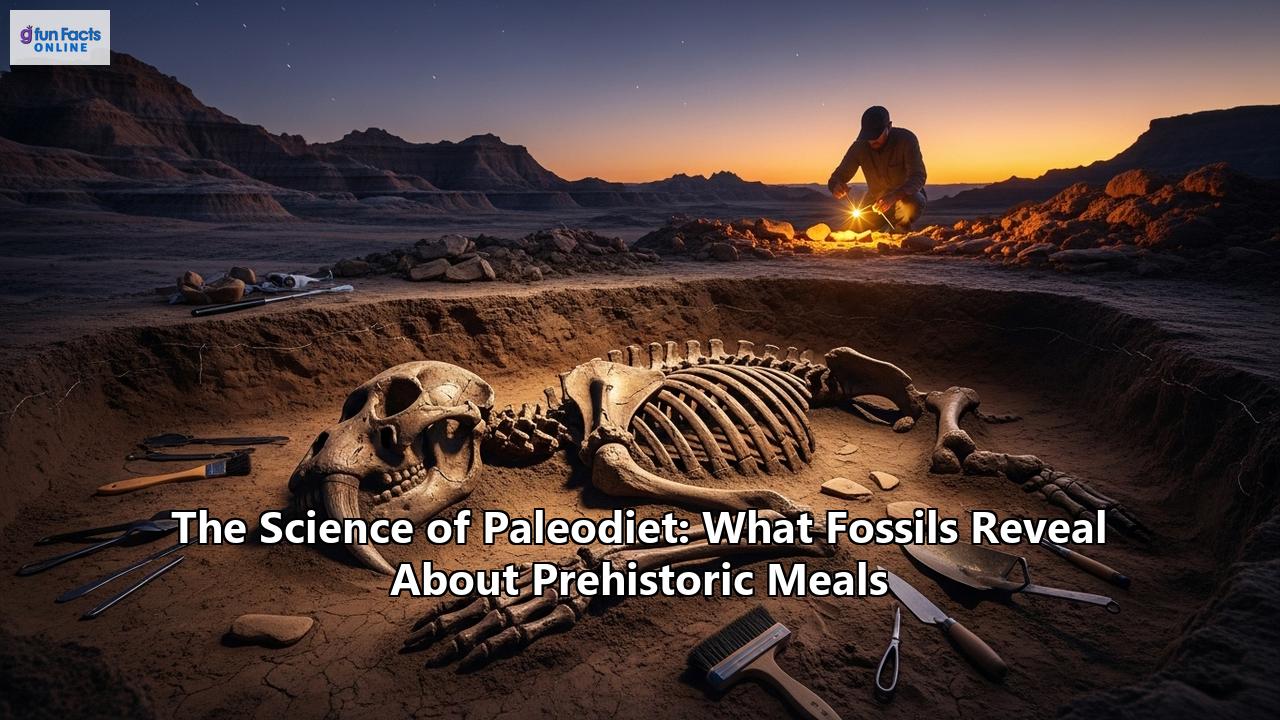
An odyssey into the eating habits of our ancestors, the science of paleodietetics transports us back in time, offering a tantalizing glimpse into the daily meals that fueled human evolution. Far from the simplistic caricature of club-wielding cavemen subsisting solely on mammoth steaks, the fossil record reveals a surprisingly complex and varied menu. This journey into prehistoric meals is not just about satisfying our curiosity; it's a profound exploration into how diet has shaped our biology, our societies, and our planet. By meticulously piecing together clues from fossilized bones, teeth, and even ancient feces, scientists are rewriting the story of what it meant to eat and survive hundreds of thousands, and even millions, of years ago.
The Fossilized Cookbook: What Can Ancient Remains Tell Us?
The primary evidence for prehistoric diets comes directly from the earth in the form of fossils. These remnants of ancient life, when subjected to the rigors of modern scientific analysis, can speak volumes about the culinary practices of our ancestors. Archaeologists employ a variety of methods to study these ancient foodways, analyzing animal and plant remains, examining residues on artifacts, and looking at isotopes in bones. This research helps us understand past diets, cultural practices, and human-environment interactions, shedding light on our ancestors' daily lives and cultural heritage.
Bones Don't Lie: Cut Marks and the Advent of Butchery
One of the most direct pieces of evidence for meat consumption comes from the bones of prehistoric animals. Fossilized bones bearing the tell-tale signs of butchery – distinct cut marks left by sharp-edged stone tools – provide a visceral connection to our ancestors' carnivorous habits. These marks, often found near joints or areas of significant muscle attachment, indicate that hominins were systematically processing animal carcasses for meat and marrow.
The study of these cut marks is a meticulous science. Researchers use powerful microscopes, including 3D imaging technology, to analyze the morphology of the incisions. This allows them to distinguish between marks made by stone tools, which typically leave a V-shaped groove, and those created by other means, such as the U-shaped grooves left by carnivore teeth or the shallow, curvy marks caused by trampling.
Some of the earliest evidence of butchery dates back an astonishing 3.4 million years, with cut-marked bones found at Dikika, Ethiopia. This discovery, predating the emergence of the genus Homo, suggests that our earlier australopithecine ancestors may have been using tools to process meat. However, the interpretation of such ancient marks remains a subject of scientific debate, with some researchers arguing that natural processes like trampling could create similar markings. Despite these debates, by about 2.6 million years ago, with the appearance of the first stone tools, the evidence for butchery becomes more widespread and definitive, indicating that meat had become a significant part of the hominin diet.
Dental Detectives: The Secrets in Ancient Teeth
Teeth, being the hardest part of the skeleton, are often exceptionally well-preserved in the fossil record and serve as a treasure trove of dietary information. Their shape and size can offer initial clues; for instance, large, flat molars suggest a diet that required significant grinding of tough, fibrous plant matter. However, the real story lies in the microscopic and chemical details preserved on and within the teeth themselves.
Dental Calculus: A Prehistoric PantryThe hardened plaque, or dental calculus, that clings to ancient teeth is a particularly rich source of information. As this plaque mineralizes over an individual's lifetime, it entombs a remarkable array of microscopic food particles, offering a direct snapshot of what was eaten. Scientists can extract and analyze this calculus to identify:
- Plant Microfossils: Tiny starch grains and phytoliths (silica structures from plant cells) can reveal the specific types of plants consumed. For example, analysis of Neanderthal dental calculus has identified starch grains from grasses, legumes, and even date palms, some of which show damage consistent with cooking. This evidence directly challenges the long-held notion that Neanderthals were exclusively meat-eaters.
- Ancient Proteins: The emerging field of paleoproteomics allows scientists to identify proteins preserved in dental calculus. This has provided direct evidence for the consumption of milk products, cereals, and other foodstuffs that are often underrepresented in the macroscopic fossil record. The presence of dairy proteins in the calculus of later prehistoric populations, for instance, offers a direct window into the origins of dairying.
- Ancient DNA: In some cases, DNA from ingested plants and animals can be recovered from dental calculus. This powerful technique allows for highly specific taxonomic identification of food sources, further refining our understanding of ancient diets. DNA analysis has confirmed the consumption of a wide variety of plants in pre-modern Japan, including species used for medicinal purposes and tobacco.
The act of chewing leaves behind a microscopic landscape of scratches and pits on the tooth's enamel surface. Different types of food create different wear patterns. Harder foods, like nuts and seeds, tend to leave behind more pits, while softer foods, such as leaves and fruits, create fine scratches. By comparing the microwear on fossil teeth to that of modern animals with known diets, scientists can infer the types of foods our ancestors were eating. For instance, the light scratches on the teeth of Paranthropus boisei, a hominin with a massive jaw and large teeth, suggest a diet of softer foods than previously thought, with tougher items possibly being fallback foods during times of scarcity.
Coprolites: The Ultimate Dietary Snapshot
Fossilized feces, or coprolites, provide some of the most direct and unambiguous evidence of past diets. While perhaps not the most glamorous of fossils, they offer an unparalleled window into the actual foods consumed and digested by an individual. The analysis of coprolites can reveal:
- Undigested Food Remains: Bone fragments, hair, fish scales, seeds, pollen, and plant fibers can all be preserved in coprolites, providing a clear picture of an individual's last meals. For example, coprolites from Hinds Cave in Texas, dating back over 6,000 years, showed that early inhabitants consumed a wide range of plants and animals, including cactus, walnuts, agave, and even small rodents, sometimes without extensive processing.
- Dietary Breadth: Coprolite studies have been instrumental in demonstrating the high-fiber, plant-based nature of many ancient diets. Research on coprolites from various pre-agricultural societies has revealed a significantly higher intake of dietary fiber compared to modern diets.
- Parasites and Gut Microbiome: Coprolites can also preserve the remains of intestinal parasites, offering insights into the health and disease challenges faced by ancient populations. Furthermore, DNA analysis of coprolites is beginning to shed light on the composition of the ancient human gut microbiome, a critical area of research for understanding the co-evolution of humans and their microbial partners.
The Chemist's Toolkit: Unlocking Dietary Secrets with Isotopes and Proteins
Beyond the macroscopic and microscopic examination of fossils, a suite of powerful chemical techniques allows scientists to delve even deeper into the dietary habits of our ancestors. These methods provide quantitative data on the types of foods consumed over an individual's lifetime, painting a more nuanced picture of long-term dietary patterns.
Stable Isotope Analysis: You Are What You Eat
Stable isotope analysis is a cornerstone of paleodietary research. This technique relies on the principle that the isotopic signatures of the foods we eat are incorporated into our body tissues, including bones and teeth. By measuring the ratios of different stable isotopes of elements like carbon and nitrogen, scientists can reconstruct key aspects of an individual's diet.
- Carbon Isotopes (δ¹³C): The ratio of carbon-13 to carbon-12 in bone or tooth enamel can reveal the types of plants at the base of the food web. Plants are broadly categorized into two groups based on their photosynthetic pathways: C3 plants (trees, shrubs, and temperate grasses) and C4 plants (tropical grasses and some sedges). By analyzing the δ¹³C values in a hominin fossil, scientists can determine whether their diet was primarily based on C3 or C4 plants, or a mix of both. This can also indicate the consumption of animals that ate these types of plants.
- Nitrogen Isotopes (δ¹⁵N): The ratio of nitrogen-15 to nitrogen-14 is a powerful indicator of an organism's trophic level—its position in the food chain. Nitrogen-15 accumulates up the food chain, so herbivores have lower δ¹⁵N values than carnivores. High δ¹⁵N values in Neanderthal bones, for example, are similar to those of modern carnivores, indicating a diet rich in meat.
- Strontium Isotopes (Sr): The isotopic composition of strontium varies depending on the local geology. Since strontium is absorbed into our bodies through the food and water we consume, its isotopic signature in our teeth and bones can be used to trace migration patterns. Tooth enamel forms in childhood and doesn't change, so it provides a record of where an individual grew up. Bone, on the other hand, is constantly remodeled, reflecting the geology of where an individual lived later in life.
Stable isotope analysis has revolutionized our understanding of early hominin diets, revealing a major dietary shift after 4 million years ago towards the inclusion of C4 plants or the animals that ate them. It has also highlighted significant dietary flexibility among some hominin species, with different individuals consuming varying proportions of C3 and C4-based foods.
Proteomics: The Language of Proteins
Proteomics is a relatively new but rapidly advancing field in archaeology that focuses on the analysis of ancient proteins. Proteins are more specific to species than lipids and can sometimes survive in archaeological contexts where DNA does not. In paleodietary research, proteomics is primarily applied to:
- Dental Calculus: As mentioned earlier, proteomics can identify specific dietary proteins preserved in hardened plaque, such as milk proteins (β-lactoglobulin) and cereal proteins, providing direct evidence of consumption.
- Ceramic Residues: The analysis of proteins absorbed into the porous walls of ancient pottery can reveal what these vessels were used to cook. This has provided evidence for early cheesemaking, for instance, by identifying a higher proportion of curd proteins to whey proteins in Neolithic pots.
Ancient DNA: The Ultimate Genetic Fingerprint
The ability to recover and analyze ancient DNA (aDNA) has been a game-changer for paleontology and archaeology. aDNA can be extracted from a variety of sources, including fossil bones, teeth, coprolites, and even sediments. In the context of paleodiet, aDNA analysis offers several advantages:
- Precise Species Identification: aDNA can identify the exact species of plants and animals consumed, offering a level of detail that is often impossible to achieve through other methods. For example, aDNA from Roman-era fish fermentation vats has allowed researchers to identify the specific types of fish used to make garum, a popular Roman condiment.
- Unbiased Dietary Reconstruction: High-throughput sequencing of DNA from coprolites can provide a comprehensive and unbiased view of an animal's or human's diet, as it can identify a wide range of ingested species simultaneously.
- Revealing Hidden Foods: aDNA analysis is particularly useful for identifying foods that leave few macroscopic traces, such as leafy greens, tubers, and certain types of insects.
A Seat at the Prehistoric Table: The Diets of Our Ancestors
Armed with this impressive array of scientific tools, let's pull up a chair to the prehistoric table and explore what our ancestors were actually eating. The picture that emerges is one of remarkable adaptability and dietary diversity, a far cry from the monolithic "paleo diet" often promoted in popular culture.
The Varied Menu of Neanderthals
Neanderthals (Homo neanderthalensis), our closest extinct relatives, have long been portrayed as top-level carnivores. Isotopic analysis of their bones indeed shows high nitrogen levels, consistent with a diet heavy in meat. Archaeological sites are replete with the remains of large game animals like mammoths, reindeer, and wild sheep, often with clear evidence of butchery. In coastal regions, there is evidence that Neanderthals also exploited marine resources, including mollusks, seals, and fish.
However, a growing body of evidence reveals that Neanderthals were not exclusively meat-eaters. The analysis of dental calculus has been particularly revelatory, uncovering microscopic remains of a variety of plant foods, including:
- Grasses, Legumes, and Tubers: Starch grains from these plants have been found in the calculus of Neanderthals from both the warm climate of the Middle East and the colder regions of northwestern Europe.
- Evidence of Cooking: Many of the starch grains show damage characteristic of cooking, suggesting that Neanderthals had a sophisticated understanding of food processing.
- Medicinal Plants: In at least one instance, DNA from poplar bark, which contains the active ingredient in aspirin, and traces of the antibiotic-producing Penicillium mold were found in Neanderthal dental calculus, suggesting the use of plants for medicinal purposes.
The evidence from coprolites further supports a more omnivorous diet. Fossilized fecal matter from a Neanderthal site in Spain contained chemical signatures consistent with the consumption of plants, including nuts, berries, and root vegetables.
*The Adaptable Diet of Early Homo sapiens---
Our own species, Homo sapiens, appears to have been characterized by even greater dietary flexibility. Early modern humans consumed a wide array of foods, adapting their menus to the specific environments they inhabited.
Evidence from a 100,000-year-old cave in Mozambique suggests an extensive reliance on wild cereals, including sorghum, as well as fruits, nuts, and tubers. This represents the earliest direct evidence of humans using pre-domesticated cereals. Similarly, a 780,000-year-old site in Israel has yielded starch grains from a variety of plants, including acorns, cereals, and aquatic plants, on stone tools, challenging the narrative of a primarily meat-based diet for early hominids.
More recent studies continue to highlight the importance of plants in the diets of early Homo sapiens. Analysis of human remains from the Andes, dating back 9,000 to 6,500 years ago, suggests that plants, particularly wild tubers, made up as much as 80% of their diet.
The cooking of starchy foods also appears to be a very ancient practice. Charred pieces of tubers from the Klasies River site in South Africa date back 120,000 years, making them the earliest known evidence of our species cooking carbohydrates. This ability to unlock the nutritional potential of starchy foods would have been a significant advantage, providing the energy necessary to fuel our large brains and support our migrations across the globe.
Hunting Giants: The Age of Megafauna
The Pleistocene epoch, often referred to as the Ice Age, was a world of giants. Mammoths, mastodons, giant sloths, and woolly rhinos roamed the landscapes of several continents. There is clear archaeological evidence that early humans hunted these megafauna. Paleoindian sites in North America, for instance, frequently contain the remains of mammoths and other large animals in association with distinctive Clovis spear points.
The hunting of such large animals would have provided a massive caloric payoff, but it was also a risky endeavor. The "overkill hypothesis" posits that the arrival of skilled human hunters in new environments was a primary driver of the mass extinction of megafauna at the end of the Pleistocene. However, the role of climate change in these extinctions is also a significant factor, and the debate over the primary cause continues. It is likely that a combination of human pressure and a changing climate led to the demise of these magnificent creatures.
The Enduring Legacy of Prehistoric Meals
The science of paleodiet does more than just tell us what was on the menu in the distant past. It provides a profound context for understanding our own biology and our relationship with food today. The evidence overwhelmingly shows that there was no single "paleo diet." Instead, our ancestors were remarkably flexible and opportunistic eaters, thriving on a wide variety of plant and animal foods depending on their environment and the time of year.
This dietary adaptability was a key to our evolutionary success. The ability to exploit a diverse range of food sources, from energy-rich meat and marrow to starchy tubers and nutrient-dense plants, allowed our species to survive and flourish in a vast array of environments across the globe.
The study of ancient diets also challenges many of the assumptions behind modern fad diets. The notion of a meat-heavy "caveman diet" is not supported by the diverse archaeological evidence, which increasingly points to the critical role of plant foods, especially cooked starches, in human evolution. Our evolutionary history is not one of dietary specialization, but of incredible culinary flexibility.
As we continue to refine the tools and techniques for peering into the deep past, the story of the paleodiet will undoubtedly become even more detailed and nuanced. Each newly analyzed fossil, each newly decoded protein, adds another ingredient to our understanding of the meals that made us human. The fossil record is a cookbook millions of years in the making, and we are only just beginning to decipher its recipes.
Reference:
- https://www.futurelearn.com/info/courses/archaeology/0/steps/15267
- https://pmc.ncbi.nlm.nih.gov/articles/PMC4843629/
- https://www.livescience.com/archaeology/human-ancestor-was-in-eurasia-nearly-2-million-years-ago-cut-marks-on-animal-bones-suggest
- https://pubmed.ncbi.nlm.nih.gov/21660994/
- https://www.sciencedaily.com/releases/2015/08/150813171207.htm
- https://scicomove.hypotheses.org/5673
- https://www.inverse.com/science/1500-year-old-human-poop-sample-reveals-ancient-diets
- https://www.calacademy.org/explore-science/neanderthal-diet
- https://www.science.org.au/curious/people-medicine/what-did-neanderthals-eat
- https://www.pnas.org/doi/10.1073/pnas.1016868108
- https://pubmed.ncbi.nlm.nih.gov/30051838/
- https://pmc.ncbi.nlm.nih.gov/articles/PMC6083251/
- https://royalsocietypublishing.org/doi/10.1098/rspb.2018.0977
- https://journals.plos.org/plosone/article?id=10.1371/journal.pone.0226654
- https://www.nhm.ac.uk/discover/what-is-a-coprolite.html
- https://paleofoundation.com/coprolites-in-pre-agricultural-diet/
- https://medium.com/smorgasbord-of-history/the-scoop-on-ancient-poop-what-it-can-teach-us-about-diets-today-ece60ee6c506
- https://www.smithsonianmag.com/smart-news/neanderthals-ate-their-vegetables-180951877/
- https://www.thoughtco.com/stable-isotope-analysis-in-archaeology-172694
- https://crowcanyon.org/stable-isotope-analysis/
- https://library.fiveable.me/key-terms/introduction-archaeology/stable-isotope-analysis
- https://www.studysmarter.co.uk/explanations/archaeology/faunal-studies/stable-isotope-analysis/
- https://www.ncbi.nlm.nih.gov/books/NBK482457/
- https://research.manchester.ac.uk/en/studentTheses/analysis-of-proteins-from-archaeological-artefacts-with-a-focus-o
- https://www.arch.cam.ac.uk/events/pitt-rivers-archaeological-science-seminars/proteomics-pottery-what-can-dirty-dishes-tell-us
- https://www.numberanalytics.com/blog/ancient-dna-paleontology-ultimate-guide
- https://pmc.ncbi.nlm.nih.gov/articles/PMC5541313/
- https://www.antiquity.ac.uk/news/2025/ancient-dna-provides-new-means-explore-ancient-diets
- https://pubmed.ncbi.nlm.nih.gov/22456883/
- https://humanorigins.si.edu/evidence/human-fossils/species/homo-neanderthalensis
- https://www.sciencedaily.com/releases/2009/12/091217141312.htm
- https://scitechdaily.com/780000-year-old-discovery-reveals-that-early-humans-thrived-on-a-plant-based-diet/
- https://www.eurekalert.org/news-releases/1069524
- https://www.sapiens.org/archaeology/starches-first-evidence-humans-cooking/
- https://theclassicjournal.uga.edu/index.php/2021/12/13/the-pleistocene-overkill-hypothesis/
- https://www.uwyo.edu/anthropology/_files/docs/surovell/extinctions-2009.pdf
- https://www.uvm.edu/~pbierman/classes/gradsem/2001/megafauna.doc
- https://www.anthropology.net/p/human-hunting-and-the-extinction