
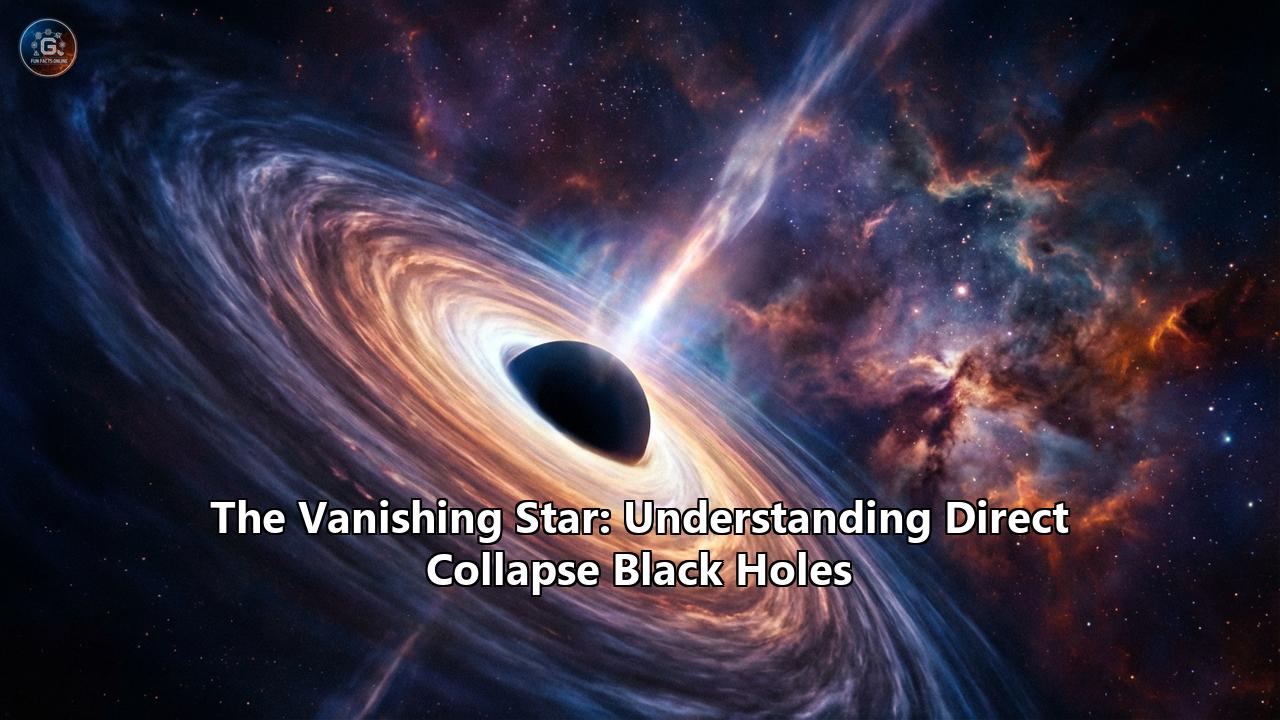
Introduction: The Paradox of the Giants
For decades, astrophysicists were haunted by a mathematical impossibility. As we peered deeper into the cosmos, looking back at the dawn of time, we began to see monsters that shouldn't exist. Quasars—bright beacons powered by supermassive black holes—were spotted in the very infant universe, mere hundreds of millions of years after the Big Bang.
These ancient giants, some weighing a billion times the mass of our Sun, posed a fundamental problem. In the standard model of cosmic evolution, black holes begin as "light seeds"—the corpses of the first massive stars, weighing perhaps 10 to 100 solar masses. These seeds would then grow by feeding on gas and merging with other black holes. But the math simply didn't add up. Even if these seeds fed constantly at their theoretical limit (the Eddington limit), there wasn't enough time in the early universe for them to reach the supermassive scales we observed. It was like finding a fully grown blue whale in a nursery pond.
To solve this paradox, theorists proposed a radical idea: What if some black holes didn't start as stars at all? What if they skipped the stellar phase entirely, forming from the catastrophic, monolithic collapse of pristine gas clouds?
This is the theory of Direct Collapse Black Holes (DCBHs). Once a fringe hypothesis, a cascade of discoveries from 2023 to early 2026 has transformed it into one of the most exciting frontiers in modern astronomy.
The Mechanism: The Star That Never Was
To understand a Direct Collapse Black Hole, one must first understand why they are so difficult to make. In the modern universe, gas clouds that collapse under gravity almost always fragment. As the gas compresses, it heats up. If it can cool down efficiently—usually through the emission of radiation by molecules and dust—it breaks into smaller clumps, forming a cluster of stars.
For a DCBH to form, this fragmentation must be stopped. You need a gas cloud to collapse into a single, massive object without breaking apart. This requires a "perfect storm" of cosmic conditions, achievable only in the unique environment of the early universe.
1. The Pristine Halo
The process begins in an "atomic cooling halo"—a primordial cloud of gas composed almost entirely of hydrogen and helium. Heavier elements (metals), which are efficient coolants, must be absent. If metals are present, they cool the gas too quickly, leading to fragmentation and normal star formation.
2. The Lyman-Werner Suppression
Even without metals, molecular hydrogen ($H_2$) is a potent coolant. To prevent the cloud from turning into stars, the formation of $H_2$ must be suppressed. This is where Lyman-Werner radiation comes in. This specific band of ultraviolet light, emitted by nearby, young galaxies, acts as a sterilizing wind. It dissociates molecular hydrogen back into atomic hydrogen.
Atomic hydrogen is a poor coolant compared to its molecular cousin. It traps heat within the cloud, keeping the temperature high (around 8,000 Kelvin).
3. The Isothermal Collapse
Kept hot by the lack of coolants, the gas pressure remains high, fighting against gravity. This prevents the cloud from breaking into small stellar clumps. Instead, the cloud grows massive, accumulating roughly 100,000 to 1,000,000 solar masses of gas. Eventually, gravity wins. The entire cloud undergoes a catastrophic, rapid collapse.
Instead of a star, the core collapses directly into a massive singularity—a "heavy seed" black hole weighing tens of thousands of solar masses at birth. In this scenario, the "star" vanishes before it is ever born.
The Evidence: A Revolution in Observation (2023–2026)
For years, DCBHs were purely theoretical. But the launch of the James Webb Space Telescope (JWST) and its synergy with the Chandra X-ray Observatory has ushered in a golden age of detection.
The UHZ1 Breakthrough (2023-2024)
The smoking gun arrived with the discovery of the galaxy UHZ1. Located at a redshift of $z \approx 10.1$ (seen as it was just 470 million years after the Big Bang), UHZ1 hosted a black hole that was shockingly massive.
Using X-ray data from Chandra and infrared data from JWST, a team led by Akos Bogdan and Priyamvada Natarajan found that the black hole in UHZ1 weighed roughly 40 million solar masses. Crucially, this mass was comparable to the total stellar mass of the entire galaxy. In the modern universe, black holes are typically only 0.1% of their host galaxy's mass. The 1:1 ratio in UHZ1 was a telltale sign of a "heavy seed"—a black hole that started big, likely via direct collapse, rather than growing slowly from a stellar remnant.
The Mystery of the "Little Red Dots" (2025)
As JWST continued its survey of the deep universe, it began picking up a swarm of baffling objects dubbed "Little Red Dots" (LRDs). These objects were compact, extremely red (indicating high dust or distance), and surprisingly bright.
Initially, astronomers were divided. Were these massive star-forming galaxies, or active black holes? By 2025, spectroscopic analysis revealed that many LRDs were indeed powered by supermassive black holes. However, their abundance and mass relative to their host galaxies defied standard accretion models.
In a landmark paper published in early 2026, researchers including Fabio Pacucci confirmed that the properties of several LRDs—specifically their thermal emission profiles and lack of X-ray signatures associated with typical accretion disks—matched the predicted signatures of Direct Collapse Black Holes. These LRDs are likely the long-sought population of heavy seeds, captured in their adolescent growth phase.
The "Infinity Galaxy" Candidate
In July 2025, another compelling candidate emerged: the so-called "Infinity Galaxy." Discovered in the COSMOS-Web survey, this system features two colliding galaxies that form an infinity symbol shape. Nestled between the two nuclei—not inside them—lies a massive black hole surrounded by a pristine cloud of gas.
The location is key. The collision likely provided the intense Lyman-Werner radiation needed to sterilize the gas cloud, triggering a direct collapse in the bridge between the galaxies. This object offers a rare glimpse of a DCBH forming in a "satellite" environment, rather than the center of a protogalaxy.
The "Other" Vanishing Star: Failed Supernovae
While the term "Direct Collapse" usually refers to the primordial cloud scenario described above, it has a secondary meaning in stellar astrophysics that is equally fascinating. We have recently observed massive stars in the local universe that simply... disappear.
In these rare cases, a massive, evolved star (typically a red supergiant) reaches the end of its life but fails to explode as a supernova. The core collapses so completely that the shockwave meant to drive the explosion stalls and falls back. The entire star is swallowed by the newly formed black hole from the inside out.
The most famous example, M31-2014-DS1 (discovered in Andromeda), was a star that brightened slightly and then vanished from optical view, leaving only a faint infrared glow. While these stellar-mass direct collapses produce "light seeds" (10-20 solar masses) and do not solve the supermassive black hole puzzle, they provide crucial observational proof that nature can bypass the explosive feedback loop we once thought was inevitable.
Implications: Rethinking Cosmic History
The confirmation of Direct Collapse Black Holes forces a rewrite of the history of the universe.
- The Fast Track to Giants: We now know that the universe has a "fast track" for black hole formation. It doesn't always need to wait for stars to live, die, and merge. It can forge titans directly from the raw material of the Big Bang.
- Galaxy Co-Evolution: The discovery of "Over-Massive Black Hole Galaxies" (OBGs) like UHZ1 suggests that in the early universe, the black hole often formed before or alongside the galaxy, rather than settling into a pre-existing one. The black hole is not just a passenger; it is a foundational anchor.
- The End of the Dark Ages: DCBHs would have been significant sources of radiation in the Epoch of Reionization. Their accretion disks, glowing with the heat of infalling gas, helped clear the cosmic fog of neutral hydrogen, rendering the universe transparent to light.
The Future of the Hunt
As we move through 2026, the hunt intensifies. The next generation of observations aims to detect the "birth cry" of a DCBH. Theorists predict that the collapse of such a massive cloud should emit a unique gravitational wave signal—a low-frequency rumble that future detectors like LISA (Laser Interferometer Space Antenna) will be able to hear.
For now, the James Webb Space Telescope remains our primary eye on this ancient era. Every "Little Red Dot" it analyzes brings us closer to understanding how the dark hearts of our universe began to beat. The vanishing star is no longer a magic trick; it is a fundamental mechanism of cosmic creation, a reminder that in the violent forge of the early universe, destruction and creation were one and the same.
Reference:
- https://www.astronomy.com/science/astronomers-may-have-spotted-a-direct-collapse-black-hole/
- https://www.forbes.com/sites/startswithabang/2017/12/26/direct-collapse-black-holes-may-explain-our-universes-mysterious-quasars/
- https://www.theguardian.com/science/2025/sep/02/primordial-black-hole-big-bang-james-webb-space-telescope
- https://en.wikipedia.org/wiki/Direct_collapse_black_hole
- https://www.universetoday.com/articles/the-little-red-dots-observed-by-webb-were-direct-collapse-black-holes
- https://arxiv.org/abs/1406.7020
- https://www.reddit.com/r/space/comments/1m1qifc/nasas_webb_finds_possible_direct_collapse_black/
- https://www.reddit.com/r/jameswebbdiscoveries/comments/1m78m4y/the_jwst_might_have_found_the_first/
- https://arxiv.org/pdf/2509.25325
- https://academic.oup.com/mnras/article/470/4/4034/3871370
- https://academic.oup.com/mnras/article/475/4/4636/4810577
- https://arxiv.org/pdf/2503.19414
- https://arxiv.org/abs/2308.02654
- https://skyandtelescope.org/astronomy-news/black-hole-may-have-formed-by-direct-collapse/
- https://science.nasa.gov/blogs/webb/2025/07/15/nasas-webb-finds-possible-direct-collapse-black-hole/
- https://timesofindia.indiatimes.com/science/james-webb-space-telescope-captures-evidence-of-black-hole-birth-via-direct-collapse/articleshow/123656291.cms