
For nearly twelve years, NASA’s Curiosity rover has operated as humanity’s surrogate geologist, tirelessly crawling across the frozen, irradiated landscape of Gale Crater. The nuclear-powered, SUV-sized robot has drilled into mudstones, analyzed ancient atmospheric gases, and slowly climbed the flanks of Mount Sharp (Aeolis Mons)—a towering central peak whose layered stratigraphy serves as a three-mile-high time machine. Yet, even after a decade of groundbreaking discoveries, the Red Planet proved it still had secrets waiting to be uncovered.
On May 30, 2024, the rover lumbered over a seemingly unremarkable rock strewn across a winding, boulder-choked scar known as the Gediz Vallis channel. The 899-kilogram (1,982-pound) machine inadvertently crushed the stone beneath its six aluminum wheels. When Curiosity’s operators directed the rover’s cameras to inspect the damage, what they saw completely upended our understanding of Mars’ chemical and climatic history. Spilling out of the freshly cracked rock were brilliant, yellowish-green crystals of pure, elemental sulfur.
Until that moment, pure sulfur had never been detected on Mars. While the planet is famously rich in sulfur-based salts called sulfates, finding a deposit of unoxidized, native sulfur sitting plainly on the surface was an astrobiological and geological shock. Ashwin Vasavada, Curiosity’s project scientist at NASA’s Jet Propulsion Laboratory, captured the awe of the scientific community: “Finding a field of stones made of pure sulfur is like finding an oasis in the desert. It shouldn’t be there, so now we have to explain it”.
This accidental discovery within the Gediz Vallis channel has rapidly become one of the most significant chapters in the story of Mars. The channel itself—a steep, 9-kilometer-long canyon carved into the sulfate-bearing unit of Mount Sharp—offers an unprecedented glimpse into the violent, episodic death of the Martian hydrosphere. By decoding the sediments, the boulders, and the unexpected brimstone of Gediz Vallis, scientists are fundamentally rewriting the timeline of how Mars transitioned from a habitable, water-rich world to a barren desert.
The Canvas of Gale Crater and the Ascent of Mount Sharp
To understand the profound significance of the Gediz Vallis channel, one must first understand the stage upon which it is set. Approximately 3.7 billion years ago, a massive meteor strike punched a hole in the Martian crust, creating Gale Crater. In the ensuing epochs, Gale Crater was a dynamic environment. Liquid water flowed into the basin from rivers fed by rain or melting snow, pooling to form a massive, long-lived lake. Over millions of years, sediments settled at the bottom of this lake, layer upon layer.
When the Martian climate eventually shifted—likely driven by the loss of the planet’s magnetic field and the subsequent stripping of its atmosphere by solar winds—the lakes evaporated. The once-submerged sediments were exposed to fierce Martian winds, which relentlessly carved away the softer material. What was left behind was Aeolis Mons, known colloquially as Mount Sharp, a massive mountain of sedimentary rock rising five kilometers above the crater floor.
Because the mountain is constructed from stacked layers of sediment, ascending Mount Sharp is akin to reading a geological history book from bottom to top. The lowest layers, where Curiosity began its journey in 2012, are rich in smectite clay minerals. On Earth, clays form exclusively in the presence of stable, neutral-pH liquid water. The discovery of these clays confirmed that ancient Mars possessed the necessary conditions to support microbial life.
However, as Curiosity has driven higher into younger geological terrain, the composition of the rocks has drastically changed. The rover recently crossed a major transitional boundary, leaving the clay-bearing units behind and entering a vast region dominated by sulfates. Sulfates, such as calcium and magnesium sulfates, are salts that precipitate when salty water undergoes intense evaporation. The presence of these expansive sulfate-bearing units was meant to signify the end of the line for Martian water—a definitive geological marker recording the long, dry death of the planet.
But geology is rarely so simple. Cutting directly through this supposedly dry, barren sulfate layer is the Gediz Vallis channel.
Anatomy of a Martian Mystery: The Gediz Vallis Channel
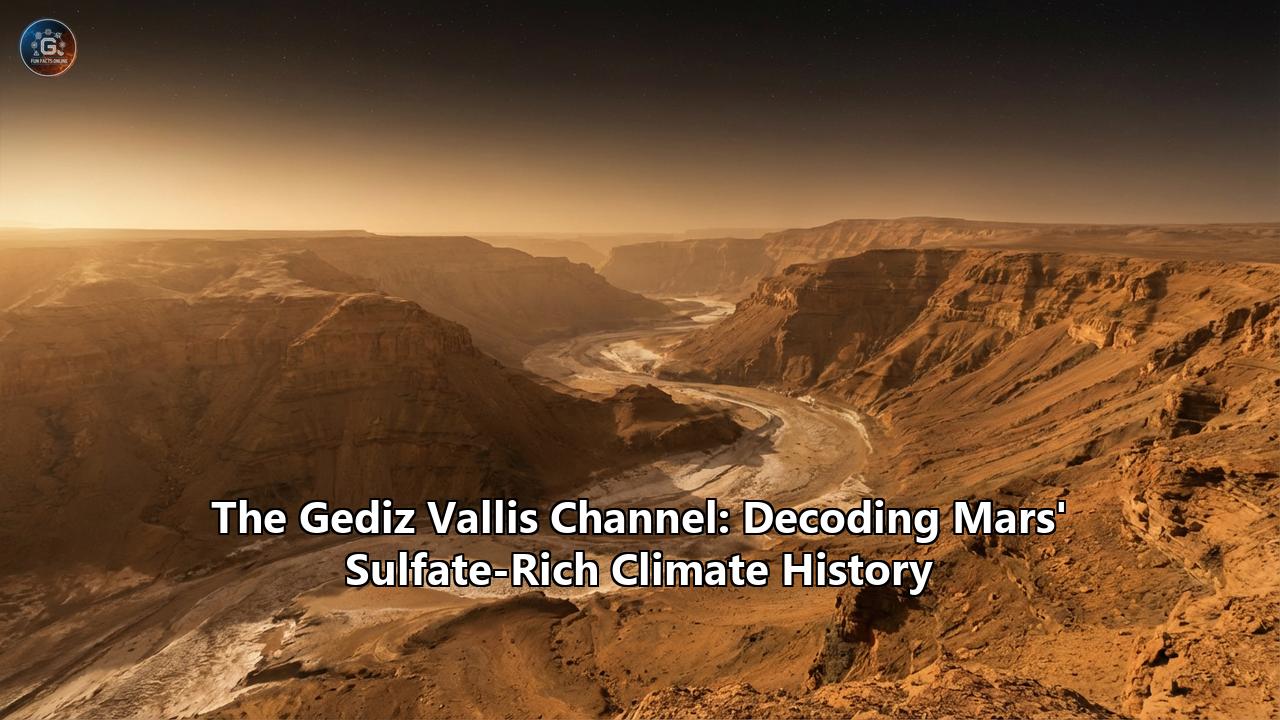
Gediz Vallis is a winding, steep-walled channel that incises deeply into the northern margins of Mount Sharp. From the vantage point of orbital satellites like the Mars Reconnaissance Orbiter, it looks unmistakably like a dried-up riverbed. However, its placement creates a profound chronological paradox.
If the sulfate-bearing layers represent a time when Mars had already lost its surface water, how could a massive, water-carved channel cut through them? The stratigraphy dictates that the channel must have formed significantly later than the rock layers it cuts into. This means that long after Mars was believed to have entered a permanent, arid deep-freeze, liquid water must have returned to the slopes of Mount Sharp in a spectacular fashion. As Vasavada noted, if liquid water formed this channel, "It would mean that fairly late in the story of Mount Sharp – after a long dry period – water came back, and in a big way".
As Curiosity approached the channel in 2022 and began traversing its interior, the sheer violence of its formation became apparent. The rover spent months imaging and conducting in-situ investigations of features like the upper Gediz Vallis Ridge (uGVR). Utilizing advanced stereoscopic imaging from the Mastcam instrument and ChemCam's Long Distance Remote Micro Imager, scientists observed that the valley floor is choked with debris.
The terrain is not formed of fine river sand, but rather of loosely consolidated, exceptionally poorly sorted blocks of rock ranging from a few centimeters to massive boulders measuring up to 7 meters in diameter. Through detailed analysis using Pro3D software, geologists measured the clasts at a specific study site called "Region B" and found that their size and chaotic distribution argue against gentle, continuous river flow. Furthermore, researchers determined that wind could not have created Gediz Vallis; the channel walls are far too steep for aeolian (wind-driven) erosion.
Instead, the evidence points to a late-stage environment characterized by catastrophic, gravity-driven debris flows and dry avalanches. These flows were likely a thick slurry of rocks, soil, and liquid water—a cohesive muddy matrix capable of transporting massive boulders down the mountainside. The presence of these deposits indicates that the transition from a wet Mars to a dry Mars was not a smooth, linear decline. Rather, the climate wildly oscillated. Water came and went in aggressive, episodic phases. Melting snow or localized hydrological events unleashed torrents of debris down the flanks of Mount Sharp long after the great lakes of Gale Crater had vanished.
The Crack Heard 'Round the Solar System
Curiosity’s exploration of Gediz Vallis was already yielding a treasure trove of paleoclimatic data, but nothing could have prepared the team for the events of late May 2024. As the rover navigated a field of pale, jagged stones rimmed with white halos, it rolled its immense weight over one of the rocks.
When the rock fractured, it exposed a blindingly bright interior of yellow crystals. Stuck hundreds of millions of miles away on Earth, the science team was astounded. To confirm the chemical makeup of the anomaly, Curiosity deployed the Alpha Particle X-ray Spectrometer (APXS) located on its robotic arm.
The APXS works by bombarding a target with alpha particles and X-rays, then measuring the energy of the X-rays emitted back by the sample. The results were unequivocal. The scatter and fluorescence data showed a massive spike in sulfur, but crucially, a significant depletion in light elements like oxygen. Furthermore, the analysis detected none of the cations—such as calcium (Ca2+) or magnesium (Mg2+)—that are the standard chemical signatures of the sulfate minerals (SO4) ubiquitous in Gale Crater.
This was not a sulfate. This was unoxidized, native sulfur (S0). It was pure brimstone.
"It is the first definitive native sulfur detected in any martian sample," noted an extensive report compiled by researchers associated with NASA's Johnson Space Center and the broader scientific community. To make matters even more surreal, panoramic imagery revealed that this wasn't an isolated meteorite fragment. The entire localized 2,100-square-meter field within the Gediz Vallis canyon was littered with similar pale, friable stones. Underneath a thin coating of Martian dust, the ground was essentially paved with elemental sulfur.
The Geochemical Conundrum
The discovery sent shockwaves through the planetary science community because the thermodynamic and environmental conditions required to form native sulfur are exceptionally narrow. On Earth, pure sulfur is typically found near hydrothermal vents, within active volcanic calderas, or produced by specialized sulfur-reducing bacteria.
Carl D. Hoff, a chemistry professor at the University of Miami, likened the discovery to finding chemicals from a vintage Gilbert Chemistry Set just sitting on the Martian surface. While Hoff noted that elemental sulfur can sometimes be delivered via meteorites, the sheer volume and localized distribution of the deposit within the Gediz Vallis canyon makes an exogenic (meteoritic) origin highly unlikely.
If it didn't come from space, how did an entire field of pure sulfur form in an environment dominated by highly oxidized sulfates?
Researchers quickly began running models to solve the mystery. According to the preliminary interpretations of the APXS data, the formation of this native sulfur likely involved a novel and complex sequence of transport, deposition, and preservation that does not rely on standard liquid water evaporation. One leading hypothesis suggests that the native sulfur formed via the oxidation of hydrogen sulfide (H2S) gas. Deep underground, a fluid rich in sulfur dioxide and hydrogen sulfide could have been trapped in clathrates or ices. Upon decompression and exposure to the Martian surface, the H2S decomposed, precipitating pure sulfur (S0) in place.
Crucially, the preservation of these fragile, friable sulfur stones implies an incredibly stable environment. Because elemental sulfur is highly reactive over long geological timescales, especially in the presence of water, the fact that it is still sitting on the surface tells us that after the catastrophic debris flows that formed Gediz Vallis subsided, this region entered a profound and unyielding state of aridity. The sulfur deposit was laid down and then persisted in a stable, dry environment for billions of years, perfectly preserved until a robotic wheel cracked it open.
Astrobiological Implications: The Stuff of Life
Whenever sulfur is mentioned in the context of planetary science, astrobiologists pay close attention. Sulfur is one of the six primary elements essential for life as we know it, alongside carbon, hydrogen, nitrogen, oxygen, and phosphorus (CHNOPS).
On Earth, organisms rely heavily on sulfur to build complex biological machinery. It is a fundamental building block of two essential amino acids—cysteine and methionine—which are required to synthesize proteins. In deep ocean hydrothermal vents, where sunlight cannot reach, entire ecosystems are powered by chemosynthesis, with microbes utilizing sulfur compounds to generate energy.
No scientist is claiming that the bright yellow crystals in Gediz Vallis are direct evidence of Martian life; the chemical pathways required to precipitate native sulfur can occur through purely abiotic (non-biological) geological processes. However, the discovery adds a vital puzzle piece to our understanding of Mars' past habitability. It demonstrates that Gale Crater possessed an incredibly complex and diverse chemical environment.
The fact that Mars was capable of hosting not just oxidized sulfates, but also reduced, elemental sulfur, means that a broader range of chemical reactions was possible on the ancient surface than previously thought. For a hypothetical Martian microbe trying to survive in the waning days of the planet's habitable era, this diversity of chemical states could have provided vital energy gradients to exploit. As NASA scientists meticulously noted, studying the Gediz Vallis region offers “a new way to study how the presence of both water and the chemical ingredients required for life changed over time”.
The Final Vistas: Pinnacle Ridge and The White Halos
Through the summer and early fall of 2024, Curiosity slowly maneuvered through the sulfur field, acting as an automated detective at a 3-billion-year-old crime scene. The rover examined the jagged sulfur stones, many of which were framed by distinctive "white halos".
Geologists suspect that dry avalanches originally brought these loose stones down the mountain. Later on, during brief, intermittent wet periods, local water soaked into the surrounding terrain. Capillary action and chemical weathering created the white, likely sulfate-rich crusts around the pure sulfur cores, acting as a protective shell that further ensured their survival through the eons.
Looking out across the channel, Curiosity's Mastcam captured breathtaking 360-degree panoramas of the surrounding features. Among these is "Pinnacle Ridge," a towering debris mound left behind by the chaotic interplay of wet debris flows and dry rockfalls. The visual data allows the science team back on Earth to reconstruct a rigorous timeline of events—mapping exactly when the river flowed, when the mudslides crashed down, and when the final winds swept the valley floor clean.
On October 11, 2024 (the 4,331st Martian day, or sol, of the mission), Curiosity used its Mastcam to capture a final, poignant look at the field of bright white sulfur stones. The colors of the image were carefully adjusted by JPL imaging specialists to reflect how the scene would look to the human eye under Earth-like lighting conditions. It stands as a visual monument to one of the most serendipitous discoveries in the history of space exploration. By November 2, 2024, Curiosity had officially headed west, capturing one last panorama of the channel fading into the distance behind it, its own wheel tracks permanently scarred into the Martian regolith.
Beyond the Channel: The Boxwork Awaits
Having conquered the mysteries of the Gediz Vallis channel, Curiosity's mission is far from over. The rover is now embarking on a months-long trek toward an entirely new and equally perplexing geological target: the boxwork formation.
Spanning a massive area of 6 to 12 miles (10 to 20 kilometers) across the slopes of Mount Sharp, the boxwork looks from orbit like a vast, geometric spiderweb draped over the landscape. On Earth, similar boxwork structures are occasionally found on cliff faces or deep within cave systems, forming when minerals precipitate inside intersecting fractures in rock, and the softer host rock later erodes away, leaving only the hardened mineral "web" behind.
However, the Martian boxwork is unique both in its staggering scale and its formational timeline. Like the Gediz Vallis channel, these structures materialized late in Mars' history, right as the surface water was permanently retreating.
Kirsten Siebach, a planetary geologist from Rice University and a scientist on the Curiosity team, highlighted the immense astrobiological potential of the upcoming target: “These ridges will include minerals that crystallized underground, where it would have been warmer, with salty liquid water flowing through”. Because the surface of Mars was becoming increasingly inhospitable, hostile, and frozen, any potential microbial life would likely have retreated deep beneath the crust. As Siebach noted, “Early Earth microbes could have survived in a similar environment. That makes this an exciting place to explore”.
As Curiosity wheels toward this subterranean graveyard of crystallized minerals, it carries with it the lessons learned from Gediz Vallis. The transition from a blue water-world to a red desert was not a gentle fading of the light. It was a violent, complex, and chemically rich epoch marked by catastrophic debris flows, shifting climates, and the localized precipitation of life-sustaining elements like native sulfur.
The Enduring Legacy of the Oasis in the Desert
The exploration of the Gediz Vallis channel stands as a masterclass in the value of sustained, on-the-ground planetary exploration. When NASA engineers first designed the Mars Science Laboratory, they could only dream of the geological nuances it would uncover. Orbiters circling high above can identify broad mineralogical trends, mapping out the large expanses of clays and sulfates, but they cannot crack open a rock. They cannot witness the bright flash of yellow brimstone hiding just millimeters beneath a dusty facade.
The discovery of pure sulfur in the Gediz Vallis channel proves that our understanding of the Red Planet is still in its infancy. Mars is not merely a dead, static rock; it is a world with a rich, dynamic, and unexpectedly beautiful history. It possessed an environment where rivers raged long after they were thought to have dried up, where entire mountainsides gave way in thunderous avalanches, and where pure sulfur crystalized in hidden oases.
As Curiosity continues its solitary climb up the lonely slopes of Mount Sharp, leaving the yellow crystals and boulder-strewn canyons behind, it serves as humanity’s tireless pioneer. With every turn of its scarred wheels, it redefines the boundaries of planetary science, ensuring that the story of Mars’ climate history is written not in broad, speculative strokes, but in the precise, shimmering light of a cracked Martian stone.
Reference:
- https://timesofindia.indiatimes.com/science/nasas-curiosity-rover-uncovers-rare-sulphur-stones-on-mars-through-gediz-vallis-exploration/articleshow/115498211.cms
- https://news.miami.edu/stories/2024/08/an-oasis-in-the-desert-on-mars.html
- https://astrobiology.com/2024/11/mars-rover-curiosity-panorama-of-gediz-vallis-channel.html
- https://www.space.com/curiosity-ancient-water-stream-mars-rover
- https://www.astronomy.com/science/lucky-break-revealed-a-surprise-on-mars/
- https://www.sciencealert.com/curiosity-cracked-open-a-rock-on-mars-and-discovered-a-big-surprise
- https://www.hou.usra.edu/meetings/lpsc2025/pdf/1208.pdf
- https://www.vice.com/en/article/nasas-curiosity-rover-found-something-strange-hidden-on-mars/
- https://meetingorganizer.copernicus.org/EGU24/EGU24-5319.html
- https://learningenglish.voanews.com/a/mars-explorer-arrives-at-new-area-in-search-for-evidence-of-water-life/7555600.html
- https://qz.com/nasa-curiosity-mars-rover-picture-water-1851379556
- https://science.nasa.gov/resource/curiosity-takes-a-last-look-at-sulfur-stones/