
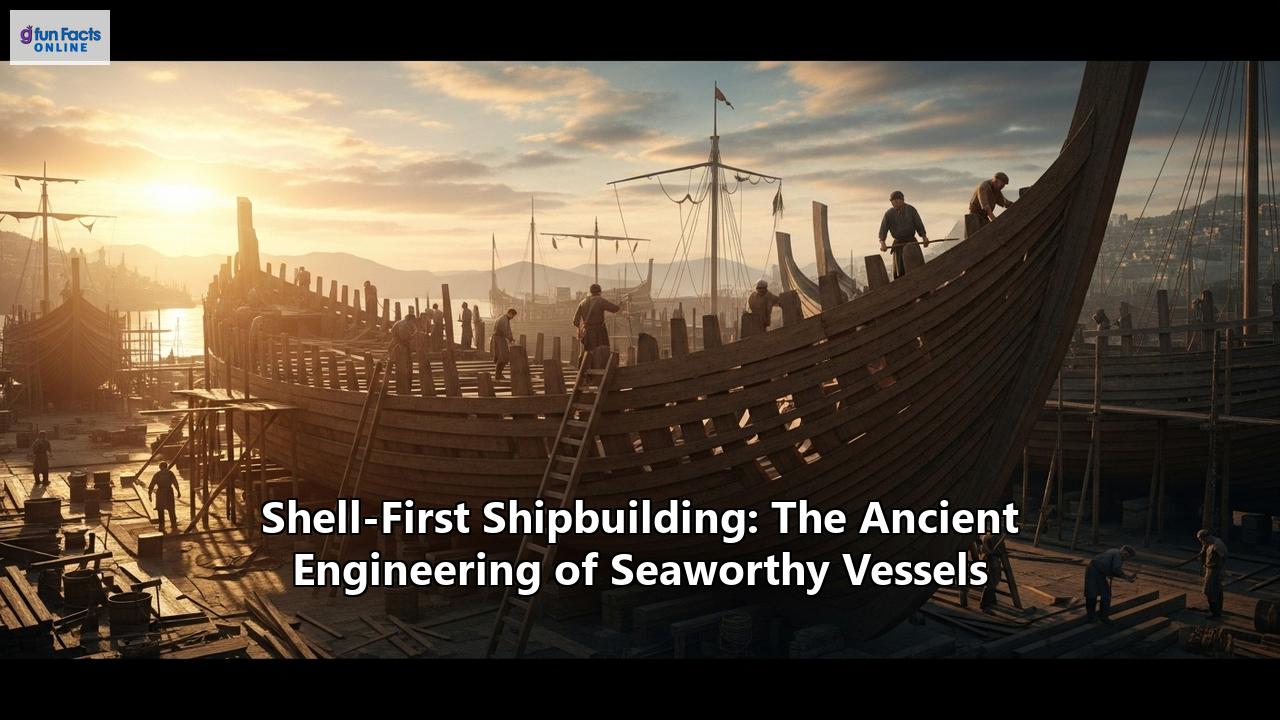
The Dawn of Seafaring: An Ancient Engineering Marvel
Long before the age of steam and steel, a revolutionary method of shipbuilding enabled ancient civilizations to conquer the seas, fostering trade, exploration, and cultural exchange on an unprecedented scale. This technique, known as shell-first construction, was a testament to the ingenuity and craftsmanship of early shipwrights who, without the aid of detailed blueprints or modern machinery, built remarkably seaworthy vessels. From the sun-drenched banks of the Nile to the rugged fjords of Scandinavia and the vast expanses of the Pacific Ocean, this ancient engineering marvel laid the foundation for the maritime world we know today.
The core principle of shell-first construction is elegantly simple: the outer hull, or the "shell," of the vessel is constructed first, and the internal framework is added later for reinforcement. This approach is in direct contrast to the frame-first method that would later dominate shipbuilding, where a skeletal frame is built first and then covered with planks. The shell-first technique, in its various forms, was not just a construction method; it was a philosophy of shipbuilding that relied on the inherent strength of the materials and the skill of the artisan to create a strong, flexible, and resilient vessel.
A Global Legacy: The Many Faces of Shell-First Construction
The story of shell-first shipbuilding is a global one, with different cultures developing unique variations of the technique, each adapted to their specific needs and available resources.
The Mediterranean: Masters of Mortise-and-Tenon
In the ancient Mediterranean, the dominant form of shell-first construction was the mortise-and-tenon method. This technique involved cutting a slot, or mortise, into the edge of a plank and a corresponding tongue, or tenon, on the adjoining plank. These were then fitted together and secured with wooden pegs, creating a strong and rigid hull.
The ancient Egyptians were early pioneers of this method. The famed Khufu ship, a solar barque discovered near the Great Pyramid of Giza and dating back to around 2500 BC, is a stunning example of their mastery. This massive vessel, measuring over 140 feet in length, was constructed from cedar planks joined together with unpegged mortise-and-tenon joints and lashed with ropes of Halfah grass. The builders first created the outer shell, and then inserted the internal framework to provide additional support. The discovery of numerous other ceremonial boats, such as the Abydos boats, further underscores the importance of this shipbuilding tradition in ancient Egypt. These vessels, though likely not intended for long sea voyages, demonstrate the advanced woodworking skills of the Egyptians and their deep cultural connection to the water.
The Greeks and Romans also adopted and refined the mortise-and-tenon technique for their merchant ships and warships. The Kyrenia ship, a Greek merchant vessel that sank off the coast of Cyprus around the 3rd century BC, is a remarkably well-preserved example of this construction method. Its hull was built shell-first with closely spaced mortise-and-tenon joints, creating a strong and durable vessel capable of carrying heavy cargoes of wine and olive oil. The Uluburun shipwreck, discovered off the coast of Turkey and dating to the Late Bronze Age, provides even earlier evidence of this technique. This vessel, built with a shell-first approach using mortise-and-tenon joints, carried a diverse cargo that reveals extensive trade networks across the ancient world. The Romans, initially a land-based people, learned shipbuilding from the Greeks and Carthaginians and became formidable maritime power. They initially employed the shell-first method with mortise-and-tenon joints before gradually transitioning to frame-first construction in the first centuries AD.
The Vikings: Lords of the Clinker-Built Longship
In Northern Europe, the Vikings developed a distinct and highly effective form of shell-first construction known as clinker-building, or lapstrake. This method involved overlapping the hull planks and fastening them together with iron rivets. This created a hull that was both strong and flexible, able to withstand the harsh conditions of the North Atlantic.
The Viking longship, a symbol of their maritime prowess, was a masterpiece of clinker construction. The process began with the laying of a keel, to which the stem and stern posts were attached. The shipwrights then built up the hull, plank by plank, overlapping each one and securing it with rivets. The internal frames were then fitted and fastened to the hull, providing the necessary reinforcement. The result was a vessel that was light, fast, and incredibly seaworthy, capable of both long ocean voyages and navigating shallow rivers.
Archaeological discoveries of Viking ships, such as the Gokstad and Skuldelev ships, have provided invaluable insights into their construction. The Gokstad ship, a 9th-century vessel found in a burial mound in Norway, is a magnificent example of a clinker-built longship. Its well-preserved remains reveal the intricate details of its construction, from the overlapping oak planks to the complex system of ribs and crossbeams. The Skuldelev ships, a collection of five Viking vessels deliberately sunk in a Danish fjord in the 11th century to create a defensive barrier, showcase the diversity of Viking watercraft, from large warships to smaller trading vessels.
The Austronesian Peoples: Voyagers of the Pacific
Across the vast expanse of the Pacific Ocean, the Austronesian peoples developed their own unique form of shell-first shipbuilding known as the lashed-lug technique. This method involved carving lugs, or cleats, on the inner face of the hull planks. These lugs had holes drilled in them, allowing the planks to be lashed together and to the internal ribs with ropes made from natural fibers.
The lashed-lug technique was a key innovation that enabled the Austronesians to undertake their remarkable voyages of exploration and settlement across the Pacific. The process began with the shaping of a dugout canoe, which formed the base of the hull. Planks were then added to the sides, sewn or doweled together at the edges, and lashed to the internal ribs through the lugs. This method created a strong and flexible hull that could withstand the stresses of ocean travel without the need for metal fastenings. Archaeological evidence for lashed-lug boats has been found throughout Southeast Asia and the Pacific, with some of the oldest examples dating back to the first few centuries AD.
The Art and Science of Shell-First Shipbuilding: A Step-by-Step Process
The construction of a shell-first vessel was a complex and labor-intensive process that required a deep understanding of materials and a high level of craftsmanship. While the specific techniques varied from culture to culture, the fundamental steps remained remarkably consistent.
The Foundation: Keel and Planking
The process typically began with the laying of the keel, the backbone of the ship. In some cases, as with many Austronesian vessels, a dugout canoe served as the starting point. The shipwrights would then begin to build up the hull, plank by plank, carefully shaping each one to fit snugly against its neighbor.
In the Mediterranean, the mortise-and-tenon method required precise cutting of joints to ensure a tight fit. The Egyptians used a variety of tools, including saws, axes, adzes, chisels, and drills, to shape the cedar planks for their vessels. The Greeks and Romans employed a similar array of tools, with the addition of specialized instruments for creating the intricate mortise-and-tenon joints.
The Vikings, on the other hand, relied on the clinker technique, overlapping the planks and fastening them with iron rivets. This method required a different set of skills, with the shipwrights carefully shaping the planks to achieve the desired curve of the hull. They used axes, adzes, and draw knives to smooth the planks and augers to drill holes for the rivets.
The Austronesian peoples, with their lashed-lug technique, had a unique approach. They carved lugs on the inside of the planks and used them to lash the hull together. This method, while not requiring metal fasteners, demanded a deep knowledge of lashing techniques and the properties of different types of rope.
The Framework: Adding the Ribs
Once the shell of the hull was complete, the internal framework was added. This consisted of a series of ribs and crossbeams that provided additional strength and support. In the mortise-and-tenon tradition, the frames were often fastened to the hull with wooden pegs or metal nails. The Vikings lashed their frames to the hull, a technique that contributed to the flexibility of their longships. Similarly, the Austronesians used their lashed-lug system to secure the ribs to the hull.
The Finishing Touches: Waterproofing and Propulsion
With the hull and frame complete, the shipwrights would then turn their attention to the finishing touches. Waterproofing was a critical step, and various methods were employed. The Egyptians used a mixture of resin and bitumen to seal the seams of their ships, while the Vikings used tarred animal hair or wool.
Finally, the vessel was equipped with its means of propulsion. This could range from a simple set of oars to a complex arrangement of masts and sails. The design and rigging of the sails were just as important as the construction of the hull, and different cultures developed their own unique sail plans to suit their specific needs.
A Legacy in Wood: The Enduring Impact of Shell-First Shipbuilding
The shell-first method of shipbuilding was a remarkable achievement of ancient engineering. For millennia, it was the dominant method of constructing seagoing vessels, enabling the rise of great maritime powers and the spread of trade and culture across the globe. However, by the end of the first millennium AD, a new method of construction began to emerge in the Mediterranean: the frame-first technique.
The transition from shell-first to frame-first was a gradual process, driven by a variety of economic, social, and technological factors. The frame-first method offered several advantages, including greater efficiency in the use of timber and a more systematic approach to construction that allowed for the building of larger and more standardized vessels. While the shell-first method required highly skilled craftsmen to shape each plank individually, the frame-first method allowed for a more specialized workforce, with some workers focusing on building the frame and others on attaching the planks.
Despite its eventual decline, the legacy of shell-first shipbuilding endures. The archaeological remains of ancient vessels, from the majestic Khufu ship to the rugged Viking longships, stand as a testament to the skill and ingenuity of the ancient shipwrights who built them. These remarkable artifacts provide us with a window into the past, revealing the secrets of an ancient engineering tradition that forever changed the course of human history. The principles of strength, flexibility, and resilience embodied in these ancient vessels continue to inspire and inform shipbuilders to this day, a timeless tribute to the enduring power of human innovation.
Reference:
- https://unionrayo.com/en/greek-shipwreck-kyrenia-treasures/
- https://historyegypt.org/technology/khufu-ship
- https://thecuriousegyptologist.com/2021/07/23/ships-and-boats-in-ancient-egypt/
- https://hardwoodsgroup.com/comprehensive-guide-to-mortise-and-tenon-joints/
- https://physicsworld.com/a/revised-calibration-curve-improves-radiocarbon-dating-of-ancient-kyrenia-shipwreck/
- https://madainproject.com/khufu_ship
- https://en.wikipedia.org/wiki/Khufu_ship
- https://en.wikipedia.org/wiki/Abydos_boats
- https://en.wikipedia.org/wiki/Ancient_Egyptian_royal_ships
- https://en.wikipedia.org/wiki/Kyrenia_(ship))
- https://greekreporter.com/2024/11/13/discovery-reveals-secrets-of-the-famed-greek-kyrenia-shipwreck/
- https://africame.factsanddetails.com/article/entry-206.html
- https://www.pastmariners.org/post/the-kyreneia-ii
- https://www.heritagedaily.com/2022/12/new-study-of-uluburun-shipwreck-reveals-ancient-trade-network/145420
- https://en.wikipedia.org/wiki/Uluburun_shipwreck
- https://www.researchgate.net/publication/280210545_ULUBURUN_-_THE_DISCOVERY_AND_EXCAVATION_OF_THE_WORLD'S_OLDEST_KNOWN_SHIPWRECK/fulltext/55f847c908ae07629dd25fee/ULUBURUN-THE-DISCOVERY-AND-EXCAVATION-OF-THE-WORLDS-OLDEST-KNOWN-SHIPWRECK.pdf
- https://www.ancientportsantiques.com/wp-content/uploads/Documents/ETUDESarchivees/Navires/Min%20of%20the%20Desert/Min-Ward2021.pdf
- https://www.vikingeskibsmuseet.dk/en/visit-the-museum/exhibitions/the-five-viking-ships
- https://paganheim.com/blogs/archaeology/skuldelev-ships-viking-defense-trade-and-naval-innovation
- https://penelope.uchicago.edu/encyclopaedia_romana/britannia/anglo-saxon/maldon/gokstad.html
- https://en.wikipedia.org/wiki/Gokstad_ship
- https://modelshipworld.com/topic/11957-gokstad-viking-ship-by-jackaubrey-finished-dusek-ship-kits-135-scale/
- https://en.wikipedia.org/wiki/Skuldelev_ships
- https://archaeology.org/issues/online/collection/skuldelev-ships/historys-10-greatest-wrecks/
- https://www.unior.it/sites/default/files/2024-03/Sesaria%20Mochtar%20Agni%20-%20RESEARCH%20PROJECT.pdf
- https://en.wikipedia.org/wiki/Austronesian_vessels
- https://en.wikipedia.org/wiki/Lashed-lug_boat
- https://www.ancientportsantiques.com/wp-content/uploads/Documents/ETUDESarchivees/Navires/Documents/Pomey2012-ShipHulls.pdf
- https://www.tandfonline.com/doi/abs/10.1111/j.1095-9270.2012.00357.x
- https://www.cambridge.org/core/journals/radiocarbon/article/abs/1st-millennium-ad-mediterranean-shipbuilding-transition-at-dortantura-lagoon-israel-dating-the-dor-20011-shipwreck/E068FC4F02E494AAAAEF3982EE6BDDFE
- https://cris.haifa.ac.il/en/publications/transition-from-shell-to-skeleton-in-ancient-mediterranean-ship-c