
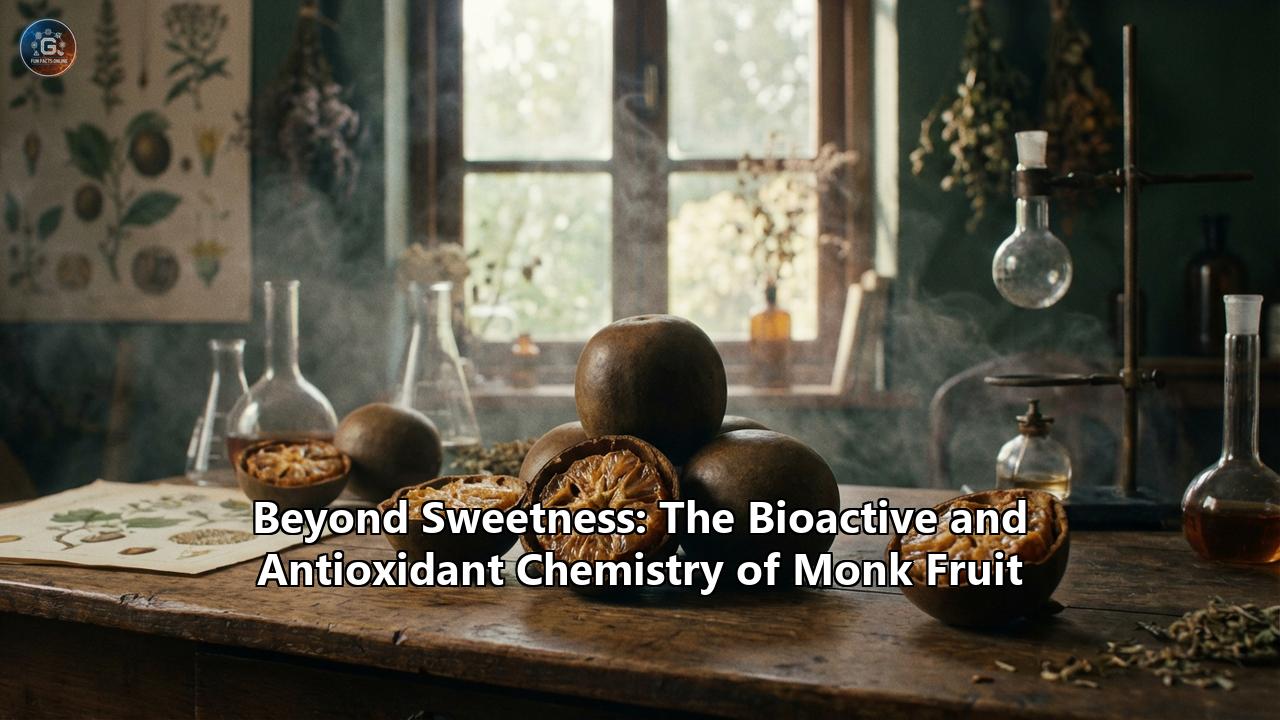
In the mist-shrouded mountains of Guilin, in the Guangxi province of Southern China, grows a vine that has been whispered about in herbalist circles for centuries. For generations, the local monks—the Luo Han—cultivated a peculiar, round fruit. They did not prize it for its sugar, but for its qi. They brewed it into elixirs to soothe the lungs, calm the throat, and restore balance to the body’s internal heat. They called it Luo Han Guo, the fruit of the Arhats.
For the modern world, this botanical curiosity—now known globally as Monk Fruit (Siraitia grosvenorii)—has largely been pigeonholed as a keto-friendly sweetener, a mere sugar substitute in the war against calories. We see it on the shelves of health food stores, a white powder promising guilt-free indulgence. But to view Monk Fruit merely as a "sweetener" is to ignore a complex biochemical symphony that has played out in traditional Chinese medicine (TCM) for nearly a millennium.
Science is finally catching up to the monks. Beyond the intense sweetness lies a powerhouse of bioactive chemistry: a library of triterpene glycosides, flavonoids, and polysaccharides that act as potent antioxidants, anti-inflammatory agents, and metabolic regulators. This is not just a story about replacing sugar; it is a story about a fruit that fundamentally interacts with our cellular machinery to combat oxidative stress, modulate our gut microbiome, and potentially rewrite the narrative of metabolic disease.
This article delves deep into the bio-machinery of Siraitia grosvenorii. We will strip away the marketing gloss and examine the molecular reality of Monk Fruit, exploring how its unique compounds—the mogrosides—function not just on our taste buds, but within our blood, our cells, and our DNA.
Part I: The Botanical and Historical Matrix
To understand the chemistry of Monk Fruit, one must first understand its biological origins. Siraitia grosvenorii is a herbaceous perennial vine belonging to the Cucurbitaceae family, making it a distant cousin of the cucumber, melon, and squash. However, unlike its robust relatives that thrive in common gardens, the Monk Fruit vine is temperamental. It demands the specific microclimate of the misty, subtropical mountains of Guangxi. It requires the diffuse light of the mountain fog, the specific mineral composition of the rocky slopes, and a delicate balance of humidity.
This geographical isolation contributed to its mystique. For centuries, it was a local secret. The first written record of the fruit appears in the records of the 13th-century monks, who used it to treat "heat" patterns—chronic coughs, sore throats, and constipation. In the paradigm of TCM, these ailments are often manifestations of inflammation and dehydration. The monks didn't know it, but they were treating inflammation with one of nature’s most potent anti-inflammatory agents.
The fruit itself is small, round, and green, turning brown as it dries. Historically, the fresh fruit was rarely used because it ferments and rots quickly due to its high sugar content and volatile compounds. Thus, the drying process became an integral part of its identity. The traditional slow-baking of the fruit not only preserved it but likely altered its chemical profile, concentrating the mogrosides and creating the caramel-like flavor notes associated with the whole dried fruit.
The Cultivation ChallengeThe modern cultivation of Monk Fruit is a feat of agricultural science. The plant is dioecious, meaning it has separate male and female plants. In the wild, pollination depends on specific insects. In commercial farming, human intervention is often required to ensure high yields. The extraction of the active compounds is equally complex. Unlike squeezing an orange for juice, obtaining the bioactive "sweetness" from Monk Fruit requires a water-extraction process that separates the intense mogrosides from the fructose and glucose abundant in the fruit's flesh. This distinction is crucial: the fruit contains sugar, but the extract—the sweetener we use—contains mogrosides, which are non-caloric.
Part II: The Mogroside Molecule – Nature’s Sweet Paradox
The heart of Monk Fruit’s magic lies in a class of chemical compounds called mogrosides. These are chemically classified as cucurbitane-type triterpene glycosides.
To visualize a mogroside, imagine a rigid, hydrophobic (water-repelling) core skeleton—this is the triterpene backbone, similar in structure to steroids and cholesterol. Attached to this backbone are various glucose units (sugar molecules).
This structure creates a fascinating biological paradox. The glucose units are "sugars," yet the body does not recognize the molecule as a carbohydrate to be burned for energy. The bond between the glucose and the triterpene backbone is resistant to simple digestion in the upper gastrointestinal tract.
The "Lock and Key" of SweetnessWhy is Monk Fruit 250 to 300 times sweeter than sugar? The answer lies in the geometry of the molecule. Our taste buds have specific receptors for sweetness (the T1R2/T1R3 heterodimer). A sucrose molecule fits into this receptor like a standard key, triggering a signal to the brain that says "sweet."
Mogroside V, the most abundant and potent of the mogrosides, acts like a master key. Its large structure binds to the sweet receptor with incredible affinity and persistence. It stimulates the receptor far more intensely than a simple sugar molecule. Because it binds so effectively, you need a microscopic amount to trigger the same sensation as a spoonful of sugar.
The Mogroside FamilyWhile Mogroside V is the star, the fruit contains a whole family of these compounds, numbered I through VI.
- Mogroside V: The primary sweetener, making up roughly 1% of the fresh fruit but concentrated significantly in extracts.
- Mogroside IV & Siamenoside I: Also sweet, but present in smaller quantities.
- Mogroside II & III: Less sweet, often acting as precursors or degradation products.
- 11-Oxo-Mogroside V: A variation with distinct biological activities.
The ratio of these mogrosides determines the flavor profile. A high-quality extract isolates Mogroside V to avoid the bitter aftertaste sometimes associated with the other terpene components.
Part III: The Antioxidant Machinery
Oxidative stress is the rust of the biological machine. It occurs when there is an imbalance between free radicals—unstable molecules with unpaired electrons—and the body's ability to detoxify them. This "cellular rust" is a primary driver of aging, cancer, heart disease, and neurodegeneration.
Monk Fruit is not just a passive substitute for sugar (which causes oxidative stress); it is an active combatant against it.
1. Scavenging Free RadicalsStudies have demonstrated that mogrosides act as direct scavengers of reactive oxygen species (ROS). The chemical structure of mogrosides allows them to donate electrons to unstable free radicals without becoming unstable themselves. In laboratory assays (like the ORAC test), Monk Fruit extracts have shown significant capacity to neutralize superoxide anions and hydroxyl radicals—two of the most damaging free radicals in the human body.
2. Protecting DNAOne of the most dangerous consequences of oxidative stress is DNA damage. When free radicals attack the DNA in the nucleus of a cell, it can lead to mutations that result in cancer. Research indicates that Mogroside V can form a protective shield around cellular DNA. In studies involving DNA exposed to oxidizing agents (like hydrogen peroxide), cells treated with mogrosides showed significantly less strand breakage and mutation.
3. The Pancreatic ShieldThe pancreas is particularly vulnerable to oxidative stress, which is a key factor in the development of diabetes. Beta-cells in the pancreas are responsible for producing insulin, but they are notoriously weak in antioxidant defense enzymes. When blood sugar is chronically high, the resulting oxidative stress can "burn out" these cells.
Mogrosides have been shown to upregulate the expression of the body's own internal antioxidant enzymes—specifically Superoxide Dismutase (SOD) and Glutathione Peroxidase (GSH-Px)—within pancreatic tissues. By boosting the organ's internal defense system, Monk Fruit may help preserve the body's ability to produce insulin over time.
Part IV: Inflammation and Immunity
Inflammation is the body’s fire alarm. It is necessary for fighting infection, but when the alarm gets stuck in the "on" position—chronic inflammation—it destroys tissues and leads to diseases like arthritis, atherosclerosis, and metabolic syndrome.
Sugar is pro-inflammatory. It spikes insulin, which triggers a cascade of cytokine release. Monk Fruit, conversely, is anti-inflammatory.
Downregulating the NF-κB PathwayThe master switch for inflammation in the body is a protein complex called NF-κB. When activated, it enters the cell nucleus and turns on genes that produce inflammatory cytokines (like IL-6, IL-1β, and TNF-α).
Recent pharmacological studies suggest that mogrosides act as NF-κB inhibitors. They effectively block the signal that tells the cell to produce inflammation. In mouse models of inflammation (such as chemically induced ear edema), the application of mogrosides reduced swelling and tissue damage as effectively as some pharmaceutical anti-inflammatory drugs.
Taming the MacrophageMacrophages are the "pac-man" cells of the immune system. They eat debris but also release inflammatory chemicals. When macrophages are overactive, they can damage healthy tissue. Mogrosides have been observed to modulate macrophage activity, preventing them from releasing excessive amounts of prostaglandins (compounds that cause pain and swelling). This suggests a potential role for Monk Fruit extracts in managing conditions like osteoarthritis and perhaps even autoimmune responses.
Part V: The Metabolic Breakthrough – Diabetes and Obesity
The most immediate application of Monk Fruit is in the management of diabetes and obesity, but the mechanism goes deeper than "zero calories."
1. The Insulinomimetic EffectThere is evidence to suggest that mogrosides may be "insulinomimetic"—meaning they mimic the action of insulin. Some studies on type 2 diabetic mice have shown that Mogroside V can stimulate the uptake of glucose into cells even in the absence of sufficient insulin. This is a critical finding. In Type 2 diabetes, cells become resistant to insulin's knock. If mogrosides can open the door to glucose via a different mechanism or by re-sensitizing the receptor, they offer a therapeutic pathway beyond simple sugar avoidance.
2. Inhibiting GluconeogenesisThe liver is the body's fuel tank. When you are fasting, the liver makes new glucose (gluconeogenesis) to keep you alive. In diabetics, this process goes haywire, and the liver pumps out sugar even when blood levels are already high. Mogrosides appear to inhibit the enzymes responsible for this overproduction of glucose in the liver, helping to lower fasting blood sugar levels.
3. Lipid Metabolism and AMPK ActivationAMPK is an enzyme often called the "metabolic master switch." When activated, it tells the body to stop storing fat and start burning energy. Exercise activates AMPK. Metformin, a common diabetes drug, works partly by activating AMPK.
Research indicates that mogrosides can also phosphorylate (activate) AMPK. This leads to a reduction in the synthesis of fatty acids and cholesterol. In animal studies, high-fat diets supplemented with Monk Fruit extract resulted in significantly lower body weight gain and reduced abdominal fat compared to controls, suggesting it helps shift the body's metabolism toward fat oxidation.
Part VI: The Gut-Brain Axis and Microbiome Modulation
For years, it was assumed that non-nutritive sweeteners just passed through the body inertly. We now know that nothing passes through the gut without interacting with the microbiome—the trillions of bacteria living in our intestines.
This is where Monk Fruit distinguishes itself from other sweeteners like sucralose or aspartame, which some studies suggest may negatively alter gut flora.
The Mogroside BiotransformationThe human body does not have the enzymes to break down the bond between the triterpene backbone and the glucose units in mogrosides. However, our gut bacteria do.
When Mogroside V reaches the colon, specific beneficial bacteria (from families like Bacteroidetes) secrete enzymes that sever these glucose bonds. They use the glucose for their own energy, and in the process, they convert Mogroside V into a metabolite called Mogrol.
This interaction has a "prebiotic" effect.
- Feeding the Good Guys: The consumption of mogrosides has been linked to an increase in beneficial bacterial strains, such as Bacteroides and Lactobacillus, and a decrease in pathogenic strains like Clostridium.
- Short-Chain Fatty Acids (SCFAs): As the bacteria ferment the sugar units from the mogrosides, they produce Short-Chain Fatty Acids like butyrate. Butyrate is a miracle molecule for the gut; it fuels the cells lining the colon, reduces gut inflammation (leaky gut), and even crosses the blood-brain barrier to improve neurological health.
The Mogrol that is left over after the bacteria strip away the sugar is also bioactive. It is absorbed into the bloodstream from the colon. Preliminary research suggests Mogrol may function as a neuroprotective agent, potentially preventing memory impairment, though this is an area requiring much more research.
Part VII: The Cancer Connection
Disclaimer: Monk Fruit is not a cure for cancer. However, its bioactive components are being studied for their chemopreventive potential.Cancer cells are characterized by uncontrolled division and an inability to undergo apoptosis (programmed cell death). Chemotherapy works by forcing these cells to die, often with toxic side effects.
Inducing ApoptosisIn vitro studies (test tube studies) on various cancer cell lines—including colorectal, throat, and pancreatic cancer cells—have shown that mogrosides can inhibit cancer cell growth. They appear to do this by:
- Arresting the Cell Cycle: Halting the cancer cell's division at the G0/G1 phase.
- Triggering Apoptosis: Turning back on the "suicide gene" (like p53) in cancer cells, causing them to self-destruct.
- Inhibiting Angiogenesis: Some triterpenoids prevent tumors from growing new blood vessels, effectively starving them of nutrients.
Specifically, a study involving Mogroside IVe showed significant downregulation of MMP-9, a protein that helps cancer cells invade other tissues (metastasis). By lowering MMP-9 levels, the mogroside made it harder for the cancer cells to spread.
Part VIII: Comparative Analysis – Monk Fruit vs. The World
To fully appreciate the chemistry of Monk Fruit, we must compare it to its contemporaries.
Monk Fruit vs. SteviaBoth are natural, high-intensity sweeteners. Stevia comes from the leaf of Stevia rebaudiana and owes its sweetness to steviol glycosides.
- Taste Chemistry: Steviol glycosides often trigger bitter receptors (hTAS2R4 and hTAS2R14) in addition to sweet ones, leading to a metallic aftertaste. Mogrosides have a cleaner profile because they do not bind as aggressively to these bitter receptors.
- Gut Health: While both are generally safe, the prebiotic fermentation of the massive glucose chains in Mogroside V offers a potential gut-health advantage that the smaller steviol glycosides may not provide to the same extent.
Erythritol is a sugar alcohol (polyol). It is often mixed with Monk Fruit to add bulk.
- Digestive Tolerance: Erythritol is absorbed in the small intestine and excreted unchanged in urine. It generally causes less gas than other sugar alcohols (like xylitol), but in high doses, it can still cause digestive distress. Monk Fruit, being effective in tiny quantities, causes zero digestive distress on its own.
- Antioxidant Profile: Erythritol acts as a mild antioxidant, but it lacks the potent anti-inflammatory and signal-modulating capabilities of the triterpene mogrosides.
- Metabolic Impact: Sucrose spikes insulin, increases oxidative stress, feeds pathogenic gut bacteria (Candida), and is pro-inflammatory.
- Monk Fruit Impact: Does not spike insulin, reduces oxidative stress, feeds beneficial gut bacteria, and is anti-inflammatory.
Part IX: Safety, Processing, and The Future
The Extraction EvolutionOriginally, the fruit was boiled—a method that destroyed some heat-sensitive vitamins and oxidized the flavor. Modern processing uses low-temperature water extraction and ultrafiltration.
- Crushing: The fruit is crushed to release the juices.
- Hot Water Extraction: The pulp is steeped in hot water.
- Filtration: The liquid is passed through filters to remove fruit solids and pectin.
- Adsorption: This is the critical chemical step. The liquid is passed through a resin column. The mogrosides stick to the resin while the sugars (fructose/glucose) and off-flavors pass through.
- Desorption: The mogrosides are washed off the resin with food-grade alcohol or water.
- Drying: Spray drying creates the final white powder.
This process ensures that a product labeled "Monk Fruit Extract" contains almost zero sugar, despite the fruit itself being sugary.
Safety ProfileMonk Fruit has achieved GRAS (Generally Recognized As Safe) status in the United States and similar approvals worldwide. Because mogrosides are poorly absorbed in the upper GI tract and are fermented in the colon, systemic toxicity is virtually non-existent. There are no known negative side effects for pregnant women or children.
The Future: Functional FoodsWe are entering the era of "Functional Sweetening." The future isn't just about removing sugar; it's about adding value. Imagine a sports drink sweetened with Monk Fruit that not only hydrates but also uses the mogrosides to reduce exercise-induced inflammation in the athlete's muscles. Imagine a diabetic formulation that sweetens the diet while simultaneously protecting pancreatic beta-cells from further oxidation.
As research into the specific pharmaceutical applications of Mogroside V, IIIE, and IV continues, we may see Monk Fruit derivatives approved not just as food additives, but as therapeutic agents in clinical settings.
Conclusion
To call Siraitia grosvenorii a "sweetener" is a reductionist error. It is a biological marvel—a plant that evolved a chemical defense system (triterpenes) that happens to tickle our sweet receptors while simultaneously scavenging the free radicals that rust our cells.
From the misty peaks of Guilin to the microbiology labs of the 21st century, the journey of Monk Fruit is a testament to the complexity of nature. It offers a solution to the modern metabolic crisis that is elegant in its simplicity: replace the poison (sugar) with the antidote (mogrosides).
The sweetness is just the invitation. The real gift of the Monk Fruit is its ability to heal, protect, and restore balance in a world addicted to the very thing that destroys it. As we continue to unlock the genomic and proteomic secrets of this gourd, we may find that the ancient monks were right all along: it wasn't just about the taste; it was about the life force within.
Reference:
- https://zenwise.com/blogs/healthy-gut/is-monk-fruit-bad-for-gut-health-the-sweet-savory-truth
- https://grokipedia.com/page/Siraitia_grosvenorii
- https://www.healthline.com/nutrition/monk-fruit-sweetener
- https://www.researchgate.net/publication/257805822_Phytochemical_and_pharmacological_aspects_of_Siraitia_grosvenorii_luo_han_kuo
- https://www.thescienceofgoodhealth.com/blogs/monk-fruit-sweetener/how-does-monk-fruit-extract-work-and-what-are-mogrosides
- https://www.wisdomlib.org/science/journal/world-journal-of-pharmaceutical-research/d/doc1381801.html
- https://www.plantsbypeople.com/blogs/plant-based-nutrition-guide/monk-fruit-sweetener-comparison
- https://www.tiiips.com/m/tiiips/home?action=listReviews&reviewID=39095&oID=38493
- https://pmc.ncbi.nlm.nih.gov/articles/PMC9108421/
- https://en.wikipedia.org/wiki/Siraitia_grosvenorii
- https://www.youtube.com/watch?v=2kFYKeDRz6o
- https://www.foodandnutritionjournal.org/volume13number1/the-battle-of-natural-sweeteners-a-comprehensive-guide-to-monk-fruit-and-stevia/