
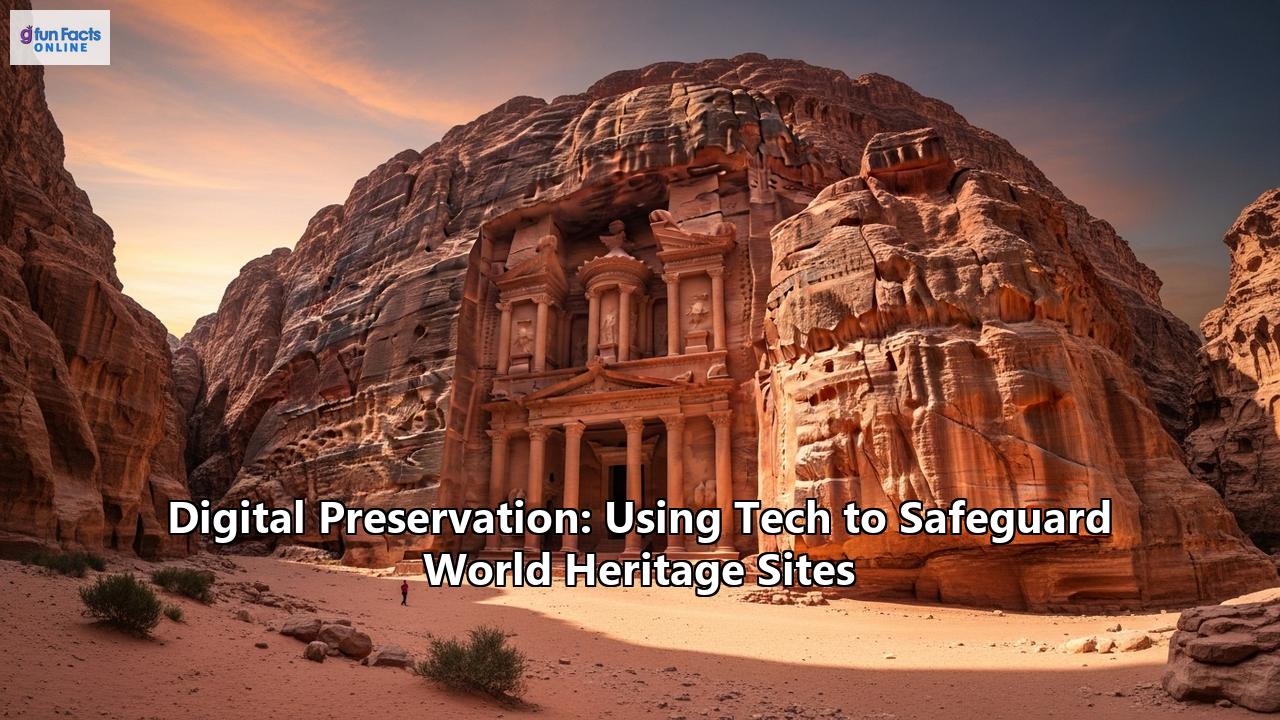
Our shared global heritage, a tapestry woven from millennia of human ingenuity, artistic expression, and natural wonder, is facing a barrage of unprecedented threats. From the relentless creep of climate change to the deliberate destruction in conflict zones and the simple, yet inexorable, passage of time, the world's most precious cultural and natural sites are at risk of being lost forever. But as these ancient wonders fade, a new generation of digital tools is rising to meet the challenge, offering a powerful arsenal for their preservation. This is the story of digital preservation, a race against time to create an immortal digital ark for our most treasured World Heritage Sites.
The use of cutting-edge technology, from 3D laser scanning to virtual reality, is revolutionizing the field of heritage conservation. It offers not just a way to document what we stand to lose, but also new methods for study, restoration, and sharing these irreplaceable sites with a global audience. This digital revolution in heritage is more than just creating a backup; it's about building a resilient future for our past.
The Imperative for Preservation: A World Heritage in Peril
The urgency behind the drive for digital preservation is underscored by the myriad dangers threatening our collective inheritance. According to UNESCO, one in three natural sites and one in six cultural heritage sites are currently threatened by climate change. These are not abstract future risks; they are active and accelerating threats that are already causing irreparable damage.
Climate Change: The Silent ErosionClimate change is a primary and pervasive threat to World Heritage Sites. Rising sea levels, increasing temperatures, and the growing frequency of extreme weather events are wreaking havoc on delicate ecosystems and ancient structures alike.
- Coastal Erosion: Sites located on coastlines are on the front lines of this battle. The iconic Moai statues of Rapa Nui (Easter Island), for instance, are in danger as rising sea levels and increased storm surges erode the platforms on which they stand, threatening their collapse. Similarly, parts of the historic Tanzanian city of Kilwa Kisiwani have already been destroyed by coastal erosion. In the Mediterranean, a staggering 60% of World Heritage properties are at risk from coastal flooding and erosion.
- Extreme Weather: The devastating floods in China in 2020 damaged more than 130 cultural sites, including the 500-year-old Zhenhai Bridge, a protected cultural site from the Ming dynasty. In Australia, the Great Barrier Reef is experiencing severe and recurrent coral bleaching events due to rising ocean temperatures, jeopardizing the very biodiversity for which it is celebrated.
- Melting Glaciers and Shifting Ecosystems: In the Kluane / Wrangell-St Elias / Glacier Bay / Tatshenshini-Alsek World Heritage site spanning Canada and the USA, the rapidly melting Kaskawulsh Glacier has altered river flows, depleting fish populations and changing the landscape. Scientists predict that glaciers could disappear from almost half of all natural World Heritage sites by 2100 if greenhouse gas emissions continue at their current rate.
In recent years, the world has watched in horror as some of humanity's most significant cultural landmarks have become casualties of armed conflict. The systematic destruction and looting of heritage sites in Syria and Iraq by extremist groups is a stark reminder of how heritage can be deliberately targeted to erase history and cultural identity.
All six of Syria's World Heritage Sites, including the ancient cities of Aleppo and Palmyra, have been designated as endangered by UNESCO due to the civil war. These sites have suffered from targeted destruction, looting, and collateral damage from fighting. The ancient city of Aleppo, a vibrant center of culture for millennia, has been reduced to rubble in many areas. Project Anqa, a partnership between CyArk, ICOMOS, and the Yale Institute for the Preservation of Cultural Heritage, was launched to counter this devastating loss by training local professionals to document at-risk sites in 3D before they are destroyed or irrevocably altered.
Looting has also been a massive problem, with thousands of archaeological sites in Syria and Iraq plundered to fund conflict. This not only removes precious artifacts from their context but also destroys the historical record they represent. Initiatives like the Safeguarding the Heritage of Syria and Iraq Project (SHOSI) by the Smithsonian Institution have worked to train museum experts and create digital records to combat this illicit trade.
The Digital Toolkit: Technologies Redefining Preservation
In the face of these threats, a suite of powerful digital technologies has emerged, offering innovative ways to document, analyze, and experience World Heritage Sites. These tools create what are known as "digital twins"—precise, data-rich virtual replicas of physical objects and places.
3D Laser Scanning (LiDAR): Capturing Reality with LightAt the forefront of digital preservation is 3D laser scanning, also known as LiDAR (Light Detection and Ranging). This non-contact technology works by emitting millions of laser pulses at a structure's surface and measuring the time it takes for the light to return. Each measurement creates a single point in space, and together, these millions of points form a "point cloud"—a stunningly detailed and accurate 3D digital representation of the scanned site.
The benefits for heritage preservation are immense:
- Unparalleled Accuracy: Laser scanning can achieve sub-millimeter accuracy, capturing the finest architectural details, inscriptions, and surface textures that would be impossible to document with traditional methods like hand-sketching or photography.
- Non-Invasive and Safe: Because it is a non-contact method, laser scanning is ideal for fragile or deteriorating structures where physical contact from ladders or scaffolding could cause further damage. It allows for the safe documentation of inaccessible or hazardous areas like high ceilings, domes, or unstable ruins.
- A Permanent Digital Record: The resulting point cloud and subsequent 3D model serve as a permanent, dimensionally accurate archive. This digital blueprint can be used for monitoring structural decay over time, planning precise restoration work, and even guiding complete reconstruction if a site is destroyed, as was demonstrated by its use in the restoration of Notre-Dame Cathedral in Paris.
Organizations like the non-profit CyArk have pioneered the use of laser scanning, embarking on an ambitious mission to digitally preserve 500 of the world's most at-risk cultural heritage sites. Their work has created a free online 3D library of places like Pompeii, Mount Rushmore, and ancient sites in Iraq, safeguarding their legacy for future generations.
Photogrammetry: The Science of Stitching ImagesPhotogrammetry is the science of deriving three-dimensional information from photographs. By taking hundreds or even thousands of overlapping digital photographs of a site or object from different angles, specialized software can identify common points and stitch the images together to create a detailed 3D model.
While laser scanning is often more geometrically accurate, photogrammetry excels at capturing photorealistic color and texture. Often, the two techniques are used in tandem, combining the precise geometry of a laser scan with the rich visual detail of photogrammetry to create a truly lifelike digital twin. This technique has become increasingly accessible and cost-effective, allowing for its use in a wide range of projects, from documenting archaeological digs with drones to creating interactive models of historic buildings for virtual tours.
Virtual Reality (VR) and Augmented Reality (AR): Immersive Journeys Through TimeThe digital models created through scanning and photogrammetry are not just static archives; they are gateways to immersive experiences. Virtual Reality (VR) and Augmented Reality (AR) are transforming how we interact with and learn from our heritage.
- Virtual Reality (VR) allows users to step entirely inside a digital reconstruction of a heritage site. Wearing a VR headset, a person can walk through the streets of ancient Pompeii as it was before the eruption of Vesuvius, explore the intricate passages of an Egyptian tomb, or witness a historical event unfold around them. This technology offers unparalleled access to sites that may be remote, inaccessible, or too fragile for large numbers of visitors. It also serves as a powerful educational tool, allowing for a deeper, more engaging understanding of a site's history and cultural significance.
- Augmented Reality (AR) overlays digital information onto the real world, viewed through a smartphone or AR glasses. At a heritage site, AR can bring ruins to life by showing digital reconstructions of how they once looked. Visitors can point their phone at a collapsed wall and see it as it stood in its prime, or view artifacts in a museum case with additional context, animations, and stories appearing alongside them. This technology enhances the visitor experience, making it more interactive, informative, and personalized.
The concept of the "digital twin" brings all these technologies together to create a dynamic, evolving virtual replica of a historic building or site. More than just a static 3D model, a digital twin is a living document that can be continuously updated with real-time data. By integrating sensor networks (IoT devices) that monitor environmental conditions like temperature, humidity, and structural stress, a digital twin can provide heritage managers with invaluable insights for proactive conservation.
For example, a digital twin of a historic building can be used to:
- Monitor Conditions: Track environmental changes and their impact on the structure in real-time.
- Simulate Threats: Model the potential effects of events like earthquakes or floods to develop better emergency response plans.
- Plan Interventions: Virtually plan and test restoration or maintenance work before touching the physical building, reducing risks and costs.
- Manage Assets: Provide a centralized database for all information related to the building, from historical documents to maintenance records.
The Keepers of the Digital Flame: Organizations on the Front Lines
The monumental task of digitally preserving our world's heritage is being led by a dedicated global community of organizations, researchers, and national institutions.
UNESCO: Setting the Global AgendaThe United Nations Educational, Scientific and Cultural Organization (UNESCO) is at the heart of international efforts to protect heritage. Through instruments like the 2003 Charter on the Preservation of the Digital Heritage, UNESCO has been a key advocate for recognizing the importance of safeguarding digitally created materials. The organization actively supports member states with technical advice, helps develop climate adaptation strategies for World Heritage sites, and runs initiatives like the "Dive into Heritage" platform, which uses digital technology to promote and transmit World Heritage to future generations.
CyArk: A Mission to Scan the GlobeFounded in 2003 by Ben Kacyra, the inventor of a portable 3D laser scanner, CyArk is a non-profit organization with a singular, ambitious mission: to digitally record, archive, and share the world's most significant cultural heritage sites. Recognizing the increasing threats from conflict, climate change, and urbanization, CyArk creates high-resolution digital twins of sites to be used for conservation, disaster response, and education. With a portfolio of hundreds of projects, from the Antonine Wall in Scotland to the temples of Angkor Wat, CyArk has become a world leader in digital preservation, providing its data freely for educational and non-commercial use through platforms like OpenHeritage3D.
The Digital Legacy: Applications and Future of Preservation
The creation of a digital heritage archive is not the end goal; it is the beginning of a new chapter in how we understand, care for, and share our history.
From Data to Action: Restoration and ResearchThe precise data captured through digital documentation is a revolutionary tool for conservationists and researchers. Architects can use 3D models to plan restorations with unprecedented accuracy, even 3D printing missing or damaged elements for replication. Researchers can study sites in minute detail from anywhere in the world, cross-referencing digital models with historical documents to unlock new insights. The digital record provides a stable benchmark against which future changes, whether from slow decay or sudden catastrophe, can be measured and addressed.
Virtual Tourism and Global AccessDigital preservation is democratizing access to cultural heritage. Virtual tours and immersive experiences allow people who may never have the chance to travel to a site to explore it in rich detail. This not only fosters a global appreciation for our shared history but also provides a sustainable alternative to mass tourism, which can put a physical strain on fragile sites.
The Road Ahead: Challenges and the Role of AIDespite the incredible potential of these technologies, the path forward is not without its challenges.
- Data Storage and Obsolescence: The massive datasets generated by 3D scanning require significant and sustainable storage solutions. Furthermore, as technology rapidly evolves, ensuring that today's digital files will be readable by the software and hardware of the future—a problem known as technological obsolescence—is a major concern.
- Funding and Expertise: Digital preservation projects can be expensive and require highly skilled personnel. Securing long-term funding and building local capacity for documentation are persistent challenges.
- Ownership and Ethics: Questions surrounding the ownership of digital data and the ethical representation of cultural heritage require careful consideration and the involvement of source communities.
Looking to the future, Artificial Intelligence (AI) is poised to play an increasingly important role. AI algorithms can help automate the process of categorizing and tagging digital content, assist in the digital restoration of artworks, and even identify patterns in large datasets to predict which sites are most at risk. The integration of AI promises to enhance and expand our capacity for preservation, making the management of our digital heritage more efficient and insightful.
In a world of constant change and mounting threats, digital preservation has become an essential act of stewardship. It is a testament to our resolve not to let our shared history vanish into dust. By harnessing the power of technology, we are not only saving stone, but also the stories, the knowledge, and the wonder embedded within them, ensuring that the legacy of our past will continue to inspire and inform humanity for generations to come.
Reference:
- https://xsite.com/9-ar-strategies-to-boost-cultural-site-visitor-experience/
- https://www.globalcitizen.org/en/content/hertiage-sites-conflict-climate-change/
- https://earth.org/heritage-at-risk-4-unesco-sites-under-threat/
- https://whc.unesco.org/en/climatechange/
- https://iucn.org/our-work/topic/world-heritage/our-work/climate-change-and-world-heritage
- https://core.tdar.org/collection/29733/intentional-destruction-of-cultural-heritage-evidence-and-responses-in-syria-and-iraq
- https://mw18.mwconf.org/paper/digital-tools-and-how-we-use-them-the-destruction-and-reconstruction-of-tangible-cultural-heritage/index.html
- https://5g.wilsoncenter.org/article/preserving-cultural-heritage-syria-through-war-and-transition
- http://openarchive.icomos.org/id/eprint/2014/
- https://openarchive.icomos.org/id/eprint/2014/1/5._ICOA_789_Akhtar_SM.pdf
- https://intandem.autodesk.com/resource/realizing-the-potential-of-digital-twins-for-building-preservation-and-restoration-efforts/
- https://conservation-science.unibo.it/article/view/17364
- https://www.libelium.com/libeliumworld/digital-twins-for-the-protection-of-unesco-architectural-heritage-in-genoa/
- https://castlesurveys.co.uk/how-3d-laser-scanning-supports-heritage-and-conservation-projects/
- https://medium.com/@ratinderkaur2018/how-3d-laser-scanning-helps-in-restoration-of-heritage-monuments-a9f33c01a8e1
- https://www.novatr.com/blog/3d-laser-scanning-for-heritage-documentation
- https://www.archdaily.com/1026993/independent-heritage-documentation-how-digital-tools-and-photogrammetry-are-reshaping-preservation-efforts
- https://phowo.ifp.uni-stuttgart.de/publications/phowo09/310Kacyra.pdf
- https://www.digitalmeetsculture.net/article/cyark-500-challenge-digital-preservation-of-top-archaeologic-sites/
- https://en.wikipedia.org/wiki/CyArk
- https://quod.lib.umich.edu/a/ars/13441566.0046.012/--cyark-protecting-cultural-heritage-through-digital?rgn=main;view=fulltext
- https://www.cipaheritagedocumentation.org/wp-content/uploads/2018/11/Streilein-van-den-Heuvel-Potential-and-limitation-for-the-3D-documentation-of-cultural-heritage-from-a-single-image.pdf
- https://www.researchgate.net/profile/Rami-Al-Ruzouq/publication/224831011_Photogrammetry_for_Archaeological_Documentation_and_Cultural_Heritage_Conservation/links/0a85e52e8e58009803000000/Photogrammetry-for-Archaeological-Documentation-and-Cultural-Heritage-Conservation.pdf
- https://www.chnt.at/wp-content/uploads/Waas_Zell_2014.pdf
- https://fibrox3d.com/3d-laser-scanning-for-heritage-preservation
- https://www.mdpi.com/2075-5309/15/9/1531
- https://www.meegle.com/en_us/topics/vr/vr-for-cultural-heritage
- https://www.atlantis-press.com/article/126007409.pdf
- https://blog.emb.global/virtual-reality-tools/
- https://www.irma-international.org/viewtitle/333032/?isxn=9781668499573
- https://www.scilit.com/publications/c7f596b7224ddcbc0400ae5e43023f23
- https://consensus.app/questions/what-impact-augmented-reality-enhancing-museum-cultural/
- https://www.mdpi.com/2075-5309/14/4/1019
- https://www.quinnevans.com/news/from-past-to-future-leveraging-technology-to-preserve-historic-structures
- https://www.mimeta.org/mimeta-news-on-censorship-in-art/2025/3/12/is-now-the-future-of-ai-driven-cultural-heritage
- https://www.ifla.org/events/artificial-intelligence-and-the-future-of-digital-preservation/
- https://www.cyark.org/whoweare/
- https://www.goethe.de/ins/ca/en/kul/loe/mag/20425798.html
- https://arxiv.org/abs/2409.04507
- https://www.mdpi.com/2571-9408/5/4/166
- https://theecmconsultant.com/challenges-of-digital-preservation/
- https://marketplace.heritageinnovation.eu/envisioning-the-future-ais-role-in-preserving-and-innovating-cultural-heritage/