
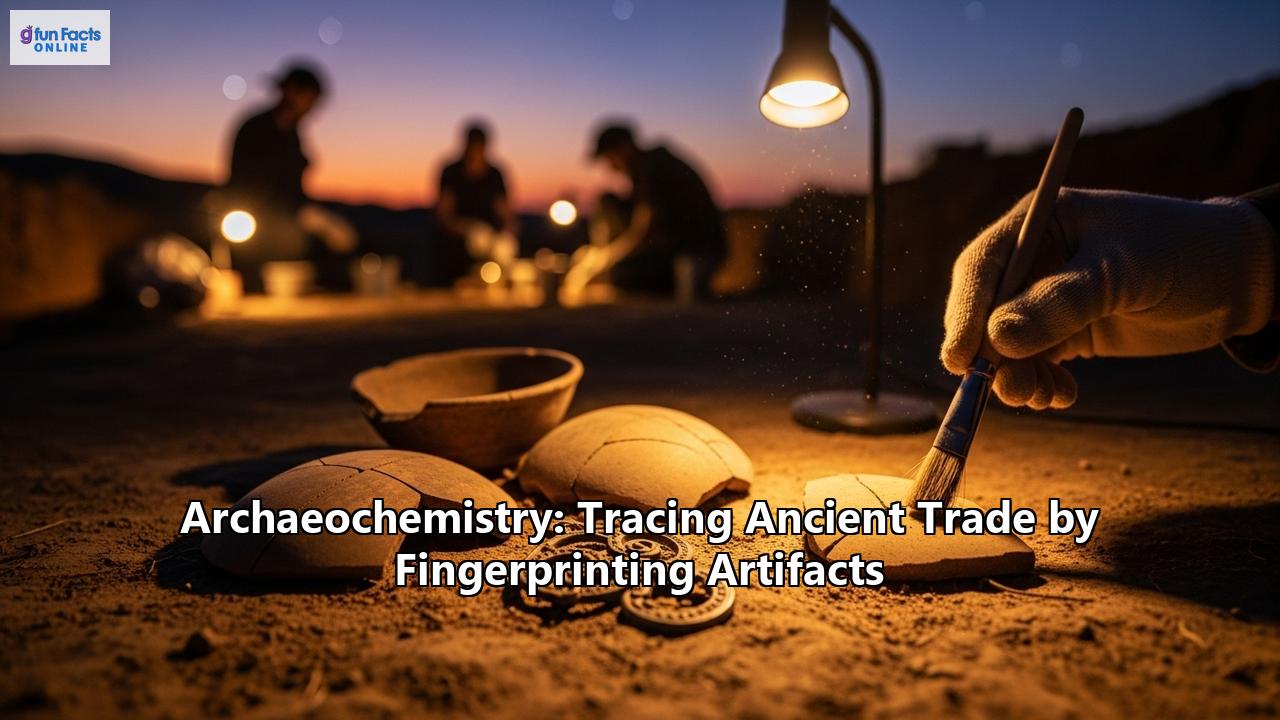
Unmasking the Past: How Archaeochemistry Is Fingerprinting Artifacts to Reveal Ancient Trade Secrets
In the silent galleries of museums and the quiet storerooms of archaeological labs, countless artifacts rest, their stories locked within their very substance. For centuries, the tales these objects could tell of their creation, use, and journey across ancient landscapes were largely interpreted through their form, style, and the context of their discovery. But what if these silent witnesses could speak? What if the clay of a pot, the stone of a tool, or the metal of a weapon held a hidden signature, a "fingerprint," that could betray its precise origin and map its travels across continents and millennia? This is the revolutionary promise of archaeochemistry, a field that is transforming our understanding of the ancient world by decoding the chemical composition of artifacts to reconstruct the vast and complex networks of trade that shaped human history.
Archaeochemistry, or archaeological science, is an interdisciplinary field that applies the techniques of chemistry and other physical sciences to the analysis of archaeological materials. One of its most powerful applications is in provenance studies, which aim to determine the geographic origin of an artifact's raw materials. By matching the unique chemical or isotopic "fingerprint" of an object to a specific geological source—be it a clay bed, a volcanic obsidian flow, or a metal ore deposit—archaeologists can trace the movement of goods and, by extension, the interactions of people. This ability to track materials from their source to their final resting place allows for the reconstruction of ancient trade routes, providing profound insights into the economic, social, and political dynamics of past societies.
The fundamental principle behind this remarkable science is that many natural materials possess a unique geochemical signature. This signature is a product of the specific geological conditions under which the material formed, resulting in a distinctive combination of major, minor, and trace elements, as well as specific isotopic ratios. This uniqueness allows scientists to "fingerprint" a source. When an artifact is discovered, sometimes hundreds or even thousands of miles from its origin, its chemical fingerprint can be compared to a database of known sources. A match provides direct evidence of long-distance trade, migration, or exchange, turning a simple artifact into a data point on a map of ancient interaction.
The journey to unlock these chemical secrets has been one of technological innovation. Beginning with early, often destructive, wet chemistry methods, the field has evolved to embrace a suite of sophisticated, high-precision, and increasingly non-destructive analytical techniques. These methods, once the exclusive domain of physics and chemistry labs, are now staple tools in the archaeologist's toolkit, each offering a unique window into the atomic and molecular world of ancient artifacts.
This article will delve into the fascinating world of archaeochemistry, exploring the powerful analytical techniques that are allowing us to read the hidden stories within ancient objects. We will journey through the history of this scientific pursuit, from its early beginnings to the cutting-edge laboratories of today. We will examine the diverse materials that are yielding their secrets—from the glassy obsidian that traversed continents to the humble pottery that connected communities, the prized metals that forged empires, and the monumental stones that built ancient wonders. Through compelling case studies, we will see how fingerprinting these artifacts is not just about identifying a point of origin, but about breathing life into the static remains of the past, revealing the dynamic and interconnected world of our ancestors.
The Archaeochemist's Toolkit: A-Suite of Analytical Techniques
The ability to connect an artifact to its source hinges on the power and precision of analytical instrumentation. Archaeochemists employ a range of techniques, each with its own strengths, to analyze the elemental and isotopic composition of ancient materials. The choice of method often depends on the type of material being studied, the specific research questions, and the need to preserve the integrity of the artifact.
X-Ray Fluorescence (XRF) Spectrometry: The Non-Destructive Workhorse
One of the most widely used techniques in archaeological provenance studies is X-ray fluorescence (XRF) spectrometry. Its popularity stems from its largely non-destructive nature, which is of paramount importance when dealing with rare and valuable artifacts. Portable XRF (pXRF) analyzers have further revolutionized the field, allowing for rapid, on-site analysis in museums or even in the field, eliminating the need to transport or sample precious objects.
The principle behind XRF is elegant in its simplicity. The instrument bombards the artifact with high-energy X-rays. This causes electrons in the atoms of the material to be momentarily knocked out of their inner shells. As electrons from outer shells drop down to fill these vacancies, they release energy in the form of secondary, or fluorescent, X-rays. The energy of these emitted X-rays is characteristic of the specific elements present in the sample. The detector measures these energies and their intensities, revealing the artifact's elemental "fingerprint"—a quantitative breakdown of its chemical composition.
XRF is particularly effective for analyzing materials like obsidian, a volcanic glass widely used for making sharp tools in antiquity. Different volcanic sources have unique trace element compositions, and XRF can quickly and reliably match an obsidian artifact to its parent volcano, thereby mapping out extensive prehistoric trade networks. It is also used to analyze the composition of metals, pigments, and the paste of ceramics. While laboratory-based XRF may require a small sample for the most precise results on certain materials, the ability of pXRF to analyze objects without causing damage has made it an indispensable tool for initial characterization and large-scale studies.
Mass Spectrometry Techniques: Unparalleled Sensitivity
For when researchers need to detect elements at extremely low concentrations or to measure the precise ratios of isotopes, they turn to the family of mass spectrometry techniques. These methods offer exceptional sensitivity, often able to detect elements in the parts-per-million (ppm) or even parts-per-billion (ppb) range.
Inductively Coupled Plasma Mass Spectrometry (ICP-MS) is a powerful technique that can simultaneously measure more than 50 different elements. In this method, a sample is typically dissolved into a liquid solution. This solution is then introduced into a plasma—a super-heated, ionized gas, often argon, with temperatures exceeding those on the surface of the sun. The intense heat of the plasma atomizes and ionizes the sample. These newly formed ions are then passed into a mass spectrometer, which acts like a magnetic filter, separating the ions based on their mass-to-charge ratio. A detector then counts the ions of different masses, providing a highly precise and quantitative elemental composition of the original sample.A significant advancement on this technique is Laser Ablation-Inductively Coupled Plasma-Mass Spectrometry (LA-ICP-MS). This method combines the power of ICP-MS with the ability to analyze solid samples directly, making it minimally destructive. A high-powered laser is focused on a tiny spot on the artifact's surface. The laser vaporizes, or "ablates," a microscopic amount of material, which is then swept by a carrier gas (like helium) into the plasma torch of the ICP-MS for analysis. The resulting ablation pit is often no larger than the diameter of a human hair, making it virtually invisible to the naked eye.
LA-ICP-MS is incredibly versatile. It allows researchers to target specific features on an artifact, such as the glaze on a ceramic pot, a painted design, or even individual mineral inclusions within a clay body. This level of spatial resolution provides incredibly detailed information about manufacturing choices and raw material sourcing. For instance, a study of Caribbean pottery used LA-ICP-MS to analyze the elemental composition of the clay, identifying nine distinct production areas and revealing long-distance trade routes between islands that spanned over a thousand years.
Neutron Activation Analysis (NAA): The Gold Standard for Trace Elements
Before the widespread adoption of ICP-MS, Neutron Activation Analysis (NAA) was considered the gold standard for high-precision trace element analysis in archaeology. Though less common now due to the need for a nuclear reactor, it remains an incredibly powerful and sensitive technique.
In NAA, a small sample of the artifact is bombarded with neutrons inside a research reactor. This process makes some of the atoms in the sample radioactive. As these newly radioactive isotopes decay, they emit gamma rays. Each element emits gamma rays with a characteristic energy and decay rate. By measuring this emitted radiation with a highly sensitive detector, scientists can identify and quantify a wide array of elements, even those present in minute concentrations.
NAA has been instrumental in numerous landmark provenance studies. Its high precision has been particularly valuable for fingerprinting sources of ceramics, chert, and obsidian, where subtle variations in trace element concentrations can distinguish between geographically close sources. A recent study, for example, used NAA to create geochemical fingerprints for ochre from the world's oldest known mine in Eswatini, Africa. By comparing the fingerprints of artifacts to the source, researchers could trace how this important pigment was distributed among communities up to 40,000 years ago, shedding light on early human cognition and social networks.
Isotope Analysis: The Unchanging Signature
While elemental analysis focuses on which elements are present and in what quantities, isotope analysis looks at the relative abundance of different isotopes of a particular element. Isotopes are atoms of the same element that have the same number of protons but a different number of neutrons, and thus a different atomic mass. Isotopic ratios can provide an even more robust fingerprint for provenance studies because they are often unaffected by the chemical and physical processes involved in creating an artifact, such as melting or firing.
Lead Isotope Analysis (LIA) has been a cornerstone of archaeometallurgy for decades. Lead has four stable isotopes (204Pb, 206Pb, 207Pb, and 208Pb). Three of these (206Pb, 207Pb, 208Pb) are the end products of the radioactive decay of uranium and thorium. The ratio of these isotopes varies depending on the geological age and history of an ore deposit. Crucially, the smelting and casting processes do not alter these isotopic ratios. This means that the lead isotope signature of a metal artifact is a direct reflection of the lead isotope signature of the ore from which it was made.By comparing the lead isotope ratios in a bronze axe, a silver coin, or even a lead glaze to databases of ore deposits like the Oxford Archaeological Lead Isotope Database (OXALID), researchers can pinpoint the mining region, and sometimes even the specific mine, that supplied the metal. This has been revolutionary for understanding the vast metal trade of the Bronze Age and Roman periods, revealing complex supply chains that spanned the Mediterranean and beyond. For example, LIA has shown that during the Early and Middle Bronze Age, the ancient cities of Tell Atchana in Turkey and Tell Leilan in Syria were acquiring metals from a similar, though not yet definitively identified, source, pointing to shared long-distance exchange networks.
Other isotopic systems, such as those of strontium (Sr) and oxygen (O), are also used. Strontium isotope analysis is particularly useful for sourcing materials like marble and limestone, as the 87Sr/86Sr ratio in these rocks reflects the local geology. This technique has been instrumental in tracing the trade of marble for sculpture and architecture throughout the classical world.
Petrographic Analysis: A Look Under the Microscope
Not all fingerprinting techniques rely on high-tech spectrometers. Ceramic petrography is a geological technique that provides invaluable information about the provenance and technology of pottery. It involves examining a very thin slice of a ceramic sherd—just 30 micrometers thick—under a polarizing light microscope.
This microscopic view reveals the ceramic's "fabric," which is composed of the clay matrix and any non-plastic inclusions. These inclusions can be naturally present in the clay or intentionally added by the potter as "temper" to improve the clay's working and firing properties. A petrographer can identify the specific minerals and rock fragments in the fabric. Since the mineralogy of a region is a direct reflection of its geology, identifying these inclusions can point directly to the area where the potter collected their raw materials.
Petrographic analysis is powerful because it not only helps determine provenance but also reveals technological choices made by the potter—such as the selection of specific clays, the preparation of the paste, and firing techniques. For instance, by examining pottery from the Linear Pottery Culture (a major European Neolithic culture), researchers have been able to source the raw materials, understand production methods, and trace exchange networks across the continent. Combining petrography with chemical analysis can be an especially powerful approach, as the mineralogical information from petrography can complement the elemental data from techniques like NAA or ICP-MS to provide an even more detailed and robust interpretation of an artifact's origin.
Together, this diverse suite of analytical tools provides archaeologists with an unprecedented ability to characterize ancient materials. By carefully selecting the right technique for the right question, they can transform inert artifacts into dynamic sources of data, allowing the silent objects of the past to finally tell the stories of their journeys.
Case Studies in Chemical Cartography: Tracing the Trade of Ancient Materials
The true power of archaeochemistry lies in its application. Across the globe, the chemical fingerprinting of artifacts has redrawn the maps of ancient interaction, revealing trade routes and social networks far more extensive and complex than previously imagined. From the razor-sharp edges of obsidian tools to the gleaming surfaces of metal treasures, different materials have provided unique clues to the economic life of antiquity.
Obsidian: The Black Gold of the Stone Age
Obsidian, a volcanic glass formed when silica-rich lava cools rapidly, was a highly prized material in many prehistoric societies. Its conchoidal fracture allows it to be knapped to produce some of the sharpest edges known in nature, making it ideal for tools and weapons. From an archaeological perspective, obsidian is a near-perfect material for provenance studies. It forms in geographically limited and distinct volcanic events, each with a unique geochemical fingerprint. This fingerprint, a specific combination of trace elements, can be readily identified using non-destructive techniques like XRF.
The Mediterranean is a classic example of a region where obsidian sourcing has illuminated vast Neolithic trade networks. Four major island sources—Lipari, Palmarola, Pantelleria, and Sardinia—supplied virtually all the obsidian found at archaeological sites across the central Mediterranean. By analyzing thousands of obsidian artifacts from Neolithic sites in Italy, France, and North Africa, researchers have been able to map the distribution patterns from each source. These maps show not just the movement of the "black gold" itself, but they also provide insights into the seafaring capabilities, social connections, and economic strategies of early agricultural communities. The widespread distribution of Lipari and Sardinian obsidian, for instance, speaks to sophisticated maritime exchange systems that connected islands and mainlands long before the rise of classical civilizations.
In North America, similar stories of vast networks have emerged. Analysis of obsidian artifacts found in Alberta, Canada, revealed that the material was not local, as there are no volcanoes in the province. Using XRF, researchers traced the artifacts to sources thousands of kilometers away, including Bear Gulch in Idaho, Obsidian Cliffs in Wyoming, and even sources in British Columbia. This research demonstrated the existence of extensive trade routes that crisscrossed the continent for millennia, connecting diverse Indigenous groups long before European contact and challenging previous notions of isolated, regional communities.
Ceramics: The Containers of Culture and Commerce
While obsidian represents a trade in luxury or high-value raw materials, ceramics—pottery—often tell a more intimate story of local production, regional exchange, and the movement of everyday goods. Pottery is one of the most common finds on archaeological sites, and its analysis can reveal a wealth of information.
Provenance studies of ceramics can be conducted in two main ways: by analyzing the clay paste itself or by identifying residues of the pot's contents. To determine the origin of the vessel, archaeologists use techniques like petrographic analysis and elemental analysis (NAA, ICP-MS). The principle of provenance states that potters typically used local clay sources, as transporting bulky raw materials over long distances was impractical. Therefore, the mineralogical and chemical composition of a pot's fabric should reflect the geology of the region where it was made.
When pottery is found far from its production center, it serves as a direct marker of trade. These vessels could have been traded for their own intrinsic value, or, more commonly, as containers for other goods like wine, olive oil, grain, or salt. The study of transport amphorae in the Roman world is a prime example. The distinctive shapes of these large ceramic jars are often associated with specific regions (e.g., Spanish olive oil amphorae, Gallic wine amphorae). Chemical and petrographic analysis can confirm these origins and trace their distribution across the vast Roman Empire, providing detailed data on the scale and organization of Roman commerce.
A fascinating case study comes from the submerged Bronze Age city of Pavlopetri in Greece. Using ceramic petrography, archaeologists were able to analyze the mineral composition of pottery recovered from the seabed. The analysis revealed clear links to Minoan Crete, providing tangible evidence for maritime trade routes and cultural connections between the mainland and the powerful Minoan civilization around 3,500 years ago. This demonstrates how even fragmented sherds can help reconstruct the complex economic tapestries of the ancient world.
More recently, advances in organic residue analysis are adding another layer to the story. Using techniques like gas chromatography-mass spectrometry (GC-MS), scientists can identify the faint molecular traces of foods, drinks, and other substances preserved within the porous fabric of a ceramic vessel. This can reveal not only what people were eating and drinking, but also what commodities were being transported and traded inside these ceramic containers across vast distances.
Metals: The Currency of Power and Prestige
The advent of metallurgy marked a profound shift in human history, giving rise to new technologies, powerful weapons, and complex economies. Metals, especially copper, tin, bronze, silver, and gold, were highly valuable commodities, and controlling their sources and trade routes was often a key to political power. Archaeometallurgy, the study of ancient metals, uses provenance techniques to unravel the intricate supply chains that fueled the Bronze and Iron Ages.
Lead isotope analysis (LIA) has been the most transformative technique in this area. Because the lead isotopic signature of an ore is transferred unchanged to the final metal object, LIA allows for a direct comparison between artifact and source. This has been crucial for understanding the Bronze Age, an era defined by an alloy—bronze—made from copper and tin. While copper sources are relatively common, tin is geologically rare. LIA, combined with trace element analysis, has helped to identify the major copper sources of antiquity, such as those on Cyprus (whose name is etymologically linked to copper), in the Balkans, and on the Iberian Peninsula.
The tin trade, however, has remained more enigmatic. For decades, the source of the tin used to make the vast quantities of bronze in the Eastern Mediterranean and the Near East was a major archaeological puzzle. While historical texts hinted at sources in the east, the geological evidence was elusive. Recent research combining lead and tin isotope analysis is beginning to shed light on this ancient mystery, pointing towards tin sources in Central Asia and even as far as Cornwall in Britain being part of a vast, interconnected network that supplied the Bronze Age world.
Beyond bronze, LIA has been used to trace the origin of silver for coinage, which was essential for the economies of classical Greece and Rome, and to track the movement of other metals like lead and even iron. These studies often reveal surprising connections. For instance, LIA of third and second millennium BC metal artifacts from sites in Turkey and Syria have shown that geographically distant communities were sometimes tapping into the same ore sources, highlighting shared long-distance trade routes and complex geopolitical relationships. However, the interpretation of metal provenance is not always straightforward due to the widespread practice of recycling. Melting down and mixing metals from different sources can complicate the chemical and isotopic signatures, a challenge that researchers are continually working to address through more sophisticated analytical models.
Marble and Building Stone: The Skeleton of Ancient Cities
The grand temples, statues, and public buildings of the ancient world were not just feats of engineering but also products of extensive trade and quarrying operations. Tracing the provenance of marble and other building stones provides a unique insight into the logistics, economy, and prestige of ancient construction projects.
The white marbles of the Aegean, such as those from Paros, Naxos, and Mount Pentelikon near Athens, were highly prized in antiquity for their quality and beauty. Each of these quarry sources has a distinct isotopic fingerprint, primarily determined through the analysis of carbon and oxygen stable isotopes, as well as strontium isotopes. By analyzing a small sample from a statue or an architectural element, scientists can determine its origin with high confidence.
This has allowed archaeologists and art historians to answer long-standing questions about the ancient stone trade. For example, it is now possible to determine whether a Roman statue found in North Africa was carved from local marble, imported Italian Carrara marble, or prestigious Greek marble. This information reveals the economic reach of the Roman Empire, the preferences of its patrons, and the organization of the vast maritime trade in heavy, bulky materials. Provenance studies have confirmed, for example, that the Parthenon in Athens was constructed almost entirely of Pentelic marble, a testament to the city-state's control over and investment in its local resources. Conversely, the discovery of Parian marble sculptures across the Mediterranean speaks to the high value and wide distribution of this specific, high-quality stone.
These case studies represent just a fraction of the applications of archaeochemistry in tracing ancient trade. From faience beads and glass to amber and precious stones, nearly any material that was moved and exchanged by ancient peoples holds chemical clues to its origin. By meticulously "fingerprinting" these artifacts, archaeologists are piecing together a global picture of ancient economies, one that is far more interconnected, dynamic, and complex than was ever imagined from texts and traditional excavations alone.
The Human Element: Beyond Materials and Maps
While the scientific techniques of archaeochemistry provide the raw data—the elemental compositions and isotopic ratios that link an artifact to a geological source—the ultimate goal of this research is to understand people. Tracing trade routes is not merely an exercise in drawing lines on a map; it is about reconstructing the human behaviors, social structures, and cultural interactions that these lines represent. The movement of goods is inextricably linked to the movement of ideas, technologies, and beliefs. Therefore, interpreting the results of archaeometric analyses requires a deep integration of scientific data with archaeological context, historical records, and anthropological theory.
The patterns of distribution revealed by provenance studies can illuminate various aspects of ancient economies. For instance, the sheer volume of certain materials, like Roman amphorae or Bronze Age copper ingots, found across vast distances points to organized, large-scale trade, likely administered by state-level societies or specialized merchant groups. In contrast, the "down-the-line" distribution pattern, where the quantity of a material decreases with distance from the source, suggests a more informal, village-to-village exchange network. This was likely the mechanism for much of the obsidian trade in the Neolithic period, where a valuable tool stone was passed from one community to the next.
Furthermore, provenance studies can shed light on the social value and meaning of objects. The presence of exotic materials, such as lapis lazuli from Afghanistan found in Egyptian tombs or amber from the Baltic found in Mycenaean Greece, speaks to their status as prestige goods. The ability to acquire and display these rare, foreign items was a clear statement of power, wealth, and elite connections. The trade in these luxury goods often forged and maintained diplomatic and political relationships between distant ruling classes.
The "fingerprinting" of artifacts also reveals the technological knowledge and choices of ancient artisans. Ceramic petrography, for example, not only identifies the source of the clay but also shows how potters purposefully selected and mixed different raw materials to achieve desired properties for their vessels. Similarly, the analysis of metal alloys can show how smiths experimented with different combinations of copper, tin, arsenic, and lead to create metals with specific qualities of hardness, color, or castability. This demonstrates a sophisticated understanding of material properties and highlights the role of craftspeople as innovators.
A particularly fascinating and direct connection to the individuals of the past comes from the study of actual fingerprints left on ancient artifacts, most commonly on ceramics. Before a clay pot is fired, it is soft and malleable, and it often retains the impressions of the potter's hands. In some cases, these ancient fingerprints are so well-preserved that the individual ridge patterns are still visible. While not a chemical technique, the analysis of these prints is a powerful complementary approach. By measuring the breadth of the fingerprint ridges, archaeologists can estimate the age and sometimes even the sex of the individual who made the pot, providing insights into whether pottery production was the work of men, women, or even children in a particular society. This brings a profoundly human touch to the study of ancient crafts, connecting us directly to the artisan who shaped the object thousands of years ago. For instance, analysis of fingerprints on pottery from a Byzantine-era kiln site in Israel revealed that a single individual was the primary potter, likely pressing their thumbs into the clay to form lamps from molds.
However, the journey of archaeochemistry is not without its challenges and limitations. The "provenance postulate"—the idea that sources are unique and distinguishable—is not always true. Some geological sources may be chemically very similar, leading to overlapping fingerprints that make definitive attribution difficult. Furthermore, the widespread practice of recycling, especially with metals, can mix materials from multiple origins, creating a composite signature that is difficult to unravel. Another significant hurdle is the need for comprehensive databases. A successful provenance study requires that all potential geological sources in a region have been located and chemically characterized; an unknown or unanalyzed source can lead to incorrect conclusions.
Moreover, scientists must always be mindful of diagenesis—the chemical and physical changes that can occur to an artifact after it has been buried. Groundwater, soil chemistry, and other environmental factors can sometimes alter the original chemical composition of an object, potentially obscuring its original fingerprint. Researchers must carefully assess the potential for such alterations when interpreting their data.
Despite these challenges, the field of archaeochemistry continues to advance. New analytical techniques are constantly being developed, offering greater precision, less destruction, and the ability to analyze new types of materials. The creation of larger, open-access databases for comparative source material is making provenance studies more robust and reliable. Perhaps most importantly, there is a growing recognition that the most powerful insights come from interdisciplinary collaboration, where chemists, geologists, archaeologists, and historians work together to weave the scientific data into a rich and nuanced narrative of the human past.
In conclusion, the chemical fingerprinting of artifacts has opened up an extraordinary new chapter in the study of our ancient world. It has allowed us to move beyond simply describing objects to understanding their life histories—from their geological birth to their creation in the hands of an artisan, their journey across land and sea, and their final use in a distant society. Archaeochemistry provides the empirical backbone for reconstructing the vast, interconnected webs of trade and exchange that have shaped human civilization from its earliest beginnings. The silent stones, clays, and metals of the past are finding their voice, and they are telling a remarkable story of human ingenuity, mobility, and the enduring quest for connection. The next time you gaze upon an artifact in a museum, remember that locked within its very atoms is a hidden map, a chemical signature just waiting to be read, promising to reveal still more secrets of our shared human journey.
Reference:
- https://pubs.acs.org/doi/10.1021/bk-2007-0968.ch018
- http://archiv.ub.uni-heidelberg.de/propylaeumdok/4719/1/Pernicka_Provenance_Determination_2014.pdf
- https://www.greatarchaeology.com/archaeometry.htm
- https://euro-acad.eu/CMS/tinymce/js/tinymce/plugins/filemanager/source/ARCHAEOMETRY%20OVERVIEW.pdf
- https://www.researchgate.net/publication/373600181_Provenance_Studies_in_Archaeology
- https://www.cambridge.org/core/elements/abs/retrospective-and-prospective-for-scientific-provenance-studies-in-archaeology/3CFA7AE169C62439927068FC1C523DFD
- https://www.sciencedaily.com/releases/2024/10/241028131603.htm
- https://www.nps.gov/teachers/classrooms/archeology-and-x-ray-fluorescence-xrf.htm
- https://emberarchaeology.ca/sourcing-with-pxrf-portable-x-ray-fluorescence/
- http://luna.cas.usf.edu/~rtykot/PR40%20-%20Enrico%20Fermi%20obsidian.pdf
- https://www.studysmarter.co.uk/explanations/archaeology/arcaheology-of-trade/historical-trade-analysis/
- https://ideas.repec.org/a/bjf/journl/v10y2025i6p869-877.html
- https://biblio.ugent.be/publication/8691701
- https://isobarscience.com/isotope-fingerprinting-in-geochemical-research/
- https://isobarscience.com/metal-artifacts-using-lead-isotopes/
- https://www.su.se/polopoly_fs/1.700878.1705060593!/menu/standard/file/Dam_et_al_JONAS20_1.pdf
- https://elvatech.com/how-xrf-analysis-reveals-the-origins-of-ancient-artifacts-and-artworks/
- https://elearning.uniroma1.it/pluginfile.php/408494/mod_folder/content/0/X-Ray%20Fluorescence%20%28XRF%29%20in%20Archaeology.pdf?forcedownload=1
- https://www.xrfscientific.com/how-icp-spectroscopy-archeology/
- https://scarf.scot/thematic/scarf-science-panel-report/3-understanding-materials/3-2-techniques-of-analysis/3-2-2-inductively-coupled-plasma-techniques-icp/
- https://www.fieldmuseum.org/science/special-projects/elemental-analysis-facility/inductively-coupled-plasma-mass-spectrometry
- https://archaeometry.missouri.edu/laicpms.html
- https://pubs.acs.org/doi/10.1021/bk-2007-0968.ch015
- https://the-past.com/news/pottery-analysis-sheds-light-on-ancient-trade-routes-across-the-caribbean/
- https://isobarscience.com/lead-isotopes-archaeology/
- https://leilan.yale.edu/sites/default/files/publications/article-specific/johnson_et_al._2020_-_sharing_ore_sources_-_lia_of_3rd_and_2nd_mil._bc_metals_from_atchana_and_leilan_2.pdf
- https://en.wikipedia.org/wiki/Ceramic_petrography
- https://www.cambridge.org/core/journals/mrs-bulletin/article/abs/petrographic-analysis-of-archaeological-ceramics/6510F198A8A171B2979177BA53D11007
- https://www.archaeopress.com/Archaeopress/DMS/F31CF9728B3641FAA02BB71B3ED89819/9781905739592-sample.pdf
- https://www.researchgate.net/publication/321844639_Ceramic_petrography/fulltext/5a349cbf45851532e82cc749/Ceramic-petrography.pdf
- https://bryanhousepub.com/index.php/jssh/article/download/799/769/836
- https://isobarscience.com/investigating-archaeological-artifacts/
- https://pubmed.ncbi.nlm.nih.gov/28541719/
- https://ouci.dntb.gov.ua/en/works/lR0zxmP7/
- https://edition-topoi.org/download_pdf/bsa_064_00.pdf
- https://www.researchgate.net/publication/389971263_Advanced_Characterization_of_Archaeological_Ceramics
- https://www.researchgate.net/publication/240398610_Geochemical_fingerprinting_40_years_of_analytical_development_and_real_world_applications