
For decades, the fundamental challenge of oncology has been a problem of geography. Cancer cells are, after all, our own cells—mutated and rogue, but biologically familiar. Eradicating them using systemic treatments like chemotherapy or conventional immunotherapy is akin to carpet-bombing a city to eliminate a few hidden fugitives. The collateral damage to healthy tissues limits the dose that can be safely administered, often allowing the tumor to survive, adapt, and return.
But what if we could deploy a microscopic special operations force? A fleet of programmable, autonomous agents capable of navigating the bloodstream, infiltrating the enemy’s fortified stronghold, and manufacturing customized weapons exclusively within the tumor’s borders?
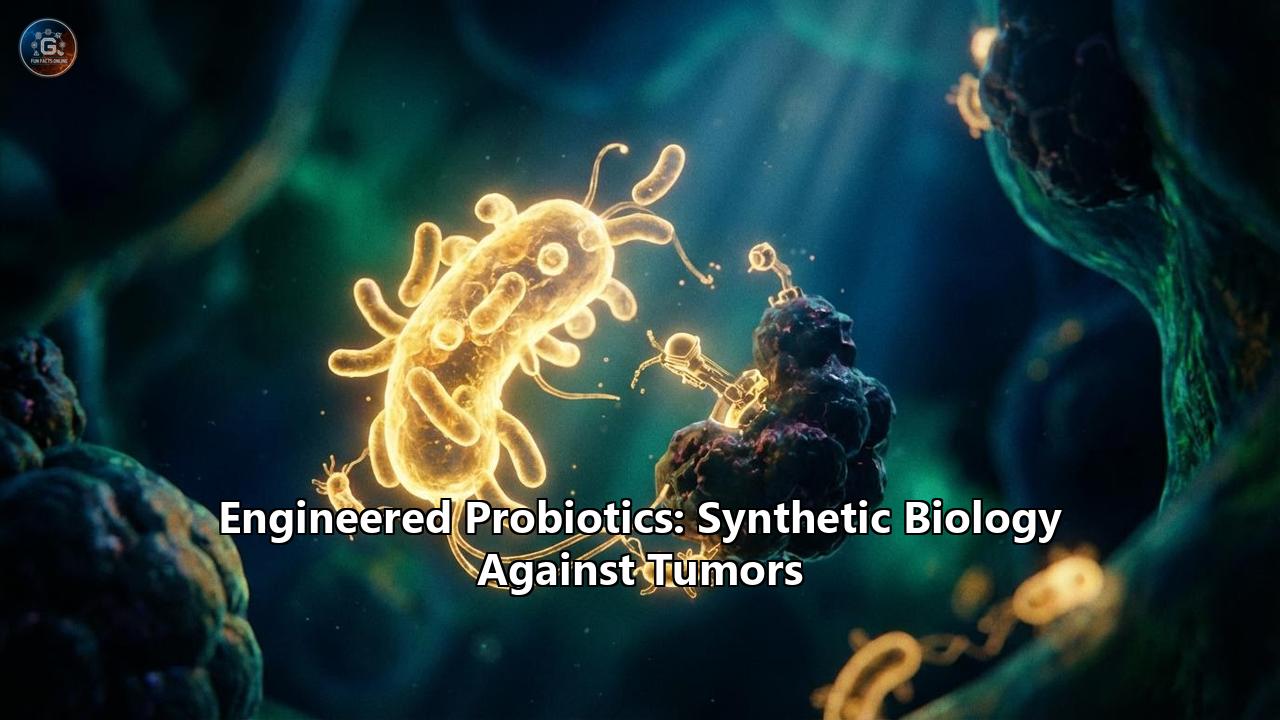
Welcome to the frontier of bacteria-mediated tumor therapy (BMTT). By merging the ancient, intricate world of the human microbiome with the cutting-edge tools of synthetic biology, scientists are transforming engineered probiotics into intelligent "living medicines". These programmable bacteria act as microscopic Trojan horses, exploiting the very defenses that make solid tumors so difficult to treat.
This is not science fiction. As of 2026, genetically engineered, sound-controlled, and environmentally-responsive bacteria are curing aggressive solid tumors in preclinical models and steadily advancing toward clinical trials. Here is the comprehensive story of how synthetic biology is reprogramming our oldest microbial co-inhabitants into the ultimate weapon against cancer.
The Tumor Microenvironment: A Microbial Safe Haven
To understand why bacteria are the perfect delivery vehicles for cancer therapy, we first need to understand the tumor microenvironment (TME).
Solid tumors are not just lumps of uncontrollably dividing cells; they are complex, rogue organs. As a tumor grows, its demand for oxygen and nutrients outpaces the chaotic, leaky blood vessels it constructs. This creates a core that is deeply hypoxic (oxygen-starved) and necrotic (filled with dead cells). To prevent the body's immune system from attacking it, the tumor secretes a thick, fibrotic extracellular matrix and releases biochemical signals that paralyze immune cells, creating an immunosuppressed fortress.
For traditional drugs and immune cells, this environment is a nightmare. Blood flow is too poor to deliver chemotherapy effectively, and immune cells are either blocked by the physical fibrotic barrier or switched off by the tumor's chemical defenses.
For certain types of bacteria, however, the TME is paradise.
Anaerobic and facultative anaerobic bacteria—such as Salmonella typhimurium, Bifidobacterium, and the probiotic Escherichia coli Nissle 1917 (EcN)—naturally thrive in low-oxygen environments. When injected into the bloodstream, these bacteria are quickly hunted down and destroyed by the immune system in healthy, oxygen-rich tissues. But when they stumble through the leaky blood vessels of a tumor and enter its hypoxic core, they find a sanctuary. The immune system is blind here, allowing the bacteria to colonize, feed on the necrotic tissue, and multiply to massive densities.
The concept of using bacteria to treat cancer actually dates back to the 1890s, when a New York surgeon named William Coley noticed that cancer patients who developed severe post-operative bacterial infections sometimes experienced miraculous tumor regressions. "Coley’s Toxins" involved injecting live or heat-killed bacteria into patients to stimulate an immune response. It was effective but wildly unpredictable and dangerous, eventually falling out of favor with the advent of radiation and chemotherapy.
Today, synthetic biology has solved the unpredictability of Coley’s era. We no longer rely on wild, pathogenic bacteria. Instead, we use safe, attenuated probiotics, mathematically programmed with genetic circuits to ensure they only act when, where, and how we want them to.
Synthetic Biology: Programming the Microbial Machines
Synthetic biology treats DNA not just as the blueprint of life, but as a programming language. By inserting synthetic genetic circuits—logic gates, biosensors, and kill switches—researchers can control the behavior of living cells with the precision of a computer algorithm.
The AND-Gate: Ensuring Pinpoint Accuracy
One of the greatest fears regarding bacterial therapy is off-target effects: what if the bacteria release toxic anti-cancer drugs in the liver or the spleen? To prevent this, synthetic biologists have equipped probiotics with biological "AND-gates."
An AND-gate requires two specific environmental conditions to be met before a genetic program is activated. For example, researchers have engineered E. coli with a synthetic promoter that requires both extreme hypoxia (low oxygen) and high lactate concentrations (a byproduct of tumor metabolism) to trigger gene expression. If the bacterium is in the gut (hypoxic but low lactate) or the bloodstream (high oxygen), it remains inert. Only in the deep core of a tumor does the AND-gate open, activating the therapeutic payload.
Quorum Sensing and Synchronized Lysis
Perhaps the most elegant genetic circuit utilized in cancer-targeting bacteria is the "synchronized lysis circuit". Developed by pioneers in the field at MIT and Columbia University, this circuit solves a critical problem: how do bacteria release drugs without continuously mutating or overgrowing?
The circuit borrows a communication system from nature called quorum sensing. As the engineered bacteria multiply within the tumor, they secrete a small molecule that acts as a chemical signal. Once the bacterial population reaches a critical density—meaning they have successfully colonized the entire tumor core—the concentration of this chemical hits a tipping point.
This threshold triggers a genetic "kill switch." The bacteria suddenly express a bacteriophage-derived lysis protein, causing their cell walls to rupture. As they burst, they simultaneously release their massive payload of anti-cancer drugs directly into the tumor. Crucially, a small percentage of the bacteria survive the purge. These survivors begin to multiply again, reaching a new quorum, and bursting in a continuous, cyclic, and highly controlled pulsating delivery of therapeutics.
Remote Control: Temperature and Sound
In recent breakthroughs stretching into 2026, researchers have pushed control mechanisms even further by incorporating external triggers. Scientists at the California Institute of Technology (Caltech) recently developed genetically engineered, sound-controlled bacteria.
These strains of E. coli are programmed with temperature-dependent genes that remain entirely dormant at the normal human body temperature of 37°C (98.6°F). Once the bacteria have safely colonized a tumor, physicians use focused pulses of ultrasound to gently heat the specific tumor site to 42–43°C (107.6–109.4°F). This localized thermal spike acts as a master switch, prompting the bacteria to unleash their tumor-suppressing payloads. This ensures that even if a few rogue bacteria wander into healthy tissue, they remain utterly harmless without the ultrasound trigger.
SimCells: The Ultimate Safety Net
To bypass the risk of engineered bacteria mutating and losing their programming, synthetic biologists are now utilizing "SimCells" (simple cells). These are chromosome-free bacterial cells controlled entirely by designed gene circuits. Because they lack a native genome, SimCells cannot replicate or mutate out of control. They act as highly predictable, disposable microscopic drones, entering the tumor, executing their therapeutic code, and harmlessly degrading.
The Arsenal: What Are These Bacteria Delivering?
Once inside the tumor, the engineered probiotics act as "Intelligent Drug Factories." Instead of injecting a patient with expensive, highly toxic synthetic drugs that degrade in the bloodstream, the bacteria manufacture the drugs in situ (on-site), drawing raw materials from the necrotic tumor tissue itself.
Here is what these microbial factories are currently programmed to produce:
1. Checkpoint Blockade Nanobodies
The immune system is regulated by "checkpoints" that prevent T-cells from attacking healthy tissue. Tumors hijack these checkpoints by covering themselves in proteins like PD-L1 or CD47, which essentially send a "Do Not Eat Me" or "Go to Sleep" signal to passing immune cells. Conventional therapies use systemic monoclonal antibodies to block these signals, but these large proteins have difficulty penetrating dense tumors and often cause severe autoimmune side effects throughout the body.
Engineered probiotics solve this by locally releasing nanobodies—miniature, stripped-down versions of antibodies derived from alpacas and llamas. Because nanobodies are small, bacteria can easily synthesize and secrete them.
When E. coli Nissle strains burst within a tumor, they flood the microenvironment with anti-CD47 or anti-PD-L1 nanobodies. This abruptly strips the tumor of its camouflage. Suddenly, the local immune cells (macrophages and T-cells) wake up, recognize the tumor as a threat, and begin devouring the cancer cells from the inside out.
2. Biosynthesizing Chemotherapy
Why inject toxic chemotherapy into the veins when bacteria can brew it inside the tumor? In a brilliant display of metabolic engineering, researchers have successfully programmed E. coli to synthesize Romidepsin (FK228), a potent FDA-approved chemotherapy drug originally derived from a rare soil bacterium (Chromobacterium violaceum). By reconstructing the massive biosynthetic gene cluster inside the probiotic, the bacteria acts as a microscopic pharmaceutical plant, continuously pumping out high-dose Romidepsin right next to the cancer cells, completely avoiding the severe cardiac toxicity usually associated with systemic delivery of the drug.
Similarly, researchers at the NUS Synthetic Biology for Clinical and Technological Innovation (SynCTI) program have engineered Lactobacillus strains that seek out mucosal tumors and convert inactive "prodrugs" into the highly toxic chemotherapy agent SN-38. The bacteria only execute this chemical conversion when bound to the cancer cells, reducing tumor growth by up to 67% in preclinical models while sparing the patient the hair loss, nausea, and organ damage typical of chemo.
3. Breaking the Fibrotic Fortress
Solid tumors are heavily guarded by a dense extracellular matrix (ECM) made of collagen and other fibrotic proteins, which physically blocks drugs and immune cells from entering. Innovative startups like Neobe Therapeutics are engineering bacteria to act as molecular demolition crews. These probiotics are programmed to secrete specific enzymes that chew through the tumor's fibrotic stroma. By breaking down this physical barrier, the bacteria "soften" the tumor, paving the way for traditional immunotherapies and chemotherapies to rush in and finish the job.
4. Probiotic Neoantigen Vaccines
Vaccines teach the immune system what a pathogen looks like. In cancer, tumors express unique mutated proteins called neoantigens. Synthetic biologists are turning probiotics into living cancer vaccines. By sequencing a patient's tumor, scientists can program an E. coli or Salmonella strain to express these exact neoantigens on their bacterial surface. When the bacteria colonize the tumor and the immune system inevitably responds to the bacterial infection, the immune cells are forced to recognize both the bacteria and the tumor's neoantigens simultaneously. This triggers a massive, highly specific, systemic T-cell response. This immune awakening is so profound that it often triggers an "abscopal effect"—meaning the immune system not only destroys the primary injected tumor but also hunts down and eradicates distant metastases throughout the body.
5. Choking the Tumor's Blood Supply
Tumors require a vast network of blood vessels to survive. Probiotics have been engineered to secrete anti-angiogenic factors (like tumstatin or VEGF inhibitors) that actively prevent the tumor from building new blood vessels. By colonizing the core and destroying the vasculature from within, the engineered bacteria literally starve the tumor to death.
Synergy: The Ultimate Combination Therapy
No single treatment will cure every cancer. The true potential of engineered probiotics lies in their ability to act as the ultimate team players, synergizing with existing medical technologies.
- CAR-T Cell Therapy: CAR-T therapy (genetically engineering a patient's T-cells to attack cancer) has cured blood cancers but struggled against solid tumors because solid tumors lack uniform targets. Researchers are now using bacteria to "paint" the tumor. The engineered bacteria infiltrate the tumor and release synthetic antigens that coat the cancer cells. The CAR-T cells, programmed to hunt that specific synthetic antigen, can then easily lock on and destroy the tumor, creating a perfectly orchestrated synthetic immune synapse.
- Radiotherapy: Solid tumors are notoriously resistant to radiation because radiation requires oxygen to generate cancer-killing free radicals, and the TME is severely hypoxic. Engineered probiotics like E. coli have been programmed to secrete catalase, an enzyme that breaks down hydrogen peroxide into oxygen. By oxygenating the tumor from the inside, the bacteria act as a radiosensitizer, dramatically amplifying the lethal effects of external beam radiation.
- Nanotechnology Hybrids: The latest frontier involves "biohybrids"—coating living bacteria in synthetic nanomaterials. The bacteria provide the autonomous propulsion, tumor-seeking logic, and deep-tissue penetration, while the nanomaterials carry massive, slow-release payloads of specialized drugs or photothermal agents that can be heated with near-infrared lasers to literally cook the tumor from within.
Furthermore, researchers are discovering that the physical environments in which these bacteria are grown matter. Recent breakthroughs in 2024 from the Japan Advanced Institute of Science and Technology (JAIST) demonstrated that culturing anti-tumor bacteria on highly porous titanium dioxide (TiO2) scaffolds enhances their innate immunomodulatory properties and oncolytic (cancer-killing) capabilities. This intersection of materials science and microbiology ensures the bacteria are perfectly primed before they even enter the patient's body.
Beyond Oncology: The Broader Horizon of Living Medicines
While the fight against cancer has catalyzed the development of programmable bacteria, the implications of this technology extend far beyond oncology. The foundational concept—a living, sensing, drug-delivering micro-robot—is highly adaptable.
In the realm of autoimmune diseases and inflammatory bowel disease (IBD), for example, researchers have developed PROT3EcT (Probiotic Type III Secretion E. coli). These engineered E. coli are programmed to sense the chemical signatures of inflammation in the human gut. Upon detecting a flare-up of colitis or Crohn's disease, the bacteria locally secrete nanobodies that neutralize Tumor Necrosis Factor (TNF-alpha), a primary driver of inflammation.
Currently, human patients take systemic TNF-alpha inhibitors via injection, which suppresses their entire immune system, leaving them vulnerable to life-threatening infections and lymphomas. The programmable bacteria, however, deliver the anti-inflammatory payload only exactly where the inflammation occurs, leaving the rest of the body’s immune system perfectly intact.
Similar logic is being applied to metabolic disorders, where engineered gut bacteria can break down toxic metabolites, and to infectious diseases, where probiotics are armed to secrete specific antimicrobial peptides to hunt down multidrug-resistant superbugs.
The Road Ahead: From the Lab to the Clinic
Despite the staggering preclinical successes—durable tumor regressions, complete eradication of metastases, and the generation of lifelong systemic anti-tumor immunity in mouse models—the transition to human clinical trials remains the ultimate proving ground.
Translating bacterial therapies from mice to humans involves significant hurdles. The human immune system is incredibly adept at clearing bacterial infections. Ensuring that enough of the engineered probiotic survives the treacherous journey through the human bloodstream to colonize the tumor requires precise dosing and potentially the temporary, localized suppression of the immune system.
Furthermore, regulatory agencies like the FDA face a paradigm shift. How do you regulate a drug that is alive, capable of multiplying, and programmed to make its own decisions based on environmental cues? Ensuring extreme genetic stability—guaranteeing that the "kill switches" do not mutate and fail—is paramount. Technologies like SimCells, auxotrophy (engineering bacteria so they literally cannot survive without an artificial nutrient not found in nature), and robust biocontainment circuits are proving to regulators that these therapies can be tightly leashed.
Early-stage clinical trials are already underway. Companies and academic institutions are testing attenuated Listeria, Clostridium, and engineered Salmonella in patients with advanced solid tumors, paving the regulatory pathways for the highly advanced synthetic gene circuits of the future.
The Dawn of the Living Medicine Era
We are standing at the threshold of a fundamental revolution in pharmacology. For thousands of years, humans have treated disease by ingesting or injecting static, dead molecules—from willow bark to modern monoclonal antibodies. These molecules cannot think. They cannot navigate. They cannot react to their environment.
Engineered probiotics represent the birth of autonomous medicine. We are no longer simply administering a drug; we are deploying a microscopic physician. By combining the evolutionary brilliance of the microbial world with the deterministic logic of computer science and synthetic biology, we are turning our oldest biological adversaries into our most potent allies.
In the war against cancer, the tumor’s greatest strength—its isolated, hypoxic, immunosuppressed microenvironment—has finally become its fatal flaw. The Trojan horse is at the gates, it is alive, and it is ready to work.
Reference:
- https://www.nanoappsmedical.com/genetically-engineered-sound-controlled-bacteria-that-seek-and-destroy-cancer-cells/
- https://www.synbiobeta.com/read/cancer-therapy-game-changer-could-lie-in-bacteria-based-chemo
- https://pmc.ncbi.nlm.nih.gov/articles/PMC12679272/
- https://academiccommons.columbia.edu/doi/10.7916/3ysq-y043
- https://www.youtube.com/watch?v=T9VCqiuOyqk
- https://www.technologynetworks.com/cancer-research/blog/bacteria-based-technology-could-revolutionize-solid-tumor-treatment-398691
- https://pmc.ncbi.nlm.nih.gov/articles/PMC5986102/
- https://www.mdpi.com/1999-4923/17/10/1349
- https://www.mdpi.com/1422-0067/25/7/3896
- https://pmc.ncbi.nlm.nih.gov/articles/PMC7685004/
- https://pubs.acs.org/doi/10.1021/acssynbio.1c00631
- https://pmc.ncbi.nlm.nih.gov/articles/PMC6688650/
- https://pmc.ncbi.nlm.nih.gov/articles/PMC12659059/
- https://journals.plos.org/plosbiology/article?id=10.1371/journal.pbio.3003657
- https://www.sciencedaily.com/releases/2023/03/230331144510.htm
- https://www.biorxiv.org/content/10.1101/561159v1.full-text
- https://www.pharmasalmanac.com/articles/engineered-bacteria-as-precision-therapeutics-for-cancer-and-beyond
- https://pmc.ncbi.nlm.nih.gov/articles/PMC12336869/
- https://ehealth.eletsonline.com/2024/10/innovative-bacteria-based-therapy-advances-in-cancer-treatment-a-breakthrough-at-jaist/