
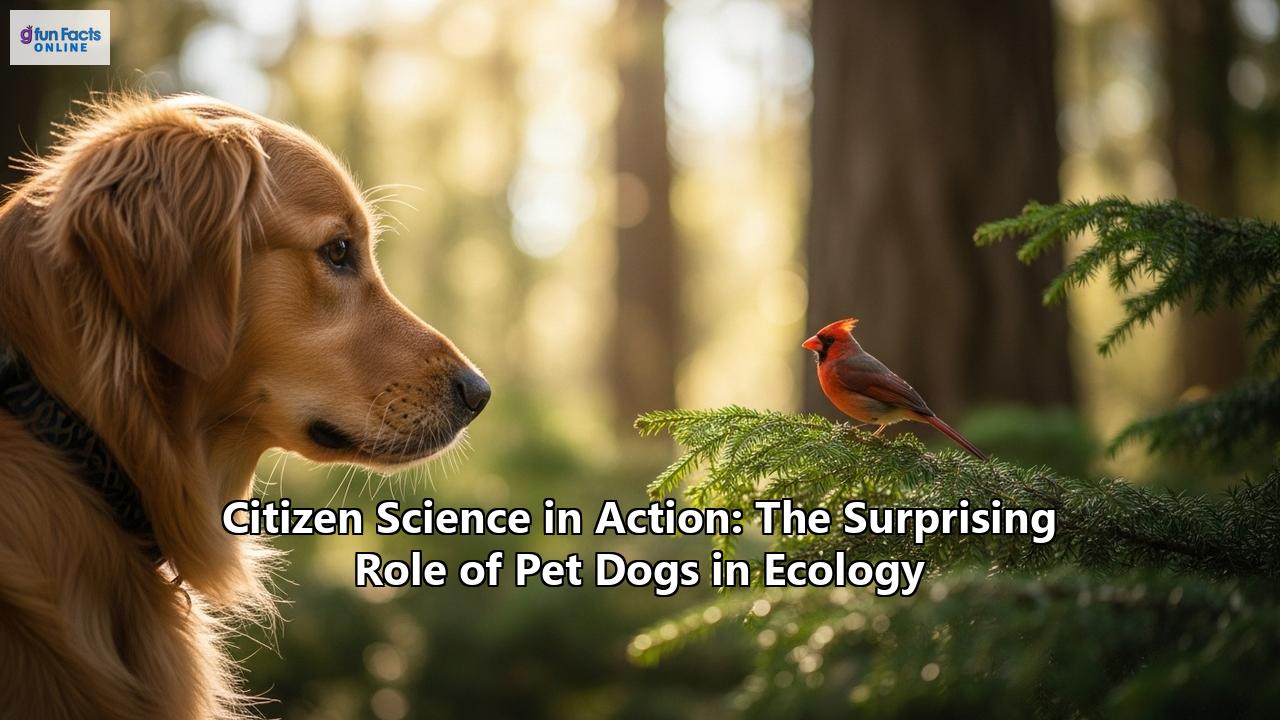
The Unseen Ecologists: How Your Pet Dog is Becoming a Vital Player in Scientific Research
In the vast and intricate world of ecological research, data is king. Scientists, in their quest to understand and protect the natural world, have long relied on a suite of tools, from satellite imagery to meticulous on-the-ground surveys. But in recent years, a surprising and furry new ally has joined their ranks, sniffing out data in places human eyes and technology often miss. This new wave of field assistants isn't a specially bred line of super-dogs, but rather the family pet—the Labradors, Beagles, Pit Bulls, and terriers that share our homes and our hearts. Harnessing the incredible power of the canine nose and the dedication of their owners, citizen science is transforming pet dogs into invaluable partners in the fight for our planet's health.
This isn't just about taking your dog for a walk and noting down the birds you see. This is about dedicated, trained teams of everyday people and their pets actively participating in rigorous scientific research. From the front lines of invasive species detection to the subtle art of finding clues left by endangered animals, pet dogs are proving that they can be more than just companions; they can be bona fide ecologists.
A New Breed of Scientist: The Rise of Canine Citizen Science
Citizen science, the practice of public participation and collaboration in scientific research, has exploded in popularity, powered by technology and a growing public desire to contribute to meaningful causes. Projects tracking bird migrations, classifying galaxies, or monitoring water quality have engaged millions of volunteers worldwide. It was only a matter of time before this movement went to the dogs.
The logic is compelling. There are millions of pet dogs in the United States alone, and many owners are constantly seeking enriching activities to share with their companions. The burgeoning sport of recreational nose work, where dogs learn to find specific scents for fun, has created a massive, untapped pool of talented animals and dedicated handlers. Researchers began to ask: what if this passion for sniffing could be channeled for the greater good?
The potential advantages are enormous. Using citizen scientists can help researchers gather vast amounts of data over large geographical areas—a scale that would be impossible for a small team of professional scientists to cover. It allows for data collection in the dogs' natural home environments, providing more realistic insights into their abilities and behaviors. Furthermore, it democratizes science, breaking down the walls of the "ivory tower" and engaging the public directly in the scientific process, which can foster a deeper understanding and appreciation for conservation. As we will see, these canine citizen scientists are not just collecting data; they are building communities and forging a powerful new bond between humans, their pets, and the environment.
On the Scent of a Threat: Deploying Pet Dogs Against Invasive Species
One of the most urgent and impactful applications of canine citizen science is in the battle against invasive species. These non-native plants and animals can wreak havoc on ecosystems, outcompeting native species and causing billions of dollars in agricultural damage. Early detection is crucial to stopping their spread, but this is often like finding a needle in a haystack.
The Lanternfly DetectivesA prime example is the fight against the spotted lanternfly (Lycorma delicatula). Native to Asia, this invasive insect was first found in Pennsylvania in 2014 and has since spread to numerous states, threatening vineyards, orchards, and forests. The key to controlling the lanternfly is to find and destroy its egg masses, which are notoriously difficult to spot, often resembling a smear of mud or lichen on trees, rocks, or even vehicles.
Recognizing the limitations of human surveyors, a groundbreaking study led by researchers at Virginia Tech posed a revolutionary question: Could pet dogs be trained to find these elusive egg masses? The project recruited hundreds of volunteer dog-and-owner teams from across the country, many of whom were already involved in recreational scent work. The teams were sent devitalized (non-hatching) egg masses to use as training aids and were guided by local trainers.
The results were astonishing. In controlled indoor tests, the citizen science dogs correctly identified the lanternfly egg masses 82% of the time. While their accuracy dropped to 61% in real-world outdoor field trials, this was still significantly better than what human-only searches could achieve. Remarkably, with a small amount of additional training, 92% of the dogs that passed the initial tests were successful in finding live egg masses. This Virginia Tech study was the first to show that volunteer-led teams could achieve detection rates comparable to highly specialized, professional conservation dogs. It proved that the thousands of people engaging in scent work with their dogs for fun could be transformed into a powerful, decentralized army for conservation.
The success didn't stop there. A follow-up study found that these same citizen science dog teams could also be trained to detect powdery mildew, a major fungal disease affecting grapevines, with over 90% accuracy. This opens up a whole new frontier for protecting agriculture, demonstrating that a deployable network of canine citizen scientists could be mobilized to tackle a variety of agricultural threats.
A Global MovementThis model is not unique to the United States. In Germany, the IGAMon-Dog project is training citizen scientists and their dogs to find and map invasive plants like Japanese knotweed and giant hogweed. The goal is to improve the monitoring of these species, allowing for more targeted and efficient management. The project not only provides crucial data but also empowers dog owners, giving underutilized working breeds a fulfilling job and strengthening the bond between humans and their four-legged partners. In Hawaii, a program called "Nose Work for Conservation" is training volunteer pet dogs that have graduated from recreational nose work classes to detect invasive plants like devil weed on popular hiking trails, contributing to both citizen science and community outreach.
These projects highlight a paradigm shift. Instead of relying solely on a small number of expensive, professionally trained dogs, conservation efforts can tap into a vast, passionate, and surprisingly effective volunteer workforce.
The Poop Sleuths: What Scat Can Tell Us
Beyond invasive species, one of the most significant roles for dogs in ecology is the detection of wildlife scat, or feces. It may seem unglamorous, but to a biologist, a pile of poop is a treasure trove of information.
From a single scat sample, scientists can extract a wealth of data without ever having to trap or even see the animal, making it a powerful non-invasive monitoring technique. Fecal DNA can reveal the species, sex, and even the individual identity of the animal, allowing researchers to estimate population sizes and understand how individuals move across the landscape. Dissecting the scat can tell biologists what the animal has been eating, providing insights into predator-prey dynamics and ecosystem health. Furthermore, advanced analysis can uncover the presence of reproductive hormones, stress hormones, parasites, and even environmental contaminants, painting a detailed picture of an animal's life and the challenges it faces.
The problem is that finding scat, especially from rare or elusive species in dense environments, is incredibly difficult for humans. We are visual creatures, but a dog navigates the world through scent. With a sense of smell up to 100,000 times more powerful than ours, a trained dog can detect a target scat from remarkable distances, often finding many times more samples than their human counterparts.
Case Study: The Otways Conservation DogsIn the Otway Ranges of Victoria, Australia, a dedicated team of community volunteers and their pet dogs are playing a crucial role in the conservation of the endangered Tiger Quoll (Dasyurus maculatus), the largest remaining marsupial carnivore on the Australian mainland. After the species was rediscovered in the region in 2012, the Conservation Ecology Centre launched the Otways Conservation Dogs program.
The program trains volunteers and their own pet dogs—spanning a wide range of breeds—to find quoll scats. This work is vital because the quoll population is small and fragmented, and traditional monitoring methods are often insufficient. The data gathered by these dog teams, in partnership with government bodies like Parks Victoria, is essential for understanding where the quolls are surviving, how viable the population is, and how to manage the habitat for their protection. The program is a powerful example of community-led conservation, where former rescue dogs and their devoted owners become the frontline in the effort to save a threatened species. The success of these teams has even led to some going on to do formal detection work for other projects, such as finding an endangered alpine stonefly.
More Than a Sniffer: Dogs as Environmental Sentinels
While scent detection is their most prominent role, the ecological contributions of pet dogs are not limited to what they can find with their noses. Their very presence in our homes and environments makes them uniquely valuable as sentinels for environmental health.
Because they share our homes, walk the same streets, and play in the same parks and yards, pet dogs are exposed to the same environmental contaminants as we are. This includes pesticides, flame retardants, and chemicals from industrial sites. However, because dogs have much shorter lifespans, diseases that might take decades to develop in humans can appear in just a few years in a dog. This makes them an invaluable early warning system for potential human health hazards.
Scientists are now tapping into this by using pet dogs in a form of passive citizen science. Projects like the Dog Aging Project and the National Pet Health Survey collect health data from thousands of dogs across the country, pairing it with information about their environment. Some studies have taken this a step further, using silicone tags attached to pet collars as passive sampling devices. These tags absorb chemicals from the dog's environment, and analysis can reveal exposure to a wide range of compounds. By linking these exposure data to the dogs' health records, researchers can identify links between specific chemicals and diseases, providing crucial insights that can inform both veterinary and human public health policy.
From Pet to Field Operative: The Making of a Citizen Scientist Canine
Turning a family pet into a reliable scientific instrument is a journey that requires dedication from both the dog and the owner. While professional conservation dogs are often selected from specific breeds known for their high drive and work ethic, citizen science programs have shown that with the right motivation and training, a wide variety of dogs can succeed.
The Training ProcessThe training for a volunteer team is adapted from professional methodologies but is designed to be accessible and enjoyable. The journey often begins with the basics of scent work, building on a dog's natural desire to play. The core principle is positive reinforcement: the dog learns to associate a specific target scent (like lanternfly eggs or quoll scat) with a high-value reward, typically a favorite toy or a delicious treat.
A typical training progression involves:
- Scent Association: The dog is first taught to associate the target odor with its reward. This might involve placing the scent in a container and rewarding the dog for any interaction with it.
- Indication Training: The dog is trained to give a clear, passive signal—such as a sit or a down—when it finds the target scent, rather than pawing at or disturbing the sample.
- Discrimination: The dog learns to pick out the target scent from a lineup of other distracting, non-target odors.
- Field Training: The search is moved to increasingly complex and realistic environments, from a simple sports field to a dense woodland, teaching the dog to deal with variable weather conditions and environmental distractions.
Throughout this process, the human half of the team is also in training. Handlers learn to read their dog's subtle body language, understand how wind and weather affect scent movement, use GPS to record finds, and handle samples correctly. Many programs, like the one for the Tiger Quoll, involve a multi-stage training program with workshops led by professional handlers to ensure the teams are competent and safe in the field.
The Human Element: Motivation and CommitmentThe success of these programs hinges on the volunteers. Studies have shown that people are drawn to these projects for a variety of reasons. Initially, many participants are simply looking for a meaningful and engaging activity to do with their dog. They are motivated by the opportunity to strengthen their bond and see what their pet is capable of.
However, as they progress through the training and participate in real fieldwork, a fascinating shift often occurs. Volunteers report a growing emphasis on environmental and conservation-related goals. They develop a deeper connection not just with their dog, but with the ecosystem they are helping to protect. This personal investment is a powerful outcome of canine citizen science, creating a passionate and knowledgeable community of conservation advocates.
The Challenges and Nuances of Canine Citizen Science
Despite its immense potential, deploying an army of volunteer dogs is not without its challenges. The very nature of citizen science introduces variability that must be carefully managed to ensure data quality.
Data Quality and Bias: Unlike in a controlled lab setting, researchers have less direct oversight of data collection. There's the potential for owner bias—a phenomenon sometimes called the "Clever Hans effect"—where an owner might unconsciously cue their dog or misinterpret its behavior. To mitigate this, programs often use "blind" trials where neither the owner nor the test administrator knows the location of the target scent. Variability in Teams: Pet dogs and their owners are not a monolith. There is huge variation in dog breeds, temperaments, and individual motivation, as well as in handler skill and experience. Some dogs may be easily distracted or unsuited for off-leash work in certain environments. Some owners may struggle to read their dog's signals accurately. Successful programs must therefore have robust methods for selecting suitable teams and providing ongoing support and training. Logistical Hurdles: Managing a large, geographically dispersed group of volunteers is a significant undertaking. It requires clear communication, standardized protocols, and efficient systems for data submission and verification. While technology like mobile apps can help, ensuring consistency across hundreds of teams remains a key challenge. Ethical Considerations: The welfare of the dogs is paramount. Training must always be based on positive reinforcement, and the work must be something the dog genuinely enjoys. Handlers must be trained to recognize signs of stress or fatigue and to ensure their dog's safety in the field, especially when working around wildlife. These programs are about partnership, not just using a dog as a tool.The Future is Four-Legged: Technology and New Frontiers
The field of canine citizen science is still young, but its future is bright and full of potential. The integration of technology is set to play a major role. We are already seeing the development of mobile apps and web platforms that streamline data collection, allowing volunteers to easily upload GPS coordinates, photos, and observations from the field. In the future, we may see more sophisticated tools, like wearable sensors that monitor a dog's behavior and physiological state during a search, providing another layer of data for researchers.
The applications for these canine teams are also expanding. Beyond finding invasive insects and endangered species scat, they could be deployed to:
- Detect Plant Diseases: As shown with powdery mildew in vineyards, dogs can be trained to detect the subtle scent of plant pathogens long before they are visible to the human eye, potentially saving entire crops.
- Monitor Pollution: By analyzing fur or blood samples from pet dogs in a specific area, or by having them detect specific chemical targets, scientists can gain a clearer picture of environmental pollution hotspots.
- Find Rare Plants: Dogs can be trained to locate rare and endangered plants, helping botanists to monitor populations and protect critical habitats.
As the challenges of climate change and biodiversity loss intensify, the need for innovative, scalable, and engaging approaches to ecological monitoring has never been greater. Citizen science, powered by the extraordinary senses of our pet dogs and the passion of their owners, offers a uniquely powerful solution. It reminds us that sometimes, the key to protecting the future of our planet is hiding in plain sight, wagging its tail, and just waiting for the command to "Go find!"
Reference:
- https://nationalenquirer.com/pet-dogs-everywhere-can-help-sniff-out-the-invasive-spotted-lanternfly-study-finds/
- https://pmc.ncbi.nlm.nih.gov/articles/PMC4574109/
- https://www.researchgate.net/publication/279420669_Conservation_Dogs
- https://taronga.org.au/sites/default/files/2024-01/TCSA12400_Annual%20Report_2022-2023_FA_221223_WEB.pdf
- https://news.vt.edu/articles/2025/05/cals-spotted-lanternfly-dog-study.html
- https://www.wsls.com/news/local/2025/07/16/virginia-tech-researchers-reveal-dogs-can-help-detect-spotted-lanternfly-egg-masses-aiding-conservation-efforts/
- https://www.publish.csiro.au/WR/pdf/WR21113
- https://play.google.com/store/apps/details?id=com.dnktechnologies.SWLog&hl=en_ZA
- https://journals.plos.org/plosone/article?id=10.1371/journal.pone.0135176
- https://vtechworks.lib.vt.edu/server/api/core/bitstreams/9b739fb3-8205-4ed4-9837-9be680bd998a/content
- https://scispace.com/pdf/designing-interactive-systems-for-community-citizen-science-1uzpyrstmb.pdf
- https://www.publish.csiro.au/WR/WR21113
- https://www.google.com/search?q=time+in+Essex,+GB
- https://alpine-acres.com/wp-content/uploads/2024/09/Dickinson-Poster-presentation-APDT-conferance.pdf
- https://thezebra.org/2025/07/16/dogs-to-the-rescue-virginia-tech-study-finds-everyday-pups-can-sniff-out-invasive-lanternfly-threat/
- https://news.mongabay.com/2017/12/training-detection-dogs-for-conservation/
- https://www.ufz.de/index.php?en=41279
- https://www.conservationdogscollective.org/post/sniffing-around-the-globe-conservation-dogs-of-hawai-i
- https://www.conservationecologycentre.org/tag/tiger-quoll/
- https://www.ufz.de/index.php?en=36336&webc_pm=11/2021
- https://k9conservationists.org/making-a-detection-dog-team-assessing-volunteer-teams-in-various-working-conditions/
- https://www.conservationecologycentre.org/discover/projects/research-network/tiger-quoll/
- https://iaabcfoundation.org/courses/professional-dog-training-science-application/
- https://bioone.org/journals/wildlife-research/volume-49/issue-7/WR21113/Improving-access-to-conservation-detection-dogs--identifying-motivations-and/10.1071/WR21113.full
- https://pages.scistarter.org/2023/08/with-one-citizen-science-survey-c-barq-is-fueling-years-of-research-into-dogs/
- https://vtechworks.lib.vt.edu/items/991dbf82-fad3-4610-9b51-b94c2be6feb2
- https://www.researchgate.net/publication/302435137_A_Platform_for_Location_Based_App_Development_for_Citizen_Science_and_Community_Mapping
- https://play.google.com/store/apps/details?id=com.scenthound.Scenthound