
When we envision the earliest humans brave enough to venture into the churning ocean and bring down a forty-ton leviathan, our minds inevitably wander to the frosty, monochromatic landscapes of the far north. We picture Indigenous Arctic peoples wrapped in thick furs, navigating treacherous, ice-choked waters in small skin boats, clutching meticulously carved bone harpoons. For more than a century, this mental imagery has dominated the archaeological consensus. Systematic whaling, the narrative went, was a technological leap born of sheer necessity in the unforgiving, cold environments of the Northern Hemisphere, emerging roughly 3,500 to 2,500 years ago.
But the sands of history have a way of shifting, often revealing secrets in the most unexpected of places.
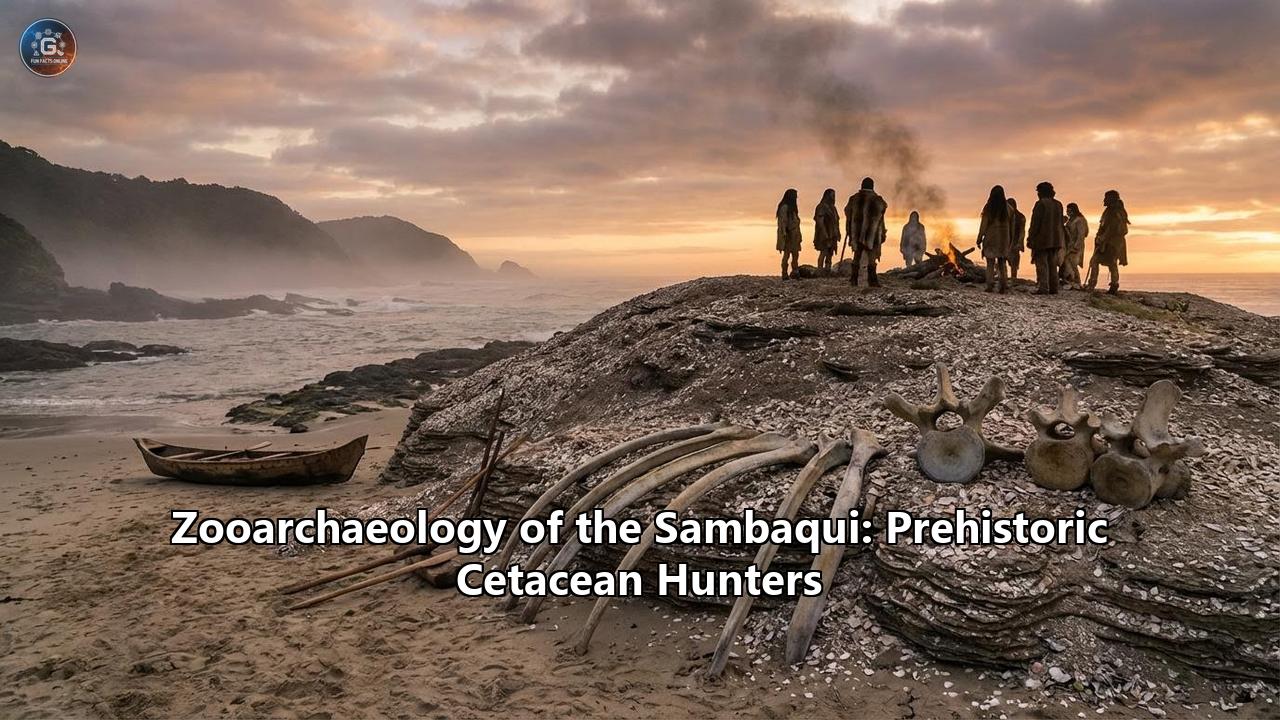
A groundbreaking paradigm shift has recently upended this long-held timeline, moving the geographic origins of organized whale hunting from the freezing Arctic to the sun-drenched, warm subtropical coastlines of southern Brazil. Deep within monumental structures known as sambaquis—massive, ancient shell mounds that dot the Brazilian Atlantic coast—zooarchaeologists have uncovered a stunning truth: Indigenous South American communities were highly specialized, active whale hunters some 5,000 years ago, pushing back the known origins of maritime whaling by more than a millennium.
This discovery not only rewrites the timeline of human interaction with the ocean's largest inhabitants but also reframes our entire understanding of prehistoric coastal societies. The Sambaqui people were not merely opportunistic scavengers waiting for the tide to deliver a beached meal. They were master mariners, engineers of complex hunting technologies, and architects of a sophisticated society intrinsically tied to the majestic cetaceans that migrated through their waters.
The Architects of the Coast: Who Were the Sambaqui?
To comprehend the magnitude of this discovery, one must first understand the people at the center of it. The word sambaqui derives from the Indigenous Tupi language—tamba meaning "shell," and ki meaning "mound". For nearly 7,000 years, during the Holocene epoch, these communities thrived along the estuaries, bays, and lagoons of the Brazilian coast, stretching primarily from Rio de Janeiro down to Santa Catarina and Rio Grande do Sul.
The sambaquis they left behind are among the most distinctive and monumental archaeological records of ancient life in South America. Built continuously over dozens, sometimes hundreds, of generations, these mounds were constructed from layers of marine shells, fish bones, sediment, botanical remains, and ash from hearths. Some were relatively small, but others were colossal—towering tens of meters high and looming over the flat coastal landscape as undeniable territorial markers.
For decades, the prevailing archaeological interpretation of the Sambaqui people was somewhat simplistic. Because their mounds were composed largely of mollusk shells and small nearshore fish bones, they were classified primarily as shellfish gatherers and small-scale fishers. They were viewed as societies tethered strictly to the shallows, lacking the technology, social organization, or seafaring prowess to venture into deeper waters and tackle formidable marine megafauna.
When massive cetacean bones occasionally surfaced during the excavation of these shell mounds, researchers naturally assumed the Sambaqui were simply the lucky beneficiaries of marine accidents. The consensus held that any whale bones found within the sambaquis were the result of opportunistic scavenging—harvesting meat, blubber, and bone from dead whales that had naturally stranded themselves on the beaches. After all, no specialized harpoon technology or definitive hunting marks had ever been identified to suggest otherwise.
A Museum Discovery: The Dusty Boxes of Babitonga Bay
The unravelling of the "scavenger" hypothesis did not occur on a wind-swept beach during a modern excavation, but rather inside the quiet, climate-controlled walls of a museum.
The region of Babitonga Bay, located in the state of Santa Catarina, was once home to hundreds of sambaquis. Tragically, over the past century, many of these monumental mounds were decimated by rapid urbanization, their ancient shells ground up to pave roads or used as raw materials for lime production. However, between the 1940s and 1960s, an amateur archaeologist named Guilherme Tiburtius recognized the immense historical value of these sites. As developers disassembled the mounds, Tiburtius frantically recovered boxes of bones and artifacts, which eventually found a home at the Museu Arqueológico de Sambaqui de Joinville.
Decades later, an international team of researchers, led by Dr. Krista McGrath and Dr. André Carlo Colonese from the Institute of Environmental Science and Technology at the Autonomous University of Barcelona (ICTA-UAB), visited the museum. Their initial goal was modest: they were looking for evidence of prehistoric ocean fishing.
During their visit, museum curators brought out dusty boxes filled with what were initially believed to be unassuming bone sticks. But to the trained eyes of the zooarchaeologists, these were no ordinary sticks. They were heavy, standardized, and intricately carved. They were, unmistakably, the components of massive marine harpoons.
Radiocarbon dating of these bone tools yielded a jaw-dropping result: the harpoons were forged between 4,710 and 4,970 years ago, establishing them as some of the oldest active whale-hunting implements ever discovered on Earth.
The Anatomy of a Leviathan Hunter's Toolkit
The physical evidence of these weapons provided the "smoking gun" that archaeologists had been missing. When hunting an animal that can weigh up to forty tons and measure 17 meters in length, standard fishing spears or terrestrial hunting arrows are virtually useless. You need heavy-duty, highly specialized equipment capable of penetrating layers of dense blubber and securing a line to a thrashing behemoth.
The artifacts recovered from Babitonga Bay fit this description perfectly. The researchers identified fifteen distinct harpoon elements, including foreshafts and socket pieces, crafted from the thick, durable ribs of large cetaceans. These were not crude tools; they were engineered with a deep understanding of marine mechanics.
Several of the bone pieces were hollowed out at one end, intentionally designed to act as a socket that would firmly hold a long wooden shaft. Others featured carefully carved bevels and grooves, allowing barbed tips (likely made of stone or sharpened bone) to be tightly lashed onto the weapon using tough plant fibers. While the organic components like the wooden shafts and fiber ropes have long since decomposed, the remaining bone architecture paints a clear picture of a complex, multi-part harpoon system.
The sheer size and heft of these tools indicated they were meant for penetration and retention. "The data reveals that these communities had the knowledge, tools, and specialized strategies to hunt large whales thousands of years earlier than we had previously assumed," noted Dr. McGrath.
Unlocking the Bones: The Magic of ZooMS
Finding harpoons made of whale bone is a monumental discovery, but to fully understand the prehistoric maritime economy, researchers needed to know exactly what kinds of cetaceans the Sambaqui were hunting. Identifying highly fragmented, heavily modified, or degraded bone visually is nearly impossible, even for the most experienced zooarchaeologists. A carved harpoon foreshaft offers no morphological clues as to whether it came from a humpback, a blue whale, or a dolphin.
To solve this, the researchers turned to a cutting-edge molecular technique known as ZooMS (Zooarchaeology by Mass Spectrometry).
If DNA is the delicate instruction manual of a living organism, collagen is the hardy structural scaffolding. Over millennia, DNA degrades quickly, especially in the warm, humid climate of coastal Brazil. Collagen, however, is incredibly resilient. ZooMS operates like a highly advanced molecular barcode scanner. By extracting minute samples of bone collagen from the artifacts and running them through a mass spectrometer, scientists can analyze the unique peptide sequences—the specific arrangement of amino acids—which vary slightly from species to species.
The ZooMS results from the Babitonga Bay artifacts were a revelation. Out of 118 analyzed bone remains, the molecular fingerprints showed that the Sambaqui were actively hunting an astonishing variety of marine mammals. The most abundant targets were southern right whales (Eubalaena australis) and humpback whales (Megaptera novaeangliae), but the team also identified the remains of blue whales, sei whales, sperm whales, and several species of dolphins.
Crucially, many of these bones—which had not been fashioned into tools—bore distinct cut marks consistent with the systematic use of stone tools for butchery. These hack marks were concentrated in areas where nutrient-dense meat and thick blubber would have been harvested, proving beyond a shadow of a doubt that these animals were being methodically processed for human consumption.
The Hunt: Braving the Prehistoric Swells
With the biological targets and the technological weaponry identified, we can begin to reconstruct the visceral reality of a Sambaqui whale hunt 5,000 years ago.
This was not an open-ocean, deep-sea pursuit like the famous 19th-century Nantucket whaling expeditions. The presence of southern right whales and humpbacks in the archaeological record is highly telling. Both of these species are known for their coastal habits, often coming into shallow bays and estuaries to calve and nurse their young.
The southern right whale was particularly vulnerable to early human hunters. They are notoriously slow swimmers, making them relatively easy to approach in human-powered dugout canoes or reed boats. More importantly, the right whale possesses an exceptionally thick layer of blubber. When killed, this blubber causes the carcass to float on the surface of the water, rather than sinking into the abyss. (This tragic biological trait is exactly why 18th-century commercial whalers named them the "right" whales to hunt).
A Sambaqui whale hunt would have been an incredible feat of communal organization and raw human courage. Teams of hunters would launch into the swells, coordinating their approach. Striking the animal with their heavy, bone-tipped harpoons, they would have relied on thick ropes to secure the leviathan, tiring it out in the coastal shallows before dispatching it and towing the floating mountain of flesh back to the shoreline.
Once on the beach, the real work began. The communal distribution of whale meat and oil would have been a massive logistical undertaking. A single whale could provide enough calories, fat, and raw materials to sustain an entire community for months. The blubber could be rendered down into oil, essential not only for caloric intake but potentially for lighting lamps and fueling fires over extended periods. This reliance on communal labor and resource management points to a highly organized, complex societal structure that was far more sophisticated than the simple "shellfish gatherer" label previously assigned to them.
The Spiritual and Cultural Weight of the Leviathan
For the Sambaqui, the whale was not merely a swimming buffet; it was a creature of immense cultural and spiritual significance. We know this because the zooarchaeological evidence does not just reflect dietary habits—it reflects profound mortuary rituals.
The shell mounds of the Brazilian coast were not just ancient trash heaps; they were the focal points of community life and the resting places of the ancestors. The mounds were constructed in alternating layers: a layer of daily refuse (shells, fish bones, ash) followed by a layer of human graves, repeatedly built up over centuries.
Within these sacred funerary contexts, researchers have found a staggering amount of cetacean material. Whale bones and the very harpoons used to hunt them were intentionally placed in the graves alongside the bodies of the deceased. Some of the bones were intricately carved into ornaments and pendants, though the vast majority were unworked remains, suggesting the meat itself was a vital part of the mortuary feast.
Burying an individual with whalebone harpoons or massive cetacean ribs suggests that the act of whaling, and the hunters who participated in it, held an elevated, esteemed status within Sambaqui society. The ocean and its giants were seamlessly integrated into their cosmology. The whale provided life, warmth, and tools, and in death, the whale accompanied them into the afterlife.
Ecological Ghost Stories: What Ancient Bones Tell Modern Conservationists
The application of ZooMS and zooarchaeology to these 5,000-year-old shell mounds offers more than just anthropological insights; it provides a vital window into the ancient ecology of our oceans.
Today, if you look at the migratory maps of humpback whales in the western South Atlantic, their main breeding grounds are generally found much further north, concentrated off the coast of the Brazilian state of Bahia. However, the overwhelming abundance of humpback remains in the deep-south sambaquis of Santa Catarina tells a very different story.
Before the advent of industrialized commercial whaling in the 19th and 20th centuries, humpback whales were incredibly abundant in the subtropical waters of southern Brazil. Commercial whaling was an ecological holocaust, driving the population of western South Atlantic humpbacks from a thriving 27,000 individuals down to a highly endangered, genetic bottleneck of just 450 survivors.
Marta Cremer, a marine biologist and co-author of the recent studies, highlights how this prehistoric baseline is vital for modern conservation efforts. In recent years, there has been a noticeable increase in humpback whale sightings off the coast of Southern Brazil. To the untrained eye, this might look like a novel shift in their migration. But the bones from the sambaquis reveal the truth: the whales are not exploring new territory; they are coming home.
"The recent increase in sightings in Southern Brazil may therefore reflect a historical recolonization process, with implications for conservation," Cremer notes. The genetic memory of the whales is leading them back to the exact coastal nurseries where they were hunted by the Sambaqui 5,000 years ago. Understanding these ancient, pre-industrial distribution maps is crucial for policymakers today as they designate marine protected areas and shipping lanes to safeguard the recovering populations.
The Fading of the Mound Builders
If the Sambaqui were such successful, organized, and technologically advanced masters of their environment, why are they no longer there? The answer lies in the very environmental systems they relied upon.
For millennia, the Sambaqui thrived in a stable coastal environment. But around 2,000 to 2,200 years ago, a dramatic climatic shift occurred. Studies analyzing the isotopic signatures in human bone collagen from late-stage sambaquis indicate a period of severe socio-ecological instability.
Sea levels, which had been relatively high and stable, suddenly dropped by approximately 1.6 meters. This seemingly minor geological shift had catastrophic consequences for the coastal topography. The vast, shallow lagoons, bays, and estuaries that served as the nurseries for the fish, mollusks, and the whales they hunted began to dry up or shrink drastically.
As the local coastal resources became scarce, the dense, stationary communities could no longer sustain their massive populations. The monumental construction of the shell mounds—which relied heavily on an infinite supply of shells—slowed and eventually ceased. The deep communal ties that bound the people to these specific ritual sites began to fray.
While early hypotheses suggested that the Sambaqui were violently conquered and replaced by incoming proto-Jê populations from the inland uplands, modern archaeological and genetic evidence tells a more nuanced story. Recent studies, such as the excavation at the Galheta IV site, show that the mound builders were not necessarily wiped out by invaders. Instead, forced by the changing environment, they adapted. They changed their settlement patterns, intensified alternative fishing strategies, and gradually integrated with new populations and cultures.
The era of building monumental shell mounds to the sky and coordinating massive tribal hunts for right whales faded away, giving rise to new ways of life along the South American coast.
A Legacy Carved in Bone
The zooarchaeology of the Sambaqui stands as a powerful testament to the ingenuity of early human civilizations. The narrative that complex, specialized maritime technologies could only arise out of the desperate cold of the Arctic has been thoroughly dismantled. Here, in the warm waters of the South Atlantic, a highly organized, deeply spiritual people mastered the art of whaling a full millennium before anyone else.
Through a remarkable blend of amateur archaeological preservation, cutting-edge mass spectrometry, and international scientific collaboration, the true legacy of the Sambaqui has been unearthed. They were not merely passive gatherers living on the margins of the sea. They were the world's first true cetacean hunters—fearless mariners who looked out at the blowing spouts of massive whales and saw not just a meal, but the foundation of a vibrant, enduring civilization.
Reference:
- https://www.discovermagazine.com/5-000-year-old-evidence-shows-humans-hunted-whales-earlier-than-previously-thought-48525
- https://www.zmescience.com/science/archaeology/brazil-5000-year-old-whale-hunting/
- https://www.iflscience.com/worlds-oldest-harpoon-shows-humans-have-hunted-whales-for-5000-years-way-longer-than-thought-82185
- https://archaeology.org/news/2026/01/14/5000-year-old-evidence-of-whaling-found-in-brazil/
- https://www.uab.cat/en/prehistory/news/20260109/balenes-sudamerica-en
- https://indiandefencereview.com/5000-year-whale-hunting-evidence-brazil/
- https://revistapesquisa.fapesp.br/en/lower-sea-fewer-shell-mounds/
- https://www.mdpi.com/2073-445X/10/7/757
- https://www.researchgate.net/publication/251636595_Sambaquis_shell_mounds_of_the_Brazilian_coast
- https://www.archaeology.wiki/blog/2024/07/02/new-findings-rewrite-ancient-brazilian-history/
- https://www.livescience.com/archaeology/some-of-the-oldest-harpoons-ever-found-reveal-indigenous-people-in-brazil-were-hunting-whales-5-000-years-ago
- https://www.smithsonianmag.com/smart-news/these-baffling-bone-artifacts-discovered-by-an-amateur-archaeologist-may-be-the-worlds-oldest-whale-harpoons-180988025/
- https://archaeologymag.com/2026/01/5000-year-old-whale-harpoons-indigenous-brazil/
- https://www.researchgate.net/publication/399619142_Molecular_and_zooarchaeological_identification_of_5000_year_old_whale-bone_harpoons_in_coastal_Brazil
- https://theorkneynews.scot/2026/01/14/the-whale-hunters-of-brazil-5000-years-ago/