
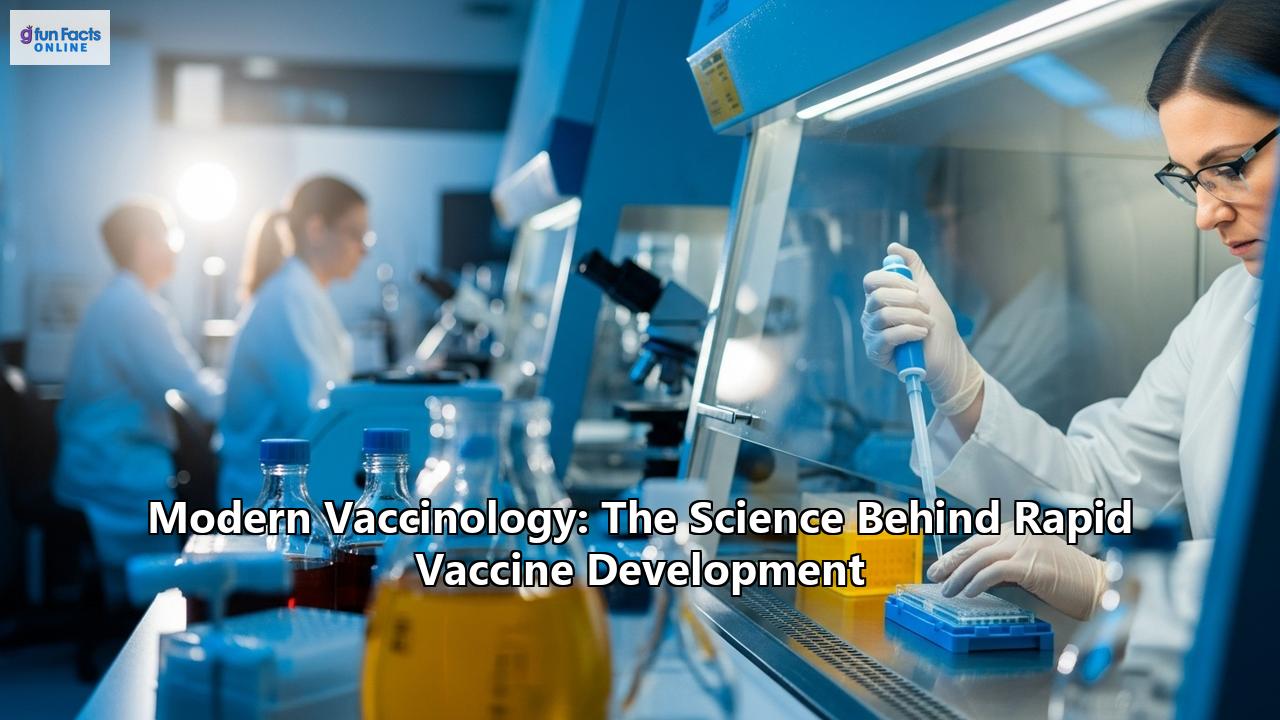
A New Era of Inoculation: The Science Behind Unprecedented Vaccine Speed
The world watched, holding its collective breath, as the COVID-19 pandemic swept across the globe. In the face of unprecedented disruption, the scientific community delivered what felt like a miracle: multiple effective vaccines, developed, tested, and deployed in under a year. This stunning achievement shattered the traditional vaccine development timeline, which typically spans a decade or more. But this was no miracle. It was the triumphant culmination of decades of dedicated, and often under-the-radar, scientific research. It marked the arrival of a new era in public health, powered by modern vaccinology.
The rapid response to SARS-CoV-2 was not a single breakthrough, but a convergence of revolutionary technologies and novel strategies. This revolution stands on several key pillars: elegant "plug and play" platform technologies like messenger RNA (mRNA) and viral vectors; the power of genomics and bioinformatics to design vaccines at digital speed; and a paradigm-shifting reinvention of regulatory and manufacturing processes. Together, these elements have not only provided the tools to combat a global pandemic but have also opened the door to a future where we can confront a vast array of diseases, from influenza and HIV to cancer, with unprecedented speed and precision. This is the story of how science hacked the code of life to save lives, heralding a golden age of vaccinology.
The Conventional Vaccine Playbook: A Legacy of Success and Its Inherent Limits
For over a century, vaccines have been one of public health's greatest triumphs, eradicating diseases like smallpox and dramatically reducing the threat of many others. This success was built on a foundation of ingenious, if time-consuming, methodologies.
The traditional vaccine arsenal consists of several core types:
- Live-Attenuated Vaccines: These contain a weakened, or "attenuated," version of the living pathogen. Because they so closely mimic a natural infection, they provoke a powerful and often lifelong immune response. The measles, mumps, and rubella (MMR) and chickenpox vaccines are prime examples.
- Inactivated Vaccines: These use a "killed" version of the pathogen, which has been rendered non-infectious, often by heat or chemicals. While they cannot cause disease, they are still recognized as foreign by the immune system. They are incredibly safe but may require multiple doses or boosters to maintain immunity. Classic examples include the inactivated polio vaccine and many seasonal flu shots.
- Toxoid Vaccines: Some bacteria cause illness by releasing harmful toxins. Toxoid vaccines, such as those for tetanus and diphtheria, contain an inactivated version of these toxins, teaching the immune system to neutralize the toxin's harmful effects.
The development process for these vaccines was methodical and, by necessity, slow. It followed a rigid, sequential path that could easily take 10 to 15 years.
- Exploratory Stage: Years of basic research to understand a pathogen and identify potential ways to generate immunity.
- Pre-clinical Stage: Testing in cell cultures and animal models to assess safety and immune response.
- Clinical Trials (in Humans): A three-act drama. Phase I involves a small group of volunteers to confirm basic safety and dosage. Phase II expands to hundreds of participants to further evaluate safety and the immune response across more diverse groups. Phase III is the critical test, involving thousands to tens of thousands of people to definitively prove both safety and efficacy, often by comparing the vaccinated group to a placebo group.
- Regulatory Review and Approval: After successful trials, a mountain of data is submitted to regulatory bodies like the U.S. Food and Drug Administration (FDA) for exhaustive review.
- Manufacturing and Scale-Up: Only after approval would a company undertake the massive financial investment to build and validate manufacturing facilities to produce the vaccine at scale.
This linear process was safe and reliable but possessed critical limitations in the face of modern threats. The reliance on growing vast quantities of live pathogens was slow and carried inherent risks. Some viruses are notoriously difficult or dangerous to culture in the lab. Most importantly, the sequential, decade-long timeline was simply no match for a fast-moving, 21st-century pandemic. A new playbook was needed.
The Dawn of a New Era: Platform Technologies as the Game-Changer
The secret to modern vaccinology's speed lies in a concept known as "platform technology." Think of it as a standardized chassis for a car. Once the chassis is designed, tested, and approved, you can create many different models of car by simply changing the body, engine, and interior. In vaccinology, a platform is a core system—a delivery mechanism or a basic structural component—that is consistent and well-understood. To create a new vaccine, scientists don't have to start from scratch; they simply "plug in" the unique genetic information from the new pathogen.
This modular, "plug and play" approach is a fundamental shift. It means that once a platform—like an mRNA delivery system—is proven safe, the development of future vaccines using that same platform can be dramatically accelerated. Regulators become familiar with the core technology, and manufacturing processes can be largely standardized, ready to be adapted with minimal changes. This strategy not only saves time but also significantly de-risks the early stages of development, encouraging investment and innovation. The COVID-19 pandemic saw the triumphant debut of several such platforms, primarily mRNA, viral vector, and advanced subunit technologies.
Deep Dive: mRNA Vaccines – Hacking the Body's Protein Factories
At the heart of the rapid COVID-19 response was messenger RNA (mRNA) technology, a revolutionary approach that essentially turns the body's own cells into on-demand vaccine factories. The concept is an elegant application of basic biology. Our cells constantly use mRNA as a temporary instruction sheet; it carries genetic blueprints from our DNA in the cell's nucleus to its protein-making machinery, called ribosomes. The ribosomes read the mRNA and build the specified protein.
mRNA vaccines harness this natural process with surgical precision:
- Digital Design: The process begins not with a virus in a lab, but with a computer file containing the pathogen's genetic sequence. For SARS-CoV-2, scientists quickly identified the gene for the "spike protein," the distinctive protrusion the virus uses to enter human cells.
- Lab Synthesis: Using this digital code, scientists chemically synthesize the relevant strand of mRNA. Crucially, no actual virus—live or inactivated—is ever needed.
- The Protective Bubble: mRNA is notoriously fragile. To get it into our cells, it's encapsulated in a microscopic bubble of fats called a lipid nanoparticle (LNP). This LNP acts as both a protective shield and a delivery vehicle, allowing the mRNA to fuse with our cells and release its payload.
- Cellular Instruction: Once inside a cell, the mRNA is read by the ribosomes, which begin producing copies of the harmless spike protein.
- Immune Activation: The cell displays these spike proteins on its surface. The immune system recognizes these proteins as foreign and mounts a powerful defense, creating targeted antibodies and developing a memory in the form of B-cells and T-cells.
- A Self-Destructing Message: The mRNA instruction sheet is temporary by nature. After a few days, the cell naturally breaks it down and disposes of it. It never enters the cell's nucleus and has no effect on our DNA.
While mRNA vaccines seemed like an overnight success, they were built on decades of painstaking research. Scientists in the 1990s first demonstrated that injected mRNA could prompt cells to make proteins, but they faced immense hurdles. The mRNA was unstable, triggered harmful inflammatory responses, and was difficult to deliver into cells. Groundbreaking work by scientists like Katalin Karikó and Drew Weissman on modifying nucleosides (the building blocks of RNA) solved the inflammatory issue. Parallel advances in lipid nanoparticle technology provided the perfect delivery vehicle. This foundational work was tested for years in the development of vaccines for other viruses like influenza, Zika, and rabies, creating a mature and ready-to-deploy platform just in time for an unforeseen pandemic.
The advantages of this platform are transformative:
- Speed: As Moderna demonstrated, a vaccine candidate can be designed in as little as two days, and the first clinical batch produced in just 42 days.
- Safety: The absence of any viral components makes them non-infectious.
- Adaptability: To target a new variant, scientists only need to tweak the mRNA code, a process far faster than re-engineering traditional vaccines.
Scientists are also exploring next-generation versions, such as self-amplifying mRNA (saRNA), which can make copies of itself inside the cell, allowing for much smaller doses and potentially longer-lasting immune responses.
Deep Dive: Viral Vector Vaccines – A Trojan Horse for Immunity
Another star of the rapid response was viral vector technology. This approach uses a harmless, modified virus as a "vector," or delivery vehicle, to carry genetic instructions into our cells. It’s a bit like using a Trojan horse to sneak the blueprint for a defense shield past the city walls.
Here's how it works:
- Choosing the Vector: Scientists start with a common, well-studied virus, like an adenovirus (which typically causes the common cold) or Vesicular Stomatitis Virus (VSV).
- Disarming and Loading: The vector virus is genetically engineered to be replication-deficient, meaning it can't reproduce or cause disease. Its harmful genes are removed and replaced with the genetic code—usually in the form of DNA—for the target antigen, such as the SARS-CoV-2 spike protein.
- Delivery and Instruction: When the vaccine is injected, the vector virus does what viruses do best: it infects our cells and delivers its genetic payload. The cell's machinery then reads this DNA blueprint, transcribes it into mRNA, and translates that mRNA into the spike protein.
- A Robust Immune Response: Just as with mRNA vaccines, the immune system detects the foreign spike protein and launches a defense, generating both antibodies and a strong T-cell response, which is crucial for killing already-infected cells.
Like mRNA technology, viral vector platforms were not new. This approach had been honed over decades of research, leading to the successful development of an Ebola vaccine (Ervebo) that uses a VSV vector. This prior experience provided a high degree of confidence in the platform's safety and effectiveness.
Key advantages of viral vectors include:
- Robust Immunity: They are known for generating powerful and durable immune responses, often with just a single dose.
- Stability: These vaccines are generally more rugged than their mRNA counterparts and do not require ultra-cold storage, making them easier to distribute globally.
However, the technology faces a unique challenge: pre-existing immunity. Because adenoviruses are so common, some people may have antibodies against the vector itself, which can intercept the vaccine before it can do its job, potentially reducing its effectiveness. Furthermore, their production can be more complex and costly than that of mRNA vaccines.
Deep Dive: Next-Generation Subunit Vaccines – The Art of Precision Engineering
The third major pillar of modern vaccinology is the refinement of a trusted concept: the subunit vaccine. This approach discards the entire pathogen and instead uses only specific, purified pieces of it—the subunits—that are necessary to provoke a strong immune response. It’s the ultimate in precision, focusing the immune system's attention exclusively on the most important target.
The modern process for creating these vaccines is a marvel of bio-engineering:
- Antigen Identification: Scientists first identify the precise protein or polysaccharide on a pathogen that acts as the key antigenic target.
- Recombinant Production: Instead of extracting this protein from the pathogen, they use recombinant DNA technology. The gene for the desired antigen is inserted into a different, easy-to-grow organism, like yeast or insect cells. These organisms are turned into living factories that churn out vast quantities of the pure antigen. This technique was pioneered for the Hepatitis B vaccine, which is now a routine part of childhood immunization.
- Adjuvants and Formulation: Purified proteins on their own are often not stimulating enough for the immune system. Therefore, they are typically formulated with an adjuvant—a substance that enhances the immune response.
- Virus-Like Particles (VLPs): A highly advanced form of subunit vaccine involves creating Virus-Like Particles. Here, viral structural proteins are produced and allowed to self-assemble into a particle that looks identical to the original virus on the outside but is completely empty on the inside—it contains no viral genetic material. This "imposter" virus is highly effective at triggering a powerful immune response. The Human Papillomavirus (HPV) vaccine, a VLP-based vaccine, is a prominent success story.
The primary advantages of subunit vaccines are:
- Exceptional Safety: Because they contain no viral genetic material, they cannot cause infection, making them an excellent option for people with weakened immune systems.
- Proven Technology: The manufacturing principles are well-established and understood.
The main challenge lies in the fact that they often require adjuvants and may not induce the same breadth of immunity, particularly T-cell responses, as effectively as mRNA or vector vaccines.
The Unseen Engines: Powering Discovery with Genomics and Bioinformatics
The lightning-fast start to the COVID-19 vaccine race was made possible by two interconnected fields: genomics and bioinformatics. The starting pistol fired on January 10, 2020, when scientists published the complete genetic sequence of the SARS-CoV-2 virus. This single act enabled researchers around the world to begin designing a vaccine immediately, without ever needing a physical sample of the virus.
This is the essence of a revolutionary approach called reverse vaccinology. Instead of the traditional method of growing a pathogen and laboriously breaking it down to find useful antigens, scientists now start with the digital genome sequence and work "backward." Using powerful computational tools, they can analyze the entire genetic code and predict which components are most likely to serve as effective vaccine targets.
Bioinformatics was the engine that drove this process:
- Antigen Prediction: Specialized algorithms sifted through the SARS-CoV-2 genome, comparing it to other known coronaviruses and predicting which of its proteins would be most visible to the immune system and critical for its function. The spike protein quickly emerged as the prime candidate.
- Epitope Mapping: Going a level deeper, computational tools identified the specific regions on the spike protein, known as epitopes, that would likely be recognized by antibodies and T-cells.
- Structural Vaccinology: Using AI-powered modeling, scientists could predict the three-dimensional shape of the spike protein. This was vital for engineering the antigen to be more stable and to present itself to the immune system in its most effective form—a key innovation in both the mRNA and subunit vaccines.
- Variant Surveillance: As the pandemic progressed, continuous, rapid genomic sequencing around the world allowed scientists to track the emergence of new variants in near real-time, providing the crucial data needed to assess whether vaccine updates were necessary.
This digital-first approach saved months, if not years, of exploratory lab work, allowing researchers to move directly to testing the most promising candidates.
Compressing Time: Reinventing Development and Regulation
Even with revolutionary vaccine designs, the traditional 10-to-15-year timeline was an insurmountable barrier. To meet the crisis, the entire development and regulatory framework was reimagined, shifting from a slow, linear sequence to a massively parallel effort.
This compression was achieved through several key innovations:
- Overlapping Trial Phases: Instead of waiting for one clinical trial phase to complete before starting the next, phases were initiated in an overlapping fashion. For instance, planning and recruitment for Phase III began while Phase II was still generating data.
- At-Risk Manufacturing: In a bold and financially risky move, governments and organizations like CEPI funded the mass production of the most promising vaccine candidates while they were still in Phase III trials. This meant that if a vaccine was proven effective, millions of doses would be ready for immediate distribution, eliminating the usual post-approval manufacturing delay.
- Emergency Use Authorization (EUA): Regulatory agencies implemented accelerated approval pathways. An EUA is a mechanism that allows for the use of unapproved medical products during a declared public health emergency when the known and potential benefits outweigh the known and potential risks. It is crucial to understand that this is not a shortcut on safety. All candidates underwent the same rigorous Phase I, II, and III trials as required for full approval. The key differences were a slightly shorter follow-up period for the initial authorization (a median of two months of safety data post-vaccination versus the typical six months for full approval) and a commitment from regulators to prioritize the review process, analyzing data on a "rolling" basis as it came in, rather than waiting for a single, final submission.
This combination of parallel tracks—running trials, manufacturing, and regulatory review simultaneously—was the logistical masterstroke that enabled a decade's worth of work to be accomplished in less than a year.
The Human Element: Fueling Progress with Funding and Collaboration
Technology alone was not enough. The unprecedented speed was also a testament to human ingenuity in collaboration and resource mobilization.
- Global Scientific Cooperation: From the moment the SARS-CoV-2 genome was shared, an unparalleled spirit of open science took hold. Researchers across academia, government, and private industry shared data, protocols, and results at breathtaking speed, creating a global brain trust focused on a single problem.
- Public-Private Partnerships: The crisis erased traditional silos. Governments, philanthropic organizations, and pharmaceutical companies forged deep partnerships to co-fund research, coordinate trials, and manage complex supply chains.
- Dedicated Funding Bodies: The response was powered by massive and strategic investment. Organizations like the Coalition for Epidemic Preparedness Innovations (CEPI), founded in 2017 precisely to prepare for future epidemics, played a pivotal role. CEPI invested early in promising platform technologies and a diverse portfolio of vaccine candidates, spreading the risk and maximizing the chances of success. In the United States, Operation Warp Speed channeled billions of dollars into multiple vaccine projects simultaneously, funding both the research and the at-risk manufacturing.
- The Push for Equity: Recognizing that a pandemic is not over for anyone until it is over for everyone, initiatives like COVAX were established. Co-led by Gavi (The Vaccine Alliance), CEPI, and the World Health Organization (WHO), COVAX was created to ensure that low- and middle-income countries would have fair and equitable access to COVID-19 vaccines.
The Future of Vaccinology: The 100-Day Mission and Beyond
The triumph over COVID-19 was not an end point; it was the start of a new chapter in medicine. The ultimate goal for many in the field is now the "100 Days Mission": the ability to develop and license a vaccine for a new pandemic threat ("Disease X") within 100 days of its identification. Achieving this will require further refinement of platform technologies, even faster regulatory pathways, and globally distributed manufacturing networks ready to activate at a moment's notice.
Furthermore, the powerful technologies honed during the pandemic are now being aimed at some of humanity's most persistent health challenges:
- Personalized Cancer Vaccines: Researchers are using mRNA technology to create vaccines that are custom-built for an individual's tumor. By sequencing a patient's cancer cells, a vaccine can be designed to teach their immune system to recognize and destroy those specific malignant cells.
- Tackling Chronic and Autoimmune Diseases: The ability to precisely modulate the immune system opens up possibilities for treating autoimmune disorders or even life-threatening allergies.
- Next-Generation Technologies: Innovation continues at a breakneck pace. Scientists are developing self-amplifying RNA (saRNA) and circular RNA (circRNA) vaccines that promise greater durability and lower doses. Artificial intelligence is being used to design entirely new protein antigens from scratch. And new delivery systems, like painless microneedle patches and even oral vaccines, could make immunization easier and more accessible than ever before.
Conclusion: A Legacy of Science and a Future of Hope
The story of rapid vaccine development is the story of modern science at its best. It is a narrative of foresight, where decades of foundational research into mRNA, viral vectors, and genomics created a powerful arsenal just waiting for a target. It is a narrative of innovation, where scientists, regulators, and manufacturers reinvented a century-old process under immense pressure. And it is a narrative of collaboration, demonstrating what humanity can achieve when it unites against a common foe.
The legacy of the COVID-19 pandemic is not just the billions of lives saved and the economies preserved. It is the dawn of an era where vaccinology is no longer just a shield against infectious disease, but a versatile, dynamic tool with the potential to reshape human health. The speed and precision that once seemed like science fiction are now science fact, offering profound hope for a future where we can meet the health challenges of tomorrow, whatever they may be, with confidence and ingenuity.
Reference:
- https://pmc.ncbi.nlm.nih.gov/articles/PMC8935460/
- https://coronavirus.jhu.edu/vaccines/timeline
- https://pmc.ncbi.nlm.nih.gov/articles/PMC8708925/
- https://www.pfizer.com/news/articles/understanding_six_types_of_vaccine_technologies
- https://www.susupport.com/knowledge/biopharmaceutical-products/drug-delivery/viral-vector-vaccines-mrna-vaccines-differences
- https://www.yalemedicine.org/news/what-does-eua-mean
- https://singingriverhealthsystem.com/wp-content/uploads/2021/08/EUA-Process.pdf
- https://en.wikipedia.org/wiki/MRNA_vaccine
- https://pmc.ncbi.nlm.nih.gov/articles/PMC7554600/
- https://centerforhealthsecurity.org/sites/default/files/2022-12/190423-opp-platform-report.pdf
- https://pubmed.ncbi.nlm.nih.gov/40035793/
- https://www.researchgate.net/publication/315628079_Platform_technologies_for_modern_vaccine_manufacturing
- https://cepi.net/vaccine-technology
- https://opalbiopharma.com/latest-advances-in-vaccine-technology/
- https://www.webmd.com/vaccines/ss/slideshow-mrna-technology
- https://www.cdc.gov/covid/vaccines/how-they-work.html
- https://my.clevelandclinic.org/health/treatments/21898-mrna-vaccines
- https://medlineplus.gov/genetics/understanding/therapy/mrnavaccines/
- https://www.researchgate.net/figure/Timeline-of-Modernas-mRNA-1273-vaccine-development-for-COVID-1911-27_fig2_358429330
- https://www.ewadirect.com/proceedings/tns/article/view/17196
- https://cepi.net/viral-vector-vaccines-what-they-are-and-what-they-are-not
- https://www.numberanalytics.com/blog/viral-vector-vaccines-ultimate-guide
- https://en.wikipedia.org/wiki/Viral_vector_vaccine
- https://en.wikipedia.org/wiki/Subunit_vaccine
- https://www.sartorius.com/en/applications/biopharmaceutical-manufacturing/vaccines/vaccine-development/recombinant-subunit-vaccines
- https://pmc.ncbi.nlm.nih.gov/articles/PMC4927204/
- https://www.malvernpanalytical.com/en/learn/knowledge-center/insights/recombinant-protein-subunit-vaccines-a-new-approach-in-second-generation-vaccines-development
- https://www.ingentaconnect.com/content/10.2174/157489312803900910
- https://www.explorationpub.com/uploads/Article/A1003203/1003203.pdf
- https://omicstutorials.com/the-role-of-bioinformatics-in-the-development-of-vaccines-and-therapies-for-covid-19/
- https://www.numberanalytics.com/blog/revolutionizing-vaccine-development-bioinformatics
- https://riveraxe.com/application-of-bioinformatics-in-immunology/
- https://pmc.ncbi.nlm.nih.gov/articles/PMC10493744/
- https://www.mdpi.com/1660-4601/21/10/1337
- https://www.bjc.org/news/timeline-covid-19-vaccine-development
- https://atriumhealth.org/dailydose/2021/08/09/eua-explained-what-is-emergency-use-authorization-and-how-can-we-know-the-covid-19-vaccines-are-safe
- https://www.fda.gov/apology_objects/abuse-detection-apology.html
- https://phrma.org/blog/understanding-the-emergency-use-authorization-process-for-covid-19-vaccines
- https://abap.co.in/index.php/home/article/download/27/24/24
- https://www.numberanalytics.com/blog/global-vaccine-collaboration-guide
- https://www.vaccinestoday.eu/stories/vaccines-global-health-making-collaboration-count/
- https://www.economicsobservatory.com/how-important-is-international-cooperation-in-the-vaccine-rollout
- https://genoskin.com/future-of-vaccine-research/
- https://www.biotechrep.ir/article_170153_ba2d35f38116eea9206fc948f7f814ce.pdf