
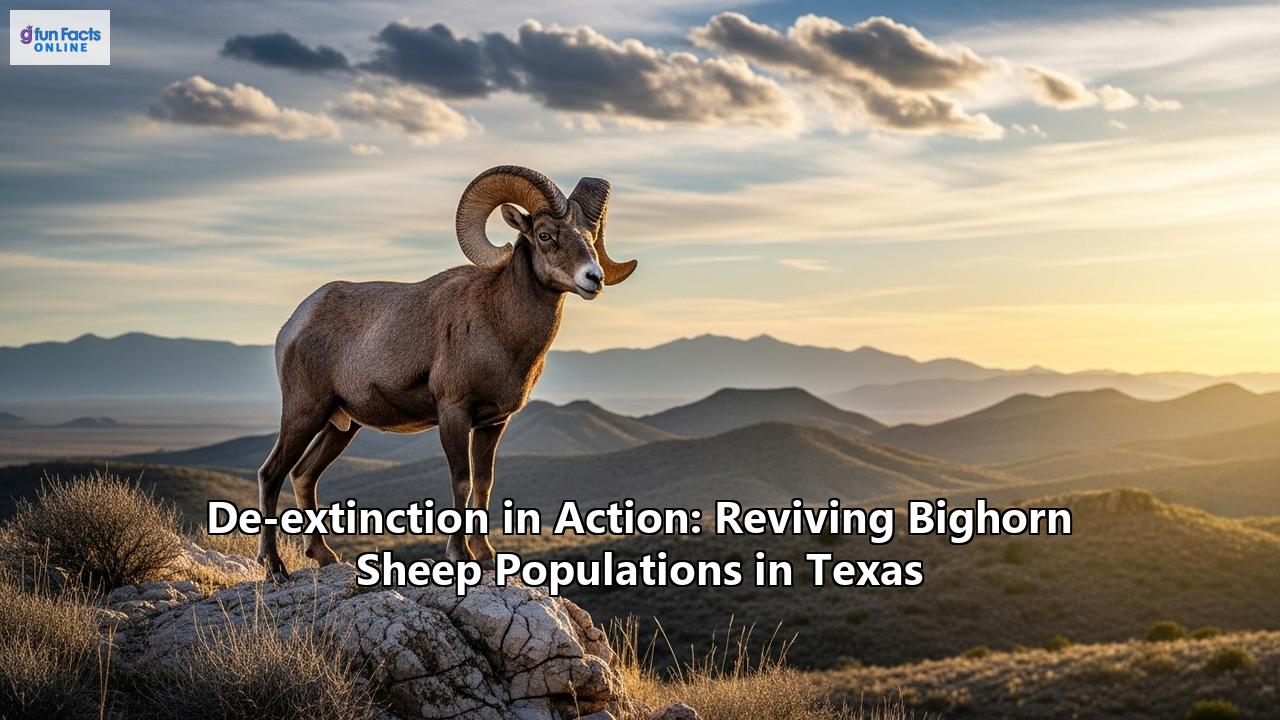
In the rugged, sun-scorched mountains of West Texas, a remarkable story of ecological revival is unfolding. It is a narrative of loss, perseverance, and the enduring spirit of one of North America's most iconic animals: the desert bighorn sheep. Once completely vanished from the Texas landscape, these majestic creatures are making a dramatic comeback, thanks to a multi-generational effort that stands as one of the most ambitious and successful wildlife restoration projects in the state's history. This is not just a story of reintroduction; it's a tale of de-extinction in action, a testament to the dedication of conservationists, and a hopeful chapter in the ongoing saga of humanity's relationship with the wild.
A Ghost in the Mountains: The Disappearance of the Native Texas Bighorn
For millennia, the desert bighorn sheep (Ovis canadensis nelsoni) were the undisputed kings of the Trans-Pecos region. Their powerful bodies, adapted to the harsh desert environment, navigated the steepest cliffs with breathtaking agility. Their distinctive, massive, curved horns were a symbol of the untamed wilderness of West Texas. Archaeological evidence, including ancient rock art, chronicles a long history of human fascination with these animals. In the 1880s, an estimated 1,500 to 2,500 bighorns roamed across at least 15 mountain ranges in the region.
However, the arrival of settlers in the late 19th and early 20th centuries marked the beginning of the end for the native Texas bighorn. The reasons for their decline were multifaceted and synergistic. Unregulated hunting took a heavy toll on their populations. The introduction of domestic sheep and goats led to competition for scarce resources like forage and water. More devastatingly, these domestic animals introduced diseases to which the bighorns had no immunity. The landscape itself was changing, with net-wire fences fragmenting their habitat and impeding their natural movements in search of sustenance.
In 1905, a landmark survey by Vernon Bailey estimated that only 500 bighorns remained in 16 mountain ranges. Despite a ban on bighorn hunting enacted by the Texas Legislature in 1903, their numbers continued to dwindle. By the mid-1940s, only 35 were left. The last documented sighting of a native Texas bighorn sheep occurred in October 1958, on the Sierra Diablo Wildlife Management Area. By the early 1960s, the once-thriving populations were declared extirpated from Texas, their ghostly presence lingering only in the memories of old-timers and the petroglyphs on ancient rocks.
The Dawn of a New Era: A Commitment to Restoration
The disappearance of the bighorn was a profound loss, a stark reminder of the fragility of even the most rugged species. Yet, even as the last native bighorns vanished, the seeds of their return were being sown. The story of their revival is a testament to the foresight and unwavering commitment of a diverse coalition of individuals and organizations.
The first formal step towards restoration was a cooperative agreement in 1954 between the Texas Game, Fish and Oyster Commission (the precursor to the Texas Parks and Wildlife Department or TPWD), the Arizona Game and Fish Commission, the U.S. Fish and Wildlife Service, the Boone and Crockett Club, and the Wildlife Management Institute. The initial strategy focused on captive propagation. In 1959, the first restoration facility was built at the Black Gap Wildlife Management Area (WMA), and it was stocked with 16 desert bighorns from Arizona.
This was followed by the establishment of additional breeding facilities at the Sierra Diablo WMA and the Chilicote Ranch. These early efforts were fraught with challenges, including disease, predation, and low reproductive rates. It was a slow, painstaking process, but it laid the crucial groundwork for the ambitious translocation efforts that would follow.
The Architects of the Comeback: Passionate Individuals and Powerful Partnerships
No account of the bighorn's return would be complete without acknowledging the passionate individuals who championed their cause. Among them, the late Dr. James "Red" Duke stands as a towering figure. A renowned trauma surgeon, Duke was also a fervent conservationist. In 1981, he founded the Texas Bighorn Society (TBS), a group of dedicated enthusiasts who tirelessly lobbied for the reintroduction of bighorns. His leadership and passion were instrumental in garnering the support of influential figures and government entities, transforming the dream of bighorn restoration into a tangible reality.
Today, the torch is carried by individuals like Froylán Hernández, the Desert Bighorn Sheep Program Leader for the Texas Parks and Wildlife Department. With a career dedicated to the study and management of these animals, Hernández has been at the forefront of the modern restoration efforts, including the recent historic translocation to the Franklin Mountains. His work, along with that of countless other biologists, veterinarians, and volunteers, is a continuation of the legacy of those who refused to let the bighorn fade into Texas history.
The success of the program is also a story of powerful partnerships. The Texas Parks and Wildlife Department has worked hand-in-hand with the Texas Bighorn Society, the Wild Sheep Foundation, the Dallas Safari Club, and other conservation organizations. A critical component of this success has been the collaboration with private landowners, who have been a driving force behind the restoration efforts. By providing access to their land and working with biologists, these landowners have opened up vast swaths of suitable habitat for the bighorns.
De-extinction in Practice: More Than Just Reintroduction
While the term "de-extinction" often conjures images of resurrecting long-extinct species like the woolly mammoth, the revival of the Texas bighorn sheep offers a more immediate and tangible example of this concept in action. The native subspecies, Ovis canadensis texiana, was declared extinct. However, recent genetic research has revealed a more complex story.
Analysis of museum specimens of the original Texas bighorns has shown that they were part of the desert bighorn sheep lineage, closely related to other populations in the Southwest and Mexico. This has important implications for the restoration effort. The bighorns that have been reintroduced to Texas are a mix of desert bighorns from Arizona, Nevada, Utah, and Mexico. This genetic mixing has created a robust and diverse population, which is crucial for the long-term survival of the species.
The restoration program is, in essence, a carefully managed experiment in population genetics. By bringing in animals from different sources, conservationists have been able to create a population that is well-suited to the diverse and challenging environments of West Texas. This genetic resilience is a key factor in their ability to overcome the numerous threats they face.
The Helicopter and the Net Gun: The Nuts and Bolts of Translocation
The cornerstone of the modern bighorn restoration effort is translocation – the process of capturing wild sheep from established populations and moving them to new, suitable habitats. This is a high-stakes, logistically complex operation that combines cutting-edge technology with old-fashioned grit.
The process often begins at the Elephant Mountain Wildlife Management Area, which has become a vital source herd for the restoration program. A helicopter, expertly piloted, swoops low over the rugged terrain, its crew scanning for bighorns. Once a target is identified, the "gunner" leans out and fires a net gun, entangling the sheep. A "mugger" then jumps from the hovering helicopter to blindfold and restrain the animal, a crucial step to reduce its stress.
The captured sheep are then airlifted, dangling from the helicopter in a specially designed sling, to a staging area. Here, a team of veterinarians, biologists, and volunteers works with remarkable efficiency. They take blood and tissue samples for genetic analysis and disease monitoring, check the animals for pregnancy using ultrasound, and fit them with GPS collars to track their movements after release. This data is invaluable for understanding the health of the population and the success of the translocation.
The sheep are then loaded into trailers for their journey to their new home. The release itself is a moment of profound significance. As the trailer doors open, the bighorns, after a moment of hesitation, bolt into their ancestral lands, a tangible symbol of a species' return.
A Formidable Foe: The Aoudad Invasion
Despite the successes of the restoration program, the future of the bighorn sheep in Texas is far from secure. Perhaps the most significant threat they face is a formidable and invasive competitor: the aoudad, or Barbary sheep. Native to North Africa, aoudad were introduced to Texas in the mid-20th century for hunting purposes. They have thrived in the arid landscapes of West Texas, their population exploding to an estimated 20,000 or more, vastly outnumbering the bighorns.
The conflict between aoudad and bighorn is a battle on multiple fronts. They compete for the same limited resources, including food and water. Aoudad are also carriers of diseases, most notably Mycoplasma ovipneumoniae (M. ovi), a bacterium that can cause deadly pneumonia in bighorns. While aoudad often carry the pathogen without showing symptoms, it can be devastating to bighorn populations, which have no natural immunity. Recent die-offs in some bighorn herds have been linked to this disease, highlighting the urgent need for effective management strategies.
Controlling the aoudad population is a complex and controversial issue. Methods range from controlled hunting to aerial gunning. The economic value of aoudad hunting for landowners adds another layer of complexity to the problem. Finding a solution that protects the bighorns while acknowledging the various interests at play is one of the greatest challenges facing conservationists today.
Restoring the Kingdom: Habitat is Key
Bringing the bighorns back is not just about the animals themselves; it's also about restoring their kingdom. The mountain ranges of West Texas are the heart of bighorn country, and ensuring their health and resilience is a critical part of the restoration effort. This involves a range of habitat management practices, from improving water sources to managing vegetation.
One of the most innovative and vital aspects of this work is the construction of "guzzlers." These are rainwater catchment and storage systems that provide a reliable source of water for bighorns and other wildlife in a region where water is a scarce and precious resource. The Texas Bighorn Society has been instrumental in this effort, with volunteers contributing countless hours to build and maintain these life-sustaining structures.
The Power of the Purse: How Hunting Fuels Conservation
It may seem paradoxical, but hunting has played a crucial role in the revival of the bighorn sheep. The restoration program is funded in large part by the very people who have a passion for pursuing these animals. The Texas Parks and Wildlife Department issues a small number of highly coveted bighorn hunting permits each year.
Some of these permits are auctioned off to the highest bidder, generating significant revenue for the conservation program. This funding is then used to support research, habitat restoration, and translocation efforts. It is a model of conservation that is driven by the passion and financial contributions of the hunting community, a powerful example of how a regulated and sustainable activity can be a force for good in the world of wildlife management.
The Human Element: Stories from the Front Lines
Behind the scientific data and the conservation strategies are the personal stories of the people who have dedicated their lives to this cause. There's the palpable excitement of a translocation, the "organized chaos" of the capture, and the profound sense of accomplishment when the sheep are released into their new home. For many, it's more than just a job; it's a calling.
Froylán Hernández describes the capture process as "almost like an alien abduction" for the sheep, a testament to the wildness of the animals and the extraordinary measures taken to save them. The release of the bighorns into the Franklin Mountains in December 2024 was a particularly emotional event, with hundreds of onlookers cheering as the sheep took their first steps back into their ancestral home. These moments are a powerful reminder of the deep connection between people and wildlife, a connection that is at the heart of the conservation movement.
An Uncertain but Hopeful Future
The restoration of the bighorn sheep in Texas is a journey, not a destination. While the successes have been remarkable, the challenges remain significant. The threat of disease, the ongoing battle with the invasive aoudad, and the long-term impacts of climate change all loom on the horizon.
However, there is also a great deal of hope. The recent translocation to the Franklin Mountains is a bold and strategic move to establish a new, disease-free "source herd." This is a critical step in creating a resilient and self-sustaining population of bighorns in Texas. The ongoing research at the Borderlands Research Institute and other institutions is providing invaluable insights into the genetics, behavior, and habitat needs of the bighorns, informing management decisions and guiding future restoration efforts.
The long-term vision is to see bighorn sheep restored to all of their historical mountain ranges in Texas, their populations thriving and secure for generations to come. It is a vision that will require the continued dedication of a diverse and passionate community of conservationists, scientists, landowners, and volunteers.
The story of the bighorn sheep's return to Texas is a powerful reminder that even when a species has been pushed to the brink, there is still hope. It is a story of resilience, of the enduring power of the wild, and of the profound impact that a dedicated group of people can have on the world around them. As the bighorns continue to reclaim their mountain kingdom, they stand as a living testament to the promise of de-extinction, a symbol of a wilder, more hopeful future for Texas and beyond.
Reference:
- https://tpwmagazine.com/archive/2025/mar/ed_1_bighorn/
- https://www.tpwf.org/bringing-back-the-bighorn/
- https://bri.sulross.edu/pubs/reports/DBSLAW_Report_2012.pdf
- https://tpwd.texas.gov/about/advisory-committees/reports/2022-annual-advisory-committee-report
- https://tpwmagazine.com/archive/2011/apr/ed_2/index.phtml
- https://www.youtube.com/watch?v=8bobsmz7vF0
- https://www.texaslandcan.org/High-Plains/Federal-and-State-Conservation-Programs/
- https://www.depts.ttu.edu/nsrl/publications/downloads/OP390.pdf
- https://www.latimes.com/opinion/story/2025-03-16/texas-bighorn-sheep-rewilding-west
- https://www.youtube.com/watch?v=fmpRsDTwYSw
- https://texasbighornsociety.org/
- https://www.marfapublicradio.org/show/nature-notes/2021-11-11/in-hidden-genetic-and-microbial-realms-scientists-seek-tools-to-safeguard-the-bighorns-of-west-texas
- https://www.texasstandard.org/stories/protecting-texas-once-extinct-bighorn-sheep-requires-a-hands-on-approach/
- https://tollbit.myplainview.com/news/article/bighorn-sheep-disease-texas-20780474.php
- https://aptitudeoutdoors.com/blog/resilience-in-the-rocks-a-new-era-for-desert-bighorn-sheep-in-texas
- https://ttu-ir.tdl.org/items/5c672bb5-ebf0-44cb-b3be-68b3004f57d1
- https://www.youtube.com/watch?v=Dsk-bqxoO0U
- https://www.youtube.com/watch?v=latqcPcuZAU&pp=0gcJCfwAo7VqN5tD
- https://texasbighornsociety.org/about-us/