
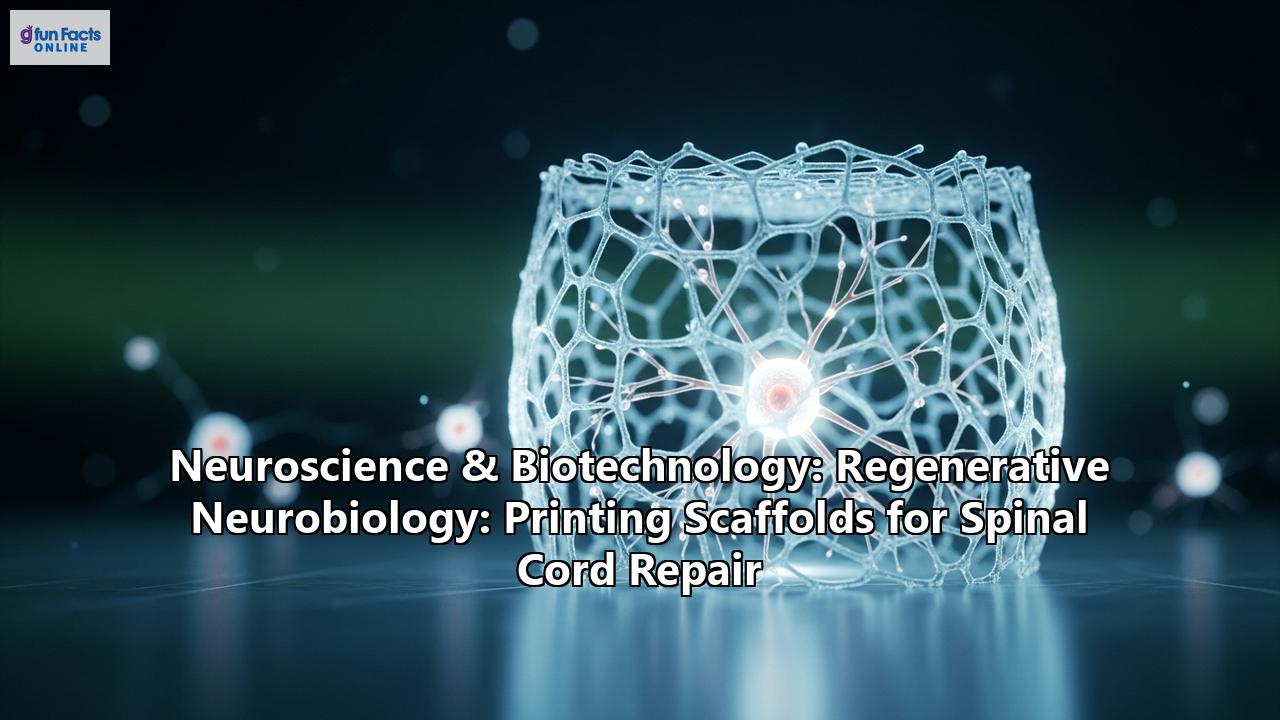
An audacious frontier is unfolding at the intersection of neuroscience and biotechnology, one that offers a glimmer of hope for one of the most devastating injuries to the human body: spinal cord injury (SCI). For decades, the notion of repairing the intricate and delicate circuitry of the spinal cord has been relegated to the realm of science fiction. The adult central nervous system (CNS) has a notoriously limited capacity for self-repair, leaving hundreds of thousands of individuals worldwide with permanent paralysis and loss of function each year. However, a revolutionary field, regenerative neurobiology, is challenging this dogma. Scientists are no longer just managing the symptoms of SCI; they are actively working to rebuild what was lost. Central to this effort is the development of sophisticated, 3D-printed scaffolds designed to bridge the injury site, guide neural regeneration, and restore lost connections.
This is not merely about filling a void. It is about creating a permissive and instructive environment within the hostile landscape of the injured spinal cord. It's a tale of microscopic architecture, advanced biomaterials, and the remarkable potential of stem cells, all converging to solve a challenge that has long been considered insurmountable. This article delves into the heart of this scientific revolution, exploring the intricate science behind 3D-printed scaffolds for spinal cord repair, from the fundamental principles to the cutting-edge technologies and the immense challenges that lie on the path to clinical reality.
The Challenge of Spinal Cord Injury: A Hostile Territory for Regeneration
To appreciate the innovation of regenerative scaffolds, one must first understand the formidable biological obstacles they are designed to overcome. A traumatic spinal cord injury unleashes a cascade of destructive events. The initial mechanical injury kills neurons and glial cells, severs long axonal tracts that carry signals between the brain and the body, and ruptures blood vessels. This primary injury is swiftly followed by a secondary injury cascade, a complex series of physiological responses that exacerbates the initial damage. This includes ischemia (lack of blood flow), excitotoxicity (over-activation of nerve cells by neurotransmitters), inflammation, and the generation of reactive oxygen species that cause further cell death.
In the days and weeks that follow, the injury site transforms into a profoundly inhibitory environment for any potential regeneration. One of the most significant barriers is the formation of a glial scar. Astrocytes, a type of glial cell, proliferate and migrate to the lesion, forming a dense, interwoven network that walls off the injured area. While this is a natural protective response to limit the spread of damage, the scar tissue also secretes a cocktail of inhibitory molecules, most notably chondroitin sulfate proteoglycans (CSPGs), that actively repel growing axons and prevent them from crossing the lesion. Furthermore, the damaged tissue breaks down, often forming a fluid-filled cystic cavity, a physical gap that regenerating axons cannot traverse. The very architecture of the spinal cord is destroyed, leaving no structural support for new growth. It is this complex, multi-faceted inhibitory environment that makes natural spinal cord repair so difficult and necessitates a multifaceted therapeutic approach.
The Role of Scaffolds: Providing a Bridge for Regeneration
Neural tissue engineering has emerged as a promising strategy to address these challenges, with the biomaterial scaffold at its core. The fundamental concept is to implant a supportive structure at the injury site to physically bridge the gap and create a more favorable microenvironment for repair. These scaffolds are designed to serve multiple, critical functions simultaneously:
- Structural Support: They provide a physical bridge across the cystic cavity, offering a substrate for cells to attach to and axons to grow along.
- Axonal Guidance: By incorporating specific architectural features like channels or aligned fibers, scaffolds can provide topographical cues that guide regenerating axons in a linear, organized fashion, mimicking the natural arrangement of the spinal cord.
- Inhibition of Scar Formation: A scaffold can act as a physical barrier to prevent the infiltration of scar-forming cells, thereby reducing the formation of the inhibitory glial scar.
- Delivery Vehicle: Scaffolds can be loaded with therapeutic agents—such as cells, growth factors, and other bioactive molecules—and release them in a controlled and sustained manner directly at the injury site where they are needed most.
The ideal scaffold must possess a specific set of properties. It must be biocompatible, meaning it does not elicit a harmful immune response. It should be biodegradable, gradually breaking down over time as new tissue is formed, eliminating the need for a second surgery for removal. Its mechanical properties are also crucial; it must be strong enough to withstand the forces within the spinal column but also soft and flexible enough to match the native spinal cord tissue and avoid causing further damage. Finally, its morphology, including porosity and the presence of guidance channels, is paramount for facilitating cell infiltration and directed axonal growth.
The Dawn of Bioprinting: Precision Engineering for Neural Tissues
Early scaffold fabrication methods, such as salt leaching or gas foaming, created porous structures but offered limited control over the internal architecture. The advent of three-dimensional (3D) printing, and more specifically 3D bioprinting, has revolutionized the field. This technology allows for the layer-by-layer construction of complex, patient-specific scaffolds with unprecedented precision, based on digital models derived from medical imaging like MRI scans. This means a scaffold can be perfectly tailored to fit the unique geometry of an individual's spinal cord lesion.
Several 3D bioprinting techniques are being explored for creating spinal cord scaffolds, each with its own set of advantages and limitations:
- Extrusion-based Bioprinting: This is one of the most common methods, where a continuous filament of biomaterial, often a hydrogel "bioink," is extruded through a nozzle to build the desired structure. It's versatile and can print with high cell densities, which is crucial for delivering therapeutic cells. However, the shear stress during extrusion can sometimes reduce cell viability, and the printing resolution is typically in the hundreds of microns.
- Inkjet Bioprinting: Inspired by conventional 2D inkjet printers, this technique deposits picoliter-sized droplets of bioink onto a substrate. It is a high-speed method and generally gentler on cells than extrusion. However, it is typically limited to low-viscosity bioinks to prevent nozzle clogging, which can restrict the choice of materials.
- Laser-Assisted Bioprinting (LAB): In LAB, a focused laser pulse is used to propel a droplet of bioink from a ribbon onto a substrate. This nozzle-free technique is very precise, capable of printing single cells with high resolution (around 10 µm), and achieves exceptionally high cell viability (over 95%). The main drawbacks are the high cost of the equipment and potentially longer printing times for larger structures.
- Stereolithography (SLA): This technique uses a projected pattern of light (often UV) to selectively cure a photosensitive liquid resin layer by layer. SLA can achieve very high resolution (5-50 µm) and is excellent for creating intricate and complex microarchitectures. A key challenge has been the development of biocompatible and cell-friendly photo-curable resins, as the process itself can be harsh on living cells if they are included in the resin. A variation called microscale continuous projection printing (µCPP) has shown remarkable speed, printing a 2mm implant in just 1.6 seconds.
The choice of printing technology depends on the specific requirements of the scaffold, including the desired resolution, the type of biomaterial and cells to be used, and the complexity of the design. Often, a combination of techniques, such as embedding electrospun fibers within a 3D-printed hydrogel, can be used to create even more sophisticated, biomimetic scaffolds.
Crafting the Perfect Microenvironment: The Art of Scaffold Design
The true power of 3D bioprinting lies in its ability to create scaffolds with a biomimetic architecture that actively guides the regenerative process. Scientists are taking cues from the spinal cord's own structure to inform their designs.
Macro- and Micro-Architecture for Axonal Guidance: A key design principle is the incorporation of features that provide contact guidance for regenerating axons. This is often achieved by printing scaffolds with multiple, parallel microchannels, typically with diameters between 150-200 micrometers, which have been shown to be effective in guiding axons in a linear fashion. These channels essentially act as highways, preventing the growing nerve fibers from getting lost or disorganized and encouraging them to bridge the lesion. In rat models, axons from the host spinal cord have been observed regenerating into these channels, aligning in parallel arrays that mimic the natural structure of the intact spinal cord. Some designs even mimic the distinct gray and white matter regions of the spinal cord, creating a solid core to represent the gray matter and channeled outer regions to guide the long tracts of the white matter. The Influence of Nano-Topography: Beyond the micro-scale channels, researchers are discovering that the surface topography at the nanoscale can also profoundly influence cell behavior. Cells in the body are constantly interacting with the nanoscale features of the extracellular matrix (ECM). By creating scaffolds with nano-sized grooves, pits, or fibers, it's possible to provide more subtle cues that affect cell adhesion, migration, and even differentiation. Techniques like electrospinning can produce nanofibers that closely resemble the natural ECM, and when these are incorporated into printed scaffolds, they can significantly enhance neural stem cell adhesion and promote directed neurite extension.The Building Blocks: Biomaterials and Bioinks
The material used to print the scaffold—the "bioink"—is as critical as the architecture itself. Bioinks are typically hydrogels, which are water-swollen polymer networks that have mechanical properties similar to soft biological tissues. They must be biocompatible, biodegradable, and support cell survival and function. There is a wide array of both natural and synthetic polymers being used and combined to create the ideal bioink.
Natural Polymers: These materials are often derived from the body's own extracellular matrix, making them inherently biocompatible and recognizable to cells.- Collagen: As the main structural protein in the body, collagen provides excellent cell adhesion and support.
- Hyaluronic Acid (HA): A major component of the neural ECM, HA is known to be involved in cell signaling and creating a supportive environment for neural cells. Modified HA can be crosslinked to form stable hydrogels.
- Fibrin: This protein is involved in blood clotting and forms a natural matrix for wound healing. It can be used to create hydrogels that support axonal growth.
- Chitosan and Alginate: Derived from crustaceans and seaweed, respectively, these polysaccharides are biocompatible and have been used extensively in tissue engineering.
While natural polymers offer excellent biocompatibility, they can sometimes lack mechanical strength and may degrade too quickly.
Synthetic Polymers: These materials offer the advantage of tunable mechanical properties and degradation rates.- Poly(ethylene glycol) (PEG): A widely used synthetic polymer that is highly biocompatible and can be chemically modified to form hydrogels with a wide range of properties.
- Poly(lactic-co-glycolic acid) (PLGA) and Polycaprolactone (PCL): These are biodegradable polyesters that have been used in FDA-approved medical devices. They offer good mechanical strength and their degradation can be controlled.
Often, the most effective approach is to create composite bioinks that combine the advantages of both natural and synthetic materials. For example, a hydrogel might be made from a blend of gelatin (for cell adhesion) and PEGDA (for tunable mechanical properties) to create a scaffold that is both biologically active and structurally robust.
The Living Components: Cells and Growth Factors
A scaffold alone is often not enough. To truly kick-start regeneration, scaffolds are typically loaded with a payload of living cells and powerful signaling molecules.
Cellular Therapies: The goal is to replace the cells lost to injury and to provide a source of trophic support to encourage repair. Several cell types are being investigated:- Neural Stem/Progenitor Cells (NSCs/NPCs): These are the most direct choice, as they have the potential to differentiate into the primary cell types of the CNS: neurons, astrocytes, and oligodendrocytes. When loaded into a scaffold, they can integrate with the host tissue, extend new axons, and form "neural relays" that bridge the injury. Studies in rats have shown that scaffolds loaded with NPCs can support the regrowth of host axons into the implant and the extension of new axons from the implant back into the host spinal cord, leading to the formation of new synaptic connections and significant improvements in motor function.
- Mesenchymal Stem Cells (MSCs): Harvested from bone marrow, fat, or umbilical cord tissue, MSCs are not as adept at becoming neurons, but they are powerful "factories" for secreting a wide range of neurotrophic factors and immunomodulatory molecules. They can help create a more pro-regenerative environment by reducing inflammation and supporting the survival of host neurons.
- Induced Pluripotent Stem Cells (iPSCs): These are adult somatic cells (like skin or blood cells) that have been reprogrammed back into an embryonic-like pluripotent state. This technology offers the potential for creating patient-specific neural cells, avoiding immune rejection and ethical concerns associated with embryonic stem cells. iPSCs can be differentiated into NSCs, oligodendrocytes, or other neural cell types before being loaded into the scaffold.
- Schwann Cells (SCs) and Olfactory Ensheathing Cells (OECs): These are glial cells from the peripheral nervous system and the olfactory system, respectively. Both are known to be highly effective at promoting axon regeneration and remyelination. OECs are particularly interesting because they naturally guide axons from the peripheral to the central nervous system in the olfactory system. Both cell types secrete a potent mix of growth factors and can be seeded into scaffolds to enhance the regenerative environment.
- Neurotrophic Factors: These are proteins that support the survival, growth, and differentiation of neurons. Key examples include Brain-Derived Neurotrophic Factor (BDNF), Neurotrophin-3 (NT-3), and Nerve Growth Factor (NGF). Scaffolds can be designed to release these factors in a controlled, sustained manner, and some even incorporate a gradient of a growth factor to more effectively guide axons in a specific direction.
- Enzymes: Molecules like Chondroitinase ABC can be incorporated to degrade the inhibitory CSPGs in the glial scar, making the environment more permissive for axonal growth.
- Other Bioactive Molecules: A host of other molecules, such as the secretome from MSCs (the complete set of proteins they secrete), can be loaded into scaffolds to reduce inflammation and promote tissue repair.
The Next Wave of Innovation: Conductive Materials and 4D Bioprinting
The field is not standing still. Researchers are already exploring the next generation of technologies to create even more sophisticated and effective scaffolds.
Conductive Scaffolds: The nervous system communicates via electrical signals. By incorporating conductive materials into the scaffold, it may be possible to restore electrical conductivity across the lesion site and even use electrical stimulation to promote nerve growth. Materials like polypyrrole (PPy), polyaniline (PANI), and various carbon-based nanomaterials (like graphene and carbon nanotubes) are being integrated into hydrogels. These conductive scaffolds have been shown to enhance neural differentiation and axon growth, potentially by providing a platform that can better transmit the natural electrical signals of the spinal cord or by allowing for the application of external electrical stimulation to guide regeneration. 4D Bioprinting: This emerging technology adds the fourth dimension—time—to 3D printing. 4D-printed scaffolds are made from "smart" materials that are designed to change their shape or properties over time in response to specific stimuli, such as temperature, light, or the physiological environment of the body. This could allow for the creation of dynamic scaffolds that, for example, initially provide a rigid support and then soften over time to better match the surrounding tissue, or that change their shape to guide different stages of the healing process. This technology is still in its early stages but holds immense potential for creating scaffolds that can adapt and evolve with the regenerating tissue.From the Bench to the Bedside: The Road to Clinical Translation
While the preclinical results in animal models have been incredibly promising, the path to using these scaffolds in human patients is long and fraught with challenges.
Preclinical Successes: Numerous studies, primarily in rodent models of severe spinal cord injury, have demonstrated the potential of this technology. 3D-printed scaffolds loaded with stem cells have been shown to:- Promote significant axonal regeneration across the lesion site.
- Reduce the size of the glial scar and the cystic cavity.
- Support the survival and differentiation of transplanted cells.
- Lead to the formation of new, functional synaptic connections.
- Result in significant and measurable improvements in locomotor function, such as the recovery of hindlimb movement.
A systematic review of preclinical studies found that in all cases, the application of 3D-bioprinted scaffolds led to significant improvement in functional scores compared to untreated animals.
The Vascularization Hurdle: One of the major biological challenges for any engineered tissue is ensuring it receives an adequate blood supply. The implanted scaffold and the cells within it need oxygen and nutrients to survive and function. Researchers are tackling this by designing scaffolds with porous architectures that encourage the infiltration of host blood vessels. Other strategies include co-culturing neural cells with endothelial cells (the cells that line blood vessels) to pre-vascularize the scaffold before implantation, or incorporating angiogenic factors (which promote blood vessel growth) into the bioink. Successful vascularization of the implant has been observed in some animal studies and is considered a critical step for long-term survival and integration of the graft. Clinical Trials and Regulatory Hurdles: Moving from animal models to human clinical trials is a monumental leap. The complexity and heterogeneity of human spinal cord injuries are far greater than in controlled laboratory models. Safety is the paramount concern. Scaffolds must be proven to be non-toxic and not cause any adverse immune reactions over the long term. When stem cells are used, particularly iPSCs, there is a risk of tumor formation that must be carefully managed. The manufacturing process must be scalable and adhere to stringent Good Manufacturing Practices (GMP) to ensure the production of consistent, clinical-grade implants.As of now, clinical trials for 3D-printed, cell-laden scaffolds for SCI are in their very early stages. Some trials have begun exploring the safety and feasibility of implanting collagen scaffolds, sometimes with MSCs, into patients with acute and chronic injuries, with some reports indicating safety and partial functional improvements. These early trials are crucial for gathering the data needed to refine the technology and move towards larger efficacy studies.
The Dawn of a New Era in Regenerative Neurobiology
The convergence of neuroscience, materials science, stem cell biology, and advanced manufacturing is forging a new path for treating what was once considered untreatable. 3D bioprinting offers an unprecedented ability to design and fabricate biomimetic scaffolds that are not just passive placeholders but are active participants in the regenerative process. They can provide structural bridges, guide growing axons with architectural precision, and deliver a potent cocktail of cells and bioactive molecules to create a pro-regenerative niche within the hostile environment of the injured spinal cord.
The journey ahead is still long and challenging. Overcoming the barriers of vascularization, immune rejection, and the complexities of achieving long-distance, functionally integrated regeneration will require continued innovation and interdisciplinary collaboration. However, the progress has been nothing short of remarkable. The ability to print a custom-designed, living implant that can coax the spinal cord to begin to heal itself represents a profound shift in our approach to neurological injury. While the vision of using these scaffolds to reverse paralysis in humans is not yet a reality, the science is no longer confined to fiction. The blueprint for repair is being drawn, and the printers are humming with the promise of a future where spinal cord injury is no longer a life sentence.
Reference:
- https://bioengineer.org/innovative-3d-printed-scaffolds-pave-the-way-for-spinal-cord-injury-recovery/
- https://3dprintingindustry.com/news/breakthrough-3d-printed-scaffolds-help-repair-spinal-cord-injuries-in-rats-243676/
- https://pmc.ncbi.nlm.nih.gov/articles/PMC6282999/
- https://scholarship.miami.edu/esploro/outputs/journalArticle/Schwann-cell-and-olfactory-ensheathing-cell/991031615462302976
- https://pmc.ncbi.nlm.nih.gov/articles/PMC9065470/
- https://pmc.ncbi.nlm.nih.gov/articles/PMC8323703/
- https://pmc.ncbi.nlm.nih.gov/articles/PMC11347741/
- https://pmc.ncbi.nlm.nih.gov/articles/PMC5561944/
- https://apb.tbzmed.ac.ir/PDF/apb-14-331.pdf
- https://www.newswise.com/articles/breakthrough-in-3d-printed-scaffolds-offers-hope-for-spinal-cord-injury-recovery
- https://acs.figshare.com/articles/media/3D-Bioprinted_Scaffolds_with_Precise_Factor_Delivery_for_Spinal_Cord_Injury_Repair/29591116
- https://pmc.ncbi.nlm.nih.gov/articles/PMC8864123/
- https://escholarship.org/content/qt66k648n7/qt66k648n7_noSplash_3a71a40d2897f51dc76ea13a2a965919.pdf
- https://www.tandfonline.com/doi/full/10.2147/IJN.S436111
- https://health.ucsd.edu/news/press-releases/2019-01-14-three-d-printed-implant-promotes-nerve-cell-growth-to-treat-spinal-cord-injury/
- https://pubmed.ncbi.nlm.nih.gov/22125000/
- https://jacobsschool.ucsd.edu/news/release/2699?id=2699
- https://www.researchgate.net/figure/The-schematic-illustration-of-4D-oriented-dynamic-scaffold-for-peripheral-nerve_fig1_373868983
- https://pubmed.ncbi.nlm.nih.gov/33326879/
- https://pmc.ncbi.nlm.nih.gov/articles/PMC10710813/
- https://pmc.ncbi.nlm.nih.gov/articles/PMC7953804/
- https://www.mdpi.com/2079-7737/14/3/314
- https://pmc.ncbi.nlm.nih.gov/articles/PMC2817665/
- https://pubmed.ncbi.nlm.nih.gov/36858280/
- https://pubs.acs.org/doi/10.1021/acsbiomaterials.3c00194
- https://pmc.ncbi.nlm.nih.gov/articles/PMC7465920/
- https://www.mdpi.com/1422-0067/25/17/9592
- https://www.researchgate.net/figure/In-vitro-prevascularization-strategies-in-nerve-tissue-engineering-a-Implant-native_fig6_385821480
- https://pmc.ncbi.nlm.nih.gov/articles/PMC10528796/
- https://www.mdpi.com/2673-6284/14/3/65
- https://www.researchgate.net/publication/249997562_Biomaterials_for_spinal_cord_repair
- https://www.mdpi.com/1999-4923/14/3/596
- https://www.researchgate.net/publication/330367752_Biomimetic_3D-printed_scaffolds_for_spinal_cord_injury_repair
- https://www.mdpi.com/2073-4409/10/12/3334
- https://core.ac.uk/download/pdf/55616315.pdf
- https://pubs.acs.org/toc/aabmcb/8/8
- https://www.researchgate.net/figure/Structure-of-conductive-biomaterials-applied-in-spinal-cord-injury-A-polypyrrole-PPy_fig3_379943074
- https://www.youtube.com/watch?v=jldu6YXAd_0
- https://www.researchgate.net/publication/391600018_Invited_3D_Printing_and_Bioprinting_in_Neural_Tissue_Engineering