
The sun had not yet breached the canopy of the palm oil plantation in rural West Bengal when the strike happened. It was a soundless, violent intimacy—a sudden, sharp pressure on the ankle of a 14-year-old worker named Aarav. He didn’t see the Spectacled Cobra, a shadow retreating into the undergrowth, but the two puncture marks were unmistakable.
In 2024, Aarav’s story would have followed a grim, century-old script. His family would have rushed him to a local healer, losing precious hours to chanting and herbal poultices. When respiratory paralysis set in—the neurotoxins binding to his diaphragm, suffocating him from the inside—they would have panicked and hired a motorbike to reach the nearest district hospital, three hours away. There, if the electricity was working to keep the fridge running, and if the stock of horse-derived antivenom hadn’t expired or been counterfeit, doctors would have injected him with a serum produced using technology from the 1890s. Even then, the "cure" might have triggered a lethal anaphylactic shock, his body rejecting the foreign horse proteins.
But this is February 2026. The script is being rewritten.
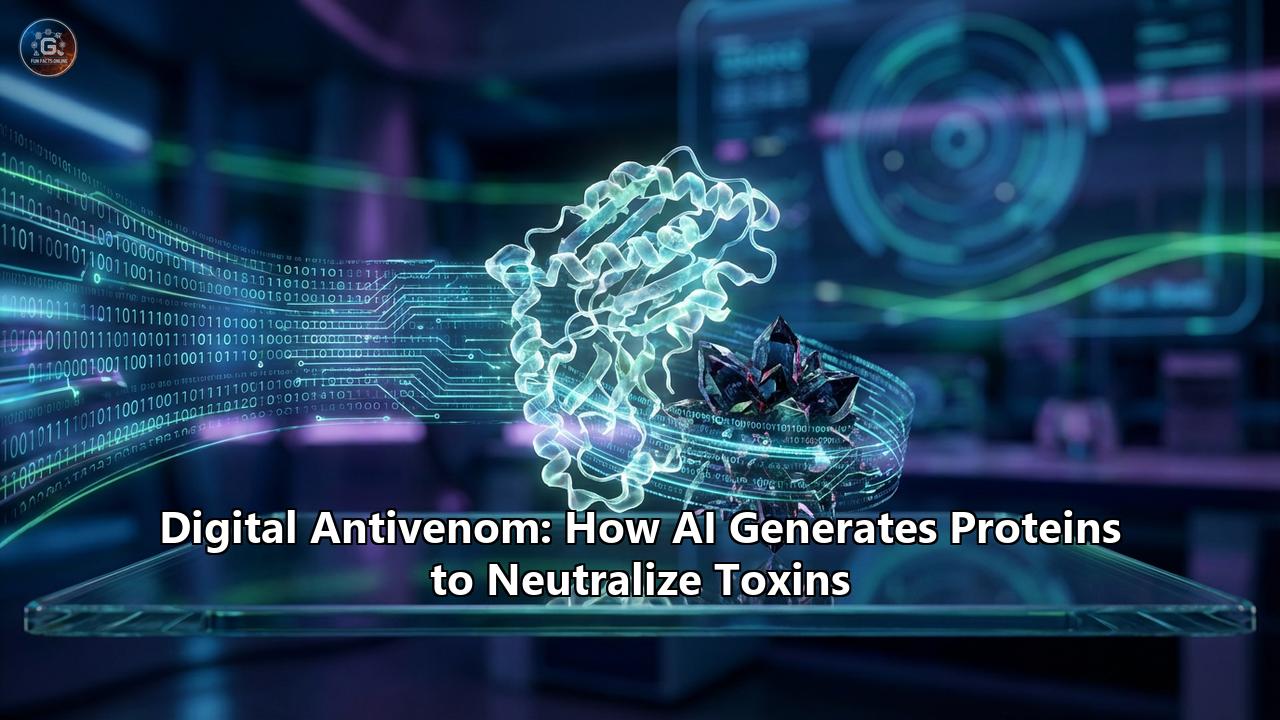
In a lab halfway across the world, a server hums with the quiet intensity of a new industrial revolution. It is not processing financial transactions or generating chatbot dialogue. It is hallucinating. Specifically, it is dreaming up a protein that has never existed in the 3.5-billion-year history of life on Earth. This protein has one purpose: to hunt down the specific lethal molecule in the cobra’s venom and lock onto it with the mathematical perfection of a magnet snapping to steel.
This is the dawn of Digital Antivenom. It is the end of the "horse era" of medicine and the beginning of a world where we don’t just discover drugs; we design them, atom by atom, to neutralize nature’s deadliest weapons.
Part I: The Horse in the Room
To understand the magnitude of the AI revolution, one must first confront the archaic reality of current snakebite treatment. For over 125 years, since Albert Calmette first produced antivenom in 1894, humanity’s defense against the snake has remained virtually unchanged.
The process is medieval. It begins with a dangerous harvest: "milking" live snakes by forcing them to bite into a jar. This venom is then injected, in low doses, into a large animal—usually a horse or a sheep. The animal’s immune system reacts, producing antibodies to fight the toxin. Weeks later, the animal is bled. The plasma is separated, purified (to varying degrees), and bottled as antivenom.
It is a biological Rube Goldberg machine, fraught with failure points:
- Imprecision: Snake venom is a "cocktail" of dozens of toxins. The horse produces antibodies for everything, including harmless proteins, meaning only a fraction of the final serum actually neutralizes the lethal components.
- Rejection: The human body knows when it is being invaded by horse proteins. "Serum sickness" and life-threatening anaphylaxis are common side effects, sometimes killing the patient before the venom does.
- The Cold Chain: These biological products are fragile. They degrade in heat. In the blistering temperatures of sub-Saharan Africa or rural India—where the vast majority of the world’s 100,000+ annual snakebite deaths occur—refrigeration is a luxury. A vial of antivenom left on a loading dock for an hour becomes useless water.
- Cost: Maintaining a stable of horses is expensive. Producing a single vial can cost hundreds of dollars, while a full course of treatment requires 10 to 20 vials. For a farmer earning $2 a day, this is an economic death sentence.
"It is like handling a live hand grenade," says Timothy Jenkins, an associate professor at the Technical University of Denmark (DTU) and a pioneer in the field. "We are relying on a 19th-century technology to solve a 21st-century neglected tropical disease."
The field was stagnant. Pharmaceutical giants largely abandoned antivenom research decades ago due to low profitability. It was a "orphan market," leaving millions of the world’s poorest people defenseless.
Then came the silicon intervention.
Part II: The Hallucinating Machine
The breakthrough that shook the scientific world arrived in early 2025, culminating in a landmark paper in Nature. A team led by Nobel Laureate David Baker at the University of Washington’s Institute for Protein Design, alongside Jenkins at DTU, posed a radical question: Why rely on a horse’s immune system to guess the shape of an antibody when we can calculate the perfect shape ourselves?
The tool they used was RFdiffusion.
To the layperson, RFdiffusion is a "generative AI," a cousin to the systems that create surreal images from text prompts. But instead of pixels, it manipulates amino acids—the building blocks of life.
Proteins are 3D origami. They are long chains of amino acids that fold into complex, knot-like structures. Their function is determined entirely by their shape. A toxin works because its shape allows it to slot perfectly into a receptor in your body (like a key in a lock), turning it off or destroying it. To stop the toxin, you need a "decoy" lock—a protein that the toxin binds to instead of your nerve cells.
Traditional drug discovery is like trying to find a key on a beach. You sift through millions of existing molecules hoping one fits.
AI protein design is like 3D printing a key.
The Workflow of a Digital Antidote:- The Target: The scientists focused on Three-Finger Toxins (3FTx). These are the lethal "warheads" in the venom of elapid snakes (cobras, mambas, kraits). They are small, rigid, and incredibly fast-acting, causing paralysis by blocking nerve signals.
- The Dream: The team fed the 3D structure of the toxin into the AI. They asked the model to "hallucinate" a new protein backbone that would bind tightly to the toxin’s active site. The AI didn't look up a database of existing proteins; it invented new shapes from scratch.
- The Sequence: Once the AI designed a shape that looked like a perfect clamp, another AI model, ProteinMPNN, calculated exactly which sequence of amino acids would cause a real protein to fold into that specific shape.
- The Test: The lab synthesized these digital blueprints. They didn't use horses. They inserted the DNA code into simple bacteria (E. coli) or yeast. The bacteria became mini-factories, churning out the designed proteins.
The results were shocking, even to the researchers.
"We didn't need to do any optimization," said Susana Vázquez Torres, the lead author of the study. "To find something that works on the first attempt—that’s incredible."
In mouse trials, these "miniproteins" were miraculous. When injected into mice exposed to lethal cobra venom, the AI-designed proteins saved them. In some cases, they offered 100% protection.
But the real revolution wasn't just survival. It was stability.
Because these proteins were designed to be small and rigid (unlike the large, floppy antibodies from horses), they were virtually indestructible. They could withstand temperatures of 95°C (203°F) without breaking down.
"This changes the logistics of saving lives," Jenkins noted. "You don't need a fridge. You could carry this in a backpack in the Sahara. You could keep it in a village dispensary shelf for years."
Part III: The Economics of democratization
The shift from "biological extraction" to "digital manufacturing" is not just a scientific triumph; it is an economic upheaval.
In the traditional model, scaling up production means buying more horses, building more stables, and harvesting more venom. It is linear and capital-intensive.
In the digital model, scaling up is fermentation.
Once the DNA sequence of the effective miniprotein is known, it can be emailed to any lab in the world. A bioreactor in Nigeria or Brazil can grow the bacteria and produce the protein just as easily as a lab in Seattle.
"This is the democratization of drug discovery," says David Baker. "With just an internet connection and a basic computer, brilliant minds anywhere can drive innovation."
Estimates suggest the cost of production could plummet. While a course of traditional antivenom can cost the healthcare system over $2,000 in the US (and still $100+ in developing nations, a prohibitive sum), recombinant miniproteins could potentially be produced for pennies per dose once scaled.
Current data from 2026 cost-analysis models indicates that recombinant antivenoms could be manufactured for as little as $20 to $40 per treatment for monovalent (single species) therapies. This is a price point that governments and NGOs can actually support.
Furthermore, these proteins are "humanized" by design or simply non-immunogenic because of their small size. The risk of serum sickness vanishes. We are trading a dirty, dangerous, biological soup for a clean, precise, molecular bullet.
Part IV: The Biosecurity Paradox
However, every god-like power casts a long shadow.
If AI can design a protein that neutralizes a toxin, it can also design a protein that is a toxin.
In late 2025, a study led by researchers at Microsoft and the International Biosecurity and Biosafety Initiative for Science dropped a bombshell. They demonstrated a "zero-day" vulnerability in the global biosecurity net.
For years, DNA synthesis companies (the firms that print the physical DNA strands for scientists) have screened orders against a database of "baddies." If you tried to order the DNA sequence for Ricin or Ebola, the software would flag it and reject the order.
But the AI doesn't need to copy Ricin. It can "paraphrase" it.
The researchers showed that they could use the same tools—RFdiffusion and ProteinMPNN—to design proteins that were structurally identical to toxins (and thus just as deadly) but had a completely different DNA sequence. To the screening software, these digital toxins looked like harmless gibberish. They slipped through the net 100% of the time in initial tests.
"It is a double-edged sword," admits Eric Horvitz, Microsoft’s Chief Scientific Officer. "We are expanding the protein universe. Most of that universe is beneficial, but there are dark corners."
This realization has triggered a frantic regulatory race in 2026. The US "AI Action Plan" and new FDA guidelines are scrambling to implement "functional screening"—using AI to predict what a protein does, not just checking if its spelling matches a banned list.
The irony is palpable: The same technology that promises to wipe out the scourge of snakebite also theoretically empowers a garage bioterrorist to print a new plague. It is the classic Promethean dilemma, played out in the folding of amino acids.
Part V: Beyond the Cobra
While the biosecurity debate rages in the halls of Washington and Geneva, in the field, the science is accelerating beyond just snakes.
The "lock and key" principle of AI protein design is universal. A toxin is just a protein that binds to something you don't want it to. A virus is just a shell of proteins binding to your cells. An autoimmune disease is your own proteins binding where they shouldn't.
1. The Universal Antidote:Researchers are already looking at "broad-spectrum" binders. Instead of designing one protein for the King Cobra and another for the Black Mamba, they are using AI to find the "conserved regions"—the structural similarities shared by all snake venoms. The goal is a single shot—a "Universal Viper/Elapid Antivenom"—that a paramedic can administer without needing to know which snake bit the patient.
2. The Oral Pill:While the Baker Lab focuses on injectables, companies like Ophirex are pushing the envelope with small molecules. Their drug, varespladib, is an oral pill that inhibits the enzymes in snake venom. In 2026, it is moving through late-stage trials. The vision is a world where every farmer carries a blister pack in their pocket. If bitten, they pop a pill immediately, buying themselves the hours needed to reach a hospital. It is the "epipen" moment for snakebites.
3. Venom as Medicine:In a twist of irony, AI is also being used to mine venom for cures. A 2025 study from the University of Pennsylvania used deep learning to scan the genetic code of extinct and living organisms, finding "encrypted peptides" in venom that act as potent antibiotics.
"Venom is an evolutionary masterpiece," says César de la Fuente from UPenn. "It has been refined by millions of years of warfare to be potent. AI lets us flip that potency to kill superbugs instead of people."
Part VI: The Road to 2030
So, when will Aarav in West Bengal get his digital shot?
Despite the breathless headlines, the timeline is one of cautious optimism. As of early 2026, the AI antivenoms are in "pre-clinical optimization." They work in mice. They are stable in the lab. But they have not yet entered human Phase I trials.
Timothy Jenkins hopes for a marketable product within five years. "My personal hope is that within 5 years we’ve completed our first clinical trials where we can actually say that there is a product ready to be delivered to patients," he stated in a 2025 interview.
The regulatory hurdles are significant. The FDA and WHO have never approved a "de novo" AI-designed protein for use as an antitoxin. The safety protocols must be rigorous—we need to be sure the antidote doesn't trigger an immune storm of its own.
But the momentum is undeniable. The "Zero Mortality" hospital model in Assam, India, has already proven that better management can save lives. Adding a heat-stable, cheap, AI-designed drug to that protocol would be the final piece of the puzzle to reach the WHO’s goal of halving snakebite deaths by 2030.
Conclusion: The End of the Harvest
For a century, our relationship with the snake was parasitic. We captured it, milked it, and used other animals to fight its poison. It was a cycle of blood and biology, crude and cruel.
Digital Antivenom represents a severance of this link. We no longer need the snake’s venom to cure the bite. We only need its information.
Once the code is captured, the snake can be left alone in the undergrowth. The horse can remain in the field. And the server, humming in the cool dark of a data center, will act as the guardian for the child walking through the palm plantation—a silent, digital shield woven from the very building blocks of life.
The age of discovery is over. The age of design has begun.
Reference:
- https://blogs.nvidia.com/blog/ai-designed-proteins-snake-venom/
- https://www.bakerlab.org/2025/01/15/neutralizing-deadly-snake-toxins/
- https://sciencenews.dk/en/scientists-develop-ai-designed-snake-antivenom
- https://timesofindia.indiatimes.com/science/ai-designed-synthetic-antivenoms-could-revolutionise-snakebite-treatment-new-study-reveals/articleshow/117292034.cms
- https://www.youtube.com/watch?v=fkXbSqo1z1U
- https://www.youtube.com/watch?v=54rHFW3RumI
- https://www.researchgate.net/publication/343783988_Challenges_and_prospects_of_snake_antivenom_supply_in_sub-Saharan_Africa
- https://www.youtube.com/watch?v=fyhWJzmvvpk