
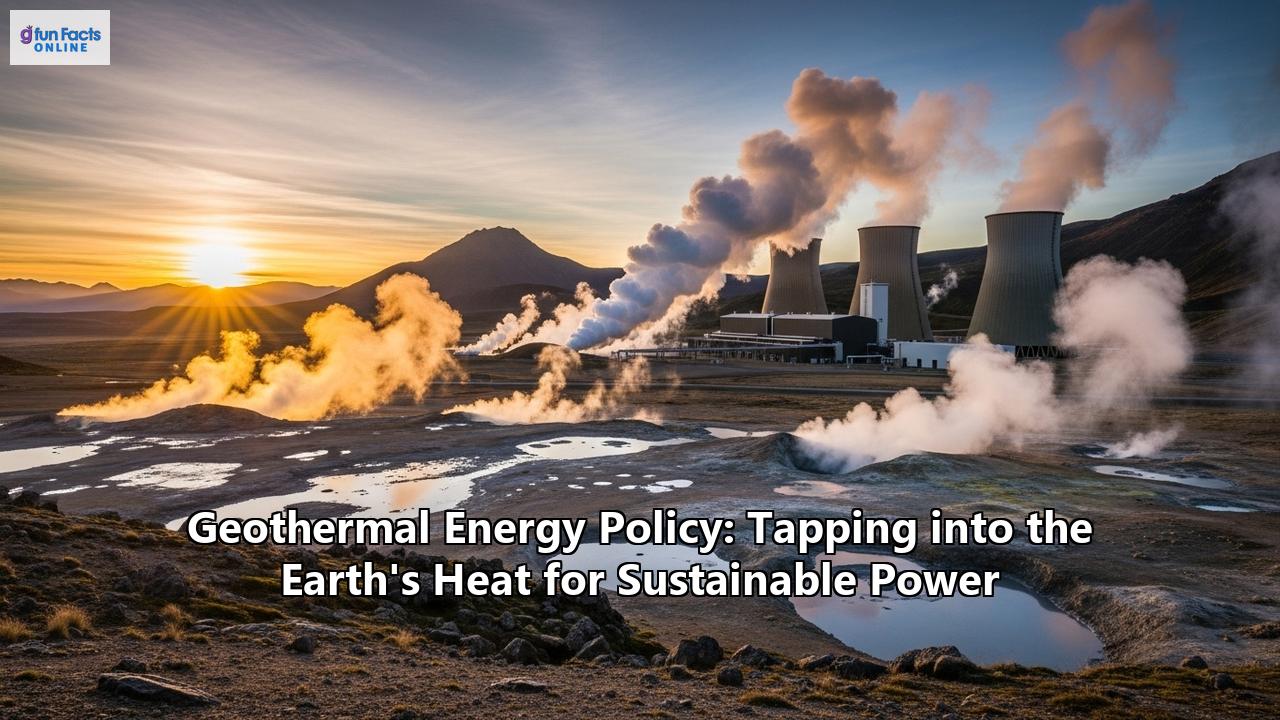
Tapping into the Earth's Heat: A Deep Dive into Geothermal Energy Policy and its Role in a Sustainable Future
Beneath our feet lies a vast, untapped reservoir of clean, renewable energy: the Earth's own internal heat. This geothermal energy, born from the planet's molten core and the decay of radioactive elements, offers a constant and reliable source of power, independent of weather conditions or the time of day. As the world grapples with the urgent need to transition away from fossil fuels and combat climate change, geothermal energy is emerging as a critical component of a sustainable power portfolio. However, unlocking its full potential requires more than just technological innovation; it demands a robust and supportive policy framework to navigate the unique challenges of this powerful energy source.
This comprehensive article explores the multifaceted world of geothermal energy policy, from the fundamental principles of harnessing Earth's heat to the intricate policy mechanisms that can accelerate its development. We will delve into the environmental and socio-economic benefits, examine successful case studies from around the globe, and look toward the future of geothermal in a decarbonized world.
The Power Beneath: Understanding Geothermal Energy
Geothermal energy is the thermal energy generated and stored in the Earth. This heat is continuously produced by the slow decay of radioactive particles in the planet's core. It can be accessed in various forms, from naturally occurring hot water and steam reservoirs to the heat stored in dry rock formations.
Harnessing this subterranean power typically involves drilling wells, sometimes several miles deep, to access these geothermal reservoirs. The extracted steam or hot water is then used to drive turbines, which in turn generate electricity. This process is not only a testament to human ingenuity but also a significant step towards a cleaner energy future, as modern geothermal power plants emit minimal to no greenhouse gases.
There are three main types of geothermal power plants, each suited to different geological conditions:
- Dry Steam Power Plants: These are the oldest and simplest type of geothermal power plant. They directly use steam that is piped from underground reservoirs to turn turbines. This technology is relatively rare as it relies on naturally occurring, high-quality steam. The Geysers in California is the world's largest single source of geothermal electricity and primarily uses dry steam plants.
- Flash Steam Power Plants: This is the most common type of geothermal power plant in operation today. They are used when the geothermal reservoir contains high-pressure hot water at temperatures greater than 182°C (360°F). As this superheated water is brought to the surface, the pressure is suddenly reduced, causing it to "flash" into steam, which then drives the turbines.
- Binary Cycle Power Plants: These plants represent a significant technological advancement as they can operate with lower-temperature geothermal resources, making them suitable for a wider range of geographic locations. In a binary cycle plant, the geothermal water is used to heat a secondary fluid with a much lower boiling point, such as an organic compound. This secondary fluid vaporizes and drives the turbines. Because the geothermal water and the secondary fluid are kept in a closed-loop system, there are virtually no air emissions.
Beyond electricity generation, geothermal energy has direct use applications, such as heating buildings, greenhouses, and aquaculture ponds, and for industrial processes. Geothermal heat pumps also utilize the stable temperature of the ground to provide efficient heating and cooling for buildings.
The Unwavering Advantages: Why Geothermal Energy Matters
In the diverse portfolio of renewable energy sources, geothermal holds a unique and compelling position due to its inherent reliability and minimal environmental footprint. Unlike solar and wind power, which are intermittent and dependent on weather conditions, geothermal energy provides a constant, 24/7 baseload power supply. This makes it an invaluable asset for grid stability and energy security.
Environmental Benefits:The most significant environmental advantage of geothermal energy is its minimal contribution to greenhouse gas emissions. By displacing fossil fuel-based power generation, geothermal energy plays a crucial role in mitigating climate change. Modern geothermal plants, particularly binary cycle plants, can operate with near-zero emissions. Furthermore, geothermal power plants have a small land footprint compared to other energy sources like large-scale solar or wind farms. Many components of a geothermal plant are located underground, minimizing the visual impact on the landscape. Some advanced systems are even designed as closed-loop systems, where the water used is reinjected back into the reservoir, conserving water resources.
Socio-Economic Benefits:The development of geothermal energy resources can bring significant economic and social benefits to local communities and national economies. Geothermal projects create a substantial number of jobs, not only in the construction and operation of the plants but also in supporting industries. Studies have shown that geothermal energy creates more jobs per megawatt installed compared to wind and solar power.
These projects often take place in rural or remote areas, providing much-needed employment and economic diversification. The long-term nature of geothermal operations ensures stable, well-paying jobs for decades. Furthermore, geothermal plants contribute significantly to local economies through property taxes and royalties.
The development of domestic geothermal resources also enhances a nation's energy independence and security by reducing reliance on imported fossil fuels.
The Policy Imperative: Creating a Fertile Ground for Geothermal Growth
Despite its numerous advantages, the widespread adoption of geothermal energy faces several hurdles, most notably the high upfront costs and risks associated with exploration and drilling. A single exploratory well can cost millions of dollars with no guarantee of success. This is where supportive government policies become paramount. Effective policies can de-risk projects, attract investment, and create a stable market for geothermal energy.
A comprehensive geothermal policy framework typically includes a combination of financial incentives, streamlined regulations, and support for research and development.
Financial Incentives: Fueling Investment
Financial incentives are crucial for leveling the playing field and making geothermal energy competitive with established energy sources. These can take various forms:
- Tax Credits: Investment Tax Credits (ITCs) and Production Tax Credits (PTCs) are powerful tools to reduce the financial burden on developers. For instance, the U.S. Inflation Reduction Act of 2022 significantly enhanced tax credits for geothermal projects, making them more attractive to investors. Some policies also offer credits for using domestically manufactured components, further stimulating the local economy.
- Feed-in Tariffs (FITs): FITs provide a guaranteed, long-term price for the electricity generated from renewable sources, including geothermal. This price certainty reduces revenue risk for developers and is a key driver for investment. Germany, Turkey, and Indonesia have successfully used FITs to accelerate their geothermal development.
- Grants and Funding: Government grants and funding programs can provide crucial capital for the early, high-risk stages of geothermal projects, such as exploration and drilling. Poland, for example, has allocated significant government funding to support geothermal exploration drilling.
- Low-Interest Loans and Loan Guarantees: Government-backed low-interest loans and loan guarantees can reduce the cost of capital and make it easier for geothermal projects to secure financing. These instruments are particularly important for mitigating the financial risks of exploration.
Regulatory Frameworks: Paving a Smoother Path
A clear, efficient, and predictable regulatory framework is essential for the timely and cost-effective development of geothermal projects. Complex and lengthy permitting processes can be a major deterrent to investment. Key elements of a supportive regulatory framework include:
- Streamlined Permitting: Simplifying and consolidating the administrative steps for obtaining licenses and permits can significantly reduce project development timelines and costs. Establishing a "one-stop-shop" for permitting, where a single agency coordinates the entire approval process, can be highly effective.
- Clear Geothermal Resource Rights: Legislation needs to clearly define the ownership of geothermal resources to provide legal certainty for developers. This includes specifying whether geothermal resources are considered minerals, water, or a separate category.
- Dedicated Geothermal Regulations: Creating specific regulations for geothermal energy, separate from those for mining or oil and gas, can address the unique aspects of geothermal projects and avoid unnecessary regulatory burdens.
- Environmental and Social Safeguards: Robust environmental and social impact assessment (EIA) processes are necessary to ensure that geothermal development is sustainable and protects local communities and ecosystems. However, these processes should be tailored to the specific impacts of geothermal projects to avoid unnecessary delays.
De-risking Exploration: The Critical First Step
The high risk associated with the initial exploration phase is one of the biggest barriers to geothermal development. Policies aimed at mitigating this risk are therefore crucial. These can include:
- Government-led Exploration: Governments can undertake initial geological surveys and exploratory drilling to identify and confirm geothermal resources before offering sites to private developers.
- Drilling Failure Insurance: Government-supported insurance schemes can cover a portion of the costs if an exploratory well fails to find a commercially viable resource.
- Public Data Repositories: Making geological and subsurface data publicly available can significantly reduce exploration costs and risks for private companies.
Global Success Stories: Geothermal Policies in Action
Several countries around the world have implemented successful policies that have spurred significant growth in their geothermal sectors.
- Iceland: A pioneer in geothermal energy, Iceland's success is built on a strong foundation of government support for research and development, clear regulatory frameworks, and a national energy policy that prioritizes renewable resources. The country's deep understanding of its geothermal resources, fostered through decades of research, has been a key factor in its ability to harness this energy for both electricity and district heating.
- Kenya: As the leading geothermal producer in Africa, Kenya has demonstrated the power of public-private partnerships (PPPs) in driving geothermal development. The government, through the Geothermal Development Company (GDC), has taken on the high-risk exploration phase, drilling wells and then inviting private companies to build and operate the power plants. This model has successfully attracted private investment and accelerated project development.
- The United States: The U.S. is the world's largest producer of geothermal energy, with a long history of development supported by various federal and state policies. The recent Inflation Reduction Act is expected to further boost the sector by providing long-term tax incentives. Additionally, some states, like Colorado, have implemented their own supportive policies, including tax credits and streamlined permitting, to encourage geothermal development.
- Indonesia: With the world's largest geothermal potential, Indonesia has utilized feed-in tariffs to attract private investment in the sector. While challenges remain, the country has seen significant growth in its geothermal capacity in recent years.
- Turkey: Turkey has also experienced a boom in geothermal development, largely driven by a feed-in-tariff scheme that provided attractive, long-term revenue streams for developers.
The Human Dimension: Community Engagement and Benefit Sharing
The success of any large-scale energy project, including geothermal, hinges on securing a "social license to operate." This requires meaningful and ongoing engagement with local communities to address their concerns, build trust, and ensure that the benefits of the project are shared equitably.
Effective community engagement strategies include:
- Early and Transparent Communication: Keeping communities informed about project plans, potential impacts, and benefits from the outset is crucial.
- Participatory Processes: Involving community members in decision-making processes can foster a sense of ownership and lead to better project outcomes.
- Benefit Sharing Mechanisms: These can include revenue-sharing agreements, community development funds, and investments in local infrastructure and services.
- Local Employment and Procurement: Prioritizing the hiring of local workers and sourcing goods and services from local businesses can maximize the economic benefits for the community.
The case of the Olkaria geothermal field in Kenya highlights the importance of community engagement. Initial tensions with the local Maasai community led to project delays. However, through a partnership with New Zealand, which has a strong track record of successful engagement with its indigenous Maori population, KenGen, the project developer, is now working to implement a more inclusive community engagement program.
The Future is Hot: Emerging Trends and the Path Forward
The future of geothermal energy is bright, with technological advancements and evolving policy landscapes poised to unlock its vast potential.
Technological Innovations:- Enhanced Geothermal Systems (EGS): EGS technology is a game-changer that could dramatically expand the geographic reach of geothermal energy. It involves creating artificial geothermal reservoirs in hot dry rock, which is far more abundant than traditional hydrothermal resources. As EGS technology matures, it could make geothermal a viable option in many more parts of the world.
- Advanced Drilling Techniques: Innovations in drilling technology, many of them borrowed from the oil and gas industry, are helping to reduce the costs and risks of geothermal exploration and development.
- Focus on De-risking: There is a growing recognition among policymakers of the need to address the upfront risks of geothermal development, particularly in the exploration phase.
- Integration with Other Renewables: Geothermal's ability to provide reliable baseload power makes it an ideal partner for intermittent renewables like solar and wind, and policies are beginning to reflect this synergy.
- Expanded Applications: There is increasing interest in the direct use of geothermal heat for applications like district heating, agriculture, and industrial processes, which can further contribute to decarbonization efforts.
- International Collaboration: International partnerships, such as the Global Geothermal Alliance, are playing a vital role in sharing knowledge, best practices, and financial resources to accelerate geothermal development worldwide.
To fully harness the Earth's heat for a sustainable future, a concerted effort is needed from governments, industry, and communities. Key policy recommendations for scaling up geothermal energy include:
- Elevating Geothermal on the Policy Agenda: National energy plans should explicitly recognize the unique value of geothermal energy and set clear targets for its development.
- Designing Comprehensive Risk Mitigation Schemes: Governments should work with financial institutions to create robust mechanisms for de-risking the early stages of geothermal projects.
- Ensuring Long-Term Revenue Certainty: Stable and predictable revenue streams, through mechanisms like long-term contracts and well-designed tariffs, are essential for attracting investment.
- Investing in Research and Workforce Development: Continued investment in research and development is needed to drive down costs and improve technologies. At the same time, programs are needed to develop a skilled workforce to support the growing geothermal industry.
Conclusion: A Foundation of Heat, A Future of Power
Geothermal energy is more than just another renewable resource; it is a fundamental, ever-present source of clean power lying just beneath our feet. Its ability to provide reliable, baseload electricity with a minimal environmental footprint makes it an indispensable tool in the global transition to a sustainable energy future.
However, the journey to fully unlocking this vast potential is paved not just with technological advancements, but with smart, forward-thinking policies. By creating a supportive ecosystem that de-risks exploration, incentivizes investment, streamlines regulations, and fosters community partnership, we can tap into the Earth's immense heat to power a cleaner, more prosperous, and sustainable world for generations to come. The heat is on, and with the right policies in place, the future of geothermal energy is incredibly bright.
Reference:
- https://www.numberanalytics.com/blog/future-geothermal-energy-economic-benefits
- https://cresforum.org/publications/the-conservative-case-for-next-generation-geothermal-energy/
- https://envirotechgeo.com/the-future-of-geothermal-energy/
- https://www.frontiersin.org/journals/environmental-science/articles/10.3389/fenvs.2022.1017923/full
- https://elc.ab.ca/post-library/policy-tools-to-support-geothermal-resource-development/
- https://www.longdom.org/open-access/the-role-of-geothermal-energy-in-climate-mitigation-105537.html
- https://energy.sustainability-directory.com/question/what-are-the-key-factors-for-scaling-geothermal-energy/
- https://www.ourenergypolicy.org/wp-content/uploads/2014/06/geothermal-econ.pdf
- https://documents1.worldbank.org/curated/en/099122823090547278/pdf/P1744881ab11080191a03411d191385e065.pdf
- https://energy.sustainability-directory.com/question/what-are-geothermal-energys-economic-advantages/
- https://geothermal.org/our-impact/blog/all-advantages-geothermal
- https://energy.sustainability-directory.com/question/how-does-geothermal-energy-impact-local-economies/
- https://www.renewableenergyworld.com/energy-business/energy-finance/geothermal-energy-offers-socioeconomic-benefits-46641/
- https://energy.sustainability-directory.com/question/what-are-environmental-benefits-of-geothermal/
- https://www.ncel.net/articles/the-heat-is-on-a-2024-outlook-on-state-geothermal-energy-policies/
- https://www.esmap.org/Geothermal_Socioeconomic_Benefits
- https://www.iea.org/reports/the-future-of-geothermal-energy/policy-recommendations
- https://www.enelgreenpower.com/learning-hub/renewable-energies/geothermal-energy/advantages
- https://www.thirdway.org/memo/geothermal-policies-to-help-america-lead
- https://www.jree.ir/article_152426_1c4558ef5f3e67bc4df5fb88717e4dc7.pdf
- https://www.numberanalytics.com/blog/geothermal-energy-community-development
- https://www.thinkgeoenergy.com/esmap-publishes-report-on-socioeconomic-benefits-of-geothermal/
- https://greenmunicipalfund.ca/case-studies/case-study-energy-efficient-community-centre-uses-geothermal-heat
- https://www.thinkgeoenergy.com/ppps-as-an-enabler-of-project-financing-for-geothermal-in-africa/
- https://www.thinkgeoenergy.com/kenya-community-engagement-and-the-sacred-nature-of-geothermal-energy/
- https://wearevuka.com/insights/traditional-generation/ten-policy-recommendations-to-take-advantage-of-geothermal-energy/
- https://cif.org/sites/cif_enc/files/knowledge-documents/kenya_2_pages_revised.pdf
- https://www.ecadin.org/comparative-analysis-of-geothermal-public-private-partnerships/
- https://www.energy.gov/eere/geothermal/community-engagement
- https://iea.blob.core.windows.net/assets/cbe6ad3a-eb3e-463f-8b2a-5d1fa4ce39bf/TheFutureofGeothermal.pdf
- https://bulletin.bmeb-bi.org/cgi/viewcontent.cgi?article=1161&context=bmeb
- https://www.numberanalytics.com/blog/community-engagement-geothermal-energy
- https://energy.sustainability-directory.com/question/why-is-community-engagement-vital-for-geothermal-projects/
- https://energy.sustainability-directory.com/question/what-is-the-geothermal-energys-economic-impact-on-cities/
- https://www.energy.gov/eere/geothermal/district-scale-geothermal-energy-pilots
- https://www.researchgate.net/publication/381828652_Determinants_of_community_acceptance_of_geothermal_energy_projects_A_case_study_on_a_geothermal_energy_project_in_Kenya
- https://www.iea.org/reports/the-future-of-geothermal-energy