
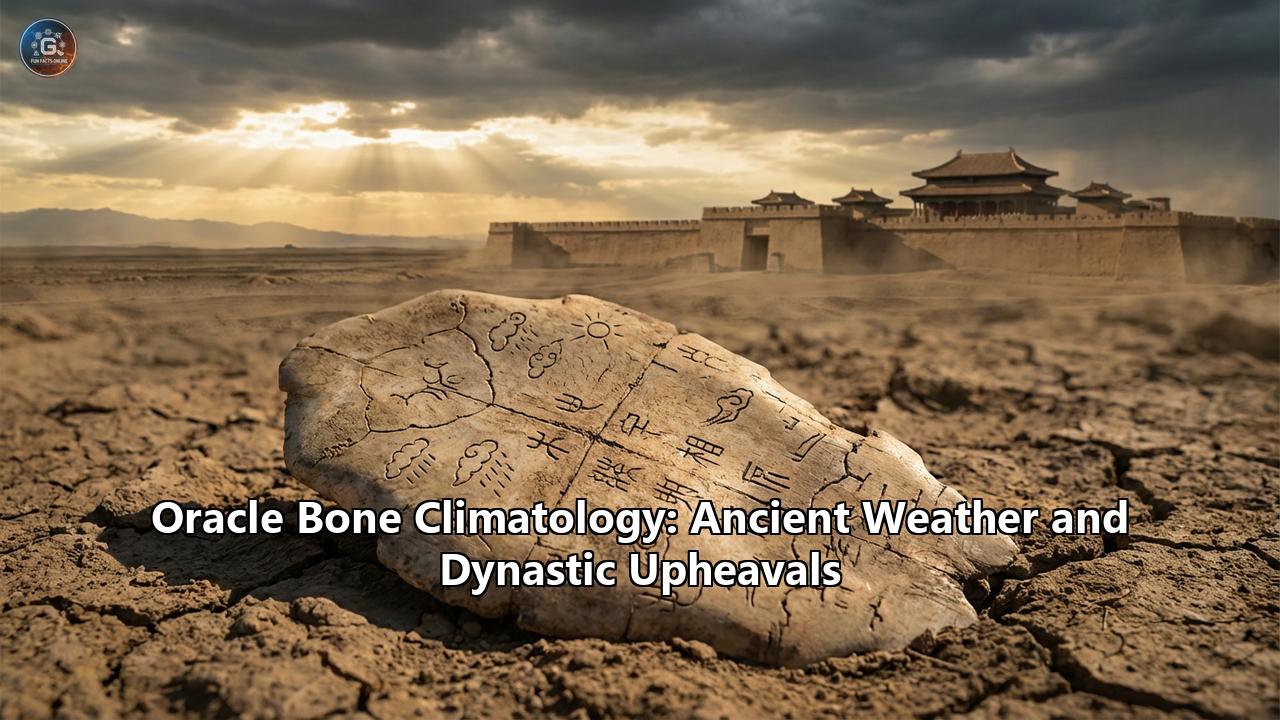
Deep beneath the loess soil of the North China Plain, a silent archive of the ancient world lay buried for more than three millennia. It was not a collection of bound books or stone tablets, but a sprawling, fragmented library carved into the shoulder blades of oxen and the underbellies of turtles. For centuries, these artifacts were occasionally unearthed by local farmers in Henan Province. Unaware of their historical magnitude, the locals called them "dragon bones," grinding them down to be sold in traditional apothecary shops as a cure for malaria and knife wounds. It was only at the twilight of the 19th century that scholars recognized the cryptic scratches on these bones for what they truly were: the earliest known, fully developed system of Chinese writing.
Today, these relics—known as oracle bones—are celebrated as the foundational texts of the Shang Dynasty, a powerful Bronze Age civilization that ruled the Yellow River Valley from roughly 1600 to 1046 BC. But beyond their immense linguistic and cultural value, these scorched and shattered skeletal remains are now fueling a groundbreaking modern science: Oracle Bone Climatology.
By merging paleoclimatology, advanced meteorological modeling, and ancient epigraphy, modern researchers have cracked the code of these divinatory inscriptions to reconstruct the volatile weather patterns of antiquity. What they have discovered is a startling revelation about human vulnerability. Far from a stable "cradle of civilization," the heartland of ancient China was battered by extreme millennial-scale climate events—ferocious El Niño patterns, devastating locust plagues, and massive inland-penetrating typhoons. Through the lens of these ancient texts, we can now map the exact climatic upheavals that not only dictated the daily lives of the Shang people but ultimately toppled dynasties and reshaped the trajectory of human history.
The Mechanics of Bronze Age Divination
To understand how a turtle shell becomes a meteorological database, one must first step into the animistic, highly ritualized world of the Shang Dynasty. The Shang people inhabited a cosmos teeming with unseen forces. They believed that a supreme deity known as Di (the High God) held ultimate sway over the rains, the winds, and the fate of the state. Beneath Di was a pantheon of nature spirits—powers of the river, the mountain, and the clouds—as well as the ancestral spirits of the royal lineage. The Shang kings believed that only by communicating with these entities could they secure favorable weather, bountiful harvests, and victory in warfare.
The primary mechanism for this communication was pyromancy—divination by fire. The royal court maintained a highly specialized "bureau" of diviners. When the king needed to know if it would rain for the upcoming wheat harvest, or if a sudden thunderstorm was an omen of royal displeasure, the diviners would prepare an ox scapula (shoulder bone) or a turtle plastron (the flat belly shell).
The process was exacting. The bone was scraped clean, polished, and then hollowed out with small, drilled indentations on the back. During the divination ritual, a fiercely heated bronze rod was thrust into these hollows. The sudden thermal shock caused the bone to fracture with a loud, sharp crack—a sound the Shang believed was the voice of the spirits responding to their inquiries. The king or the master diviner would then "read" the shape and direction of the cracks (a shape visually preserved in the Chinese character for divination, bu 卜) to determine if the spiritual answer was auspicious or disastrous.
Once the ritual was complete, scribes would carve a meticulous record of the event directly beside the cracks. These inscriptions typically followed a strict grammatical formula: the preface (the date and the diviner's name), the charge (the question asked of the spirits), the prognostication (the king's interpretation of the cracks), and, remarkably, the verification (what actually happened afterward).
Because agriculture was the lifeblood of the Shang economy, an overwhelming number of these divinations focused on meteorology. The scribes carved early pictograms representing rain (an archway with drops falling), snow (feathers falling from a cloud), and floods. One famous oracle bone plastron, now housed in the Academia Sinica, details a weather forecast spanning an entire month, predicting specific rainy days in a complex 60-day calendar cycle. Through these verifications, the Shang inadvertently created the world's oldest continuous weather database.
Decoding the Climate of the Shang
For decades, historians studied oracle bones primarily to reconstruct royal genealogies and state rituals. However, modern paleoclimatologists recognized an untapped treasure trove. In recent groundbreaking studies, interdisciplinary teams of scientists and historians quantitatively analyzed the weather information inscribed on over 55,000 oracle bone fragments spanning the last two centuries of the Shang Dynasty (roughly 1250 to 1046 BC).
The methodology was ingenious. Researchers scoured the inscriptions for specific meteorological characters, creating three primary 200-year indexes representing drought conditions, flood conditions, and general rainfall. They tracked the frequency of specific phrases, such as "pray for rain" (indicating severe drought), and looked closely at linguistic evolutions. For example, the Shang character for "disaster" or "calamity" structurally resembled a series of violent water waves, highlighting the deep cultural trauma of massive floods. Another prominent character resembled a locust, an insect that served a dual purpose in Shang epigraphy: it was used to denote the autumn season, but it was also widely used to record catastrophic locust plagues, which invariably follow periods of intense, extended drought.
When researchers plotted these oracle bone weather indexes onto a timeline, a chaotic and terrifying picture of the late Bronze Age emerged. The data revealed intense, centennial-scale fluctuations where the Central Plains of China were repeatedly hammered by concurrent extreme weather events. Even more surprising was the discovery that the flood index and the drought index often spiked simultaneously in certain phases.
How could a society experience crippling drought and devastating floods at the same time? To solve this paradox, the researchers turned to natural paleoclimate proxies—stalagmites from limestone caves, sediment cores from ancient lakes, and modern meteorological models. The geological data perfectly corroborated the bone inscriptions. The late Shang period coincided with a phase of hyper-intense El Niño–Southern Oscillation (ENSO) activity and incredibly strong Pacific typhoon cycles.
During severe El Niño years, the normal summer monsoons that watered the Yellow River Valley were disrupted, causing prolonged, scorching droughts that withered crops and triggered massive locust swarms—events the anxious Shang scribes dutifully recorded. Concurrently, shifting atmospheric patterns allowed super-typhoons from the Pacific to penetrate unusually far inland. These coastal storms would dump catastrophic amounts of rainfall over the parched, unabsorbent loess soil in a matter of days. As modern researchers point out, typhoon-induced extreme rainfall does not cure an agricultural drought; instead, it causes flash floods that wash away topsoil, drown livestock, and destroy crops, compounding the misery.
Thus, the oracle bones tell a tragic story of a civilization caught in a meteorological crossfire. The Shang people were not facing a gentle, gradual climate shift, but rather violent, whiplash extremes that modern scientists attribute to millennial-scale anomalies.
The Shaman King and the Burden of the Heavens
In Shang society, weather was not merely an environmental backdrop; it was the ultimate test of political legitimacy. The Shang king was not just a secular warlord; he was the realm's chief priest, a shaman-king who stood as the sole conduit between the human world and the divine powers of the sky. If the king conducted the proper sacrifices, the ancestors would intercede with Di, ensuring gentle rains and abundant harvests.
This placed an immense psychological and political burden on the monarchy. When the climatic anomalies of the late Shang period intensified, the royal court's anxiety reached fever pitches. The oracle bones from this era show a marked increase in divinations related to impending heavy rain, unusual meteorological phenomena, and water-related disasters.
The bones record desperate, terrifying rituals enacted to appease the angry skies. When prolonged drought threatened the wheat and millet crops, the court would perform the yu rain dance. If the drought persisted, the rituals became darker. The oracle inscriptions contain chilling references to the ritual burning of humans—often shamans or physically handicapped individuals—as the ultimate sacrifice to end droughts and bring rain.
Astronomical anomalies further fueled the kingdom's dread. The Shang were meticulous sky-watchers. Oracle bones record at least six solar and lunar eclipses, including a solar eclipse definitively dated to October 31, 1161 BC, and observations of terrifying "blood moons". To the Shang, a sun devoured by darkness or a moon stained red were horrific omens, signals that the cosmic balance was violently out of alignment. The king's inability to control or predict these celestial and meteorological terrors began to erode the very foundation of Shang authority.
The Fall of the Shang: A Climate-Driven Collapse
As the 11th century BC dawned, the Shang Dynasty was entering its death spiral, and the oracle bones document the atmospheric mechanics of its demise. Over the final decades of the dynasty, the relentless barrage of typhoon-induced floods and El Niño-driven droughts critically weakened the state.
Archaeological evidence from the period paints a picture of a society on the defensive against nature. Settlements along the Yellow River began migrating abruptly to higher-elevation river terraces to escape flash floods. Excavations of late Shang cities reveal the sudden, hurried construction of massive, improved drainage systems. The population of the Central Plains experienced a sharp, demographic decline.
Furthermore, the Shang were not the only ones suffering. To the southwest, in the Sichuan Basin, the contemporaneous Shu Kingdom—creators of the magnificent bronze masks at Sanxingdui—also faced sudden population drops and severe flooding, suggesting the climate anomalies were a widespread, regional catastrophe.
Starvation, destroyed infrastructure, and depleted granaries fundamentally altered the geopolitical balance of ancient China. The Shang kings, once viewed as infallible intermediaries with the divine, were now perceived as having lost the favor of the gods. Their failure to secure good weather led to massive social unrest.
This climate-induced vulnerability provided the perfect opportunity for the Zhou, a semi-nomadic vassal state on the western frontier. Around 1046 BC, the Zhou armies marched eastward. At the legendary Battle of Muye, the Zhou forces clashed with the Shang. The Shang armies, likely demoralized, starving, and disillusioned with their king, quickly collapsed—many soldiers famously turning their weapons against their own rulers.
To justify their conquest, the victorious Zhou formalized a political philosophy that would define Chinese history for the next three thousand years: the Mandate of Heaven (Tianming). The Zhou declared that Heaven bestows the right to rule upon a just leader, but withdraws it from a tyrant. And how does Heaven signal its displeasure? Through natural disasters—floods, droughts, famines, and eclipses. Though the Zhou codified the concept, the root of the Mandate of Heaven was born directly out of the climate anxiety recorded on the oracle bones of the Shang.
The Pulse of the Dragon: Climate and the Dynastic Cycle
The fall of the Shang was not an isolated incident. The intersection of climatology and history proves that the famed "dynastic cycle" of China—the rhythmic rise, flourishing, decay, and violent collapse of imperial families—is inextricably linked to the hydroclimate.
Recent macro-studies utilizing dendrochronology (tree-ring dating) have expanded on the foundations laid by Oracle Bone Climatology. By analyzing the isotopic rings of ancient Qilian Juniper trees high on the Tibetan Plateau, researchers from the Chinese Academy of Sciences have reconstructed a continuous 3,476-year record of precipitation in China.
Their findings are a profound testament to the power of water over human empires. The researchers identified a recurring "Prosperity-Aridity" paradox. During long, humid, and warm periods, Chinese dynasties flourished. Abundant rainfall led to bumper harvests, which allowed the population to boom, cities to expand, and the imperial tax base to swell. However, this success built a fragile, overpopulated system.
When the climate inevitably shifted toward prolonged aridity, the results were apocalyptic. The tree-ring data shows three distinct, historical phases of long-term precipitation decline, each correlating with unimaginable dynastic turmoil.
The first massive drought phase ran from 110 BC to 280 AD. During this time, the short-lived Xin Dynasty (established by the usurper Wang Mang) experienced catastrophic aridity after 14 AD. The resulting agricultural collapse triggered widespread famine and well-documented instances of cannibalism. Millions of starving peasants joined messianic rebellions, such as the Red Eyebrows, eventually dragging the dynasty into oblivion. This same drought phase extended into the legendary Three Kingdoms period, where endless warfare exacerbated by severe climatic famine caused China's population to plummet staggeringly from 60 million down to a mere 30 million.
The second major arid phase lasted from 330 to 770 AD, a period of fractured kingdoms that eventually destabilized the mighty Sui and Tang dynasties. The third phase, from 950 to 1300 AD, perfectly mirrored the slow strangulation and eventual conquest of the Song Dynasty. Time and time again, the narrative remained the same: a shift toward aridity dried up the grain surplus, leading to starving peasants, unpaid frontier armies, massive rebellions, and the eventual loss of the Mandate of Heaven.
Echoes in the Anthropocene
Standing in the modern halls of a museum, looking at a cracked turtle shell inscribed with archaic fears of incoming rain, it is easy to view the Shang dynasty as a primitive society uniquely vulnerable to the whims of nature. Yet, the paleoclimatological insights gleaned from these bones offer a chilling mirror for the 21st century.
We now live in the Anthropocene, an era where human activity is rapidly altering the global climate system. The same meteorological monsters that haunted the Shang—intensifying El Niño events and super-typhoons penetrating deep inland—are returning with terrifying force. In recent years, inland Chinese cities in the Yellow River basin, the very same geographical cradle inhabited by the Shang, have been hit by catastrophic, unprecedented typhoon-induced floods. The ancient paradox of intense droughts violently interrupted by flash-flood rains is no longer just a Bronze Age phenomenon recorded on scapulae; it is a feature on the nightly news.
The Shang people, lacking modern infrastructure, relied on the blood of sacrifices and the cracks of heated bone to navigate the chaos of their changing skies. Today, we rely on satellite telemetry, Doppler radar, and supercomputer climate models. But as modern researchers studying the oracle bones astutely point out, even with our great advances in science, humankind remains highly susceptible to the ever-changing weather. The collapse of the Shang serves as a 3,000-year-old warning: when extreme climate fluctuations shatter the agricultural and economic foundations of a society, political instability and cultural upheaval inevitably follow.
The oracle bones are far more than archaic curiosities or linguistic puzzles. They are a testament to humanity's eternal struggle to understand, predict, and survive the awesome, terrifying power of the natural world. They remind us that history is not just shaped by the ambitions of kings and the march of armies, but by the winds that blow from the Pacific, the temperature of the oceans, and the rain that falls—or fails to fall—upon the earth. In the silent, charred fractures of the dragon bones, the ancient skies are still speaking, if only we have the wisdom to listen.
Reference:
- https://www.chinesethought.cn/EN/detail.aspx?nid=114&pid=131&id=10012
- https://www.livescience.com/archaeology/ancient-china/climate-disasters-caused-societal-upheaval-3-000-years-ago-in-china-study-of-oracle-bones-hints
- https://eartharxiv.org/repository/view/4878/
- https://eartharxiv.org/repository/object/4878/download/9692/
- https://globalplantcouncil.org/ancient-tree-rings-uncover-climates-impact-on-chinese-dynastic-history/
- https://culture.teldap.tw/culture/index.php?option=com_content&view=article&id=1462:forecast-through-divination-a-special-exhibition-on-the-use-of-oracle-bones-for-weather-prediction&catid=156:lives-and-cultures
- https://museum.sinica.edu.tw/en/exhibitions/53/
- https://www.researchgate.net/publication/366911533_Oracle_bone_script_records_explain_the_impact_of_climate_extremes_in_ancient_China