
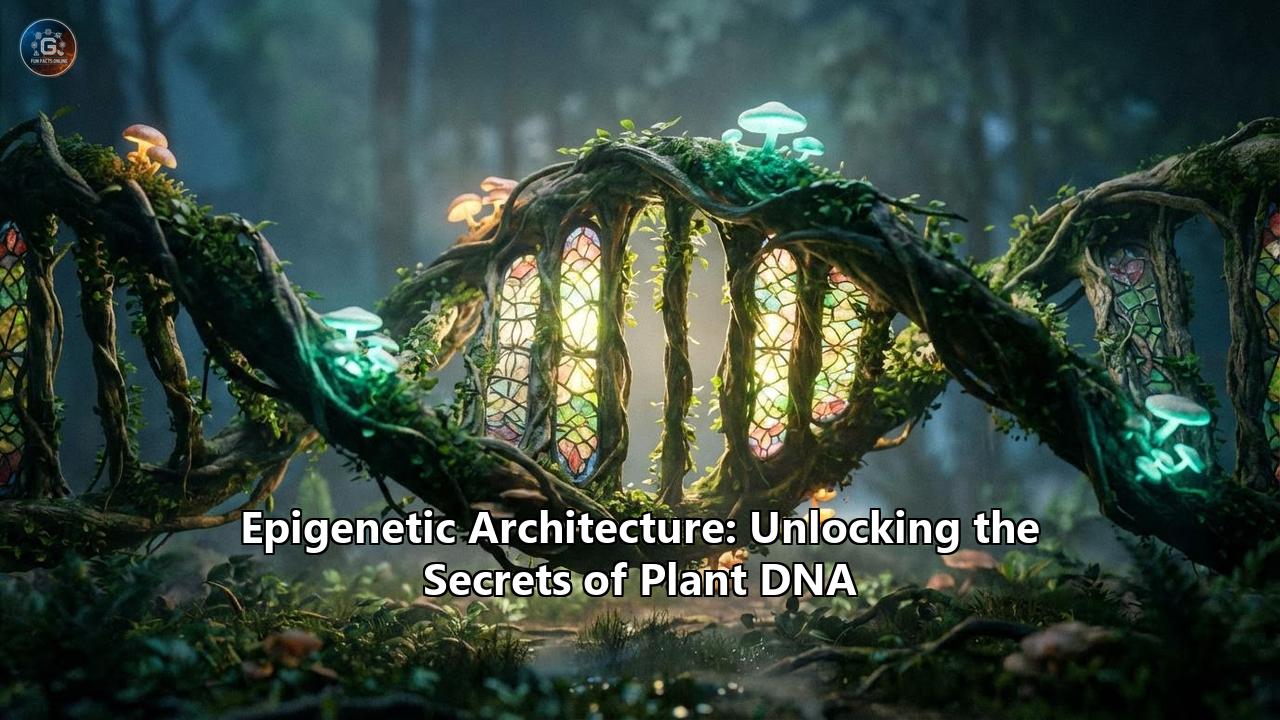
For decades, the standard biological narrative taught us that DNA is destiny. We envisioned the genome as an immutable blueprint, a rigid set of instructions dictating everything from the color of a petal to the height of a towering redwood. But to truly understand the resilience of the botanical world, we must look beyond the sequence of A’s, C’s, T’s, and G’s. We must explore the dynamic, invisible scaffolding that governs how this blueprint is read. This is the realm of epigenetic architecture—the intricate "software" that operates atop the genetic "hardware."
Unlike animals, which can flee from a sudden frost, migrate to seek water during a drought, or hide from hungry predators, plants are sessile. They are tethered to the earth, forced to endure whatever the environment throws at them. To survive, plants have evolved an astonishingly sophisticated capacity for adaptation, driven largely by epigenetics. They possess the ability to "remember" past traumas, adjust their biology to shifting climates, and even pass these hard-won memories down to their offspring. Today, as modern science unlocks the secrets of plant epigenomes, we are not only rewriting our understanding of botanical life but also discovering unprecedented tools to secure the future of global agriculture.
The Software of Life: What is Epigenetic Architecture?
The term epigenetics literally translates to "above genetics." It refers to heritable modifications in gene expression that do not involve any alteration to the underlying DNA sequence itself. If the genome is an extensive library of books, the epigenome is the system of highlighters, sticky notes, and paperclips that tells the cellular machinery which pages to read carefully, which to skim, and which to glue shut completely.
In plants, this architecture is built upon three foundational pillars: DNA methylation, histone modifications, and the regulatory action of non-coding RNAs. Together, they modulate chromatin—the tightly coiled complex of DNA and proteins housed within the cell nucleus.
1. The Methylation Tags: Silencing the NoiseDNA methylation is perhaps the most heavily studied epigenetic mechanism. It involves the addition of a tiny chemical tag—a methyl group—to the cytosine bases of DNA. In plants, this process is remarkably complex. While mammals primarily methylate cytosine when it sits next to a guanine (CG sites), plants have mastered methylation across a diverse array of contexts (CG, CHG, and CHH, where H can be any nucleotide other than guanine).
By attaching these methyl groups, the plant cell effectively places a biological "Do Not Read" sign over specific genomic regions. This is vital for silencing transposable elements—so-called "jumping genes" or viral remnants that could wreak havoc if allowed to freely duplicate and insert themselves randomly across the genome.
2. The Histone Code: The Spools of the GenomeTo fit inside a microscopic nucleus, a plant's DNA must be masterfully packaged. It is wound around octamers of proteins called histones, much like thread wrapped around a spool. The tightness of this wrapping dictates whether a gene is accessible to the transcription machinery.
Histone proteins have protruding "tails" that are subject to various chemical modifications, including acetylation, methylation, and phosphorylation. For example, the addition of acetyl groups typically relaxes the chromatin, unspooling the DNA and turning genes "on." Conversely, the addition of methyl groups to specific locations on the histone tail can either activate or repress genes. The trimethylation of histone H3 at lysine 4 (H3K4me3) acts as a green light for gene expression, while trimethylation at lysine 27 (H3K27me3) acts as a strict red light, locking the gene away in a condensed, unreadable state.
3. Non-Coding RNAs: The GhostwritersFor years, scientists referred to the vast majority of transcribed RNA that did not code for proteins as "junk." We now know that these non-coding RNAs (ncRNAs) are the master conductors of the epigenetic symphony. MicroRNAs (miRNAs), small interfering RNAs (siRNAs), and long non-coding RNAs (lncRNAs) traverse the cell, seeking out complementary sequences and orchestrating targeted gene silencing or chromatin remodeling.
The Plant-Exclusive Marvel: RNA-Directed DNA Methylation (RdDM)
One of the most spectacular evolutionary innovations unique to the plant kingdom is the RNA-directed DNA methylation (RdDM) pathway. Unlike animals, plants have evolved a highly specialized mechanism where small RNA molecules act as literal GPS guides, directing DNA methylation machinery to exact genomic coordinates.
The RdDM pathway is a marvel of biological engineering, relying on two plant-specific RNA polymerases: Pol IV and Pol V. The process begins when Pol IV transcribes a target region of the genome into a single-stranded RNA, which is then converted into double-stranded RNA and diced into tiny fragments, typically 24 nucleotides long. These 24-nt siRNAs are picked up by a specialized protein called Argonaute 4 (AGO4).
Simultaneously, Pol V creates a scaffold transcript at the target DNA site. The siRNA-AGO4 complex patrols the genome until it finds a sequence matching the Pol V scaffold. Once it docks, it summons a suite of methyltransferase enzymes, primarily DRM2 (DOMAINS REARRANGED METHYLASE 2), to install methyl groups directly onto the DNA.
Why did plants evolve such a convoluted system? The answer lies in their vulnerability. Unable to move, plants are sitting targets for pathogens, particularly viruses that inject foreign DNA into their cells. The RdDM pathway acts as a hyper-vigilant immune system, recognizing invasive genetic material, creating a custom RNA guide, and permanently silencing the invader through heavy methylation. Furthermore, RdDM plays a critical role in seed development, fruit ripening, and managing the chaotic subgenomes of polyploid crops like wheat and brassica.
Ecological Memory: How Plants Remember the Past
Perhaps the most philosophically profound revelation to emerge from plant epigenetics is the concept of "ecological memory." Plants possess a form of memory that doesn't rely on a brain or nervous system; instead, it is encoded directly into their chromatin.
Consider the phenomenon of vernalization, the process by which certain plants require a prolonged period of cold weather before they will flower. How does a cabbage or a winter wheat plant "know" that winter has passed and spring has arrived? The secret lies in a master repressor gene called FLC (FLOWERING LOCUS C), which prevents flowering.
When the chill of winter sets in, the plant begins to produce a long non-coding RNA named COOLAIR. This RNA wraps around the FLC gene and recruits a protein complex that coats the gene's histones with the repressive H3K27me3 mark. As winter progresses, this epigenetic silencing spreads, completely shutting down the FLC gene. When spring arrives and temperatures warm, the DNA sequence of FLC remains unchanged, but the gene is now locked away by epigenetic tags. The plant "remembers" the winter and is finally free to bloom.
This memory system extends to environmental trauma. When a plant experiences a severe drought, it undergoes massive epigenetic reprogramming to survive. It alters DNA methylation patterns and modifies histones to activate drought-response genes. Once the rain returns, the plant does not simply revert to its baseline state. It retains a subset of these epigenetic marks—a phenomenon known as stress priming. If a second drought occurs weeks later, the primed plant reacts much faster and more vigorously than a plant experiencing drought for the first time.
Astonishingly, some of these memories can cross generational lines. If a parent plant survives intense heat or severe pathogen attacks, it can pass these protective epigenetic configurations through its seeds. The offspring, having never experienced the stress themselves, are born with a pre-primed epigenetic defense system, ready to face the hardships that plagued their ancestors.
The Underground Web: Epigenetics and Symbiosis
The epigenetic architecture of plants does not merely respond to abiotic factors like temperature and water; it also intimately manages biological relationships, particularly in the dark, bustling world beneath the soil. The vast majority of land plants engage in mycorrhizal symbiosis, partnering with soil fungi in an intricate exchange of nutrients.
Recent discoveries have revealed that this "Wood Wide Web" is heavily regulated by epigenetics. For a plant root to allow a fungal hypha to penetrate its cells and establish an arbuscule (a nutrient-exchange structure), the plant must temporarily lower its immune defenses. This delicate negotiation is mediated by dynamic changes in chromatin states. DNA demethylation and specific histone modifications open up the genomic regions required for symbiotic pathways, while simultaneously keeping pathogen-defense genes on a tight leash.
Furthermore, groundbreaking research points to cross-kingdom RNA interference. Plants and symbiotic fungi literally exchange small RNA molecules through their root interfaces. The plant can send sRNAs into the fungus to regulate fungal gene expression, ensuring the fungus remains a cooperative partner rather than a parasitic threat, while the fungus sends its own epigenetic messengers back into the plant. Epigenetics is the shared language that maintains the peace and prosperity of the subterranean ecosystem.
Climate Change: The Epigenome Under Threat
We are entering an era of unprecedented climatic volatility. Rising global temperatures, prolonged droughts, increasing soil salinity, and erratic freeze-thaw cycles are pushing global agriculture to the brink. Traditional crop breeding, which relies on the slow accumulation of beneficial genetic mutations over decades, is struggling to keep pace with the speed of climate change.
Herein lies the agricultural promise of plant epigenetics. The epigenome is inherently plastic; it is designed to respond rapidly to environmental shifts. When crops are exposed to heat stress, we see a widespread reorganization of their chromatin. For instance, high temperatures trigger the production of specific microRNAs and alter the RNA-directed DNA methylation pathways to induce the expression of heat-shock proteins.
However, severe and prolonged climate stress can also cause epigenetic chaos. Prolonged heat can lead to the breakdown of epigenetic silencing, causing dormant transposable elements to reactivate, jump across the genome, and disrupt essential agricultural traits. Understanding the precise epigenetic signatures of stress-resilient varieties—why a certain landrace of drought-tolerant maize mounts a superior epigenetic defense compared to a sensitive commercial variety—is the key to breeding climate-smart crops.
The Dawn of Epigenome Editing: Precision Agriculture Without the Transgenes
For years, the application of epigenetics in agriculture was limited to "epigenetic breeding"—exposing plants to chemical demethylating agents or stress conditions to artificially induce variations, and then selecting the best performers. It was a shotgun approach. Today, we are witnessing a surgical revolution thanks to CRISPR technologies.
While traditional CRISPR-Cas9 acts as a pair of molecular scissors, physically cutting the DNA sequence to induce mutations or insert genes, researchers have developed a "blunted" version called dead Cas9 (dCas9). The dCas9 protein retains its incredible ability to find a specific genetic address using a guide RNA, but it cannot cut the DNA. Instead, scientists use dCas9 as a delivery truck to transport epigenetic enzymes directly to target genes.
By fusing dCas9 to a DNA methyltransferase (like DNMT3A), scientists can artificially silence a specific gene. Conversely, by fusing dCas9 to a demethylase (like TET1), they can strip away methyl tags and awaken dormant genes. They can also attach histone modifiers to alter the physical wrapping of the chromatin.
The Herbicide Resistance BreakthroughA stunning proof-of-concept for this technology emerged recently with the development of herbicide-resistant crops. Weeds are a massive threat to global food security, and modern farming relies heavily on herbicides. Traditionally, creating herbicide-resistant crops required introducing foreign transgenes (creating GMOs) or inducing permanent genetic mutations in the plant's natural enzymes (like EPSPS or ALS).
Using CRISPR/dCas9 epigenome editing, researchers have achieved herbicide resistance without altering a single letter of the plant's DNA. Instead of permanently mutating the sensitive genes, they used epigenetic editing to achieve "conditional silencing." By applying specific epigenetic modifications, they engineered the plant so that the sensitive genes are temporarily inhibited only when the herbicide is applied, or only in specific tissues. This preserves the plant's normal metabolic functions and completely avoids the growth penalties often associated with traditional genetic knockouts.
Because epigenome editing does not alter the underlying DNA sequence—and because it mimics the natural regulatory mechanisms plants already use—it sits in a regulatory gray area. In many jurisdictions, crops developed through targeted epigenetic modifications may not be classified as heavily regulated genetically modified organisms (GMOs). This regulatory friendliness could dramatically accelerate the time it takes to get climate-resilient, high-yielding crops from the laboratory to the farmer's field.
Looking to the Future: Epigenetic Multi-Editing and Super Crops
The trajectory of epigenetic architecture is moving toward the creation of custom-tailored "super crops." The next frontier is epigenetic multi-editing—simultaneously targeting dozens of epigenetic sites across a crop's genome to fine-tune complex traits.
Imagine a wheat plant epigenetically programmed with a fortified memory of drought, ensuring its stomata close faster when water is scarce. Simultaneously, its root architecture is epigenetically optimized to enhance mycorrhizal symbiosis for better phosphorus uptake, while its defense genes are held in a "primed" state, ready to unleash a rapid immune response at the first sign of a fungal rust infection. All of this achieved without introducing foreign DNA or permanently breaking the natural genetic code.
However, challenges remain. The greatest hurdle in epigenome editing is stability. While genetic mutations are permanent, epigenetic marks are inherently reversible. Ensuring that beneficial epigenome edits are stably maintained across multiple generations, resisting the natural tendency of the plant to "reset" its epigenome during reproduction, is the holy grail of current research. Advanced tools like the SunTag system—which recruits multiple copies of an epigenetic effector to a single dCas9 complex to drastically amplify the editing signal—are already showing immense promise in solidifying these artificial marks.
The Plant Reimagined
The study of epigenetic architecture forces a profound paradigm shift in how we view the botanical world. Plants are not passive, hardwired machines blindly executing a genetic script. They are highly sensitive, dynamic, and adaptive organisms continuously sensing their environment, recording their experiences into the very architecture of their chromatin, and preparing their offspring for the challenges of tomorrow.
The secrets locked within plant DNA are not just in the sequence; they are in the folding, the tagging, and the intricate dance of RNA molecules. As we learn to read and write the epigenetic code, we are unlocking a new era of biology—one that honors the profound adaptability of nature and offers humanity the vital tools needed to cultivate a thriving, resilient world in the face of an uncertain climate.
Reference:
- https://premierscience.com/pjpb-24-654/
- https://pmc.ncbi.nlm.nih.gov/articles/PMC12189143/
- https://www.mdpi.com/2223-7747/15/4/534
- https://pmc.ncbi.nlm.nih.gov/articles/PMC9961165/
- https://www.frontiersin.org/journals/plant-science/articles/10.3389/fpls.2026.1738299/full
- https://www.mdpi.com/2223-7747/10/11/2466
- https://pmc.ncbi.nlm.nih.gov/articles/PMC7544125/
- https://academic.oup.com/jxb/article/76/9/2389/8165398
- https://www.researchgate.net/figure/Mechanisms-of-RNA-directed-DNA-methylation-RdDM-in-plants-The-canonical-Pol_fig2_353013418
- https://www.biorxiv.org/content/10.1101/2023.07.03.547469v1.full
- https://pubmed.ncbi.nlm.nih.gov/25494460/
- https://www.maxapress.com/article/id/686c83d5fa6c5854b3ec571b
- https://www.mdpi.com/2223-7747/13/2/163
- https://www.researchgate.net/publication/400016466_The_role_of_epigenetics_in_shaping_plant-mycorrhizal_interactions_and_ecosystem_resilience
- https://www.cabidigitallibrary.org/doi/10.1079/9781800626102.0002
- https://www.lifeasible.com/blog/epigenome-editing-opens-a-new-era-of-crop-breeding/
- https://www.cabidigitallibrary.org/doi/10.1079/9781800626102.0001
- https://pubmed.ncbi.nlm.nih.gov/36057300/