
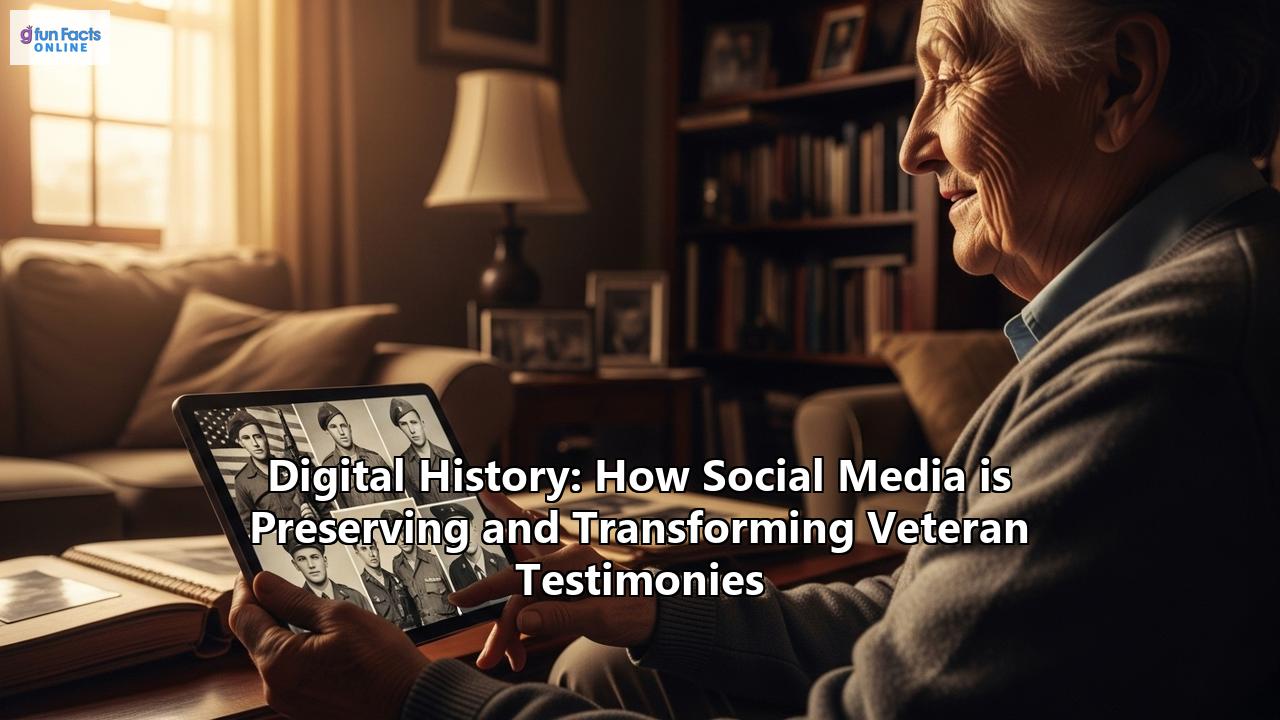
The Unfiltered Archive: How Social Media is Shaping the Narrative of Military Service
In an era defined by digital connectivity, the nature of remembrance is undergoing a profound transformation. The stoic silence that often shrouded the experiences of past generations of military veterans is steadily being replaced by a vibrant, complex, and unfiltered tapestry of stories shared across global networks. Social media, once dismissed as a frivolous realm of fleeting trends, has emerged as a powerful and contested space for the preservation and transformation of veteran testimonies. From ephemeral TikTok videos that offer a raw glimpse into daily life in a conflict zone to meticulously curated Facebook groups that connect generations of service members, digital platforms are democratizing the historical record, one post, picture, and personal story at a time.
This shift is not merely a technological update to the age-old practice of oral history. It represents a fundamental change in how we collect, interpret, and interact with the memories of those who have served. This "living archive" is immediate, interactive, and immense in its scope, offering unprecedented opportunities for connection, healing, and historical understanding. However, it also presents a minefield of challenges, from the fragility of digital data and the perils of misinformation to the profound ethical responsibilities of bearing witness to trauma in a public square. As we navigate this new frontier of digital history, we are forced to confront critical questions about the future of memory, the nature of historical truth, and our collective responsibility to honor the unfiltered voices of our veterans.
The Rise of the Digital Veteran: Platforms of Testimony
The migration of veteran stories to the digital realm is not a top-down phenomenon dictated by institutions, but a grassroots movement led by veterans themselves. Recognizing the power of direct communication, service members and their families have harnessed a variety of platforms to share their experiences, build communities, and bridge the often-vast divide between military and civilian life.
Facebook: The Digital VFW PostWith its emphasis on community building and connecting with friends and family, Facebook has become a virtual Veterans of Foreign Wars (VFW) or American Legion post for the 21st century. It hosts thousands of groups dedicated to specific units, service eras, and shared experiences, allowing veterans to reconnect with those who understand their journey most intimately. These spaces often serve as informal support networks where members can share memories, ask for help, and find a sense of belonging that can be elusive after returning to civilian life.
A case in point is the VFW's own #StillServing campaign, which successfully used social media to highlight the continued contributions of veterans to society through first-person stories. By analyzing audience engagement and adapting their strategies, they were able to foster a sense of identity and evolution for the organization, proving that even legacy institutions can thrive in the digital age. Similarly, organizations like Disabled American Veterans (DAV) have launched powerful social media campaigns, such as "Victories for Veterans," which use real veteran stories to showcase the organization's impact and connect with the public on an emotional level.
TikTok, Instagram, and YouTube: The Visual FrontlineFor younger generations of veterans, platforms like TikTok, Instagram, and YouTube offer a more immediate and visual medium for storytelling. Short-form videos can capture the humor, boredom, and intensity of military life with a raw authenticity that is often missing from polished documentaries or official histories. The Veterans Breakfast Club, for instance, has found surprising success on TikTok, sharing everything from humorous anecdotes about military life to deeply personal war stories. This approach has allowed them to reach a younger audience and provide a "glimpse into the world of serving in the military" that is both engaging and educational.
Ukrainian soldiers have notably used Instagram to humanize their experience of war, posting photos of loved ones and daily life alongside images from the battlefield. These posts, often created in the moment, serve as a real-time personal archive, a way of "creating their story while living it." This immediacy creates a powerful connection with a global audience, offering a counter-narrative to state-controlled media and fostering a sense of direct engagement with the realities of conflict.
Blogs and Podcasts: The New War MemoirsThe tradition of the war memoir has found a new home in the digital age through blogs and podcasts. These long-form mediums allow veterans to delve deeper into their experiences, offering nuanced reflections on their service, the challenges of reintegration, and the complexities of war. So-called "milblogs" emerged during the wars in Iraq and Afghanistan, providing a channel for soldiers to communicate their firsthand experiences to a public hungry for authentic perspectives.
Podcasting, in particular, has become a popular medium for veteran storytelling. Audio narratives can create a sense of intimacy, allowing listeners to connect with the veteran's voice and emotions in a powerful way. These platforms provide veterans with the flexibility to tell their stories on their own terms, fostering a sense of ownership and control over their own narratives.
The Democratization of History: Benefits and Opportunities
The rise of social media as a repository for veteran testimonies has yielded a wealth of benefits, fundamentally altering the landscape of oral history and public memory. By placing the tools of storytelling directly into the hands of those who served, these platforms have fostered a more democratic, accessible, and dynamic understanding of military life.
One of the most significant advantages is the empowerment of veterans to control their own narratives. For generations, the stories of service members were often filtered through journalists, historians, or filmmakers. Now, veterans can speak directly to a global audience, sharing their experiences in their own words and from their own perspectives. This act of "restorying" can be a powerful tool for personal healing and empowerment, allowing veterans to process their experiences, find a sense of purpose, and build a supportive community around their shared journey.
Moreover, these digital platforms have dramatically increased the reach and accessibility of veteran testimonies. Traditional oral history projects, while invaluable, are often housed in physical archives, accessible only to dedicated researchers. Social media, by contrast, can bring these stories to millions of people with a simple click or share, bridging the gap between veterans and a civilian population that may have little to no personal connection to the military. This can foster greater empathy, understanding, and a more nuanced public discourse on the realities of war and the challenges of homecoming.
The interactive nature of social media also creates a "living archive," a dynamic space where stories are not simply stored but are actively discussed, debated, and enriched by the community. The comments section of a YouTube video or a Facebook post can become a site of collective remembrance, where other veterans share their own related experiences, and civilians can ask questions and express their gratitude. This creates a feedback loop that can be deeply affirming for the storyteller and educational for the audience.
Finally, the use of social media can have therapeutic benefits for veterans. The act of articulating and sharing their stories can be a powerful step toward processing trauma and finding closure. In a study of military video blogs, or "milvlogs," researchers found that veterans were often drawn to these platforms to connect with others who had similar experiences, to tell their stories as a form of outreach and advocacy, and to manage their own mental health. The sense of community and shared understanding found online can be a vital lifeline for those struggling with the invisible wounds of war.
The Perils of the Digital Archive: Challenges and Ethical Dilemmas
Despite its immense potential, the use of social media to preserve veteran testimonies is fraught with challenges and ethical complexities. The very features that make these platforms so powerful—their immediacy, accessibility, and interactivity—also create significant risks that must be carefully navigated by veterans, historians, and the public alike.
The Fragility of the Digital RecordOne of the most pressing concerns is the long-term preservation of "born-digital" content. Unlike physical letters or photographs, digital files are susceptible to a host of threats, including file format obsolescence, media degradation, and the simple fact that social media platforms can change their policies or even disappear entirely. A study of the personal archiving practices of modern soldiers found a heavy reliance on social media as an ad-hoc preservation tool, with little understanding of the inherent risks. This raises the alarming possibility of a "digital black hole," where the most documented period in history becomes the least accessible to future generations due to technological failure or a lack of preservation planning.
Furthermore, digital files often lack the metadata—the "who, what, where, and when"—that is crucial for historical research. Without this context, a photograph or a video can be easily misinterpreted or stripped of its original meaning, a significant problem when dealing with sensitive and complex subjects like military service.
The Minefield of Misinformation and DisinformationIn the age of "fake news" and algorithmic amplification, the authenticity of online content is a constant concern. Social media platforms can be fertile ground for the spread of misinformation and disinformation, where stories can be twisted, taken out of context, or fabricated entirely to serve a particular agenda. This is especially dangerous when it comes to military narratives, where the line between personal testimony and propaganda can be easily blurred. Algorithms, which are designed to maximize engagement, do not verify the authenticity of stories before promoting them, meaning that harmful or inaccurate narratives can spread rapidly and become impossible to contain.
For historians, this presents a significant challenge. While social media offers a treasure trove of primary sources, its use requires a new level of critical scrutiny. Distinguishing between genuine testimony and performance, or between a spontaneous expression and a carefully crafted narrative, requires a deep understanding of the digital landscape and the motivations of those who inhabit it.
Ethical Responsibilities in the Digital AgeThe ethical considerations of sharing veteran testimonies online are perhaps the most complex challenge of all. When a veteran shares a story of trauma or loss, they are placing a profound amount of trust in their audience. In a traditional oral history setting, this trust is managed through a carefully negotiated relationship between the interviewer and the narrator, with clear guidelines on consent, anonymity, and the use of the material.
On social media, these boundaries are much more porous. A video shared with a small group of fellow veterans can quickly go viral, exposing the narrator to a global audience they never intended to reach. This can lead to unwanted attention, harassment, or the re-traumatization of the individual. The issue of informed consent is paramount; veterans must be fully aware of how their stories might be used and shared in a digital environment where they have little control over the context in which their narrative is presented.
Privacy is another major concern. Even when data is "de-identified," there is a risk of re-identification, which can have serious consequences for veterans, particularly those still on active duty. Military regulations on social media use can also put service members in a difficult position, where their personal expression could be seen as a breach of protocol or a threat to operational security. The phenomenon of "digital exhaust"—the trail of data left by online activity—can even be exploited by adversaries to track troop movements or target individuals.
Ultimately, the responsibility for navigating these ethical dilemmas lies with all of us. For researchers and historians, it means developing new methodologies that prioritize the well-being of the narrator and approach online sources with a healthy dose of skepticism. For the public, it means engaging with these stories with empathy, respect, and a critical awareness of the complexities involved. And for veterans themselves, it means making informed choices about how and where they share their stories, and seeking out resources and communities that can support them in this often-difficult journey.
The Future of Testimony: AI, VR, and the Living Archive
As technology continues to evolve, so too will the ways in which we preserve and interact with veteran testimonies. Emerging technologies like artificial intelligence (AI) and virtual reality (VR) are already beginning to reshape the landscape of digital history, offering new possibilities for immersive storytelling, interactive archives, and even therapeutic intervention.
Interactive Archives and AIThe National WWII Museum in New Orleans has pioneered the use of AI to create "conversational" exhibits that allow visitors to interact with the stories of veterans in a remarkably personal way. In their "Voices from the Front" installation, the museum recorded hours of interviews with veterans, asking them thousands of questions about their service. This massive database of responses is then powered by AI, allowing visitors to ask their own questions and receive a pre-recorded answer from the veteran in real-time.
This technology does not generate or manipulate the veteran's story; rather, it uses AI to facilitate access to a vast archive of authentic human experiences. The result is a powerful and engaging way to connect with history, particularly for younger generations who are accustomed to interactive digital media. As this technology becomes more sophisticated, it could be used to create even more nuanced and personalized historical experiences, allowing researchers and the public to explore the connections between different stories and gain a deeper understanding of the complexities of war.
AI and machine learning are also being explored as tools for proactive mental health outreach for veterans. By analyzing large datasets, these technologies could potentially identify veterans who are at high risk for suicide or other mental health challenges, allowing for timely and targeted support.
Immersive Storytelling with VRVirtual reality is another technology with immense potential for transforming veteran testimonies. For years, VR has been used in exposure therapy to help veterans process traumatic memories in a safe and controlled environment. By recreating scenes from a veteran's memory, complete with sights, sounds, and even smells, therapists can help them confront and work through their trauma in a way that feels both real and manageable.
Beyond its therapeutic applications, VR also offers a powerful new medium for storytelling. Imagine being able to step into a veteran's memory, to see the world through their eyes and experience a moment in history with a sense of presence and immersion that no traditional documentary could ever replicate. Artist Basil Al-Rawi's "House of Memory" project does just that, using VR to create immersive environments based on the personal photographs and recollections of Iraqi diaspora members. This approach allows for a "counter-narrative" to dominant, often dehumanizing, depictions of conflict, and celebrates the rich diversity of individual stories.
The Enduring Power of the Living ArchiveWhether through AI, VR, or the ever-evolving landscape of social media, the future of veteran testimonies lies in the concept of the "living archive." This is not a static repository of historical facts, but a dynamic, participatory space where memory is continuously created, shared, and reinterpreted. It is a space where the voices of veterans are not simply preserved, but are actively engaged with, honored, and woven into the fabric of our collective understanding.
This ongoing dialogue between past and present is the true power of digital history. It reminds us that the stories of our veterans are not relics of a bygone era, but are living, breathing testaments to the enduring human cost of conflict and the remarkable resilience of the human spirit. As we continue to navigate the complexities of this new digital frontier, our most important task is to listen—to listen with empathy, with critical awareness, and with a profound sense of gratitude for the unfiltered, unvarnished, and essential truths that our veterans have chosen to share.
Reference:
- https://www.researchgate.net/publication/346913908_Living_Archives_and_The_Social_Transmission_of_Memory
- https://www.numberanalytics.com/blog/innovative-oral-history-methods
- https://calenda.org/1128303
- https://www.google.com/search?q=time+in+Nyong-et-Kell%C3%A9,+CM
- https://siarchives.si.edu/what-we-do/digital-curation/preservation-strategies-born-digital-materials
- https://networks.h-net.org/group/announcements/20020033/exploring-historical-war-experiences-through-digital-sources-and
- https://www.remento.co/journal/preserving-veterans-stories-honoring-service-through-innovative-storytelling
- https://www.youtube.com/watch?v=Dvg2zc5NVn8
- https://pmc.ncbi.nlm.nih.gov/articles/PMC12035006/
- https://ohda.matrix.msu.edu/2012/06/oral-history-and-social-networks/
- https://www.nationalarchives.gov.uk/about/our-research-and-academic-collaboration/our-research-projects/open-access-research-from-our-staff/more-than-just-algorithms-a-machine-learning-club-for-information-specialists/
- https://thepolyphony.org/2022/07/11/oral-history-or-personal-archive/
- https://www.theartnewspaper.com/2023/12/08/american-second-world-war-museum-uses-ai-to-tell-veterans-stories
- https://www.tandfonline.com/doi/abs/10.1080/13688804.2014.950639
- https://www.researchgate.net/publication/352295455_History_in_the_Era_of_Massive_Data_Online_Social_Media_as_Primary_Sources_for_Historians
- https://www.scholarsandstorytellers.com/oral-history-borrow-my-eyes
- https://www.emoryhealthcare.org/stories/veterans-health/virtual-reality-makes-real-impact-how-emory-healthcare-veterans-program-uses-technology-to-heal
- https://ranke2.uni.lu/u/social-media-historians/
- https://ohda.matrix.msu.edu/2012/06/why-here-why-now/
- https://newlinesmag.com/review/preserving-iraqi-memories-through-virtual-reality/
- https://oralhistory.org/wp-content/uploads/2024/04/AI-in-OH-Symposium-Program.pdf
- https://www.stripes.com/opinion/2023-07-03/veteran-suicide-ai-machine-learning-10630552.html
- https://pmc.ncbi.nlm.nih.gov/articles/PMC12169647/
- https://cris.unibo.it/retrieve/2242e676-d621-45c6-bcbf-fbec29bb78d1/2022_iannucci%20et%20al_digital%20living%20archive.pdf
- http://www.thirdtext.org/livingarchives-chandra-sunderason1