
Part I: The Temple of Sterility
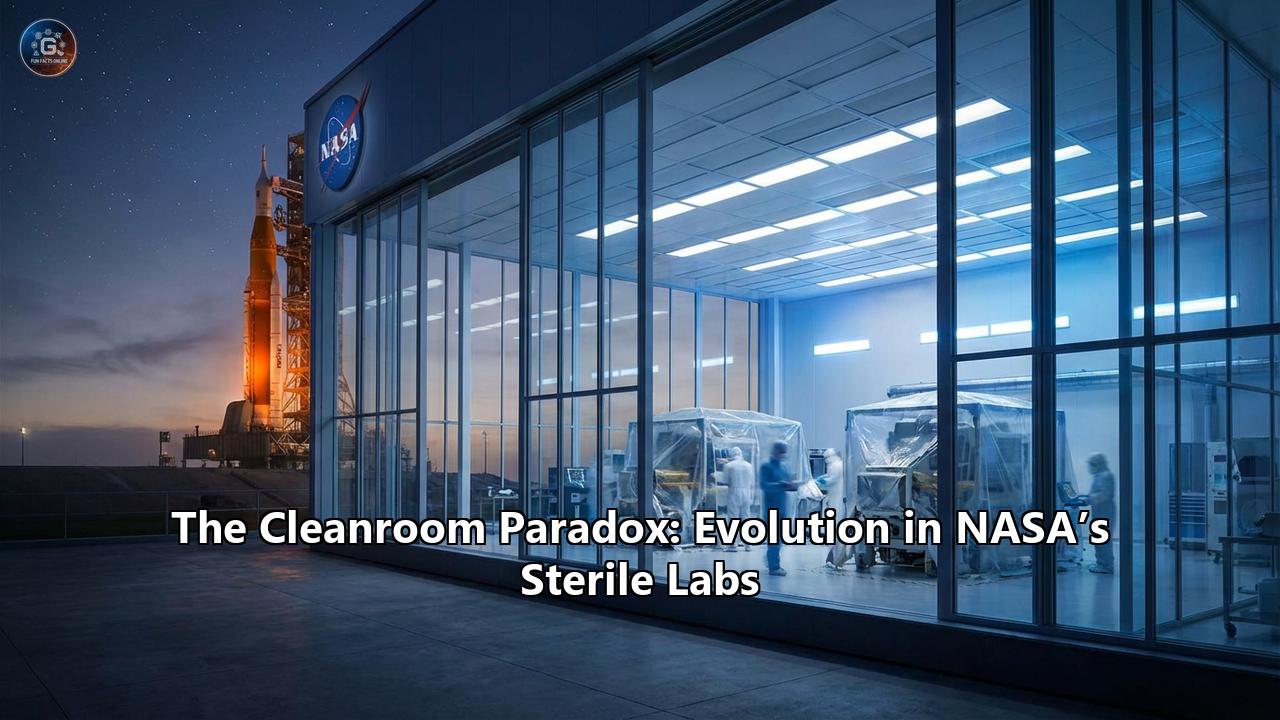
In the humid swamplands of Florida, just miles from where tourists snap photos of alligators, stands a building that is arguably the cleanest place on Earth. It is the Payload Hazardous Servicing Facility (PHSF) at NASA’s Kennedy Space Center. To enter, you must shed the skin of the outside world. You remove your clothes, scrub your hands with surgical precision, and don a "bunny suit"—a white, synthetic exoskeleton designed to contain the thousands of skin flakes, hair follicles, and bacteria your body sheds every minute. You step through air showers that blast away lingering particles. You walk on sticky mats that grab the dust from your booties.
Inside, the air is not just air; it is a filtered gas, scrubbed of 99.99% of particulate matter by HEPA filters that run floor-to-ceiling. The humidity is locked at a precise percentage. The temperature never fluctuates. The floors are mopped with industrial-grade disinfectants like Kleenol 30, and the surfaces are wiped down with isopropyl alcohol so pure it would evaporate off your tongue before you could taste it.
This is the cathedral of the Space Age. It is here that the rovers Curiosity, Perseverance, and the Viking landers were prepared for their voyages. The goal is absolute purity—a "planetary protection" mandate to ensure that when we touch the face of Mars or the ice of Europa, we are not bringing Earth with us. We are looking for alien life, and the cardinal rule of the hunt is: don't bring your own fleas.
But in the shadows of these hyper-sterile cathedrals, something unexpected has happened. Something that defies the brute force of chemistry and the arrogance of engineering.
In trying to scrub life out of the room, NASA has inadvertently created an evolutionary pressure cooker. By poisoning the environment with harsh chemicals, drying it out to desert-like humidity, and starving it of all nutrients, they haven't just killed bacteria. They have selected for the Spartans.
This is the Cleanroom Paradox. In the quest for sterility, we have bred a new class of "super-bug"—microbes that are resistant to radiation, immune to poisons, and capable of surviving in conditions that would kill 99% of life on Earth. We wanted a blank slate. Instead, we created a training camp for the toughest life forms our planet has ever produced. And now, we are strapping them to rockets and shooting them at the stars.
Part II: The Survivors
To understand the magnitude of this biological irony, we must look at the specific entities that have emerged from these sterile labs. These are not your garden-variety E. coli or Salmonella. These are biological tanks, hardened by the very weapons used to destroy them.
*The Zombie: Tersicoccus phoenicis---
The story of Tersicoccus phoenicis begins with a mystery that spanned an ocean. In 2007, microbiologists swabbing the floor of the cleanroom where the Phoenix Mars Lander was being assembled found a bacterium they couldn’t identify. It was a small, berry-shaped organism (a coccus). When they ran its genetic markers against global databases, it matched nothing.
Years later, across the Atlantic in Kourou, French Guiana, the European Space Agency (ESA) was preparing the Herschel Space Observatory. In their own ultra-clean facility—separated from Florida by 4,000 kilometers of ocean and jungle—they found the same bacterium.
It existed nowhere else. Not in the soil outside, not in the ocean, not in hospitals. It was found only in the cleanest rooms on the planet.
NASA microbiologist Parag Vaishampayan eventually named it Tersicoccus phoenicis—"Clean bacteria of the Phoenix." But its name belies its terrifying resilience. Tersicoccus is a master of "playing dead." When nutrients are scarce—as they always are in a cleanroom—it enters a state of deep dormancy. It shuts down its metabolism so completely that it becomes undetectable to standard culture tests. It doesn't grow, it doesn't eat, it just waits.
It can survive the harsh chemical scrubs, the desiccation, and the lack of food for years. It is a biological sleeper agent. But the moment it is introduced to a specific resuscitation factor—or perhaps the brine of a Martian aquifer—it wakes up. The discovery of Tersicoccus shattered the illusion that cleanrooms were empty. They weren't empty; they were just full of life that had learned to hold its breath.
*The Astronaut: Bacillus pumilus SAFR-032
If Tersicoccus is the master of hiding, Bacillus pumilus SAFR-032 is the master of fighting.
This strain was isolated from the Jet Propulsion Laboratory (JPL) spacecraft assembly facility. To test its mettle, NASA scientists didn't just scrub it with bleach; they sent it to space. Spores of SAFR-032 were plastered onto the outside of the International Space Station (ISS) as part of an exposure experiment. For 18 months, these spores sat in the vacuum of space, bombarded by cosmic rays, solar UV radiation, and temperature swings of hundreds of degrees.
When the samples were returned to Earth, scientists expected them to be dead. They weren't.
Not only did SAFR-032 survive, but the survivors were harder than the ones that stayed on Earth. The radiation had killed off the weak, leaving behind a lineage of super-spores with enhanced DNA repair mechanisms and thickened cell walls. The cleanroom had selected for UV resistance (since UV is often used to sterilize surfaces), which inadvertently pre-adapted the bug for the harsh radiation environment of Mars. We didn't just fail to kill it; we trained it for its mission.
The Eater of Worlds: Acinetobacter---
Perhaps the most disturbing character in this cast is Acinetobacter. In the wild, this genus is a common soil bacterium, sometimes involved in hospital infections. But the strains found in NASA cleanrooms, particularly those isolated during the Mars Odyssey and Phoenix missions, have developed a terrifying taste.
Cleaning protocols rely heavily on alcohol-based solvents (like isopropyl alcohol) and detergents (like Kleenol 30). We assume these chemicals destroy cell membranes and denature proteins. But recent studies by researchers like Dr. Rakesh Mogul at Cal Poly Pomona revealed that cleanroom Acinetobacter strains don't just tolerate these cleaning agents—they eat them.
When starved of other nutrients, these bacteria can use the very ethanol intended to kill them as a carbon source. They biodegrade the detergents. They turn the "poison" into lunch. By constantly washing the floors with these chemicals, we have created an all-you-can-eat buffet for the microbes that have the genetic machinery to digest them. It is the ultimate evolutionary backfire: the weapon becomes the fuel.
Part III: The Mechanism of the Paradox
How does this happen? The mechanism is simple, brutal Darwinian selection, accelerated by human ingenuity.
A normal environment—like a handful of soil—is a chaotic warzone. Billions of microbes compete for resources, fighting each other with antibiotics and rapid growth. But a cleanroom is a desert. There is no competition because 99.9% of the life is killed instantly by the cleaning protocols.
The only things left are the "extremophiles." In this vacuum of competition, any organism that has a slight mutation allowing it to survive a wipe of isopropyl alcohol or a blast of UV light has a tremendous advantage. It has the whole world to itself. It reproduces, passing that resistance gene to its progeny. Over decades of missions—from Voyager to Viking to Perseverance—we have been running a continuous selection experiment.
We have selected for:
- Oligotrophy: The ability to live on almost zero food.
- Desiccation Tolerance: The ability to survive extreme dryness (xerophiles).
- Chemotolerance: The ability to process or ignore toxic chemicals.
- Dormancy: The ability to shut down and wait.
These traits are, by cosmic coincidence, the exact same traits needed to survive on Mars. Mars is dry, bathed in UV radiation, chemically harsh (perchlorates), and nutrient-poor. By building "clean" rooms, we have effectively built "Mars simulation" rooms. We are breeding Martians on Earth.
Part IV: The Blind Spot
For decades, NASA didn't know this was happening. The reason lies in the methodology of detection.
Since the Viking missions of the 1970s, the standard for cleanliness was the "spore assay." Technicians would swab a spacecraft surface, wipe it onto a nutrient-rich agar plate, and put it in an incubator. If colonies grew, the surface was dirty. If nothing grew, it was "sterile."
This method is now known as the "Great Plate Count Anomaly." It is estimated that less than 1% of microbial life can grow on standard lab agar. The other 99%—the "unculturable majority"—simply refuse to grow in those conditions, or they grow too slowly to be seen.
Tersicoccus phoenicis doesn't like standard agar. Acinetobacter might be in a dormant state that won't wake up for a 3-day incubation.It wasn't until the genomic revolution—specifically the use of metagenomics and 16S rRNA sequencing—that we opened our eyes. Instead of trying to grow the bugs, scientists started sequencing all the DNA found on the wipes.
The results were shocking. The "sterile" surfaces were teeming with DNA. The cleanrooms were not empty; they were diverse ecosystems of hardy survivors. We found DNA signatures of bacteria, fungi, and even viruses that had been invisible to the spore assay. We realized that for 50 years, we had been looking at the world through a keyhole, assuming the room was empty because we couldn't see anyone standing directly in front of the door.
Part V: The Martian Mirror
The implications of the Cleanroom Paradox are profound, particularly for the field of Astrobiology.
The primary fear is "Forward Contamination"—the accidental seeding of Mars with Earth life. If Bacillus pumilus can survive the vacuum of space, and Acinetobacter can eat harsh chemicals, could they survive on Mars?
The answer is increasingly looking like "yes."
If a rover lands on Mars carrying dormant spores of these super-bugs, and that rover drives into a region with liquid brines (like the Recurring Slope Lineae), those spores could wake up. They could find a niche. They could reproduce.
This leads to the "False Positive" nightmare. Imagine 10 years from now, a Life Detection rover drills into the Martian soil. It finds a microbe! The world rejoices. We have found alien life! But then, we sequence its genome, and it looks suspiciously like Tersicoccus phoenicis.
Did we find Martians? or did we just find the hitchhiker we brought with us 10 years ago?
This is not hypothetical. The Curiosity rover has already detected spikes of methane on Mars. On Earth, methane is largely biological. On Mars? We don't know. But if Curiosity brought methanogens (methane-producing bacteria) with it, we might be chasing our own tail. The more resistant the bugs in our cleanrooms become, the harder it becomes to distinguish "us" from "them."
Part VI: The Return
The stakes are about to get infinitely higher. NASA and ESA are currently planning the Mars Sample Return (MSR) mission. The goal is to pick up the tubes of rock and soil that the Perseverance rover is currently dropping on the Martian surface and bring them back to Earth.
This introduces the concept of "Backward Contamination"—the protection of Earth’s biosphere from potential Martian biology.
The Cleanroom Paradox complicates this immensely. If our cleanrooms are full of Earth bacteria that can play dead and survive sterilization, how do we ensure that the "containment facility" where we open the Martian samples is truly secure?
If we find a bacterium in the Martian sample, we need to be 100% sure it’s not a contaminant from the lab where the sample is being analyzed. This requires a level of cleanliness that makes current cleanrooms look like garbage dumps.
Furthermore, the MSR mission requires "breaking the chain" of contact. The spacecraft that lands on Mars to pick up the samples must never touch the spacecraft that flies back to Earth. They must perform a robotic hand-off in orbit, and the container must be sealed/sterilized in a way that destroys Martian dust on the outside while preserving the sample on the inside.
But if our sterilization techniques (heat, chemical, UV) are the very things that trained Tersicoccus to be invincible, are they enough to kill a potential Martian microbe that evolved in an environment even harsher than our cleanrooms?
Part VII: Future-Proofing and the "Clean is Not Sterile" Paradigm
NASA is not asleep at the wheel. The agency, led by the Office of Planetary Protection, is undergoing a paradigm shift. The old binary of "Sterile vs. Dirty" is being replaced by a more nuanced understanding of "Bioburden" and "Genomic Inventory."
- The Genomic Inventory: Instead of trying to achieve zero life (which is impossible), the new goal is to know exactly what life is there. By sequencing the DNA of every microbe in the cleanroom, NASA creates a "negative list." If we find a bug on Mars, we check it against the Cleanroom Inventory. If it’s a match, it’s Earth life. If it’s not on the list, it might be alien.
- New Sterilization Physics: We are moving beyond simple bleach and alcohol. New technologies are being developed to bypass the resistance mechanisms of these super-bugs.
Cold Plasma: Using ionized gas to bombard microbes. It destroys cell walls mechanically and chemically in ways that biological evolution cannot easily counter.
Supercritical CO2: Using high-pressure carbon dioxide to sterilize delicate electronics that can't be baked.
Vaporized Hydrogen Peroxide (VHP): While some bugs resist liquid peroxide, VHP is far more penetrating and is being used to sterilize the internals of spacecraft.
- Planetary Simulation Chambers: Researchers are now taking these "cleanroom survivors" and putting them in "Mars Chambers"—boxes that replicate the atmosphere, pressure, and radiation of the Red Planet. They are testing exactly how long Tersicoccus* can survive. The results help define where we can and cannot land. (e.g., "Special Regions" on Mars where liquid water exists are strict No-Go zones for rovers that haven't been baked to the highest standard).
Part VIII: The Cosmic Petri Dish
There is a philosophical beauty to the Cleanroom Paradox. It is a testament to the tenacity of life. We built the most hostile, unnatural, artificial environments possible—places that should be sterile tombs—and life found a way to not just survive, but to thrive.
It suggests that life is not fragile. It is stubborn. It is adaptable. And it is waiting.
As we stand on the precipice of becoming a multi-planetary species, we must accept a humble truth: we will never be alone. Wherever we go, our microbiome goes with us. We are not just explorers; we are arks. The challenge of the next century is not to scrub ourselves clean of life, but to understand it well enough that we don't mistake our own reflection for an alien face.
The bacteria in the cleanroom are not just contaminants; they are fellow astronauts. They have passed the training program. They are ready for space. The question is: are we ready for them?
Reference:
- https://astrobiology.com/2025/10/plasmidome-resistome-and-virulence-associated-genes-characterization-of-acinetobacter-johnsonii-in-nasa-cleanrooms-and-a-clinical-setting.html
- https://en.wikipedia.org/wiki/Tersicoccus_phoenicis
- https://www.wondersinspace.com/dormant-bacteria-found-in-nasa-clean-rooms/
- https://astrobiology.nasa.gov/nai/articles/2018/6/25/how-microbes-survive-clean-rooms-and-contaminate-spacecraft/index.html
- https://escholarship.org/uc/item/7v38h81c
- https://pmc.ncbi.nlm.nih.gov/articles/PMC9743659/
- https://www.researchgate.net/publication/258730403_Extremotolerant_survival_and_proteomics_of_Acinetobacter_isolated_from_spacecraft_assembly_facilities
- https://www.cleanlink.com/news/article/Bacteria-Thrives-On-Cleaning-Products-Used-In-NASA-Clean-Rooms---22506
- https://www.insidehook.com/culture/powerful-bacteria-nasa
- https://www.biorxiv.org/content/10.1101/2025.10.09.681420v1