
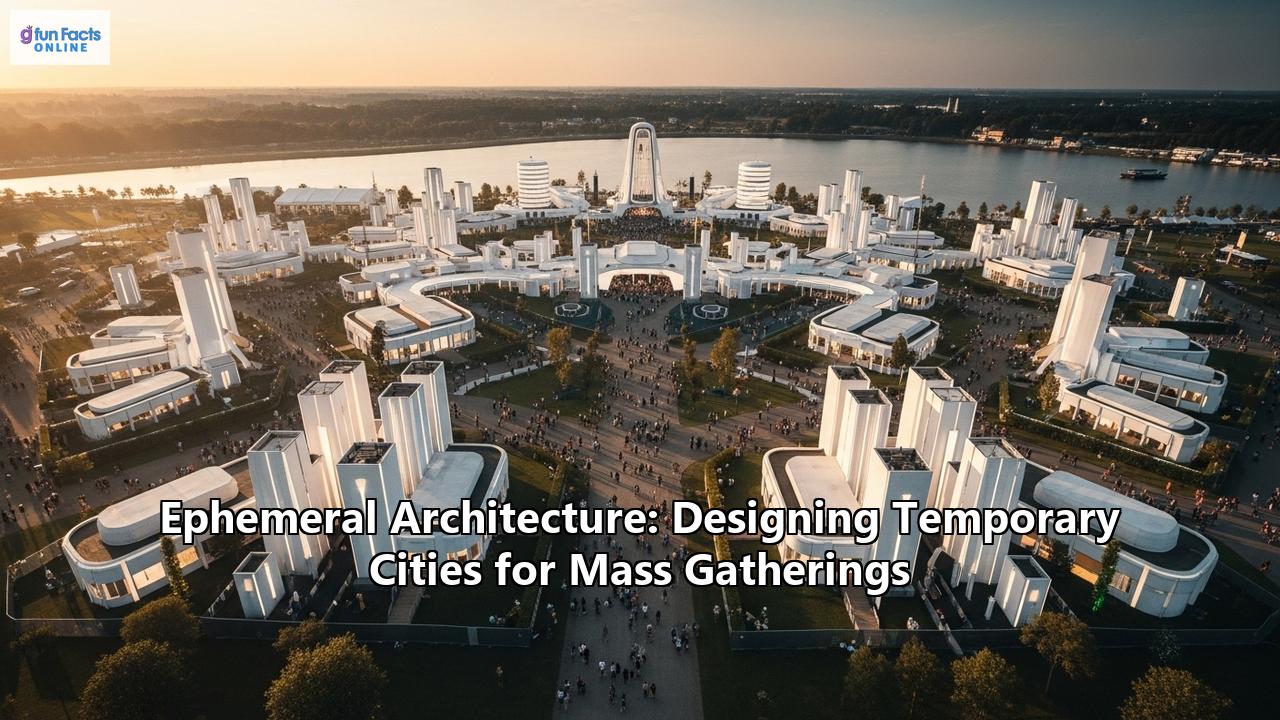
From desert festivals to global sporting events, humanity has a long-standing tradition of creating massive, temporary cities that appear and disappear like mirages. This is the world of ephemeral architecture, a fascinating and increasingly relevant field that challenges our notions of permanence and redefines how we inhabit space. It is more than just temporary structures; it is the art and science of designing flexible, transient, and often awe-inspiring urban environments for fleeting moments in time.
These pop-up metropolises are not a new phenomenon. History is dotted with examples of temporary constructions for celebrations, religious gatherings, and even military campaigns. Think of the grand, elaborate structures of Renaissance festivals or the triumphal arches of the Roman Empire, initially conceived as temporary installations. Today, this practice has evolved to address the needs of a wide range of modern mass gatherings, from cultural events like Burning Man to religious pilgrimages like the Kumbh Mela in India, and global spectacles such as World Expos and the Olympic Games.
The core of ephemeral architecture lies in its temporality. Unlike traditional architecture that strives for permanence, ephemeral designs are created for a limited lifespan, ranging from a few days to a few years. This transient nature fosters a unique brand of creativity and innovation, allowing architects and designers to experiment with new materials, technologies, and social concepts. Key principles guiding this discipline include flexibility, resourcefulness, low cost, and a focus on the user experience.
Blueprints for the Blink-of-an-Eye City
Designing a city that will only exist for a short period presents a unique set of challenges and opportunities. The process is a masterclass in logistics, community planning, and sustainable thinking.
Core Principles in Action:- Flexibility and Modularity: Structures must be adaptable and easy to assemble and disassemble. This often involves modular construction, where prefabricated components can be quickly deployed and reconfigured.
- Temporariness as a Virtue: The finite lifespan of these cities is a driving force for innovation. It encourages a "do it yourself" ethos and a focus on creating powerful, memorable experiences.
- Resource Economy: Given their short duration, temporary cities must be built with an economy of resources in mind. This often leads to the use of lightweight, reusable, or recyclable materials.
- The User Experience: The primary focus is on creating a vibrant and functional environment for the inhabitants. This includes everything from the layout of streets and public spaces to the provision of essential services.
Case Studies: Cities Born of Celebration and Spectacle
Some of the most compelling examples of ephemeral urbanism are the cities built for large-scale festivals and events. These temporary settlements are living laboratories for architectural and social experimentation.
Black Rock City: A Utopian Experiment in the DesertEach year, the barren landscape of Nevada's Black Rock Desert is transformed into a bustling metropolis for the Burning Man festival. Black Rock City is a prime example of a temporary city built on principles of community, self-expression, and radical self-reliance. Its meticulous urban plan, a radial grid with open spaces for art installations, is designed to foster social interaction and a sense of collective identity.
Kumbh Mela: The World's Largest Ephemeral MegacityThe Kumbh Mela, a Hindu pilgrimage that occurs every twelve years in India, is the largest gathering of human beings on the planet, sometimes attracting over 100 million people. The temporary city erected for the event is a marvel of planning and logistics. It features a grid of streets, pontoon bridges, and sectors with their own essential services like hospitals, police stations, and sanitation facilities. The success of the Kumbh Mela provides valuable lessons in how to manage massive flows of people and create a functional, albeit temporary, urban environment.
World Expos and Olympic Games: Showcases of InnovationWorld Expos and the Olympic Games have historically been platforms for architectural innovation, often featuring temporary pavilions and structures that push the boundaries of design. These events provide a stage for countries and companies to showcase their technological and cultural achievements through ephemeral architecture. While many of these structures are dismantled after the event, some, like the Eiffel Tower (originally built for the 1889 Exposition Universelle), become so iconic that they are made permanent.
Building Blocks of the Temporary: Materials and Technologies
The material palette of ephemeral architecture is as diverse as the events it serves. Designers often opt for materials that are lightweight, inexpensive, and easy to transport and assemble.
Common Materials:- Wood, plaster, and textiles: These have been staples of temporary construction throughout history.
- Cardboard and paper: In the wake of the Kobe earthquake in 1995, architect Shigeru Ban famously designed temporary housing made from paper tubes, demonstrating the potential of this humble material for emergency shelters.
- Shipping containers: These are increasingly being repurposed for temporary structures due to their modularity and durability.
Modern technology is playing an increasingly important role in the design and management of temporary cities. Smart city technologies can be used to manage everything from waste and energy to traffic flow and security. Digital fabrication and 3D printing are also opening up new possibilities for creating complex and customized temporary structures.
Challenges and the Quest for Sustainability
Despite their temporary nature, large-scale gatherings can have a significant environmental impact. Waste management, sanitation, and energy consumption are major challenges that need to be addressed.
Towards a Circular Economy:The concept of a circular economy, where resources are reused and waste is minimized, is particularly relevant to ephemeral architecture. The goal is to create a closed-loop system where materials are either recycled, upcycled, or returned to the natural environment without causing harm. Some festivals and events are pioneering innovative waste management strategies, such as composting toilets and on-site recycling centers.
The Legacy of the Temporary:One of the most important questions for designers of temporary cities is what happens after the event is over. The "leave no trace" principle, famously championed by Burning Man, is a guiding ethos for many ephemeral projects. The aim is to restore the site to its original condition, leaving behind nothing but memories and a positive social impact.
The Human Dimension: Community and Connection
Ephemeral cities are more than just collections of temporary buildings; they are vibrant social ecosystems. The temporary nature of these spaces can foster a powerful sense of community and connection among their inhabitants. By design, they often encourage social interaction, collaboration, and a shared sense of purpose. This can lead to the formation of strong social bonds and a collective identity that can last long after the physical city has disappeared.
The Future of Ephemeral Urbanism
As our world becomes more dynamic and unpredictable, the principles of ephemeral architecture are becoming increasingly relevant. The need for flexible and adaptable living solutions is growing, particularly in the context of climate change, mass migration, and other global challenges.
The lessons learned from designing temporary cities for festivals and events can be applied to a wide range of other contexts, including:
- Emergency and Disaster Relief: Ephemeral architecture can provide quick and efficient solutions for creating temporary shelters and infrastructure in the wake of natural disasters.
- Temporary Housing: As cities become more crowded and expensive, temporary housing solutions can offer a more affordable and flexible alternative to traditional housing.
- Adaptive Urban Spaces: The principles of ephemeral design can be used to create more dynamic and responsive public spaces in our permanent cities.
The future of ephemeral architecture is likely to be shaped by ongoing innovation in materials, technology, and design thinking. We can expect to see more sustainable and resilient temporary cities that are better integrated with their natural surroundings. As we continue to grapple with the challenges of the 21st century, the fleeting, adaptable, and innovative spirit of ephemeral architecture may hold the key to building a more sustainable and humane future for all.
Reference:
- https://en.wikipedia.org/wiki/Ephemeral_architecture
- https://www.roomonethousand.com/temporary-flows-ephemeral-cities
- https://www.re-thinkingthefuture.com/architectural-community/a11081-ephemeral-installations-art-architecture-and-the-temporary/
- https://www.archdaily.com/878486/exhibition-does-permanence-matter-ephemeral-urbanism
- https://www.architekturmuseum.de/en/exhibitions/does-permanence-matter/
- https://misterio.studio/en/blog/ephemeral-architecture-experimentation-for-a-changing-world
- https://surface.syr.edu/cgi/viewcontent.cgi?article=2324&context=honors_capstone
- https://escholarship.mcgill.ca/downloads/zp38wj97n
- https://www.archdaily.com/969428/a-display-of-ideas-and-visions-the-temporary-architecture-of-biennales-festivals-and-world-expos
- https://www.granthaalayahpublication.org/Arts-Journal/ShodhKosh/article/download/4868/4437/26317
- https://www.archdaily.com/1019356/ephemeral-architectures-engaging-communities-through-temporary-structures
- https://www.archdaily.com/991631/temporary-but-with-long-lasting-effects-6-ways-in-which-architecture-festivals-can-revitalize-a-city