
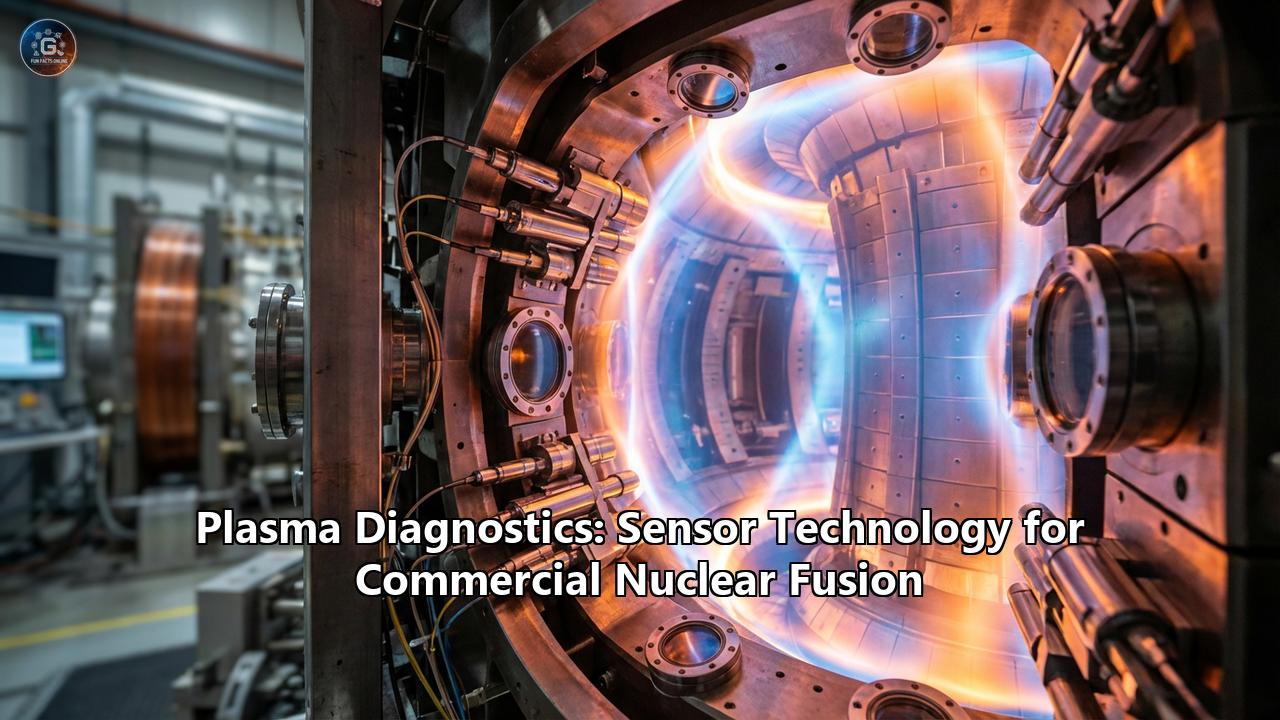
The quest to harness nuclear fusion—the very process that powers the stars—has long been hailed as the ultimate solution to humanity's energy needs. By fusing light atomic nuclei together to release immense amounts of clean, nearly limitless energy, we stand on the precipice of a post-carbon world. Yet, bringing the power of the sun down to Earth requires more than just brute force and colossal magnets; it requires a level of precision, control, and understanding that pushes the absolute boundaries of modern science. At the heart of this monumental engineering challenge lies a critical, yet often unsung, hero: plasma diagnostics.
As the fusion industry transitions from publicly funded experimental laboratories to commercial power plants designed to put electricity on the grid, the role of sensor technology is undergoing a radical evolution. We are no longer simply trying to observe plasma to understand its fundamental physics; we are now orchestrating its behavior in real-time to maintain a continuous, commercial-scale burn. The sensors that peer into the crucible of a fusion reactor are the eyes and nervous system of the machine. Without them, controlling a 100-million-degree cloud of ionized gas is impossible.
The Crucible of the Fourth State of MatterTo understand why plasma diagnostics are so complex, one must first understand the nature of the beast they are trying to measure. When a gas is subjected to extreme temperatures, its electrons are stripped from their atomic nuclei, creating a chaotic, electrically charged soup of ions and free electrons known as a plasma—the fourth state of matter. In a fusion reactor, such as a doughnut-shaped tokamak or a twisted stellarator, this plasma must be heated to temperatures exceeding 100 million degrees Celsius—several times hotter than the core of our sun.
Because no physical material on Earth can contain a substance this hot without instantly melting, fusion scientists use "magnetic confinement." Massive superconducting electromagnets create a complex web of magnetic fields that squeeze and suspend the plasma in a vacuum chamber, preventing it from touching the walls. However, plasma is notoriously unruly. It is highly unstable, prone to violent turbulence, and constantly shifting. If the magnetic confinement falters even for a fraction of a second, the plasma can undergo rapid disruptions, dumping its immense thermal energy into the reactor walls, potentially causing catastrophic damage to the facility.
This is where diagnostics enter the equation. Operators need to know the plasma's temperature, electron density, shape, flow velocity, and purity at every given microsecond. But how do you take the temperature of something that destroys everything it touches?
Measuring the Unmeasurable: The Arsenal of Diagnostic SensorsBecause physical probes cannot survive insertion into the core of a fusion plasma, scientists must rely almost entirely on indirect, non-invasive measurement techniques. This requires an array of sophisticated sensors that capture the electromagnetic radiation, particles, and magnetic fluctuations emitted by the reaction.
1. Optical and Laser DiagnosticsOptical systems are the workhorses of plasma measurement. By analyzing the light and radiation emitted by the plasma, or by shooting lasers through it and measuring how the light is altered, engineers can deduce the plasma's internal conditions.
- Thomson Scattering: This is a vital diagnostic technique used extensively in tokamaks. A high-intensity laser pulse is fired directly through the plasma. As the laser light strikes the free-floating electrons, it scatters. By measuring the spectrum and intensity of this scattered light, physicists can accurately calculate both the temperature and the density of the electrons at various points within the reactor.
- Laser Dispersion Interferometry: Companies like Tokamak Energy are developing advanced laser interferometers to measure fuel density. As a laser beam propagates through the plasma, the electrons interact with the light, causing a measurable shift in its phase. Because lasers are largely immune to the extreme heat and electromagnetic interference of the reactor environment, this technology represents a robust path forward for commercial continuous-operation plants.
- Optical Emission Spectroscopy (OES) and Bremsstrahlung Radiation: By studying the specific wavelengths of light emitted by the plasma (from X-rays down to UV and visible light), scientists can detect the presence of impurities. If plasma-facing materials like tungsten or beryllium begin to erode and leach into the fuel, OES will detect their spectral signatures, allowing operators to adjust the magnetic fields before the impurities cool the plasma and extinguish the fusion reaction.
The plasma itself is an electrically conductive fluid moving at high speeds, which means it generates its own magnetic fields that interact with the reactor's containment fields.
- Inductive Loops and Flux Sensors: Arrays of wire loops and magnetic probes are embedded in the walls of the vacuum vessel. These sensors detect rapid changes in magnetic flux, providing a real-time 3D map of the plasma's shape, position, and current profile. This data is instantly fed into the reactor's control system, which rapidly adjusts the external electromagnets to keep the plasma perfectly centered.
- Reflectometry and Electron Cyclotron Emission (ECE): Microwaves are beamed into the plasma, and the reflected signals are measured to determine the density profile of the plasma edge. Simultaneously, as electrons spiral around the magnetic field lines at relativistic speeds, they emit cyclotron radiation. Measuring this emission provides a continuous, high-resolution profile of the electron temperature across the plasma.
Historically, fusion machines like the Joint European Torus (JET), DIII-D, and the upcoming international ITER project were built as experimental science platforms. Their primary goal is discovery. Consequently, these machines are bristling with hundreds of highly complex, bespoke diagnostic systems. They are designed to collect terabytes of data during brief plasma "pulses," which physicists then spend months analyzing.
However, the dawn of the commercial fusion industry has fundamentally altered the requirements for sensor technology. Private fusion companies—such as Commonwealth Fusion Systems (CFS), Tokamak Energy, and Helion—are racing to deploy commercial power plants that can put electricity on the grid by the 2030s.
In a commercial power plant, the operational paradigm shifts from analysis to assurance. A commercial fusion reactor must run 24 hours a day, 7 days a week, 365 days a year. It cannot afford to shut down because a single delicate sensor became misaligned or degraded by radiation. As highlighted by a 2026 report sponsored by the U.S. Department of Energy (DOE), there is an urgent need to transition from fragile laboratory diagnostics to hardened, industrial-scale sensors capable of surviving intense neutron bombardment.
This transition brings three major engineering challenges:
First is Radiation Hardening. When deuterium and tritium fuse, they release highly energetic neutrons. In a commercial plant, these neutrons will bombard the diagnostic sensors, degrading optical lenses, destroying silicon-based electronics, and generating false signals. Tomorrow's sensors must be built from novel, neutron-resistant materials, or positioned behind heavy shielding using complex labyrinthine mirrors to relay optical data to safe zones.
Second is Simplification and Miniaturization. Today's experimental tokamaks have a vast array of diagnostics that take up valuable physical space. In a commercial reactor, wall space is prime real estate needed for "breeding blankets" (which capture neutrons to generate heat and breed more tritium fuel) and heat extraction systems. Therefore, commercial systems must utilize far fewer, much more compact sensors without sacrificing the fidelity of the data required to control the plasma.
Third is Real-Time Data Processing. In continuous-operation plants, operators will not have the luxury of analyzing data between plasma pulses. Diagnostics will need to function as "fast gauges"—providing immediate, highly reliable summary indicators of machine health, plasma compression, and fusion output directly to automated control systems.
Commonwealth Fusion Systems and the SPARC TokamakA prime example of this commercial trajectory is Commonwealth Fusion Systems (CFS), a spin-out from MIT. CFS is currently constructing SPARC in Devens, Massachusetts, a compact, high-field tokamak that utilizes revolutionary High-Temperature Superconducting (HTS) magnets. SPARC is slated to achieve a historic milestone in 2027: becoming the first commercially relevant machine to demonstrate "net energy gain" (Q>1), meaning it will generate more power from the fusion reaction than is required to sustain it.
Because SPARC operates at significantly higher magnetic fields and plasma densities than traditional tokamaks like ITER, its diagnostic requirements are uniquely demanding. The sensors monitoring SPARC must peer through the cryostat—a massive 1,000-tonne vacuum chamber keeping the HTS magnets near absolute zero—to measure a plasma burning at over 100 million degrees. The success of SPARC, and its commercial successor ARC, relies entirely on streamlining these diagnostics so that the reactor can be operated not by an army of PhD physicists, but by industrial plant operators relying on automated, highly reliable sensor readouts.
The AI Revolution: Supercharging Plasma DiagnosticsPerhaps the most exciting development in the realm of fusion diagnostics in the mid-2020s is the integration of Artificial Intelligence (AI) and Machine Learning (ML). AI is not merely an incremental upgrade; it is a fundamental game-changer that is solving the exact problems commercial fusion faces regarding sensor limitations, missing data, and real-time control.
Diag2Diag: Synthetic Sensors and ResilienceIn late 2025, an international team led by researchers from Princeton University and the Princeton Plasma Physics Laboratory (PPPL) unveiled an AI software tool named Diag2Diag. The premise of Diag2Diag addresses a critical vulnerability in commercial fusion: sensor failure. In an experimental lab, if a Thomson scattering sensor fails, the experiment is paused. In a power plant powering a city, pausing is not an option.
Diag2Diag acts as a digital safety net. It takes the data streams from a variety of operational sensors in the reactor and uses complex machine learning algorithms to generate a highly accurate, "synthetic" version of the data that would have been provided by a failing or limited sensor. For instance, while Thomson scattering accurately measures electron temperature, it sometimes doesn't take measurements fast enough to capture rapid plasma instabilities. Diag2Diag fills in these temporal gaps, providing high-resolution, continuous data that allows the control systems to maintain stability.
Furthermore, this AI enables commercial reactors to be physically built with fewer actual sensors, saving millions of dollars and freeing up critical wall space, because the AI can computationally infer the missing data with astonishing accuracy. PPPL scientists used Diag2Diag to monitor the plasma "pedestal"—the unstable outer edge of the plasma where powerful energy bursts known as Edge-Localized Modes (ELMs) originate. By providing enhanced data, the AI confirmed a leading theory on how to suppress ELMs using Resonant Magnetic Perturbations (RMPs), paving the way for safer, damage-free commercial operation.
Physics-Informed Machine Learning for Disruption PredictionSimultaneously, researchers at MIT's Plasma Science and Fusion Center developed a hybrid AI system to predict and prevent catastrophic plasma disruptions. Pure machine learning models are often "black boxes" that recognize statistical patterns but lack an understanding of the underlying physics. If the AI encounters a completely new plasma state, it might make a dangerous error.
To solve this, MIT researchers created "Neural Jacobian Fields," a hybrid system that strictly marries machine learning algorithms with the fundamental laws of plasma physics. This physics-informed AI processes real-time data from the diagnostic sensors and predicts dangerous plasma disruptions with over 85% accuracy, fast enough for the reactor's automated control systems to take preventive action—such as adjusting the magnetic confinement fields or safely shutting down the reaction before the reactor walls are damaged.
Filtering the Noise: AI in the StellaratorAt the Max Planck Institute for Plasma Physics (IPP) in Germany, researchers operating the Wendelstein 7-X stellarator are using AI to deal with the sheer volume and chaotic nature of diagnostic data. Stellarators, unlike the symmetric doughnut shape of tokamaks, resemble twisted, continuous ribbons. This complex 3D geometry means plasma turbulent modes are localized in bizarre patterns, requiring an immense network of infrared cameras, coherent imaging spectroscopy, and dispersion interferometers to monitor the heat exhaust and plasma boundary layers.
During a plasma discharge, these sensors generate several gigabytes of data every second. Compounding the issue, stray neutrons frequently strike the diagnostic imaging sensors, creating "outliers" or false data points that look like hot spots in the plasma. IPP researchers successfully trained machine learning algorithms to instantly identify and filter out these fundamental measurement errors, ensuring that the plasma control systems are reacting to the actual physics of the fusion fuel, rather than sensor noise.
The Road Ahead: Building the Nervous System of Clean EnergyThe commercial viability of nuclear fusion is no longer purely a question of physics; it is a question of engineering, automation, and sensor integration. The roadmap to the 2030s is clear. As outlined by the DOE, the industry must aggressively invest in diagnostics that can withstand the brutal environment of a commercial fusion core, capture data at ultra-quick speeds, and interface seamlessly with AI-driven control architectures.
We are witnessing a profound convergence of technologies. High-temperature superconductors are shrinking the size of the reactors. High-frequency lasers and advanced microwave reflectometry are penetrating the densest, hottest plasmas ever created by humanity. And physics-informed artificial intelligence is translating the chaotic symphony of diagnostic data into actionable, automated control.
When the first commercial fusion plants—like CFS's ARC—finally illuminate the grid, delivering safe, secure, and limitless carbon-free energy to millions of homes, the spotlight will naturally fall on the colossal magnets and the star-like temperatures within. But the true silent guardians of this modern miracle will be the plasma diagnostics. These incredibly advanced networks of optical lenses, magnetic loops, and intelligent algorithms will stand ever-vigilant, continuously taming the fire of the stars, transforming the wild, unpredictable chaos of the fourth state of matter into the steady, reliable hum of continuous electricity.
Reference:
- https://www.iaea.org/bulletin/magnetic-fusion-confinement-with-tokamaks-and-stellarators
- https://www.helionenergy.com/articles/how-we-know-whats-happening-inside-a-fusion-plasma-plasma-diagnostics/
- https://www.world-nuclear-news.org/articles/assembly-starts-of-sparc-as-iter-cryopumps-completed
- https://www.ipp.mpg.de/5372351/ki_in_der_Fusionsforschung_2023
- https://www.pppl.gov/news/2025/new-ai-enhances-view-inside-fusion-energy-systems
- https://www.pppl.gov/tokamak-experimental-science
- https://andor.oxinst.com/learning/view/article/optical-diagnostics-to-empower-fusion-reactor-development
- https://www.youtube.com/watch?v=BG4fIJfsSWI
- https://agenda.infn.it/event/20740/contributions/140250/contribution.pdf
- https://cfs.energy/technology/
- https://www.photonics.com/Articles/US-DOE-Report-Urges-Action-to-Support-Fusion/a72026
- https://acee.princeton.edu/acee-news/new-ai-enhances-the-view-inside-fusion-energy-systems/
- https://www.iter.org/node/20687/commonwealth-fusion-systems-joins-itpa
- https://cfs.energy/technology/sparc/
- http://www-new.psfc.mit.edu/sparc/faq
- https://indico.ipp.cas.cz/event/30/attachments/134/242/ECPD2025_MCF_Jalalvand.pdf
- https://www.ans.org/news/article-7492/princetonled-team-develops-ai-for-fusion-plasma-monitoring/
- https://www.jimsellmeijer.com/artificial-intelligence/2025/10/07/ai-models-finally-see-the-light-how-machine-learning-is-revolutionizing-fusion-plasma-control.html