
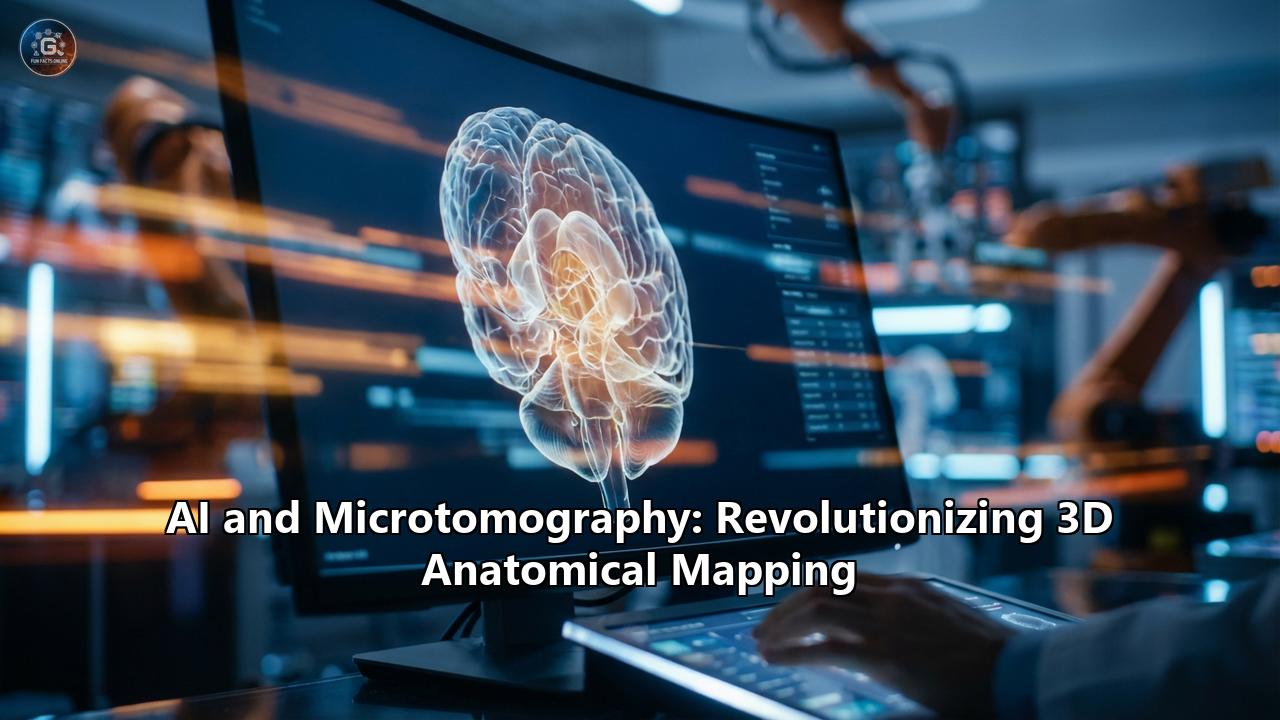
The quest to understand the hidden architecture of the natural world has driven scientific innovation for centuries. From the earliest magnifying glasses to the most sophisticated electron microscopes, humanity has relentlessly pursued the ability to see the unseen. Yet, for decades, biology and materials science faced a fundamental limitation: to truly understand the internal structure of a complex object, one had to physically slice it apart. This destructive process inherently altered the specimen, losing crucial spatial information and making the study of rare or delicate samples a high-stakes gamble.
Enter X-ray microtomography (micro-CT), a technology that allowed scientists to peer inside objects with micrometer, and even nanometer, resolution without ever lifting a scalpel. By capturing hundreds or thousands of 2D X-ray projections around a sample and mathematically reconstructing them into a 3D volume, micro-CT provided an unprecedented window into the intricate networks of blood vessels, the delicate microarchitecture of bone, the fossilized remains of ancient insects, and the porous structures of advanced materials.
However, as micro-CT hardware evolved, a new and daunting bottleneck emerged: data. A single high-resolution scan can generate terabytes of imaging data. Identifying, isolating, and measuring specific anatomical structures within this vast digital ocean—a process known as segmentation—traditionally required agonizing hundreds of hours of manual labor by highly trained experts.
Today, we stand on the precipice of a new era. The convergence of Artificial Intelligence (AI) and microtomography is not merely accelerating existing workflows; it is fundamentally revolutionizing 3D anatomical mapping. Deep learning algorithms are now reconstructing higher-quality images from less data, automating the tedious process of segmentation, and extracting biological insights at a scale previously thought impossible. This comprehensive exploration delves into how AI is transforming micro-CT, the underlying neural architectures driving this change, its profound applications across diverse fields, and the future of 3D anatomical mapping.
The Genesis and Evolution of Microtomography
To appreciate the magnitude of the AI revolution, one must first understand the mechanics of micro-computed tomography. The underlying principle is identical to the CT scanners found in hospitals: an X-ray source emits a beam that passes through an object, and a detector on the opposite side records the attenuation (the reduction in intensity) of the X-rays. Different materials absorb X-rays at different rates—bone absorbs more than muscle, metal more than plastic.
By rotating the sample (or the source and detector) 360 degrees, the system captures thousands of 2D projections. A mathematical algorithm, traditionally Filtered Back Projection (FBP), is then used to reconstruct these 2D images into a stack of cross-sectional slices. When stacked together, these slices form a complete 3D volumetric map composed of 3D pixels, known as voxels.
While clinical CT scanners prioritize speed and low radiation doses to image living human beings at a resolution of roughly one millimeter, micro-CT prioritizes extreme magnification. These machines can achieve resolutions in the sub-micrometer range, revealing details a thousand times smaller than what a hospital scanner can detect.
For years, the evolution of micro-CT was purely hardware-driven. Brighter X-ray sources, such as synchrotron particle accelerators, and more sensitive detectors pushed the boundaries of resolution. Biologists developed novel heavy-metal contrast agents (like iodine or phosphotungstic acid) to make soft tissues—which normally let X-rays pass right through—visible.
Yet, as the resolution increased, so did the challenges:
- The Dose-Resolution Dilemma: Higher resolution requires longer exposure times. In biological samples, prolonged X-ray exposure can cause radiation damage, altering the very structures scientists wish to study.
- Noise and Artifacts: Reconstructing ultra-high-resolution images often introduces noise and artifacts, such as streaking or ring artifacts, which obscure delicate anatomical features.
- The Segmentation Bottleneck: Once a 3D volume is created, a computer does not inherently "know" what it is looking at. It sees only a matrix of grayscale values. Distinguishing a specific nerve bundle from the surrounding tissue required a human expert to manually "paint" the structure slice by slice. For a dataset containing thousands of slices, this could take weeks or months.
It became evident that hardware improvements alone could not overcome these hurdles. The solution required a paradigm shift in how data was processed.
The AI Awakening: Reconstructing Reality
The first major intersection of AI and micro-CT occurs before the 3D volume is even fully formed: the reconstruction phase. Traditional mathematical reconstruction algorithms require a massive number of densely packed 2D projections to create a clear 3D image. If you try to speed up the scan or reduce the radiation dose by taking fewer projections (a "sparse-view" scan), traditional algorithms fail, producing blurry images plagued by streaking artifacts.
This is where generative AI models are rewriting the rules of physics and computation.
Sparse-View Reconstruction and Generative AIRecent advancements in deep learning have introduced supervised and self-supervised learning techniques that can reconstruct high-fidelity 3D volumes from remarkably sparse data. Instead of relying purely on mathematical geometry, these AI models are trained on thousands of paired examples of high-dose, dense-view scans and their corresponding low-dose, sparse-view counterparts.
A prime example is the deployment of diffusion models—the same underlying architecture that powers popular AI image generators. Researchers have developed frameworks like DiffusionBlend, which utilizes a 3D-patch diffusion prior. Rather than trying to reconstruct the entire massive 3D volume at once (which would require impossible amounts of computer memory), the AI learns the spatial correlations among a group of nearby 2D image slices. It evaluates local "patches" of data, understands the anatomical context, and mathematically blends the scores of these multi-slice patches to model the entire 3D CT image volume.
The results are staggering. AI can now reconstruct a high-quality 3D CT scan using as few as four to eight X-ray projections, compared to the 1,000 to 2,000 normally required. This breakthrough drastically reduces the radiation exposure for vulnerable samples and accelerates the scanning process exponentially.
Denoising and Artifact ReductionEven with dense-view scans, micro-CT images often suffer from thermal noise and phase-contrast artifacts. Convolutional Neural Networks (CNNs) have proven highly adept at image denoising. By training on datasets where artificial noise has been injected into pristine images, the neural network learns the specific visual signature of noise and artifacts. During inference, it actively subtracts this noise while preserving the sharp edges of microscopic anatomical structures, enhancing image clarity without the need for longer scanning times.
Conquering the Segmentation Bottleneck
If AI-driven reconstruction is the foundation of the revolution, AI-driven segmentation is its crowning achievement. Image segmentation—assigning a specific label (e.g., "brain," "muscle," "exoskeleton") to every single voxel in a 3D space—has long been the bane of comparative morphology and biomedical engineering.
In the past, manual segmentation was subjective and prone to human error. Two different experts might segment the exact same anatomical structure slightly differently, making large-scale statistical comparisons difficult.
The U-Net Architecture and 3D CNNsThe modern solution relies heavily on a specialized neural network architecture known as U-Net, originally designed for biomedical image segmentation. The U-Net architecture is characterized by its "U" shape, consisting of a contracting path (encoder) that captures context and spatial features, and a symmetric expanding path (decoder) that enables precise localization.
When applied to 3D micro-CT data, variants like 3D U-Net or V-Net analyze volumetric patches of data, understanding not just the 2D cross-section but the 3D depth of the structure. For instance, researchers developing automated segmentation for insect anatomy utilized 3D CNNs combined with pixel-island detection to isolate complex nervous systems from surrounding tissue.
Few-Shot Learning and Transfer LearningHistorically, the biggest caveat to deep learning was the insatiable appetite for training data. Training a model to recognize an ant brain required hundreds of manually segmented ant brains—which defeated the purpose of automation.
However, AI has become vastly more efficient. Through transfer learning, a model pre-trained on a massive dataset of general images (or human medical CTs) can be fine-tuned for a specific micro-CT task using only a handful of examples.
Recent breakthroughs in entomological mapping demonstrated that highly accurate deep learning models can be trained using only 1 to 3 micro-CT images of the Drosophila melanogaster (fruit fly) brain. By leveraging pre-trained neural networks and advanced data augmentation techniques (where the AI rotates, flips, and slightly distorts the training data to create virtual examples), the models achieved over 98% accuracy in full brain segmentation. What used to require weeks of manual tracing can now be automated in a matter of minutes.
Cross-Domain GeneralizationOne of the most remarkable features of modern AI segmentation models is their adaptability. Biological samples are messy. Different researchers use different chemical stains, scan at different resolutions, and use different brands of micro-CT scanners.
Advanced AI frameworks are now demonstrating robust cross-domain generalization. A single deep learning model trained on a small, diverse dataset can accurately predict and segment anatomical regions regardless of whether the sample was scanned on a Zeiss or a Bruker scanner, or whether it was stained with iodine or osmium tetroxide. Furthermore, models trained on the neural anatomy of one species (like ants) have shown the generalized ability to segment the neural systems of distantly related, morphologically divergent insects (like fruit flies), setting the stage for truly universal anatomical AI tools.
Vision Transformers in 3D SpaceMoving beyond traditional CNNs, researchers are now deploying Vision Transformers (ViTs) for 3D image analysis. Models like UCLA's SLIViT (SLice Integration by Vision Transformer) have fundamentally altered the landscape. Volumetric images are complex and require the AI to understand long-range dependencies—how a structure in slice 1 connects to a structure in slice 50. SLIViT overcomes the training dataset bottleneck by utilizing prior "medical knowledge" from accessible 2D domains and effectively translating it to 3D space, achieving clinical expert-level accuracy across multiple volumetric modalities in a fraction of the time.
Expanding Horizons: Applications of AI-Enhanced Micro-CT
The synergy of AI and microtomography has catalyzed a Renaissance across numerous scientific disciplines. By removing the data processing bottleneck, scientists can now adopt a "Big Data" approach to physical anatomy.
1. Neuroscience and Connectomics
The brain is arguably the most complex structure in the known universe. Understanding its wiring—the connectome—is essential for understanding behavior, cognition, and neurodegenerative diseases.
Using AI-enhanced micro-CT, researchers are generating standard 3D maps of whole-brain neural networks. In the study of insect neuroscience, AI models automatically trace individual neurons and distinct brain regions (like the optic lobes or the mushroom bodies) from massive 3D optical and X-ray microscopy datasets. By comparing hundreds of automatically segmented brains, scientists can rapidly assess natural variability in brain size and symmetry, or identify novel morphological phenotypes in mutant species.
This high-throughput capability allows for the mapping of sensory systems from the receptor structures on an insect's antenna, through the neuronal pathways, directly into the central brain—all reconstructed in a few days rather than decades.
2. Evolutionary Biology and Taxonomy
For centuries, taxonomy relied on the painstaking external examination of specimens. Internal morphology was often ignored because it required destroying rare museum samples.
AI and micro-CT have birthed the era of "cybertypes"—highly detailed, segmented 3D digital models of type specimens. In one landmark study, researchers produced complete micro-CT scans of 76 different species of ants. Using custom U-Net architectures, the AI automatically segmented the brains and internal anatomies across the entire dataset.
This allows evolutionary biologists to conduct large-scale, 3D comparative morphology. They can digitally extract the brain, measure the volume of different glandular systems, analyze the mechanics of the exoskeleton, and run statistical analyses on morphological and ecological data to understand how specific anatomical traits evolved in response to environmental pressures.
3. Vascular Flow and Advanced Angiography
The combination of 3D anatomical mapping and AI is also revolutionizing our understanding of fluid dynamics within the body. Traditional angiography provides 2D representations of 3D blood flow, which can obscure complex hemodynamics critical for treating conditions like brain aneurysms.
Researchers have developed models like the 3D Angiographic Reconstruction Neural Network (ARNN). By taking the 3D anatomical mask of the vasculature (obtained via CT) and combining it with sparse, orthogonal 2D angiographic projections, the 3D CNN reconstructs the actual flow of contrast media inside the blood vessels in real-time, frame-by-frame.
This allows clinicians and biomedical engineers to visualize complex hemodynamics in 3D, observing exactly how blood swirls and eddies within an aneurysm. Such insights are invaluable for designing patient-specific endovascular treatments and stents.
4. Botany, Biomimetics, and Material Sciences
The natural world extends far beyond animal life, and so does the application of AI-driven micro-CT. In botany and forestry, researchers use X-ray micro-computed tomography for the high-resolution, non-destructive visualization of internal plant structures, such as the major anatomical structural features in softwood and the complex phloem and xylem networks.
AI morphological operations and watershed segmentation algorithms isolate individual cells, resin canals, and vascular bundles, assigning them distinct colors and creating quantified 3D morphological maps. Overcoming the limitations of traditional 2D microscopy, this spatial data provides a deeper understanding of the relationship between a wood's anatomical characteristics and its physical and mechanical properties.
These insights are directly translating into the field of biomimetics. By understanding the optimized, hierarchical 3D structures that nature has evolved—such as the lightweight yet incredibly strong internal lattice of a bird's bone or the shock-absorbing properties of a pomelo peel—engineers can use AI to design advanced biomimetic materials for aerospace, architecture, and manufacturing.
5. Clinical Diagnostics and Precision Medicine
While micro-CT is primarily a research tool, the AI architectures developed for it are bleeding rapidly into clinical, macroscopic CT. The goal is to bring high-resolution 3D imaging to the patient's bedside.
Historically, processing complex 3D medical AI models required massive computational power—expensive GPU farms and complex cloud setups. However, recent breakthroughs in lean AI design have dramatically reduced these requirements. Innovations like EffiDec3D and EfficientMedNeXt utilize multi-scale receptive fields and optimized architectures to reduce computing needs by up to 95% without sacrificing diagnostic accuracy.
This means that powerful AI image segmentation and analysis—for tumor detection, organ segmentation, and surgical planning—can now be performed locally, in real-time, on standard computer hardware. This lean, fast, and resource-aware AI is democratizing access to high-performance diagnostics, making state-of-the-art 3D anatomical mapping accessible to rural hospitals and clinics worldwide.
The Synergy of Hardware and Software
The true revolution lies not in AI replacing hardware, but in how the two are becoming inextricably linked. Modern micro-CT scanners are increasingly shipping with deep learning modules integrated directly into their control software.
Platforms like Dragonfly, Amira/Avizo, and open-source tools like 3D Slicer and Napari (with plugins like nnInteractive) provide intuitive graphical interfaces that abstract the complex code. A biologist with zero programming experience can now use a "smart brush" to paint a few slices of a micro-CT scan, train a local neural network on their standard workstation, and watch as the AI autonomously segments the rest of the 10-gigabyte dataset.
This synergy is shifting the role of the scientist from a manual laborer to an editor and curator. The AI does the heavy lifting, proposing a 3D anatomical map, which the human expert then reviews, refines, and analyzes.
Challenges, Ethics, and the Road Ahead
Despite the breathtaking pace of innovation, the integration of AI into 3D anatomical mapping is not without its challenges.
The Threat of AI HallucinationsAs generative AI models become heavily involved in image reconstruction, a significant risk arises: "hallucinations." If an AI is trained to reconstruct high-resolution images from sparse data, there is a possibility that it might insert plausible-looking anatomical structures that do not actually exist in the physical sample. In biological research and clinical diagnostics, a phantom blood vessel or a fabricated neural connection could completely derail a study or a diagnosis. Ensuring the mathematical fidelity of generative models and establishing rigorous validation protocols remains a top priority for developers.
Standardization and Ground TruthSupervised deep learning models are only as good as the data they are trained on. Currently, the "ground truth" datasets used to train these models rely on manual segmentation by human experts. Because manual segmentation is subjective, inherent biases are baked into the AI models. The scientific community is actively working towards standardizing 3D imaging protocols and establishing global, open-source repositories of verified, high-quality micro-CT datasets to serve as objective benchmarks.
Data Storage and SharingAs AI enables the rapid scanning and segmentation of thousands of specimens, the sheer volume of data is becoming a logistical nightmare. A comprehensive database of 3D segmented cybertypes for thousands of species will require petabytes of storage. Cloud computing and advanced data compression algorithms will be essential to host these datasets, ensuring they remain open-access and easily navigable for researchers worldwide.
A New Dimension of Understanding
The fusion of Artificial Intelligence and X-ray microtomography marks a fundamental inflection point in the biological and material sciences. We have transcended the era of static, 2D observation and entered an age of dynamic, automated 3D exploration.
By drastically reducing radiation doses through generative reconstruction, automating the agonizingly slow process of image segmentation with 3D U-Nets and Vision Transformers, and reducing computational overhead to enable bedside analysis, AI has unlocked the true potential of micro-CT.
We are no longer just looking at the natural world; we are mapping it, voxel by voxel, at a microscopic scale. From decoding the neural circuitry of insects to mapping the fluid dynamics of aneurysms, and from understanding the strength of ancient timber to designing the biomimetic materials of tomorrow, AI and microtomography are working in tandem to make the invisible visible. The digital map of life is being drawn faster, clearer, and more accurately than ever before, promising a future where the deepest structural mysteries of our world are finally brought to light.
Reference:
- https://pmc.ncbi.nlm.nih.gov/articles/PMC10926430/
- https://pubmed.ncbi.nlm.nih.gov/38469492/
- https://www.researchgate.net/publication/367341860_Micro-CT_and_deep_learning_Modern_techniques_and_applications_in_insect_morphology_and_neuroscience
- https://oist.repo.nii.ac.jp/record/2550/files/Toulkeridou_FullText.pdf
- https://www.biorxiv.org/content/10.1101/2024.12.30.630782.full
- https://www.foxvalleyimaging.com/how-is-artificial-intelligence-ushering-in-a-new-era-of-computed-tomography-scans
- https://ece.engin.umich.edu/stories/new-generative-ai-model-can-reconstruct-a-high-quality-sparse-view-3d-ct-scan-with-a-much-lower-x-ray-dose
- https://www.bohrium.com/en/sciencepedia/agent-tools/aritra-2506_Reconstruction-of-3D-CT-Volume-from-2D-X-ray-Images-using-Deep-Learning
- https://www.emjreviews.com/radiology/news/ai-revolutionising-ct-image-quality-control/
- https://www.researchgate.net/publication/374154789_Automated_segmentation_of_insect_anatomy_from_micro-CT_images_using_deep_learning
- https://appliedradiology.com/articles/ucla-ai-model-reaches-clinical-expert-level-accuracy-in-3d-images
- https://www.spiedigitallibrary.org/conference-proceedings-of-spie/13410/1341013/Reconstruction-of-3D-vascular-flow-patterns-from-sparse-angiographic-data/10.1117/12.3047074.full
- https://www.mdpi.com/1999-4907/16/5/710
- https://www.ece.utexas.edu/news/new-ai-breakthroughs-bring-3d-imaging-patients-bedside