
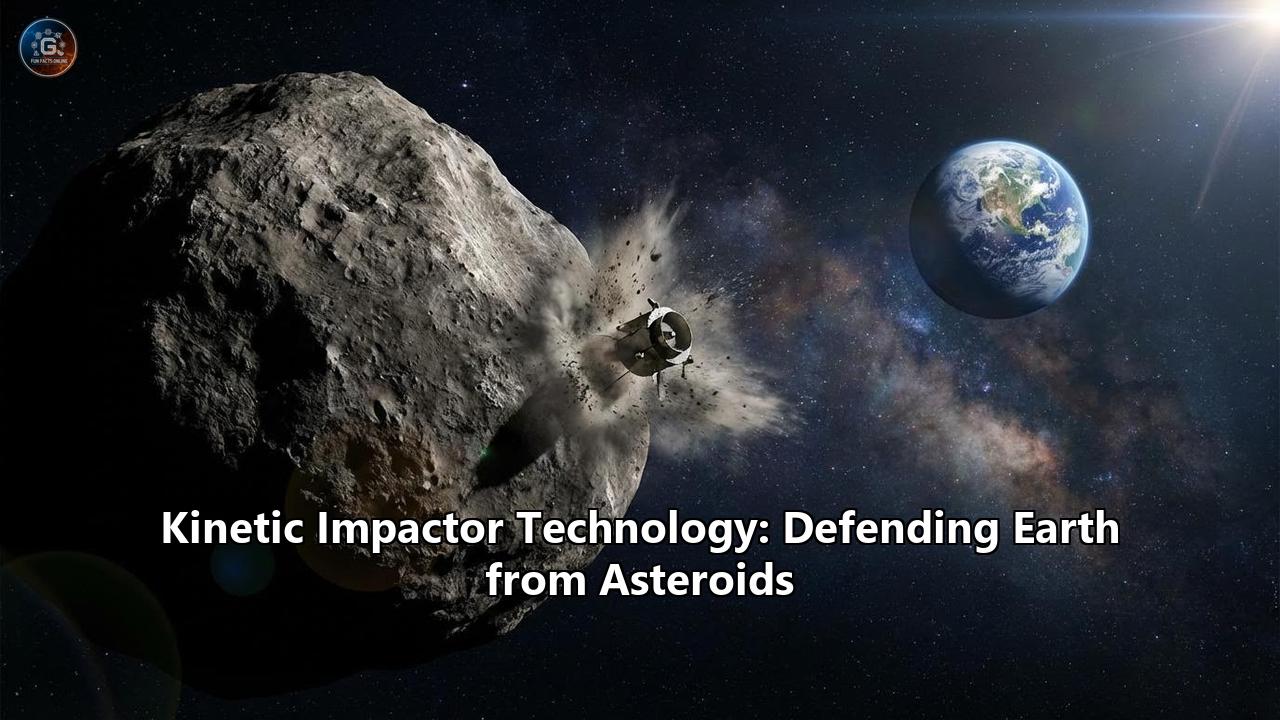
For billions of years, life on Earth has been an unwitting participant in a cosmic game of roulette. Our solar system is a shooting gallery of leftover primordial debris, with millions of rocks hurtling through the dark voids between planets. Most are harmless, burning up in our atmosphere as beautiful, transient meteors. But history and geology remind us that the sky can sometimes fall. The scarred landscape of the Moon, the 1908 Tunguska event that flattened 2,000 square kilometers of Siberian forest, the 2013 Chelyabinsk meteor that shattered windows and injured over a thousand people, and the cataclysmic Chicxulub impact that ended the reign of the dinosaurs all serve as violent reminders of our vulnerability.
For the entirety of human history, our only defense against an incoming asteroid has been a mix of atmospheric friction and blind luck. Today, that paradigm has fundamentally shifted. We have entered the era of active planetary defense, spearheaded by a concept as elegantly simple as it is scientifically complex: Kinetic Impactor Technology.
By purposefully ramming spacecraft into potentially hazardous near-Earth objects (NEOs), humanity is learning how to rewrite the orbital mechanics of the solar system. We are no longer sitting ducks.
The Physics of the Cosmic Nudge
At its core, a kinetic impactor relies on the fundamental physics of momentum transfer, governed by Sir Isaac Newton’s laws of motion. If a threat is detected with enough lead time—ideally years or decades—we do not need to blow the asteroid into a million pieces like a Hollywood blockbuster. We simply need to change its velocity by a fraction of a millimeter per second. Over the course of millions of kilometers and several years, that microscopic shift in velocity compounds, altering the asteroid's trajectory just enough so that when it crosses Earth's orbit, the Earth is no longer there.
In a perfectly inelastic collision—where two objects stick together—the resulting change in velocity is a straightforward calculation of mass and speed. However, hitting an asteroid at hypervelocity is far from simple. When a spacecraft strikes an asteroid at thousands of kilometers per hour, it does not merely bump the rock; it detonates upon impact due to the sheer kinetic energy, excavating a massive crater.
This excavation process is the secret weapon of the kinetic impactor, introducing a crucial variable known to astrophysicists as the Beta factor ($\beta$). When the spacecraft impacts the asteroid, it blasts tons of rock, dust, and debris out into space. According to Newton's third law of motion, every action has an equal and opposite reaction. As the ejecta is thrown violently backward along the spacecraft's path, it acts exactly like the exhaust from a rocket engine, imparting an additional physical push against the asteroid.
If the impact produces no ejecta, the Beta factor is exactly 1, meaning the asteroid only receives the momentum of the spacecraft. But if the impact blasts a massive plume of debris into the void, the Beta factor multiplies the effectiveness of the strike. Understanding, measuring, and predicting this Beta factor is the absolute cornerstone of making kinetic impactors a reliable planetary defense system.
First Blood: The Historic Success of DART
The theory of kinetic impactors remained strictly on chalkboards and inside computer simulations until September 2022, when NASA's Double Asteroid Redirection Test (DART) mission turned science fiction into science fact.
To test the technology safely, scientists needed a target that could not accidentally be nudged into an Earth-crossing orbit. They found the perfect candidate in the Didymos binary asteroid system. Didymos is a roughly 780-meter-wide asteroid orbited by a smaller, 160-meter-wide moonlet named Dimorphos. Because Dimorphos orbits Didymos rather than the Sun, altering its mutual orbital period poses zero threat to Earth, and the changes could be observed relatively quickly by ground-based telescopes.
On September 26, 2022, the 500-kilogram DART spacecraft, traveling at roughly 6.6 kilometers per second (over 22,000 km/h), intercepted Dimorphos. Guided by an autonomous optical navigation system during its final moments, DART squarely struck the moonlet. Days prior to the collision, DART had deployed a tiny Italian-built CubeSat named LICIACube, which safely flew past the impact site to capture breathtaking images of the resulting debris plume.
The results of the mission shattered all expectations. Prior to the impact, Dimorphos orbited Didymos once every 11.9 hours. Mission planners hoped the kinetic strike would shorten this period by roughly 7 to 10 minutes. Instead, the impact shortened the orbit by an astonishing 33 minutes.
The monumental success was largely attributed to the Beta factor. The hypervelocity collision excavated a crater between 50 and 100 meters wide, fundamentally reshaping the spherical moonlet into a more elongated form. More than five million kilograms of rock and dust were violently ejected into space. This immense ejecta plume acted as a massive thruster, resulting in a momentum enhancement Beta factor of approximately 3.6. In other words, the shower of debris provided more than three times the deflection force of the spacecraft itself. Humanity had successfully moved a celestial body.
Hera: The Deep Space Detective
While DART proved that an asteroid could be deflected, the collision left a chaotic crime scene that ground-based telescopes could only partially decipher. To turn this one-off experiment into a repeatable, reliable planetary defense strategy, scientists need to know exactly what they hit. Was Dimorphos a solid, monolithic chunk of rock, or a loosely bound "rubble pile" held together by weak gravity? What is the moonlet's exact mass, and what does the newly formed crater look like?
To answer these questions, the European Space Agency (ESA) developed the Hera mission. Launched on October 7, 2024, atop a SpaceX Falcon 9 rocket, Hera is an interplanetary detective. Following a deep-space maneuver and a Mars flyby in March 2025—which returned spectacular images of the Martian moon Deimos—Hera is currently coasting toward its target. The spacecraft is scheduled to rendezvous with the Didymos-Dimorphos system in late 2026.
Roughly the size of a small car, Hera will spend at least six months orbiting the binary system. Because the gravity of these small bodies is so incredibly weak, Hera will not orbit in the traditional sense; instead, it will perform a series of delicate hyperbolic arc flybys at relative speeds as low as 12 centimeters per second.
Hera does not travel alone. The mission carries two highly specialized CubeSats: Milani and Juventas. Milani is tasked with performing a spectral analysis of the asteroid's surface dust, while Juventas will make history by using low-frequency radar to perform the very first internal tomography of an asteroid. By peering deep inside the rock, Juventas will reveal its internal structure, answering critical questions about how rubble-pile asteroids absorb and dissipate kinetic impacts. Together, Hera and its CubeSats will provide the hard data needed to scale up kinetic impactors for larger, more threatening asteroids.
The Eastern Vanguard: China’s Dual-Spacecraft Mission
Planetary defense is an inherently global imperative, and the kinetic impactor framework is rapidly expanding beyond Western space agencies. China is currently preparing its own highly ambitious planetary defense test, targeting a launch by 2026 or 2027.
While earlier proposals suggested targeting asteroids like 2020 PN1 or 2019 VL5, recent mission outlines indicate that the China National Space Administration (CNSA) has set its sights on 2015 XF261, a near-Earth asteroid measuring roughly 30 meters in diameter.
China's approach introduces a fascinating evolution of the DART-Hera methodology. Instead of launching an impactor and an observer years apart, China plans to execute both roles in a single, coordinated mission. Riding aboard a Long March 3B rocket, the mission will deploy two separate spacecraft: an Observer and an Impactor.
Upon arriving at the target, the Observer spacecraft will spend three to six months carefully mapping 2015 XF261, studying its size, shape, composition, and baseline orbit. Once this comprehensive survey is complete, the Impactor spacecraft will execute a high-speed kinetic strike against the asteroid. The Observer will monitor the collision in real time and spend the following 6 to 12 months evaluating the aftermath.
Chinese mission planners aim to produce an orbital deflection of about 3 to 5 centimeters. While seemingly minuscule, this deliberate nudge on a solitary, Sun-orbiting asteroid will provide invaluable data on how smaller bodies react to kinetic strikes. If successful, China will cement its position as the second nation capable of altering the trajectory of a celestial body, significantly bolstering humanity's combined planetary defense arsenal.
The Arsenal: Comparing Deflection Methodologies
While kinetic impactors are currently the undisputed champions of planetary defense, they are not the only tools being researched. Assessing different methodologies highlights exactly why the kinetic impactor remains the preferred choice.
1. Nuclear Deflection (The Stand-Off Blast)For late-detected asteroids or bodies far too massive for a kinetic impactor, a nuclear device is the ultimate fallback. However, the goal is not to shatter the asteroid into pieces—which could turn a single "cannonball" into a lethal "shotgun blast" of radioactive fragments raining down on Earth. Instead, a nuclear device would be detonated a few hundred meters above the asteroid's surface. The intense burst of X-rays would instantly vaporize the top layer of the asteroid. This flash-vaporized rock would expand outward, acting as a massive rocket thruster and pushing the asteroid off its course. While highly effective on paper, nuclear options carry massive geopolitical, legal, and safety risks, making them strictly a last resort.
2. The Gravity TractorIf we have several decades of warning, a gravity tractor offers a gentle, precise solution. A massive spacecraft would park itself near the asteroid and hover. It wouldn't physically touch the rock; instead, the mutual gravitational attraction between the heavy spacecraft and the asteroid would act like an invisible tow rope. By firing its thrusters continuously, the spacecraft would slowly drag the asteroid off its Earth-crossing path. It is safe and prevents the asteroid from breaking apart, but it requires a tremendous amount of time and an incredibly reliable propulsion system.
3. Laser Ablation / Ion Beam ShepherdsFuture technologies propose using concentrated solar lasers or high-powered ion beams to constantly blast the surface of an asteroid from a safe distance, vaporizing rock to create a slow, steady thrust over years. These remain largely theoretical and require technological leaps in deep-space power generation.
The Kinetic Impactor hits the perfect "Goldilocks" zone. It does not require nuclear materials. It works much faster than a gravity tractor. It utilizes mature guidance, navigation, and propulsion technologies that exist today. As DART proved, it is a ready-to-use shield.
NEO Surveyor: Earth’s Early Warning System
There is, however, one glaring prerequisite for a kinetic impactor to work: we must see the threat coming. A kinetic impactor requires years, preferably a decade or more, of advance notice. If an asteroid is discovered just months before impact, a kinetic strike will not provide enough time for the tiny orbital shift to move the rock away from Earth.
Currently, Earth has a blind spot. In 2005, the United States Congress mandated NASA to discover and track 90% of all near-Earth objects larger than 140 meters in diameter—the threshold at which an impact could decimate an entire region or trigger massive tsunamis. The original deadline was 2020, but due to funding and technological limitations, we fell far short. As of recent estimates, less than half of these objects have been found.
The primary challenge is that ground-based telescopes can only search the night sky. They are virtually blind to asteroids approaching from the direction of the Sun. This exact blind spot allowed the 2013 Chelyabinsk meteor to strike without a single moment of warning.
To illuminate the darkness, NASA is building the ultimate cosmic sentry: the Near-Earth Object Surveyor (NEO Surveyor). Scheduled to launch no later than September 2027 aboard a SpaceX Falcon 9 rocket, this cutting-edge space telescope is designed specifically for planetary defense.
NEO Surveyor will not orbit Earth. Instead, it will be positioned at the Sun-Earth L1 Lagrange point, approximately 1.5 million kilometers closer to the Sun. From this gravitational sweet spot, the telescope will face outward, scanning the space ahead of and behind Earth's orbital path.
Equipped with a 50-centimeter mirror and dual mid-infrared sensors, NEO Surveyor will hunt for the heat signatures of asteroids. Dark asteroids, which reflect very little visible light and are nearly invisible to standard telescopes, will glow brightly in the infrared spectrum as they are warmed by the Sun. Operating far above Earth's atmosphere, NEO Surveyor is expected to discover tens of thousands of new asteroids and finally fulfill the 140-meter Congressional mandate within ten years of its operations.
The Shield is Forged
We are living in a profound transitionary period for our species. For the first time in the 4.5-billion-year history of our planet, life has developed the capacity to protect itself from cosmic extinction.
The kinetic impactor method is no longer a mathematical hypothesis. Through the spectacular success of the DART mission, humanity proved it can physically move the heavens. As the ESA's Hera mission arrives at Didymos in 2026 to meticulously document the impact crater, and as China prepares to launch its own dual-spacecraft planetary defense test around the same time, the global community is rapidly refining this critical technology. And with the launch of the NEO Surveyor telescope on the horizon, we will soon have the early warning radar required to spot threats hiding in the cosmic glare.
Earth remains a fragile blue dot in a dangerous and chaotic universe. But as our telescopes sweep the darkness and our spacecraft stand ready to deliver the ultimate cosmic nudge, we are ensuring that humanity's future will not be dictated by a random falling rock.
Reference:
- https://www.academicjobs.com/research-publication-news/nasa-dart-mission-shifted-dimorphos-path-sun-new-analysis-8437
- https://astrobites.org/2025/01/14/astrobites-at-aas-245-day-1/
- https://www.ieec.cat/en/the-collision-of-the-dart-probe-with-the-asteroid-dimorphos-resulted-in-the-ejection-of-more-than-five-million-kilos-of-material/
- https://www.space.com/china-asteroid-deflection-test-planetary-defense
- https://www.ohb-czech.cz/our-projects/hera
- https://www.esa.int/Space_Safety/Hera/From_2022_to_2026_a_question_of_time
- https://starlust.org/china-plans-advanced-mission-to-hit-an-asteroid-with-spacecraft-and-alter-its-course/
- https://www.dlr.de/en/wr/research-transfer/projects/planetary-research/hera
- https://www.heramission.space/
- https://www.esa.int/Enabling_Support/Operations/Hera_operations
- https://www.planetary.org/articles/china-targets-its-first-planetary-defense-test-mission
- https://universemagazine.com/en/chinese-asteroid-deflection-mission-starts-in-2026/
- https://www.scmp.com/news/china/science/article/3324609/china-plotting-mission-defend-earth-asteroids-top-space-researcher-says
- https://nss.org/neo-surveyor/
- https://www.spiedigitallibrary.org/conference-proceedings-of-spie/12191/121911V/Status-update-on-the-NEO-surveyor-detector-development/10.1117/12.2629660.pdf
- https://www.planetary.org/space-missions/neosm
- https://www.jpl.nasa.gov/missions/near-earth-object-surveyor/
- https://en.wikipedia.org/wiki/NEO_Surveyor