
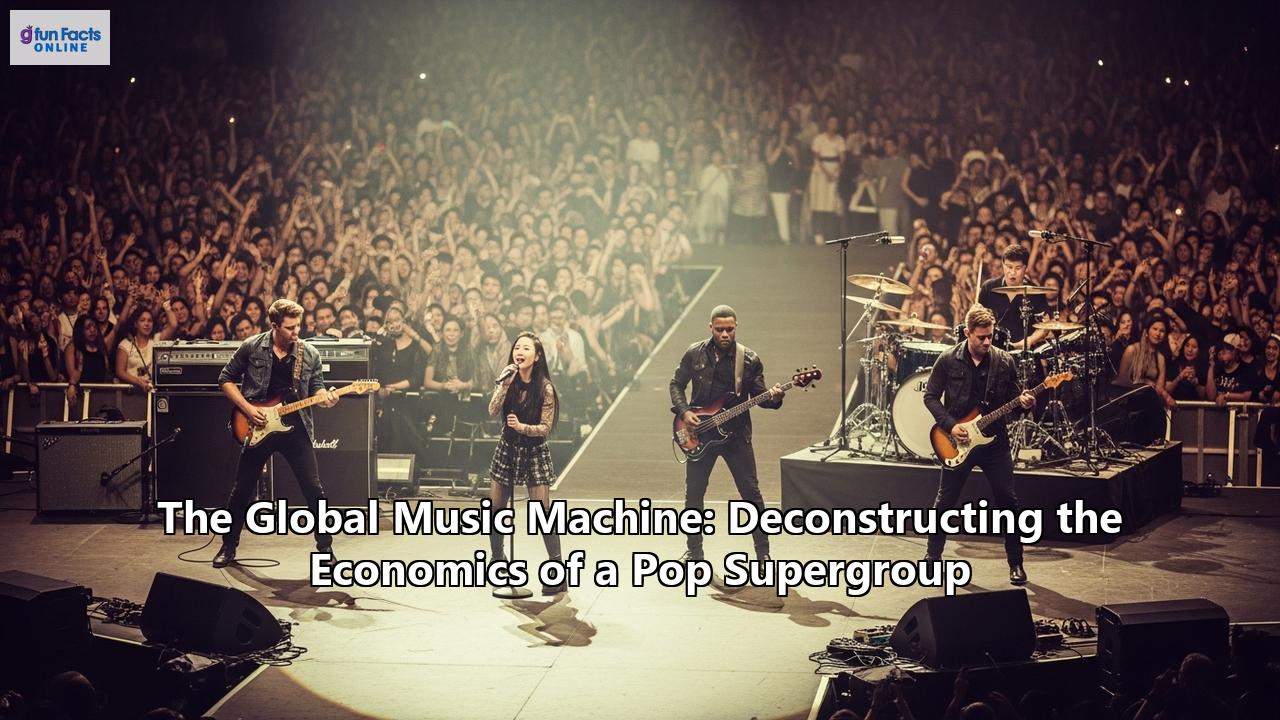
The Global Music Machine: Deconstructing the Economics of a Pop Supergroup
In the ever-evolving landscape of the global music industry, the pop supergroup stands as a colossal monument to commercial prowess and cultural influence. These meticulously crafted ensembles are more than just collections of talented performers; they are intricate economic engines, fine-tuned to generate staggering revenues and command worldwide attention. From the fever-pitch energy of sold-out stadium tours to the silent, algorithmic churn of streaming platforms, the financial lifeblood of a supergroup pulses through a complex network of revenue streams, strategic partnerships, and massive upfront investments. This is a world where a catchy chorus can translate into a multi-million dollar enterprise and a dedicated fanbase can wield the economic power of a small nation.
At the heart of this phenomenon lies a concept articulated by economist Sherwin Rosen in 1981: "The Economics of Superstars." Rosen's theory posits that in certain markets, including the arts and sports, small differences in talent can lead to monumental disparities in income. The music industry is a quintessential example of this "winner-take-all" market. There is no perfect substitute for a superstar; as Rosen argued, "hearing a succession of mediocre singers does not add up to a single outstanding performance." In the age of global media, where a single performance can be replicated and distributed to billions at a negligible marginal cost, the most talented or, perhaps more accurately, the most marketable artists capture a disproportionately large share of the revenue. This creates a highly skewed distribution of earnings, where the top 1% of performers can take home the lion's share of income, a reality that has only been amplified by globalization and digital technology.
Nowhere is this dynamic more apparent than in the meteoric rise of K-pop, and specifically, in the global domination of BTS. The seven-member group from South Korea is not just a band; they are a strategic national asset and a multi-billion dollar economic ecosystem. By deconstructing the intricate financial machinery behind a group like BTS, we can illuminate the broader economic principles that govern the creation, maintenance, and astonishing success of a modern pop supergroup.
The Multi-Million Dollar Revenue Pie: A Lopsided Feast
The income of a pop supergroup is a complex cocktail of diverse revenue streams, each with its own economic logic and profit margin. While the music itself is the core product, it is often not the most lucrative component for the artists. The real financial power lies in a diversified portfolio of activities that leverage the group's brand and passionate fanbase.
Live Performances and Touring: The Cash CowFor the vast majority of artists, especially superstars, touring is the primary source of income. In 2019, before the global pandemic, BTS's "Love Yourself" world tour was reported to have generated over $170 million. The sheer scale of these operations is immense. A study by the National Independent Talent Organization (NITO) broke down the revenue from a hypothetical $100 concert ticket, revealing how little of it can end up as pure profit for the artist. According to the study, ticketing fees can account for over 20% of the ticket price, with another 30% going to staging costs like production, venue staff, and security. Of the remaining amount, the artist typically takes the larger share, but from that, they must pay for their own extensive expenses, including their band, crew, travel, and commissions. Ultimately, the NITO analysis suggested an artist might only profit around $8.16 from that $100 ticket.
However, for a supergroup operating at maximum capacity, even this small-looking margin on a per-ticket basis translates into enormous figures when multiplied by hundreds of thousands of seats sold across a global tour. For top-tier artists, a single arena show can generate at least $600,000.
Merchandise: Weaving Fandom into ProfitClosely tied to touring, and often the second-most significant revenue stream, is merchandise. For many artists, merch sales can constitute a staggering 70% of their revenue. The profitability of merchandise far outstrips that of streaming; selling a single $35 t-shirt can be equivalent to nearly 9,000 streams on a platform like Spotify. To put it in perspective, to earn $1 million from Spotify streams, an artist would need 250 million plays, whereas they would need to sell approximately 28,500 t-shirts to make the same amount.
Touring artists can earn between 10-35% of their total revenue from merchandise sales, and for the biggest names, this can amount to $300,000-$400,000 in a single night. However, this revenue is also subject to cuts. Venues often take a percentage of merchandise sales, typically ranging from 10% to as high as 40%. Despite these cuts, the high-profit margins on items like t-shirts, light sticks, and posters make it a critical component of a supergroup's financial health.
Music Sales and Streaming: A River of PenniesIn the digital age, music consumption is dominated by streaming. In 2024, global recorded music revenues grew for the tenth consecutive year, reaching $29.6 billion, with streaming accounting for 69% of that total. However, the economic reality for artists is one of volume over value. The average payout per stream on a platform like Spotify is estimated to be around $0.004. This means a million streams would generate about $4,000. While this is a vital and continuous revenue stream, only a tiny fraction of artists, the top 0.2%, earn over $50,000 a year from Spotify royalties.
For a supergroup like BTS, the sheer volume of their streams does translate into significant income. However, the contrast with other revenue streams is stark. Physical album sales, while a declining format globally, remain a significant source of income for K-pop groups, who have perfected the art of collectible packaging and fan-centric inclusions.
Brand Endorsements and Partnerships: The Billion-Dollar BrandA pop supergroup at its zenith transcends music to become a global brand. This brand recognition is then monetized through lucrative endorsement deals and partnerships. BTS, for instance, has collaborated with a vast array of global giants, including Samsung, Louis Vuitton, McDonald's, and Coca-Cola. These deals are immensely valuable, with reports suggesting that the band could be paid up to $4.5 million for endorsing a Korean brand, with that figure rising for global luxury brands. The "BTS Meal" at McDonald's, for example, was launched in 50 countries and was credited with boosting the fast-food giant's sales by 40%.
These partnerships are a testament to the supergroup's economic influence, transforming them into powerful marketing platforms. Each member of a group like BTS can also secure individual deals, as seen with Jimin for Dior and Tiffany & Co., and Suga for Valentino, further diversifying the group's overall income.
The Cost of a Colossus: The Investment Behind the Machine
The colossal revenues of a pop supergroup are mirrored by equally colossal expenses. The journey from aspiring trainees to global icons is paved with significant financial investment, covering everything from production and marketing to the salaries of a small army of personnel.
Album Production and Marketing: A High-Stakes GambleThe cost of producing a major pop album can be astronomical. While it's possible to produce a competitive album for around $35,000-$40,000, for a supergroup, the sky's the limit. Some estimates place the budget for a major artist's album at a minimum of $200,000, with the potential to soar well past $350,000, and in some cases, into the millions. Michael Jackson's 2001 album Invincible remains a legendary example, with a reported production cost of between $30 and $40 million.
Once the album is complete, an even larger investment is required for marketing. A common rule of thumb is to spend as much on marketing as was spent on making the music. Some estimates suggest a successful promotional campaign for a single song on the radio can cost between $250,000 and $1 million. For a global album launch, marketing budgets can run into the multi-millions, covering music videos, global press tours, and extensive digital advertising campaigns.
Touring: A Traveling City of ExpensesAs lucrative as touring is, it's also incredibly expensive. The costs include:
- Venue rental: A significant portion of ticket sales goes directly to the venue.
- Production: This includes stage design, lighting, sound systems, and special effects, which for a supergroup's stadium show, is a multi-million dollar affair.
- Personnel: A supergroup travels with a large entourage, including backup dancers, a live band, stylists, makeup artists, sound engineers, security, and management staff, all of whom need to be paid, transported, and housed.
- Logistics: Transporting the entire production, including sets and equipment, often requires a fleet of trucks.
These expenses consume a large chunk of the gross tour revenue before the artists see a single dollar of profit.
The Power Brokers: Labels, Agencies, and the "360 Deal"
Behind every successful pop supergroup is a powerful corporate entity—a record label or, in the case of K-pop, an entertainment agency. These organizations are the investment banks and strategic command centers of the music world, providing the capital and infrastructure necessary to build a global phenomenon.
Traditionally, record labels profited primarily from music sales. However, with the decline of physical sales in the early 2000s, the industry adapted by introducing the "360 deal." This all-encompassing contract allows the label to take a percentage of all of an artist's revenue streams, including touring, merchandise, endorsements, and publishing. In exchange for this larger share of the pie, the label provides a greater upfront investment in the artist's career, funding everything from album production to marketing and tour support.
The percentage a label takes in a 360 deal can vary, but it typically ranges from 10% to 35% of an artist's non-record income. For an artist, this means giving up a significant portion of their earnings from their most lucrative activities. However, it also provides them with the immense resources and industry connections of a major label, which can be crucial for achieving global stardom. These deals are often complex, with advances that are recoupable, meaning the artist must pay back the label's initial investment from their future earnings before they start making a profit.
K-pop agencies like HYBE, the powerhouse behind BTS, have taken this model a step further. They are not just record labels but comprehensive entertainment companies that manage every aspect of their artists' careers. HYBE's business model is divided into "artist direct-involvement" revenue (recorded music, concerts, ads) and "artist indirect-involvement" revenue (merchandising, licensing, content, and fan platforms like Weverse). This model allows them to create a vast ecosystem around their artists, monetizing their intellectual property in a myriad of ways, from character creation and story-based content to educational materials.
The Fan Economy: The Unseen Hand of the Market
Perhaps the most potent and unique economic force behind a modern pop supergroup is its organized fanbase. Fandoms, particularly in the K-pop world, are not passive consumers; they are active and powerful economic agents. These communities, like the BTS ARMY, function as a massive, decentralized marketing and promotion team, and their coordinated efforts have a tangible financial impact.
The economic power of fandom manifests in several ways:
- Coordinated Buying and Streaming: Fans organize mass buying and streaming campaigns to propel their favorite group to the top of the charts. This not only generates direct revenue but also increases the group's visibility and cultural capital, leading to more lucrative opportunities.
- Driving Merchandise and Album Sales: The desire to support the group and feel a sense of connection drives the enormous sales of merchandise and physical albums, which are often designed as collectible items.
- Boosting Brand Endorsements: The proven purchasing power of a dedicated fanbase makes the supergroup an incredibly attractive partner for brands, who know that an endorsement will likely lead to a surge in sales.
- Tourism and Local Economies: The global appeal of a group like BTS has a significant impact on tourism, with fans traveling from all over the world to attend concerts and visit locations associated with the group. The 2023 BTS Festa, a two-week event celebrating the group's 10th anniversary, was expected to have a massive positive impact on Seoul's local economy. A Hyundai Research Institute report estimated that BTS generates economic effects worth over $32 billion over a decade.
The relationship between the supergroup and its fans is symbiotic. The fans provide unwavering financial and promotional support, and in return, the group provides music, content, and a sense of community and identity.
In conclusion, the global music machine that powers a pop supergroup is a marvel of modern capitalism. It is a system built on the principles of the superstar economy, where a handful of artists command the vast majority of the rewards. It is an enterprise that requires immense upfront investment, with costs for production, marketing, and touring reaching into the tens of millions. The financial success of a supergroup is a carefully balanced equation, weighing massive revenues from a diverse portfolio of sources against these staggering expenses. At the center of it all is the powerful partnership between the artist and their agency, a relationship that has evolved to encompass every facet of the artist's career. And finally, it is an economy fueled by the passion and dedication of a global fanbase, whose collective power can shape charts, influence brands, and even boost national economies. The pop supergroup, therefore, is more than just a musical act; it is a global economic phenomenon, a testament to the power of music to capture hearts, minds, and a significant share of the global market.
Reference:
- https://www.usemogul.com/post/why-is-a-360-deal-bad
- https://www.indiemusicacademy.com/blog/360-music-deal
- https://blog.discmakers.com/2024/09/what-is-a-360-deal/
- https://www.duplooylaw.com/record-label-contracts-understanding-the-360-deal/
- https://en.wikipedia.org/wiki/360_deal
- https://rem.fan/360-record-deal/
- https://medium.com/@kendarudjati/the-economics-of-k-pop-fandom-how-fans-drive-the-industry-fc098c5cd9a
- https://www.quora.com/How-much-does-it-cost-to-create-release-distribute-etc-a-major-music-album
- https://scipg.com/index.php/102/article/download/797/653
- https://help.songtrust.com/knowledge/what-is-a-360-deal-and-how-would-that-affect-my-publishing
- https://bartdaylaw.com/360-deals/
- http://buscompress.com/uploads/3/4/9/8/34980536/riber_13-2_16_s23-047_251-267.pdf
- https://musicofpittsburgh.com/costs-and-profits-of-producing-an-album/
- https://taiandrewsinstrumentals.com/understanding-360-deals-in-the-music-industry/
- https://www.quora.com/How-much-does-it-cost-to-produce-and-market-an-album
- https://riceba.prosiding.unri.ac.id/index.php/riceba-prosiding/article/download/85/66/651
- https://en.wikipedia.org/wiki/List_of_most_expensive_albums
- https://www.theunsignedguide.com/blog/886-setting-a-music-marketing-budget
- https://interceptmusic.com/Home/Blog?p=music-release-marketing-budget
- https://www.unhurdmusic.com/blog/cost-of-music-promotion-23
- https://www.reprtoir.com/blog/360-deals
- https://blog.novecore.com/creating-a-fan-club/
- https://itp.nyu.edu/adjacent/issue-11/i-have-no-choice-but-to-stan-manufacturing-desire-within-the-affective-economy-of-k-pop-2/