
The Enduring Wisdom of the Land: Rediscovering the Agro-Ecology of Ancient Crops
In our modern pursuit of agricultural efficiency, we have often overlooked the profound wisdom embedded in the farming practices of our ancestors. For millennia, civilizations rose and fell on their ability to cultivate the land, developing intricate systems of agriculture that were not only productive but also deeply attuned to the ecological realities of their environments. This is the realm of the agro-ecology of ancient crops, a field of study that unearths the sophisticated, sustainable, and resilient farming methods that nourished humanity for thousands of years. As we grapple with the mounting pressures of climate change, resource depletion, and food insecurity, the lessons from these ancient food systems are more relevant than ever. This journey into the past is not a mere historical curiosity; it is a vital exploration of sustainable practices that could hold the key to a more resilient agricultural future.
What is Agro-ecology? A Holistic Approach to Farming
Before delving into the specifics of ancient agricultural systems, it is essential to understand the lens through which we will be viewing them: agro-ecology. Agro-ecology is more than just a set of farming techniques; it is a scientific discipline, a social movement, and a practical approach that views agricultural systems as ecosystems. It emphasizes the interconnectedness of all components within a farming system, including plants, animals, soil, water, and humans, and seeks to optimize their interactions. The core principles of agro-ecology revolve around enhancing biodiversity, creating synergies between different elements, recycling nutrients, and reducing reliance on external inputs like synthetic fertilizers and pesticides.
Agro-ecology also encompasses a significant social dimension, recognizing that sustainable food systems are intrinsically linked to fair labor conditions, equitable access to resources, and the preservation of cultural and food traditions. It values local and indigenous knowledge, which has been accumulated over generations of hands-on experience with specific environments. In essence, agro-ecology provides a framework for creating food systems that are not only environmentally sound but also socially just and economically viable.
The Americas: A Tapestry of Ingenuity and Symbiosis
The agricultural landscapes of the ancient Americas were incredibly diverse, showcasing a remarkable ability to adapt to a wide range of environments, from the arid Southwest to the tropical lowlands and the high Andes.
The Three Sisters and Milpa Agriculture: A Symphony of Companion Planting
Perhaps one of the most well-known examples of indigenous agro-ecological wisdom is the "Three Sisters" system, a sophisticated method of intercropping corn, beans, and squash. Practiced by numerous Native American tribes across North America, this system is a perfect illustration of companion planting, where different crops are grown in close proximity to benefit one another.
The corn provides a sturdy stalk for the bean vines to climb, eliminating the need for artificial supports. The beans, in turn, are nitrogen-fixing legumes, which means they capture nitrogen from the atmosphere and convert it into a form that can be used by the corn and squash, enriching the soil for all three plants. The large leaves of the squash plants spread across the ground, acting as a living mulch that suppresses weeds, conserves soil moisture by reducing evaporation, and creates a microclimate that benefits all three sisters. This symbiotic relationship not only maximizes the use of land but also provides a nutritionally complete diet of carbohydrates from the corn, protein from the beans, and vitamins and fats from the squash.
The Three Sisters system is often part of a broader agro-ecological strategy known as milpa agriculture, particularly in Mesoamerica. The term "milpa" derives from the Nahuatl language and refers to a "cultivated field." A milpa is a highly diverse polyculture system that can include dozens of different crops grown together, such as various types of maize, beans, and squash, as well as avocados, melons, tomatoes, chilis, and sweet potatoes. This incredible diversity is a hallmark of the milpa system's resilience. By cultivating a wide array of crops, farmers created a system that was less susceptible to pests and diseases and could better withstand unpredictable weather patterns. If one crop failed, others were likely to survive, ensuring a stable food supply.
For ancient Mesoamerican civilizations like the Maya and the Aztec, the milpa was not just a farming technique; it was central to their culture and spirituality. Corn, in particular, held a sacred place in their cosmology. The milpa system represents a profound understanding of ecological principles, fostering biodiversity, maintaining soil fertility, and creating a resilient and sustainable food system.
Chinampas: The Floating Gardens of the Aztecs
In the marshy lakebeds of the Valley of Mexico, the Aztecs developed a truly remarkable and highly productive agricultural system known as chinampas, often referred to as "floating gardens." These were not actually floating, but rather man-made islands constructed in the shallow waters of lakes like Texcoco.
The construction of a chinampa began by staking out a rectangular plot in the lakebed and weaving a fence of reeds and branches between the stakes. This enclosure was then filled with layers of nutrient-rich mud dredged from the lake bottom, along with decaying vegetation and other organic matter. This process created a raised bed of incredibly fertile soil that was constantly irrigated by the surrounding canals. To further stabilize these artificial islands, willow trees were often planted at the corners, their roots anchoring the chinampa to the lake floor.
The chinampas were a marvel of agro-ecological engineering. They allowed the Aztecs to cultivate crops year-round, yielding up to seven harvests annually. The canals provided a constant source of water, eliminating the need for complex irrigation systems, and also served as transportation routes for farmers to move their produce. The nutrient-rich mud from the canals was periodically added to the chinampas, creating a closed-loop system of nutrient recycling. These highly productive gardens supported a wide variety of crops, including maize, beans, squash, tomatoes, and chilies, and were essential for feeding the large urban population of the Aztec capital, Tenochtitlan. The chinampa system is a powerful example of how ancient societies could create incredibly productive agricultural landscapes in seemingly challenging environments, all while maintaining ecological balance. Today, some of these ancient chinampas are still in use in Xochimilco, a borough of Mexico City, serving as a living testament to this ingenious agricultural system.
Andean Agriculture: Mastering the Mountains
The steep, rugged terrain of the Andes Mountains presented a unique set of agricultural challenges. To overcome these, the Inca and other Andean civilizations developed sophisticated techniques for managing land and water.
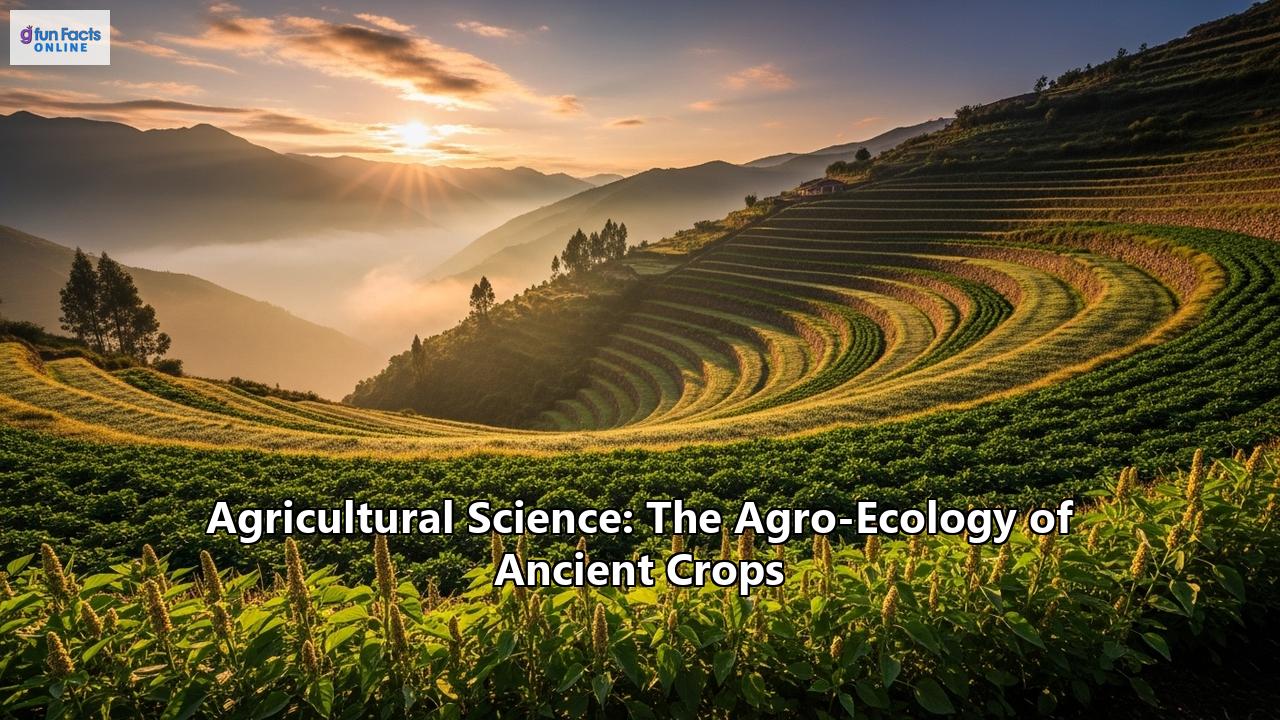
One of the most visually stunning examples of Andean agriculture is the extensive use of terracing. By carving step-like platforms into the mountainsides, they created flat, arable land suitable for farming. These terraces served multiple purposes: they prevented soil erosion on the steep slopes, conserved water, and created a series of microclimates that allowed for the cultivation of a variety of crops at different altitudes.
To irrigate these terraced fields, the Incas constructed intricate systems of stone-lined canals that transported water from mountain springs and rivers. They also developed underground aqueducts, known as puquios, which tapped into groundwater sources and carried water to where it was needed. These irrigation systems were a testament to their advanced engineering skills and their deep understanding of hydrology.
The Inca also practiced a form of agro-ecology that involved the cultivation of a diverse range of crops adapted to the different ecological zones of the Andes. These included hundreds of varieties of potatoes, quinoa, amaranth, and maize. This crop diversity was a key factor in their food security, as it ensured that even if some crops failed due to frost or drought, others would likely survive.
Africa: A Cradle of Agricultural Innovation
Africa is another continent where agriculture arose independently and developed unique and resilient systems adapted to its diverse climates.
The Sahelian Agricultural Revolution
In the Sahel region of West Africa, ancient peoples domesticated a number of important crops between 3000 and 2500 BC, including sorghum and pearl millet. These grains are incredibly drought-tolerant, making them well-suited to the semi-arid conditions of the Sahel. The development of agriculture in West Africa was also closely linked to the domestication of cattle.
Around 1000 BCE, a great migration of Bantu-speaking peoples began, spreading their farming practices across much of sub-Saharan Africa. They carried with them their knowledge of cultivating crops like sorghum and millet, as well as their skills in ironworking, which allowed them to create more effective farming tools.
A Diversity of African Crops
In addition to sorghum and millet, a wide variety of other crops were domesticated in Africa. In West Africa, often referred to as the "Yam Belt," yams were a staple food, along with cowpeas (black-eyed peas), oil palms, and a unique variety of African rice. Archaeological evidence from the Kakapel Rockshelter in Kenya has revealed that cowpea was being cultivated in eastern Africa as early as 2,300 years ago, representing the earliest direct evidence of farming in that region. This discovery, along with the later introduction of sorghum and finger millet, indicates that domesticated plants arrived in eastern Africa in multiple phases, likely through the movement of different groups of people.
The agricultural systems of ancient Africa were characterized by their diversity and adaptability. Farmers often cultivated a mix of crops to ensure food security in the face of unpredictable weather. They also developed tools like hoes and sickles to aid in cultivation and harvesting. The maintenance of tree crops, such as bananas and oranges, was also an important part of their agricultural system.
Asia: Ancient Grains and Ingenious Irrigation
Asia is home to some of the world's oldest and most enduring agricultural traditions, with a rich history of crop domestication and sophisticated water management.
The Domestication of Rice and Other Staples
Rice is one of the most important food crops in the world today, and its domestication can be traced back to ancient China. The cultivation of rice required the development of intricate irrigation systems to manage the large amounts of water needed for paddy fields. In addition to rice, other important crops like mung beans were also cultivated in ancient Asia.
Ingenious Irrigation Systems
In the arid regions of Persia (modern-day Iran), ancient engineers developed a remarkable system of underground aqueducts known as qanats. These qanats tapped into groundwater at the base of mountains and transported it over long distances to irrigate fields. The underground tunnels minimized water loss from evaporation, making them a highly efficient method of irrigation in a dry climate.
In India, the Indus Valley Civilization constructed sophisticated irrigation systems, including reservoirs, wells, and canal networks, around 2500 BCE. The Chinese also developed intricate canal systems and used water wheels to lift water for irrigation. These ancient water management systems were crucial for supporting the large populations of these early civilizations.
The Social Fabric of Ancient Agricultural Societies
The development of agriculture had profound consequences for human social organization. The transition from nomadic hunter-gatherer lifestyles to settled farming communities led to the emergence of larger, more complex societies.
With the ability to produce a surplus of food, not everyone needed to be directly involved in farming. This led to the specialization of labor, with some people becoming artisans, priests, soldiers, and administrators. This specialization, in turn, gave rise to social hierarchies, with a ruling class of elites who controlled land and resources and a larger class of laborers who worked the fields.
The concept of land ownership also emerged with the rise of agriculture. Farmers invested significant time and energy into cultivating specific plots of land, leading to a sense of attachment and ownership. This could sometimes lead to disputes, which in turn spurred the development of laws and centralized forms of government to manage these new social complexities.
However, it is important to remember that not all ancient agricultural societies were organized in the same way. While many were characterized by a hierarchical structure, others may have had different forms of social organization based on factors like kinship or spiritual authority.
The political landscape of ancient civilizations was also deeply intertwined with their agricultural systems. The control of food and water resources was a major source of power for ruling elites. In some cases, as with the Aztec Empire's re-engineering of Lake Xaltocan for salt production, political decisions could have devastating consequences for local farming systems. The story of Andean raised fields also serves as a cautionary tale. While these fields were incredibly productive, archaeological evidence suggests they may have been used by the Tiwanaku Empire as a means of exploiting labor to extract surplus crops. This highlights the important lesson that ancient agricultural practices are not inherently "good" or "bad"; their social and ecological outcomes depend on the political context in which they are implemented.
The Modern Revival of Ancient Wisdom
In our search for more sustainable and resilient agricultural systems, there has been a growing interest in reviving ancient crops and farming practices. As we face the challenges of climate change, soil degradation, and a growing global population, the lessons from these time-tested systems are more valuable than ever.
Ancient Grains for a Modern World
Many ancient grains that were once staples of human diets have been largely replaced by modern, high-yielding varieties of wheat, rice, and corn. However, these ancient grains, such as spelt, Kamut, quinoa, amaranth, and millet, are now making a comeback, prized for their nutritional benefits, unique flavors, and resilience to harsh growing conditions.
Amaranth, for example, is a highly nutritious grain that is also incredibly drought-tolerant, a trait that is becoming increasingly important in a warming world. Millet is another drought-resistant grain with a short growing season, which made it an important crop for ancient semi-nomadic peoples. The revival of these ancient grains not only offers new culinary experiences but also helps to preserve agricultural biodiversity and create more resilient food systems.
Lessons in Resilience for a Changing Climate
The agro-ecological practices of ancient farmers offer valuable lessons for adapting to climate change. The diversity of crops grown in systems like the milpa provided a buffer against crop failure, a strategy that is just as relevant today as it was thousands of years ago. Ancient irrigation techniques, such as those developed by the Incas and the creators of the qanats, demonstrate how to manage water resources efficiently in arid and semi-arid regions.
Modern farmers and researchers are now looking to these ancient systems for inspiration. In Spain, drought-stricken farmers have revived medieval Moorish irrigation technology. In Ethiopia, there is a growing movement to revive the tradition of planting "maslins," mixtures of different grains grown together in the same field. These grain mixtures have been found to be more resilient to pests and drought and produce more reliable yields than monoculture crops.
Conclusion: Cultivating a Sustainable Future from the Seeds of the Past
The agro-ecology of ancient crops is a testament to the ingenuity, adaptability, and deep ecological knowledge of our ancestors. From the symbiotic harmony of the Three Sisters to the engineering marvel of the chinampas, ancient farmers developed a rich tapestry of sustainable agricultural practices that nourished civilizations for millennia.
As we look to the future, we would be wise to heed the lessons of the past. The principles of agro-ecology that underpinned these ancient systems – diversity, synergy, recycling, and a deep respect for the land – offer a powerful antidote to the vulnerabilities of our modern, industrialized food system. By embracing the wisdom of our agricultural heritage, we can cultivate a future where food is produced in a way that is not only productive but also ecologically sound, socially just, and truly sustainable. The seeds of this future lie buried in the rich soil of our agricultural past, waiting to be rediscovered and cultivated anew.
Reference:
- https://indigenousclimatehub.ca/2023/06/the-three-sisters-as-indigenous-sustainable-agricultural-practice/
- https://themindcircle.com/ancient-inca-irrigation-systems/
- https://www.technologynetworks.com/applied-sciences/news/archaeologists-find-earliest-evidence-of-crop-farming-in-east-africa-388566
- https://www.vaia.com/en-us/explanations/anthropology/economic-anthropology/agrarian-societies/
- https://www.ted.com/talks/srishtaa_aparna_pallavi_ancient_farming_practices_and_lessons_in_climate_resilience
- https://grow.cals.wisc.edu/departments/front-list/five-fascinating-facets-of-the-indigenous-three-sisters-cropping-method
- https://www.britannica.com/topic/agriculture/The-Americas
- https://www.nal.usda.gov/collections/stories/three-sisters
- https://www.thoughtco.com/three-sisters-american-farming-173034
- https://library.fiveable.me/key-terms/native-american-history/three-sisters-farming
- https://en.wikipedia.org/wiki/Milpa
- https://www.true-connection.org/resilient-by-design/milpa
- https://www.researchgate.net/figure/Some-benefits-of-the-Milpa-system-The-milpa-is-an-agro-sustainable-production-system_fig1_388420637
- https://dsp.facmed.unam.mx/wp-content/uploads/2022/02/MilpaSystemMexico2022-ENG.pdf
- https://www.historyonthenet.com/aztec-agriculture-floating-farms-fed-the-people
- https://www.thearchaeologist.org/blog/chinampas-the-ancient-aztec-floating-gardens-that-hold-promise-for-future-urban-agriculture
- https://www.aztec-history.com/aztec-farming.html
- https://hilo.hawaii.edu/nihopeku/2018/02/02/chinampa-an-ancient-agricultural-system/
- https://circularwaterstories.org/analysis/chinampas-agriculture-and-settlement-patterns/
- https://www.mdpi.com/2073-4441/12/5/1285
- https://www.khanacademy.org/humanities/big-history-project/agriculture-civilization/first-cities-appear/a/the-origin-of-agriculture-in-africa
- https://www.oerproject.com/-/media/BHP/PDF/Unit7/U7-2-Origin_of_Agriculture_in_Africa_2015_860L.pdf
- https://en.wikipedia.org/wiki/History_of_agriculture
- https://www.resilience.org/stories/2024-02-29/what-ancient-farmers-can-really-teach-us-about-adapting-to-climate-change-and-how-political-power-influences-success-or-failure/
- https://the-past.com/news/early-farming-in-east-africa/
- https://www.sapiens.org/archaeology/ancient-modern-farmers-climate-change/
- https://www.coolaboo.com/world-history/ancient-africa/ancient-african-agriculture/
- https://pure.mpg.de/rest/items/item_2270857_8/component/file_2300820/content
- https://www.digcorp.com/the-history-and-evolution-of-irrigation-techniques/
- https://www.waterhistory.org/histories/qanats/
- https://www.khanacademy.org/humanities/world-history/world-history-beginnings/birth-agriculture-neolithic-revolution/a/why-did-human-societies-get-more-complex
- https://www.khanacademy.org/humanities/whp-origins/era-3-cities-societies-and-empires-6000-bce-to-700-c-e/33-comparing-early-agrarian-societies-betaa/a/read-introduction-to-agrarian-societies-beta
- https://oralhistory.ws/resources/the-impact-of-agriculture-on-social-hierarchy/
- https://www.numberanalytics.com/blog/ancient-grains-organic-farming-revival
- https://www.anthropology.net/p/cultivating-modern-farms-using-ancient
- https://www.theaustralianfarmer.com/ancient-farming-modern-lessons-adapting-australian-agriculture-to-climate-change
- https://undark.org/2022/11/01/maslins-ancient-grain-comeback/
- https://www.frontiersin.org/journals/agronomy/articles/10.3389/fagro.2023.1115490/full
- https://www.numberanalytics.com/blog/revival-ancient-grains-emmer-story
- https://farm.muisca.co/post/446/ancient-lessons-climate-change-farming-collapse.html