
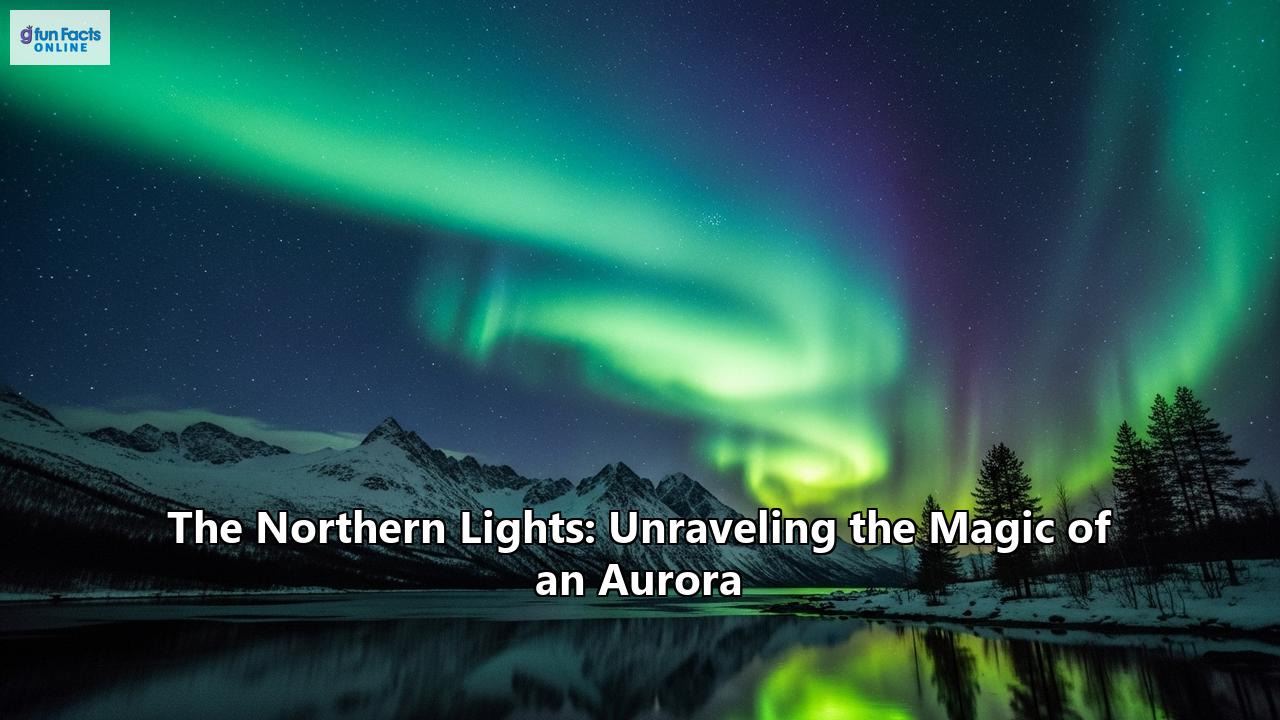
A Celestial Ballet: Unraveling the Magic of the Northern Lights
The night sky, a vast canvas of velvet black, has captivated humanity since time immemorial. But in the planet's far northern reaches, this canvas comes alive with a celestial ballet of ethereal light, a silent symphony of color that dances and swirls across the darkness. This is the Aurora Borealis, the Northern Lights, a phenomenon so breathtaking it has inspired myths, fueled legends, and drawn intrepid travelers to the frigid ends of the Earth for a glimpse of its otherworldly beauty.
For centuries, before the advent of scientific understanding, cultures around the globe sought to explain the spectacle unfolding above them. They were seen as everything from the spirits of ancestors to omens of war. Today, while we understand the science behind this luminous display, the sense of wonder and magic remains. To witness the aurora is to connect with the cosmos, to feel the immense power of our sun and the delicate, protective embrace of our own planet. It is an experience that transcends the ordinary and touches the soul.
This article is your guide to understanding and experiencing this incredible natural wonder. We will journey from the heart of our sun, across millions of miles of space, and into the Earth's upper atmosphere to uncover the science behind the aurora. We will explore the best places on the planet to witness this spectacle, the optimal times to go, and the practicalities of planning your own aurora-hunting adventure. We will delve into the rich tapestry of myths and legends inspired by the lights, and provide you with the tools you need to capture their beauty, not just in your memory, but also on camera. So, prepare to be captivated as we unravel the magic of the Northern Lights.
The Cosmic Dance: The Science Behind the Aurora
The story of the Northern Lights begins not on Earth, but 150 million kilometers away, at the heart of our solar system: the sun. The sun is a colossal nuclear furnace, constantly spewing a stream of charged particles—mostly electrons and protons—into space. This stream is known as the solar wind, and it travels at speeds of up to 72 million kilometers per hour.
As this solar wind journeys across the solar system, it eventually encounters Earth. Our planet, however, is not defenseless. It is surrounded by a protective magnetic field, the magnetosphere, generated by the molten iron core deep within the Earth. This magnetic field acts as a shield, deflecting the majority of the solar wind's charged particles.
But the magnetosphere is not impenetrable. At the North and South Poles, the magnetic field lines are weaker, creating funnel-like regions. Here, some of the charged particles from the solar wind become trapped and are channeled down into the Earth's upper atmosphere.
It is in the upper atmosphere, at altitudes ranging from 80 to over 1,000 kilometers, that the magic happens. The charged particles from the sun collide with atoms and molecules of gas in our atmosphere, primarily oxygen and nitrogen. These collisions "excite" the atmospheric atoms and molecules, causing them to gain energy. To return to their normal state, they must release this excess energy in the form of light. This release of countless photons of light is what we see as the aurora.
The shape of the aurora, often appearing as curtains, arcs, or bands of light, is dictated by the Earth's magnetic field lines, which the charged particles follow. The constant fluctuation in the solar wind and the Earth's magnetosphere is what makes the aurora appear to dance and move across the sky.
The Solar Cycle's Influence
The intensity and frequency of the Northern Lights are not constant. They are heavily influenced by the sun's 11-year cycle of activity. This cycle is marked by periods of high activity, known as the solar maximum, and periods of low activity, the solar minimum.
During the solar maximum, the sun's magnetic field is at its strongest, leading to more frequent and powerful solar storms, such as solar flares and coronal mass ejections (CMEs). These events release massive clouds of plasma and charged particles into space, which can supercharge the aurora when they reach Earth, making the displays brighter, more dynamic, and visible at lower latitudes than usual. We are currently in a period of solar maximum, which is why there have been more frequent and widespread aurora sightings in recent years.
Even during the solar minimum, the Northern Lights do not disappear. A steady stream of solar wind continues to flow from the sun, so auroras are still visible, especially in the regions within the auroral oval.
A Spectrum of Colors
The Northern Lights are not limited to a single color. They can paint the sky in a breathtaking palette of greens, pinks, purples, reds, and even blues. The color of the aurora is determined by two main factors: the type of gas molecule being excited and the altitude at which the collision occurs.
- Green: The most common color seen in the aurora is a brilliant green. This is produced by excited oxygen atoms at altitudes of around 100 to 300 kilometers.
- Red: A rarer sight, deep red auroras are produced by high-altitude oxygen, above 200 kilometers. Because the atmosphere is thinner at these altitudes, the oxygen atoms have more time to emit their red light. These "blood auroras" are typically only seen during periods of intense solar activity.
- Pink and Dark Red: At the lower edges of the aurora, sometimes as low as 100 kilometers, excited nitrogen molecules can produce a pink or dark red glow.
- Blue and Purple: Nitrogen molecules can also produce blue and purple light at even lower altitudes. These colors are often at the very fringe of what the human eye can perceive and are more easily captured by a camera.
The Aurora Hunter's Guide: Where and When to See the Lights
To witness the Northern Lights is a dream for many, but turning that dream into a reality requires planning. Knowing the best locations, the right time of year, and the optimal conditions for viewing is key to a successful aurora-hunting expedition.
The Auroral Oval: Your Geographic Target
The Northern Lights are most frequently seen in a doughnut-shaped region around the Earth's magnetic North Pole known as the "auroral oval". This oval is a dynamic feature, expanding and contracting based on the level of geomagnetic activity. During periods of high solar activity, the oval expands, allowing the aurora to be seen from lower latitudes. However, for the best and most consistent chances of a sighting, you need to be within or very close to this oval.
The auroral oval covers the northern parts of several countries, making them prime destinations for aurora chasers. These include:
- Norway: Often called the "Gateway to the Arctic," Tromsø is a popular hub for Northern Lights tours. Other excellent locations include Alta, known as the "City of Northern Lights," the Lofoten Islands, and the remote Svalbard archipelago.
- Sweden: Swedish Lapland offers vast, sparsely populated areas with minimal light pollution. Abisko National Park is particularly renowned for its clear skies, often having a "blue hole" effect where the sky remains clear even when surrounding areas are cloudy. Kiruna is another excellent base.
- Finland: Finnish Lapland boasts up to 200 nights of aurora activity a year. Rovaniemi, the official hometown of Santa Claus, is a popular destination, along with more remote locations like Ivalo, Inari, and Utsjoki. Staying in a glass igloo is a unique way to experience the lights.
- Iceland: The entire country of Iceland lies within the auroral oval, making it a fantastic destination for aurora viewing. Its dramatic landscapes of volcanoes, glaciers, and waterfalls provide stunning backdrops for the celestial display.
- Canada: The northern territories of Canada offer some of the most consistent aurora viewing in the world. Yellowknife in the Northwest Territories is known for having over 200 clear nights a year, while Whitehorse in the Yukon and Churchill, Manitoba (also famous for its polar bears) are other top spots.
- USA (Alaska): For American travelers, Fairbanks, Alaska, is the best place to see the Northern Lights without a passport. Located directly under the auroral oval, it offers a 90% chance of seeing the aurora if you stay for three nights. Other good locations include Denali National Park and more remote spots like Coldfoot.
While the Southern Lights, or Aurora Australis, are the southern counterpart to the Northern Lights, they are much harder to see due to the lack of easily accessible landmasses within the southern auroral oval. The best chances of seeing the Aurora Australis are from Tasmania, Australia, and the South Island of New Zealand, especially during strong geomagnetic storms.
The Best Time to Go: Season and Time of Day
The Northern Lights are actually present year-round, but they are only visible when the sky is dark. This means the prime aurora-viewing season is from late August to mid-April. During the summer months in the far north, the midnight sun makes the sky too bright to see the aurora.
Within this long season, certain times are considered optimal:
- The Equinoxes: The periods around the spring equinox (March) and autumn equinox (September) are often associated with increased geomagnetic activity. This is due to the tilt of the Earth's axis in relation to the sun, which allows for a better connection between the solar wind and our planet's magnetosphere. This can lead to more intense and frequent aurora displays.
- Mid-Winter: The months of November through February offer the longest and darkest nights, maximizing your window of opportunity for sky-gazing. While the weather can be colder, the snowy landscapes create a magical winter wonderland setting for your aurora hunt.
The best time of day to see the Northern Lights is typically between 9 p.m. and 3 a.m. local time, with the peak activity often occurring around midnight. It's important to be patient, as the aurora can appear in short, brilliant bursts or as a gentle glow that lasts for hours.
Essential Conditions for a Sighting
Beyond being in the right place at the right time, a few other conditions need to align for a successful aurora viewing:
- Darkness: Get as far away from city lights as possible. Light pollution will significantly diminish the visibility of the aurora. National parks, remote wilderness areas, and dedicated "dark sky" reserves are ideal.
- Clear Skies: Clouds are the aurora hunter's biggest enemy. You need clear or at least partly clear skies to see the lights. Always check the weather forecast before heading out.
- Patience: The Northern Lights are a natural phenomenon and can be unpredictable. It's not uncommon to wait for hours in the cold for a display to begin. It's often recommended to plan a trip of at least three to five nights to increase your chances of a successful sighting.
Echoes of the Cosmos: Myths and Legends of the Northern Lights
Before science could explain the celestial dance of the aurora, cultures across the Northern Hemisphere wove rich and varied tapestries of myths and legends to make sense of the spectacle. These stories, passed down through generations, reveal a deep connection to the natural world and the human desire to find meaning in the cosmos.
Norse Mythology: Warriors and Gods
In the world of the Vikings, the Northern Lights were deeply intertwined with their gods and the afterlife. One of the most enduring beliefs was that the aurora was the Bifröst Bridge, a shimmering, pulsating arch of light that connected Midgard (the realm of mortals) to Asgard (the realm of the gods). This was the path that fallen warriors took to reach Valhalla, the great hall of the god Odin.
Another powerful Norse legend saw the lights as the reflections from the shields and armor of the Valkyries, fierce female warriors who chose which soldiers would die in battle and be escorted to Valhalla. The Vikings believed the Valkyries would ride their horses across the night sky, and the aurora was the light glinting off their armor as they guided the spirits of the chosen. Some tales even suggested the lights were the very breath of these brave, departed soldiers.
Indigenous Peoples of the North: Spirits and Ancestors
For the many Indigenous cultures living within the auroral oval, the Northern Lights were often seen as the spirits of the dead.
- The Inuit of Greenland and North America had various beliefs. Many saw the lights as the spirits of their ancestors playing a game, using a walrus skull as a ball. In some communities, it was believed you could summon the spirits by whistling, though this was often seen as dangerous, as the spirits might come too close and carry you away. The Inuit of Point Barrow, Alaska, viewed the aurora as an evil entity and would carry knives for protection.
- The Cree people believed the lights were the spirits of their departed loved ones trying to communicate with those they left behind on Earth. They saw it as part of the great "circle of life."
- The Dene people of northwestern Canada believed the lights were fires lit by their creator, Nanahbozho, to show them he was still watching over them.
- The Sámi, the indigenous people of northern Scandinavia, often feared the aurora, seeing them as the souls of the dead. They believed it was disrespectful and dangerous to wave, whistle, or sing at the lights, as this could attract their attention and lead to being carried away or even decapitated.
Folklore from Around the World
Even in places where the aurora is a rare sight, its appearance sparked awe and often fear.
- In Finland, a charming myth tells of the "revontulet," or "fire fox." It was believed that a magical firefox ran so quickly across the snowy landscape that its tail would brush against the mountains, sending sparks flying into the sky to create the aurora.
- In medieval Europe, a red aurora was often seen as a terrible omen, foretelling war, plague, or death. A fiery red aurora was reportedly seen in the skies over England and Scotland just before the French Revolution, and was later interpreted as a sign of the coming conflict.
- In China, the lights were often associated with dragons, seen as a celestial battle between good and evil dragons breathing fire across the heavens.
- In Japan, on the other hand, the aurora is considered a sign of good fortune. A popular belief holds that a child conceived under the Northern Lights will be blessed with good looks, intellect, and luck.
These stories, though diverse, share a common thread of reverence and awe. They remind us that long before we understood the science, humanity has always looked to the skies for answers, for connection, and for a touch of magic.
Capturing the Magic: A Guide for Aurora Chasers
For many, the dream of seeing the Northern Lights is accompanied by the desire to capture their beauty. With the right preparation and equipment, even amateur photographers can come away with stunning images of this celestial spectacle. And for those just wanting to soak in the experience, being properly dressed and prepared is key to a comfortable and enjoyable aurora hunt.
Photographing the Aurora: From DSLRs to Smartphones
Photographing the Northern Lights requires a camera that allows for manual control over its settings. While a DSLR or mirrorless camera will produce the best results, even modern smartphones can capture decent images with the right apps and techniques.
Essential Equipment:- A Camera with Manual Mode: The ability to adjust aperture, shutter speed, and ISO is crucial.
- A Wide-Angle Lens: A lens with a focal length between 12mm and 24mm is ideal, as it allows you to capture a large expanse of the sky and the surrounding landscape.
- A Sturdy Tripod: Long exposure times are necessary for aurora photography, and a tripod is essential to keep the camera perfectly still and avoid blurry images.
- Extra Batteries: Cold weather drains batteries quickly, so bring several fully charged spares and keep them warm in an inside pocket.
- A Remote Shutter Release or Self-Timer: Using a remote or the camera's self-timer will prevent the camera shake that can be caused by pressing the shutter button manually.
- Mode: Manual (M)
- Aperture (f-stop): Set your aperture to its widest setting (the lowest f-number), such as f/2.8 or f/4. This allows the maximum amount of light to enter the lens.
- Shutter Speed: This will depend on the brightness and movement of the aurora. Start with a shutter speed of around 15-20 seconds for a slow-moving aurora. For a fast-dancing, bright aurora, you'll need a shorter shutter speed of 5-10 seconds to capture the details without them blurring into a green blob.
- ISO: The ISO setting controls the camera's sensitivity to light. Start with an ISO between 1600 and 3200. If your photo is too dark, you can increase the ISO, but be aware that higher ISOs will introduce more "noise" or graininess into the image.
- Focus: Set your lens to manual focus. The easiest way to focus in the dark is to find a bright star or a distant light, zoom in using your camera's live view, and manually adjust the focus ring until the point of light is as small and sharp as possible.
- White Balance: Set your white balance manually, starting around 3500-4000 K or using the "fluorescent" preset for more natural-looking colors.
Many newer smartphones have impressive night photography capabilities. To get the best results:
- Use a tripod or stabilize your phone against a solid object.
- Download an app that allows for manual camera controls, such as setting a long shutter speed.
- Use your phone's night mode if it has one.
- Use the self-timer to avoid camera shake when you tap the screen.
Dressing for Success: The Art of Layering
Aurora viewing often means spending long hours in frigid temperatures. The key to staying warm and comfortable is the layering system.
- Base Layer: This is the layer closest to your skin. It should be made of a moisture-wicking material like merino wool or synthetic thermal underwear. Avoid cotton, as it absorbs moisture and will make you feel cold.
- Mid-Layer: This is your insulating layer. A fleece or wool sweater is a great choice. For very cold conditions, a light down jacket can also be used as a mid-layer.
- Outer Layer: Your outermost layer should be a waterproof and windproof jacket and pants. A good quality ski or snowboard jacket and pants are ideal.
- Extremities: Don't forget your head, hands, and feet.
Hat: A warm, insulated hat that covers your ears is essential. A trapper hat or a wool beanie is a good option.
Gloves: It's a good idea to have two pairs of gloves: a thin pair of touchscreen-compatible gloves for operating your camera, and a thick, insulated pair of mittens to wear over them.
Socks: Wear warm, thick socks, preferably made of wool.
Boots: Insulated, waterproof winter boots with good grip are a must.
- Accessories: Hand and foot warmers can be a lifesaver on particularly cold nights.
Planning Your Aurora Adventure
- Check the Forecasts: Before you head out each night, check both the weather forecast (for clear skies) and the aurora forecast. Websites and apps from organizations like NOAA's Space Weather Prediction Center and the Geophysical Institute of the University of Alaska Fairbanks provide short-term forecasts of auroral activity, often using the Kp index. The Kp index is a scale from 0 to 9 that measures geomagnetic activity. A Kp of 4 or higher indicates a good chance of seeing the aurora.
- Be Patient and Persistent: The aurora is a natural phenomenon and can be fickle. Don't be discouraged if you don't see it on your first night. Plan for a multi-night trip to increase your odds.
- Consider a Tour: Especially for first-time aurora hunters, joining a guided tour can be a great option. Experienced guides know the best local spots for viewing, monitor the forecasts, and can often provide warm clothing and photography assistance.
To stand beneath a sky ablaze with the Northern Lights is to witness one of nature's most profound and moving spectacles. It's a reminder of the intricate and powerful forces that shape our world and our universe. Whether you are drawn by the science, the mythology, or simply the sheer beauty of it all, the aurora offers an experience that is at once humbling and exhilarating, a memory that will shimmer in your mind long after the lights have faded from the sky.
Reference:
- https://perlan.is/articles/how-to-read-northern-lights-forecast
- https://www.visitnorway.com/things-to-do/nature-attractions/northern-lights/how-to-photograph/
- https://www.adobe.com/creativecloud/photography/hub/guides/camera-settings-northern-lights.html
- https://digital-photography-school.com/how-to-photograph-the-northern-lights-or-aurora-borealis/
- https://gcmeneses.wordpress.com/2024/04/12/what-to-wear-for-aurora-watching-at-23c/
- https://mikkolagerstedt.com/blog//how-to-photograph-the-northern-lights-aurora-borealis
- https://perlan.is/articles/what-to-wear-and-bring-to-see-northern-lights
- https://www.hurtigruten.com/en-us/inspiration/northern-lights/photography
- https://travelseewrite.com/chasing-the-northern-lights-your-ultimate-guide-to-aurora-adventures-in-2024-25/
- https://www.icelandair.com/blog/planning-for-a-northern-lights-trip/
- https://www.thegreenadventure.no/post/what-to-pack-for-aurora-hunting
- https://www.northernshotstours.com/how-to-photograph-northern-lights/
- https://guidetoiceland.is/the-northern-lights/how-to-photograph-the-northern-lights
- https://www.davemorrowphotography.com/2014/10/how-to-photograph-northern-lights.html
- https://www.lifeinnorway.net/packing-list-northern-lights/
- https://www.fairbanksauroratours.com/helpful-tips/dressing-for-aurora-viewing
- https://www.mtu.edu/tour/copper-country/northern-lights/
- https://www.gi.alaska.edu/monitors/aurora-forecast
- https://www.lonelyplanet.com/articles/northern-lights-a-how-to-guide