
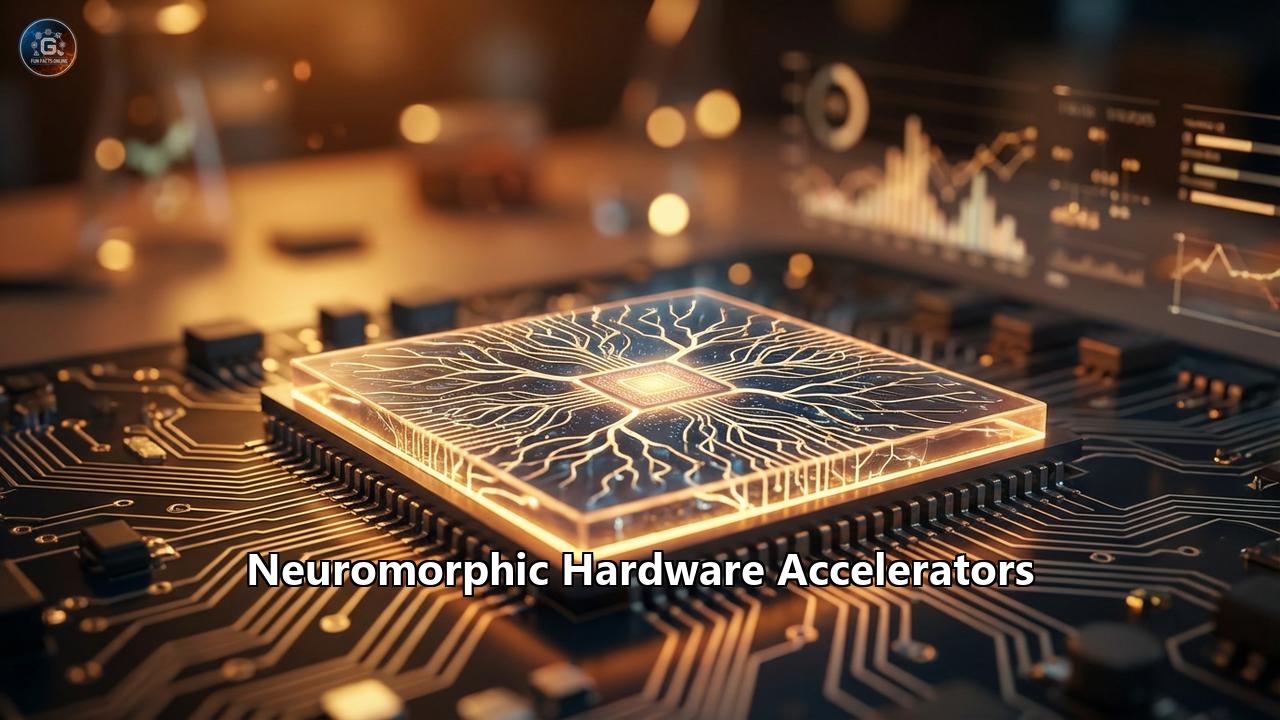
By 2026, we are no longer just simulating brains; we are building them. This article explores the deep technical architecture, the burgeoning software ecosystem, the exotic materials science, and the real-world deployments of neuromorphic computing. This is the story of how silicon is learning to think like nature.
Part 1: The Von Neumann Bottleneck and the Neuromorphic Promise
To understand why neuromorphic hardware is inevitable, one must first understand the fundamental flaw of modern computing. For nearly 80 years, virtually every computer—from the smartphone in your pocket to the Summit supercomputer—has relied on the von Neumann architecture. In this design, processing (CPU/GPU) and memory (RAM) are physically separated. To perform a calculation, data must be fetched from memory, moved to the processor, computed, and sent back.
This constant shuffling of data is the "von Neumann bottleneck." In modern AI workloads, where billions of weights must be accessed for every single token generated by an LLM, this data movement consumes up to 90% of the total energy. We are effectively burning gigawatts of electricity just to move numbers around, not to calculate them.
Neuromorphic computing shatters this paradigm by looking at the only known example of general intelligence that operates on a 20-watt power budget: the human brain. Biological brains do not separate memory and compute. A neuron is both a processor and a storage unit. When a neuron "spikes," it processes information locally and transmits it only when necessary. This architecture offers three distinct advantages that neuromorphic chips emulate:- Sparsity: In a brain, not every neuron fires at every moment. Activity is sparse in both space and time. In contrast, a GPU processing a matrix multiplication will activate every transistor, regardless of whether the value is a meaningful signal or a zero. Neuromorphic chips only consume power when a "spike" (an event) occurs.
- Parallelism: The brain is massively parallel, with billions of neurons operating simultaneously but asynchronously. There is no global clock forcing them to march in step.
- Colocation: Memory and compute are intertwined. Synaptic weights are stored right next to the neuronal integration circuits, eliminating the energy-intensive data bus.
As of 2026, this field has bifurcated into two distinct but related approaches: Deep Neuromorphic (focusing on high-fidelity brain simulation and spiking neural networks, or SNNs) and Pragmatic Neuromorphic (using brain-inspired principles like event-driven processing to accelerate standard Deep Learning workloads).
Part 2: The Titans of Silicon – Architectural Deep Dives
The hardware landscape has exploded with diversity. Unlike the standardized x86 or ARM architectures, neuromorphic chips vary wildly in how they implement neurons, synapses, and communication.
1. Intel Loihi 2: The Asynchronous Mesh
Intel’s Loihi 2 represents the pinnacle of digital SNN research. Fabricated on the Intel 4 process node, a single Loihi 2 chip contains 128 neuromorphic cores and roughly 1 million programmable neurons.
- Architecture: Loihi 2 abandons the global clock entirely. It uses an asynchronous 2D mesh for communication. When a neuron in Core A fires, it generates a "spike packet" that traverses the mesh to Core B. This packet is not just a binary "1"; Loihi 2 supports graded spikes (up to 32-bit payloads), allowing it to carry richer information like integer values. This is a crucial departure from biological realism for the sake of computational efficiency.
- Neuron Model: The cores implement a generalized Leaky Integrate-and-Fire (LIF) neuron model. However, unlike its predecessor, Loihi 2 allows for microcode programmability. A developer can write custom assembly code to define how a neuron integrates inputs, adapts its threshold, or decays over time. This flexibility allows Loihi 2 to run algorithms ranging from standard DNNs to complex optimization solvers (like graph coloring) and even robotic arm kinematics.
- Hala Point: In 2024, Intel unveiled "Hala Point," a chassis the size of a microwave containing 1,152 Loihi 2 chips. With 1.15 billion neurons and 128 billion synapses, it rivals the scale of an owl brain. Crucially, it demonstrates 15 trillion operations per second per watt (TOPS/W) for 8-bit inference, surpassing conventional GPUs by orders of magnitude in sparsity-heavy tasks.
2. IBM NorthPole: The Memory Wall Breaker
IBM took a different path with NorthPole. While Loihi 2 focuses on spiking dynamics, NorthPole focuses on the "active memory" concept.
- Architecture: Built on a 12nm process, NorthPole contains 256 cores. What makes it unique is that it has no off-chip memory interface for weights. All model weights must fit entirely within the chip's on-board SRAM. This seems like a limitation (constraining model size), but it eliminates the memory bottleneck entirely.
- Performance: By intertwining compute and memory, NorthPole achieves 25x higher energy efficiency and 22x lower latency than an NVIDIA V100 GPU on ResNet-50 benchmarks. It operates more like a digital inference engine than a biological simulator, making it easier to port standard convolutional neural networks (CNNs) without converting them to spikes.
3. BrainChip Akida 2.0: The Edge Specialist
BrainChip has focused aggressively on the "Edge AI" market—devices where power is measured in milliwatts, not watts.
- Event-Based Processing: The Akida architecture is fully digital and event-based. It processes inputs only when they change. If a camera sees a static background, Akida performs zero computations for those pixels.
- TENNs (Temporal Event-based Neural Networks): Akida 2.0 introduces native hardware support for TENNs. These networks are designed to process streaming time-series data (like audio or vibration) extremely efficiently. Unlike Recurrent Neural Networks (RNNs) which can be heavy to train, TENNs use complex temporal convolution kernels to capture long-range dependencies with a fraction of the parameters.
- On-Chip Learning: A standout feature is Akida's ability to learn at the edge using STDP (Spike-Timing-Dependent Plasticity). A device can be deployed with a base model and then "learn" new classes (e.g., a specific person's face or a new voice command) locally without cloud connection, preserving privacy and bandwidth.
4. SynSense Xylo: The Ultra-Low Power Asynchronous Logic
SynSense (formerly aiCTX) targets the extreme edge—"always-on" sensors.
- Xylo-Audio & Xylo-IMU: These chips are designed for specific modalities. Xylo uses a digital asynchronous logic design that consumes sub-milliwatt power (often in the microwatt range).
- Operation: Xylo operates directly on the output of dynamic vision sensors (DVS) or audio streams. Its architecture is optimized for distinct, sparse spikes. In benchmark tests for keyword spotting, Xylo chips have demonstrated power consumption 100x lower than standard microcontroller implementations while maintaining comparable accuracy.
5. Tianjic: The Hybrid Bridge
Developed by Tsinghua University, the Tianjic chip is famous for its "hybrid coding" scheme. It can run both SNNs (biological alignment) and ANNs (computer science alignment) simultaneously.
- The Bicycle Demo: Tianjic gained fame for powering an autonomous bicycle that could balance, navigate, and respond to voice commands simultaneously. This required fusing multiple neural networks (CNN for vision, SNN for motor control) on a single die, proving that hybrid architectures can handle multi-modal dynamic tasks effectively.
Part 3: The Software Ecosystem – Mapping Thoughts to Silicon
The greatest hardware in the world is a paperweight without software. Historically, neuromorphic computing suffered from a "PhD barrier"—you needed a doctorate in neuroscience to program the chips. By 2026, this has changed dramatically thanks to three key frameworks.
1. Intel Lava: The Open Standard
Intel open-sourced Lava, a Python-based framework that treats neuromorphic computing as a set of asynchronous processes.
- Abstraction: Lava allows developers to define "Processes" (e.g., a filter, a neuron group, an input generator) that communicate via "Channels." This uses the Communicating Sequential Processes (CSP) paradigm.
- Compiler: Under the hood, the "Magma" compiler maps these processes to the physical cores of Loihi 2. It handles the complex routing of spike packets across the mesh, ensuring that neurons that communicate frequently are placed physically close to each other to minimize latency.
- Optimization: Lava includes solvers for Constraint Satisfaction Problems (CSP). You can encode a Sudoku puzzle or a railway scheduling problem into an energy landscape, and the spiking network will "settle" into the optimal solution—often faster and cheaper than a CPU searching the solution space.
2. BrainChip MetaTF: The Migration Path
BrainChip realized that commercial engineers don't want to rewrite their code. MetaTF is designed to look and feel exactly like TensorFlow/Keras.
- CNN2SNN: The core tool is the cnn2snn converter. A developer can train a standard MobileNet or YOLO model in Keras, and MetaTF will analyze the activation functions. It replaces standard ReLUs with spiking equivalents and quantizes weights to 1, 2, or 4 bits.
- Quantization-Aware Training: MetaTF supports training loops that simulate the low-precision hardware, ensuring that the model doesn't lose accuracy when deployed to the chip. This allows a seamless transition from a Python notebook to an Akida chip in a Mercedes-Benz dashboard.
3. SynSense Rockpool: The Dynamic Wave
Rockpool is a Python library focused on temporal dynamics.- Torch/Jax Backends: Rockpool integrates with PyTorch and Jax, allowing researchers to use standard gradient descent (specifically surrogate gradient methods) to train spiking networks. Since spikes are non-differentiable (you can't calculate the slope of a vertical line), surrogate gradients approximate the spike function during the backward pass, allowing backpropagation to work on SNNs.
- Deployment: Rockpool has a direct compilation path to Xylo hardware. A developer can train a network on a GPU using Rockpool's simulation layers, and then flash the exact configuration to a Xylo chip for microwatt inference.
Part 4: Materials Science – The Physical Brain
While digital neuromorphic chips (Loihi, Akida) are dominant today, the next generation relies on exotic materials that physically behave like neurons. This is the realm of memristors and phase-change memory (PCM).
The Memristor Revolution
A memristor (memory resistor) is a component whose electrical resistance changes based on the history of current that has flowed through it. This is analogous to a biological synapse: the more two neurons communicate, the stronger their connection becomes (Long-Term Potentiation).
- 2D Materials: In 2024/2025, researchers achieved breakthroughs using 2D materials like Molybdenum Disulfide (MoS2). These "memtransistors" can be tuned with extreme precision and can be stacked in 3D layers, offering density far surpassing standard SRAM.
- Diffusive Memristors: These devices use silver or copper nanoparticles that diffuse through a dielectric layer to form a conductive bridge. When the voltage is removed, the bridge naturally dissolves. This mimics the "leaky" nature of short-term memory in biological synapses, essential for temporal processing.
Phase-Change Memory (PCM)
IBM and others are championing PCM for Analog In-Memory Computing.
- How it works: PCM materials (like Germanium-Antimony-Tellurium, GST) switch between amorphous (high resistance) and crystalline (low resistance) states when heated. By carefully controlling the heat pulses, one can achieve a continuum of resistance states.
- Matrix Multiplication: Instead of calculating A x B digitally, a PCM array performs it using Ohm's Law (V = I x R). You apply inputs as voltages, and the resulting current is the summation of the multiplication. This happens instantaneously across the entire array, enabling massive throughput for matrix-heavy AI loads.
Spintronics and Stochasticity
Spintronic devices, utilizing Magnetic Tunnel Junctions (MTJs), are introducing true randomness (stochasticity) into hardware.
- Why Randomness? Deterministic computers are bad at generative tasks and probabilistic sampling. The brain is noisy. Spintronic neurons can fluctuate between states thermally, providing a free source of entropy. This is proving vital for Bayesian Neuromorphic Computing, where the system represents uncertainty and probability distributions naturally, rather than just point estimates.
Part 5: Quantitative Reality – Benchmarks and Performance
The "orders of magnitude" claims often seen in press releases require nuance. In 2025, several independent benchmarks helped clarify exactly when neuromorphic wins.
- Latency & Sparsity: In a comparison between Intel Loihi 2 and an NVIDIA Jetson Orin Nano on a sensor fusion task (combining Lidar and camera data), Loihi 2 demonstrated 75x lower latency. Because the Lidar data is sparse (mostly empty space), the event-driven Loihi chip skipped the majority of computations that the Jetson's GPU cores had to process as zeros.
- Energy Efficiency: On keyword spotting tasks, SynSense Xylo consistently clocks in at <1 milliwatt, whereas standard microcontroller solutions (like an ARM Cortex-M4 running a tinyML model) typically require 10-50 milliwatts.
- The "Dense" Trap: However, on dense, static tasks—like processing a high-resolution photograph where every pixel matters—neuromorphic chips often lose to GPUs. The overhead of managing spike packets exceeds the benefit of sparsity. This has led to the consensus that neuromorphic is for dynamics (video, audio, control), while GPUs are for statics (images, large text blocks).
Part 6: Applications and Case Studies
The technology has moved from "lab bench" to "product bench."
1. Automotive: Mercedes-Benz Vision EQXX
Mercedes-Benz integrated BrainChip’s Akida hardware into the Vision EQXX concept car. The goal: "Hey Mercedes" voice command processing.
- The Problem: Traditional voice assistants send audio to the cloud or keep a high-power ECU awake to listen. This drains EV battery range.
- The Solution: The Akida chip handles the "Keyword Spotting" (KWS) locally. It consumes negligible power and only wakes the main computer when the specific phrase is detected with high confidence. This contributes to the EQXX's record-breaking 1,000 km range.
2. Robotics: The Smart Skin
Researchers at the National University of Singapore, using Intel Loihi, developed an artificial "smart skin" for robots.
- Event-Based Touch: The skin uses tactile sensors that output spikes only when pressure changes (e.g., slipping).
- Result: The robotic hand could detect a slipping object and adjust its grip force in under 5 milliseconds, faster than human reflex and far faster than a standard control loop running at 50Hz or 100Hz.
3. Drone Navigation: Prophesee + Neuromorphic
The combination of Event-Based Cameras (which see light changes rather than frames) and neuromorphic processors is revolutionizing drones.
- Use Case: A drone navigating a dense forest. Standard cameras suffer from motion blur at high speeds. Event cameras do not.
- Deployment: Using a setup with Prophesee sensors and neuromorphic processing, drones have demonstrated the ability to dodge obstacles thrown at them in mid-air, a feat requiring sub-10ms processing latencies that would throttle a standard mobile GPU.
4. Scientific Simulation: DeepSouth
In Australia, the DeepSouth supercomputer (projected to be fully operational in 2026) is the first machine designed to simulate neuronal networks at the scale of the human brain. Unlike Frontier or Fugaku which simulate neurons using software equations, DeepSouth uses hardware (FPGAs currently, moving to custom chips) that behaves like the neurons. This allows neuroscientists to test theories of Alzheimer’s and epilepsy on a "digital twin" of the cortex.
Part 7: Challenges and the Road to 2030
Despite the triumphs, significant hurdles remain.
- The Standardization Gap: There is no "x86 instruction set" for neuromorphic. A model optimized for Akida (8-bit quantized CNN) does not run on Loihi 2 (asynchronous spiking mesh) or Xylo (digital logic). The fragmentation forces developers to pick a hardware winner early.
- The Programming Paradigm: Most AI engineers think in "tensors" and "matrices." Thinking in "spikes," "time constants," and "membrane potentials" is a steep learning curve. While tools like MetaTF hide this, extracting maximum performance often requires dropping down to the low-level "neuromorphic assembly," which few know how to write.
- Hardware Maturity: While digital neuromorphic is mature (22nm/14nm/4nm), the analog/memristive devices are still struggling with device variability. No two memristors conduct exactly the same way, making it hard to deploy precise weights across millions of devices.
Conclusion: The Age of Cognitive Silicon
We are standing at the precipice of the Post-Von Neumann Era. By 2026, Neuromorphic Hardware Accelerators have graduated from "promising research" to "critical infrastructure" for Edge AI. They are not replacing GPUs—GPUs will likely remain the kings of training massive static models in data centers. Instead, neuromorphic chips are becoming the cortex of the edge: the always-on, hyper-efficient, reflex-driven processors that allow our cars, robots, and wearables to see, hear, and touch the world without burning the planet.
As materials science matures and software abstractions lower the barrier to entry, we are moving toward a future where computing is not just a tool we use, but an ambient, intelligent fabric that operates with the elegance and efficiency of biology itself. The silicon brain has arrived; now we just have to teach it.
Extended Technical Analysis
Deep Dive: Implementing Spiking Neural Networks (SNNs)
To truly appreciate the engineering feat of these accelerators, one must understand the mathematical translation of SNNs. In a standard Artificial Neural Network (ANN), a neuron's output is a real-valued number passed through an activation function like ReLU: $y = max(0, \sum w_i x_i + b)$.
In an SNN, the neuron has an internal membrane potential $V(t)$ that evolves over time.
$$V(t) = V(t-1) \cdot \beta + \sum w_i \cdot S_i(t)$$
Where $\beta$ is a decay factor (leak) and $S_i(t)$ is the binary spike input (1 or 0) at time $t$. When $V(t)$ exceeds a threshold $\theta$, the neuron fires a spike and $V(t)$ is reset.
Why is this harder to train?The "firing" function is a step function (Heaviside step), which is non-differentiable. You cannot compute gradients across it using standard backpropagation.
The Solution (Surrogate Gradients): Frameworks like Rockpool and snnTorch use a "surrogate gradient"—a smooth function (like a sigmoid or fast sigmoid) that approximates the step function during the backward pass of training. This allows engineers to use the robust optimizers (Adam, SGD) from the deep learning world to train these biologically plausible networks.The "Event" Protocol: AER
How do these chips talk? They use Address-Event Representation (AER). In a standard computer, a bus is 64 bits wide and transmits data on every clock cycle. In AER, the bus is silent until a neuron fires. When it does, it puts the address of the destination neuron on the bus. This is an asynchronous handshake.
- Loihi 2's Enhancement: Loihi 2 extends standard AER. Instead of just "I spiked," the packet contains "I spiked with magnitude X, destined for Core Y, Neuron Z." This allows for sparse vector-matrix multiplication, a hybrid between SNN efficiency and ANN mathematical density.
Market Dynamics: The "Pilot Purgatory" Ends
For years, neuromorphic companies were stuck in "pilot purgatory"—endless proof-of-concept trials with automakers and defense contractors that never went to production. 2025/2026 marks the exit from this phase. The key catalyst has been the Transformer.
As Vision Transformers (ViTs) replaced CNNs in many tasks, neuromorphic companies adapted. BrainChip's Akida 2.0 added hardware support for the Vision Transformer architecture, proving that neuromorphic chips are not stuck in the past with simple CNNs but can accelerate the cutting-edge "Attention" mechanisms by sparsifying the attention matrix.
Final Thought: The Path to 2030
Looking ahead, the holy grail is 3D Neuromorphic. Stacking layers of memory (RRAM/MRAM) directly on top of layers of CMOS logic neurons, connected by dense vertical vias (TSVs). This would create a "cube of compute" that physically resembles the cortical columns of the brain. Prototypes from collaborative projects (like those involving CEA-Leti and Intel) suggest such architectures could achieve petabyte/second internal bandwidths within a few watts.
The journey of neuromorphic hardware accelerators is ultimately a journey of humility. After decades of trying to brute-force intelligence with higher clock speeds and more power, computer engineering has circled back to the blueprint nature perfected millions of years ago. We are finally building computers that don't just calculate—they adapt, they react, and they endure.
Reference:
- https://arxiv.org/html/2409.10290v1
- https://firstignite.com/exploring-the-latest-neuromorphic-computing-advancements-in-2024/
- https://medium.com/@meisshaily/shocking-quantum-memristor-breakthroughs-2025-1d5c485e4a9d
- https://markets.financialcontent.com/wral/article/tokenring-2025-11-6-silicon-brains-unlocked-neuromorphic-computing-achieves-unprecedented-energy-efficiency-for-future-ai
- https://ai-techpark.com/brainchip-demonstrates-event-based-vision-at-embedded-world-2025/
- https://brainchip.com/brainchip-demonstrates-event-based-vision-at-embedded-world-2025/
- https://research.ibm.com/publications/phase-change-memory-materials-and-structural-design-for-analog-in-memory-computing-applications
- https://purl.stanford.edu/vh328kj9007
- https://www.mdpi.com/2078-2489/15/8/472
- https://www.youtube.com/watch?v=_Ajpisgh3QM