
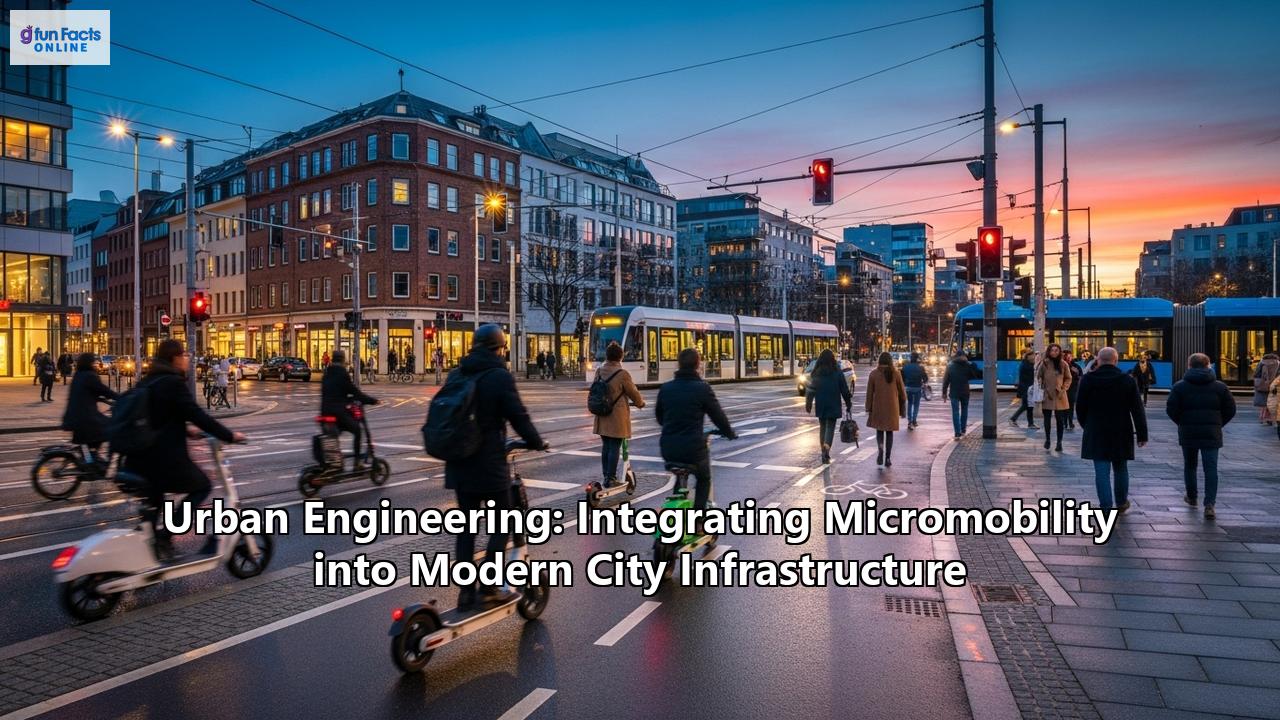
The New Era of Urban Movement: Weaving Micromobility into the City's Fabric
The rhythmic pulse of our cities is changing. The familiar chorus of car engines and the rumble of subways is now punctuated by the whisper-quiet hum of electric motors and the gentle whir of wheels on pavement. This is the sound of the micromobility revolution, a transformative wave of lightweight, personal vehicles that are reshaping the urban landscape. From shared electric scooters and bikes to their privately-owned counterparts, these agile machines are more than just a novelty; they represent a fundamental shift in how we navigate our urban environments. For urban engineers, city planners, and policymakers, the rise of micromobility presents both a golden opportunity and a complex set of challenges. The core question is no longer if these vehicles belong in our cities, but how we can seamlessly and intelligently integrate them into the intricate tapestry of modern urban infrastructure.
This deep dive into the world of urban engineering and micromobility explores the multifaceted journey of integrating these new modes of transport. We will dissect the engineering feats required to create safe and efficient pathways, analyze the economic and social ripples of this mobility revolution, and traverse the globe to learn from cities that are pioneering this new frontier. From the concrete and asphalt of dedicated lanes to the invisible threads of digital networks, we will uncover what it takes to build a city that is not just "smart," but also sustainable, equitable, and, ultimately, more human-centric.
The Dawn of a New Urban Mobility: Understanding the Micromobility Phenomenon
Micromobility, in its essence, refers to a range of small, lightweight vehicles operating at speeds typically below 25 kilometers per hour (about 15.5 miles per hour). This category is broad and ever-expanding, encompassing everything from traditional bicycles and their electric-assisted cousins (e-bikes) to electric scooters (e-scooters), skateboards, and even more novel designs like electric unicycles. These vehicles can be personally owned or, as is increasingly common in urban centers, part of a shared fleet accessible through smartphone apps.
The meteoric rise of micromobility is not a fleeting trend but a response to some of the most pressing challenges of modern urban life. Our cities are growing at an unprecedented rate, with the United Nations projecting that 60.4% of the global population will live in urban areas by 2030. This rapid urbanization has led to a host of problems, including crippling traffic congestion, hazardous levels of air and noise pollution, and an ever-increasing demand on overburdened public transportation systems.
Micromobility offers a compelling solution to many of these issues. These vehicles are perfectly suited for short-distance trips, which constitute a significant portion of urban travel. In the United States, for instance, a staggering 60% of all vehicle trips are under six miles. By providing a convenient and efficient alternative to cars for these shorter journeys, micromobility can help alleviate traffic congestion and reduce harmful emissions. A study by Carnegie Mellon University found that replacing just 10% of short car trips during peak afternoon travel with micromobility could prevent over 4,800 car trips and reduce vehicle miles traveled by more than 7,300 miles per day.
Furthermore, micromobility is a powerful tool for tackling the "first-mile/last-mile" problem—the challenge of connecting commuters to and from public transit hubs. By bridging these gaps, micromobility can make public transportation a more viable and attractive option for a larger segment of the population, thereby reducing reliance on private vehicles. This integration is crucial for creating a truly multimodal transportation ecosystem where different modes of transport work in harmony to provide a seamless and efficient travel experience.
The COVID-19 pandemic, while disruptive, also served to highlight the importance of resilient and diverse transportation systems. As people sought alternatives to crowded public transit, many turned to micromobility, leading to a surge in cycling and scooting in cities around the world. This has further solidified the position of micromobility as an essential component of the urban transportation landscape.
However, the rapid proliferation of these vehicles has also brought to light a new set of challenges that require careful consideration and planning. The initial, often unregulated, rollout of shared e-scooters in many cities led to cluttered sidewalks, safety concerns, and conflicts with pedestrians and other road users. This has underscored the critical need for a proactive and thoughtful approach to integrating micromobility into the urban environment. The journey ahead lies in harnessing the immense potential of these small vehicles while mitigating their potential downsides through intelligent urban engineering, robust policy frameworks, and a commitment to creating cities that are safe, accessible, and enjoyable for everyone.
The Engineering Challenge: Reimagining the Streetscape for Micromobility
The successful integration of micromobility hinges on a fundamental reimagining of our urban streetscapes. For decades, our cities have been designed around the car, with vast expanses of asphalt dedicated to moving and parking automobiles. The rise of micromobility demands a paradigm shift, a move away from this car-centric model towards a more inclusive and multimodal approach to urban design. This is not simply a matter of adding a few bike lanes; it requires a holistic and strategic approach to infrastructure planning and engineering.
Dedicated and Protected Lanes: The Arteries of Micromobility
The cornerstone of a micromobility-friendly city is a network of dedicated and protected lanes. These are not merely painted lines on the road but physically separated pathways that provide a safe and comfortable space for micromobility users, away from the dangers of vehicular traffic. Research consistently shows that safety is a primary concern for potential micromobility users, and the presence of protected lanes is a key factor in encouraging adoption.
The design of these lanes requires careful consideration. They should be wide enough to accommodate a variety of micromobility vehicles, from bicycles and e-scooters to wider cargo bikes. The Institute of Transportation Engineers (ITE) "Micromobility Facility Design Guide" provides valuable insights into the appropriate design standards for these facilities. Furthermore, the Buro Happold "Micromobility Street Design Manual" advocates for a network of city-wide lanes that are seamlessly integrated with other public transport modes. This includes innovative junction designs like the CYCLOPS (Cycle Optimised Protected Signals) junction, which creates protected signalized junctions for cyclists and other micromobility users.
Smart Hubs and Innovative Parking Solutions: Taming the Clutter
One of the biggest challenges in the early days of shared micromobility was the issue of haphazardly parked vehicles cluttering sidewalks and creating obstacles for pedestrians. To address this, cities are increasingly turning to innovative parking solutions. These range from designated on-street corrals and docking stations to "smart hubs" that serve as multimodal interchange points.
These hubs are more than just parking spots; they are designed to be an integral part of the urban fabric, often located near public transport stations to facilitate seamless transfers. They can also incorporate charging infrastructure, creating a convenient and centralized location for both shared and privately-owned micromobility users to park and recharge their vehicles. Some cities are experimenting with geofencing technology to enforce parking in designated areas, with operators using backend dashboards to set and monitor these zones. This technology can also be used to create "slow zones" in pedestrian-heavy areas, automatically reducing the speed of e-scooters to improve safety.
Charging Infrastructure: Powering the Micromobility Fleet
The proliferation of electric micromobility devices necessitates a robust and accessible charging infrastructure. Planning for this infrastructure typically occurs at the community or site level, with charging stations being deployed in public spaces, at workplaces, and in residential buildings.
Innovations in charging technology are helping to overcome some of the challenges in this area. For e-bikes with removable batteries, indoor charging lockers with proprietary cables are being deployed in some locations. For vehicles with fixed batteries, outdoor fast-charging stations are becoming more common. There is also a push towards interoperable charging standards, with some advocating for USB-C technology as a universal solution. Public-private partnerships are proving to be a key driver in the deployment of charging infrastructure, with cities collaborating with micromobility operators and charging equipment companies to create a comprehensive network of charging points.
Integrating Micromobility into Real Estate and Building Design
The influence of micromobility extends beyond the street and into the very fabric of our buildings. Real estate developers and property owners are increasingly recognizing the value that micromobility can bring to their properties. By incorporating micromobility-friendly amenities, developers can attract tenants, increase property values, and contribute to the creation of more sustainable and accessible communities.
This can take the form of dedicated on-site storage for bikes and scooters, which is more cost-effective than providing car parking and demonstrates a commitment to sustainable transportation. Developers can also support the addition of bike lanes on or through their properties and invest in on-site charging infrastructure. These charging areas can double as storage sites, providing a two-for-one benefit. As younger generations, who are more inclined to use micromobility, exert more influence on the real estate market, these features will become increasingly important in creating desirable and future-proof properties.
A Tale of Two Environments: Urban vs. Suburban Micromobility
The challenges and opportunities of micromobility integration differ between dense urban environments and sprawling suburban areas. Urban areas, with their higher population density and shorter trip distances, are a natural fit for micromobility. However, they also present challenges in terms of limited space and competition for right-of-way.
Suburban areas, on the other hand, are characterized by lower population density and longer distances between destinations, which can make micromobility less practical for some trips. However, e-bikes, with their longer range, are proving to be a viable option for suburban commuters, and micromobility can play a crucial role in connecting suburban residents to public transportation networks. The key to successful suburban micromobility integration lies in developing infrastructure that is tailored to the specific needs of these communities, such as a network of safe and connected paths that link residential areas to commercial centers and transit hubs.
In both urban and suburban contexts, the goal is to create a seamless and integrated transportation system where micromobility is not an afterthought but a fundamental component of the urban design. This requires a long-term vision, a commitment to innovation, and a willingness to challenge the car-centric status quo.
The Economic Equation: Weighing the Costs and Benefits of Micromobility
The integration of micromobility into the urban fabric is not just an engineering challenge; it is also a significant economic proposition. The rise of these small, agile vehicles is creating a ripple effect across urban economies, generating new revenue streams, creating jobs, and influencing the value of real estate. However, there are also costs to consider, from the initial investment in infrastructure to the ongoing expenses of managing and regulating these new mobility services.
Boosting Local Economies: A Boon for Businesses
One of the most significant economic benefits of micromobility is its positive impact on local businesses. Studies have shown that increased foot traffic and the convenience of stopping at local shops can lead to a boost in sales, particularly for small businesses. A study by Emory University's Goizueta Business School found that shared e-scooter systems generated an estimated $13.8 million in additional sales for food and beverage companies in four cities over a six-month period. The study also found that total sales in the food and beverage category increased by an estimated 0.6 percent on average, or approximately $921 in incremental spending per available e-scooter.
This economic spillover effect is not limited to the food and beverage sector. Research has consistently shown that bike sharing programs can also boost local businesses by increasing foot traffic and encouraging more frequent stops. A study in Portland, Oregon, found that customers arriving by bike spent 24% more per month at local businesses than those arriving by car. This suggests that micromobility can be a powerful tool for revitalizing commercial districts and creating more vibrant and economically resilient neighborhoods.
The Economic Impact on Tourism and Real Estate
The tourism industry is also feeling the positive effects of micromobility. For tourists, e-scooters and shared bikes offer a convenient and enjoyable way to explore a city, providing access to areas that may not be easily reachable by public transport. A 2019 global rider survey by Lime revealed that 29.3% of tourists use shared e-scooters to access shops within a city. This increased mobility can lead to higher spending at local attractions, restaurants, and shops, further boosting the local economy.
The real estate market is also being influenced by the rise of micromobility. Properties located near micromobility hubs and with easy access to dedicated bike lanes are becoming increasingly desirable. For developers, investing in micromobility infrastructure can be an economic development strategy, attracting investment and improving community equity. A micromobility system in an area with no traditional transit can provide a similar real estate bump to a traditional transit-oriented development.
Job Creation and New Economic Opportunities
The growth of the micromobility industry is also creating new jobs. The operation and maintenance of shared fleets, the development of software platforms, and the manufacturing of vehicles all contribute to job creation. A report by the National Association of City Transportation Officials (NACTO) revealed that bike sharing programs in the United States created over 3,500 jobs between 2010 and 2016.
Furthermore, micromobility is enabling new forms of economic activity. The rise of the "gig economy" has seen an increase in delivery services that rely on e-bikes and cargo bikes for fast and efficient urban logistics. This creates opportunities for individuals to earn income and for businesses to reach customers in new ways.
The Costs of Integration: A Necessary Investment
While the economic benefits of micromobility are significant, there are also costs associated with its integration. The most significant of these is the investment in infrastructure, such as dedicated lanes, parking facilities, and charging stations. These projects require careful planning and significant capital investment.
There are also the ongoing costs of managing and regulating micromobility services. This includes staff time for overseeing permit programs, collecting and analyzing data, and enforcing regulations. Cities are also exploring various fee structures to recoup some of these costs and ensure that micromobility operators contribute to the public good.
However, it is important to view these costs not as a burden but as a necessary investment in a more sustainable and efficient urban future. The long-term economic benefits of reduced congestion, improved air quality, and increased economic activity far outweigh the initial costs of integration. As a study by Oxford University found, if just one in five of London's car trips were made using an environmentally friendly alternative, there would be over £1.1 billion in benefits, including congestion savings, time savings, and health savings. This demonstrates the immense potential of micromobility to create not just more livable cities, but also more prosperous ones.
Weaving a More Inclusive City: Social Equity and Accessibility in Micromobility
The promise of micromobility extends beyond environmental sustainability and economic growth; it also holds the potential to create more equitable and accessible cities. By providing a low-cost and convenient transportation option, micromobility can help to bridge transportation gaps, connect underserved communities to opportunities, and improve the overall quality of life for all residents. However, ensuring that these benefits are distributed equitably is a critical challenge that requires a deliberate and proactive approach.
Addressing Transportation Inequity: Connecting Underserved Communities
For many low-income individuals and communities of color, access to reliable and affordable transportation is a major barrier to economic opportunity, education, and healthcare. Micromobility can play a vital role in addressing this inequity by providing a solution to the first-mile/last-mile problem and connecting residents to public transit networks. In Chicago, for example, increased access to micromobility has been shown to increase the average number of jobs reachable by a city resident within 30 minutes by 16% compared to employment opportunities accessible by transit and walking alone.
However, the simple presence of micromobility services is not enough to guarantee equitable access. Early deployments of shared micromobility often concentrated services in wealthier, more central neighborhoods, leaving many low-income and minority communities underserved. To counter this, cities are increasingly implementing equity requirements in their micromobility programs, such as mandating that operators distribute a certain percentage of their fleet in designated equity zones.
Designing for All: Creating Inclusive Micromobility Solutions
Beyond geographic distribution, ensuring that micromobility is truly accessible requires a focus on inclusive design. This means creating vehicles and systems that can be used by people of all ages, abilities, and backgrounds. This includes:
- Adaptive Vehicles: The industry is beginning to move beyond the standard two-wheeled scooter and bike to include a wider range of vehicle types, such as three-wheeled trikes, seated scooters, and vehicles with wider wheels for greater stability. These designs can make micromobility a more viable option for older adults and people with disabilities.
- Affordable and Accessible Payment Options: Many low-income individuals may not have access to smartphones or credit cards, which are often required to use shared micromobility services. To address this, cities are requiring operators to provide non-smartphone access and cash payment options. Reduced-fare programs are also a key component of many equity initiatives, offering discounted rates to low-income residents.
- Multilingual Services and Outreach: To ensure that all residents are aware of and can use micromobility services, it is essential to provide information and customer support in multiple languages. Targeted marketing and outreach in underserved communities can also help to increase awareness and adoption.
Case Studies in Equity: Learning from Promising Practices
Cities across the United States are experimenting with innovative programs to promote equity in micromobility. In Pittsburgh, the "Move PGH" program, a public-private partnership, offers low-income participants unlimited bikeshare use, free scooter rides, and no-cost transit rides. In Minneapolis, the Mobility Hub pilot program has prioritized the placement of micromobility hubs at high-frequency bus stops in low-income, majority-BIPOC communities.
These case studies highlight the importance of a multi-pronged approach that combines infrastructure investment, targeted programs, and community engagement. They also underscore the critical role of data in monitoring and evaluating the effectiveness of these initiatives. By collecting and analyzing data on who is using micromobility services and where, cities can identify gaps in access and make data-driven decisions to improve equity.
The Road Ahead: Building a Truly Equitable Micromobility System
While significant progress has been made in recent years, there is still much work to be done to ensure that the benefits of micromobility are shared by all. This will require a continued commitment from cities, micromobility operators, and community organizations to work together to create a transportation system that is not just efficient and sustainable, but also just and equitable. By centering the needs of the most vulnerable and underserved communities in our planning and design, we can harness the transformative power of micromobility to create cities that are truly for everyone.
A Global Perspective: Case Studies in Micromobility Integration
The journey of integrating micromobility into the urban fabric is a global one, with cities around the world grappling with similar challenges and opportunities. From the bustling streets of Singapore to the sprawling metropolises of Latin America, each city offers a unique set of lessons and insights into what it takes to create a successful micromobility ecosystem.
Singapore: A Tale of Regulation and Adaptation
Singapore's experience with micromobility has been a dynamic one, marked by rapid adoption, regulatory challenges, and a proactive approach to governance. In the mid-2010s, the city-state saw a boom in the use of personal mobility devices (PMDs), particularly e-scooters, which were widely adopted by delivery workers and commuters. However, this rapid growth also led to a rise in accidents and conflicts with pedestrians, prompting the government to take a more stringent regulatory approach.
In 2018, Singapore enacted the Active Mobility Act, the world's first comprehensive piece of legislation governing the use of micromobility devices. This was followed by further regulations, including a ban on the use of e-scooters on footpaths and a requirement for all PMDs to be registered and inspected. While these measures were met with some backlash, they were part of a broader strategy to create a safer and more orderly environment for all road users.
The Singaporean government has also made significant investments in infrastructure, with a focus on expanding the network of dedicated cycling paths and shared paths. The goal is to create a seamless and connected network that can accommodate a variety of active mobility modes, while keeping pedestrians safe on dedicated footpaths. Singapore's journey highlights the importance of a strong regulatory framework, a commitment to infrastructure development, and a willingness to adapt policies in response to emerging challenges.
Australia: A Patchwork of Policies and a Push for Progress
Australia's approach to micromobility has been more fragmented, with each state and territory developing its own set of laws and regulations. This has created a complex and sometimes confusing landscape for both operators and users. In some cities, like Brisbane and Adelaide, shared e-scooter programs have been successfully rolled out, while in others, like Sydney, e-scooters remain largely prohibited on public roads.
Despite these regulatory hurdles, there is a growing recognition of the benefits of micromobility in addressing urban congestion and reducing emissions. Cities are increasingly conducting trials and pilot programs to test the viability of shared micromobility services and gather data to inform future policy decisions. There is also a push for greater consistency in regulations across the country to create a more stable and predictable market for micromobility operators.
Latin America: Embracing Micromobility as a Solution to Urban Challenges
In Latin America, micromobility is emerging as a powerful tool for addressing some of the region's most pressing urban challenges, including severe traffic congestion and inadequate public transportation systems. Cities like Santiago and Mexico City have made significant progress in developing mature and competitive micromobility service ecosystems, with a focus on integrating these services with existing public transport networks.
Bike-sharing systems have been in place in some Latin American cities since the early 2010s, and the market for both shared bikes and e-scooters is expected to grow significantly in the coming years. Companies like Tembici, a São Paulo-based bike-sharing company, are leading the way in providing sustainable and accessible mobility options across the continent. The success of micromobility in Latin America demonstrates its potential to thrive even in cities with complex urban dynamics and to provide a much-needed alternative to car-centric transportation.
Bangkok: Navigating the Complexities of a Megacity
The case of Bangkok, Thailand, offers a glimpse into the challenges and opportunities of implementing micromobility in a sprawling and congested megacity. While shared micromobility services have been introduced in Bangkok, their success has been mixed, with factors such as business sustainability, legal endorsement, and safety all playing a role.
One of the key challenges in Bangkok is the lack of dedicated infrastructure and the competition for road space. This can make it difficult for micromobility users to navigate the city safely and efficiently. However, there is also a recognition of the potential of micromobility to address the city's notorious traffic problems and to provide a more sustainable and accessible mode of transportation. The future of micromobility in Bangkok will depend on a concerted effort from both the public and private sectors to create a more supportive environment for these new mobility services.
These case studies from around the world reveal that there is no one-size-fits-all solution to micromobility integration. Each city must develop a strategy that is tailored to its unique context, taking into account its existing infrastructure, regulatory environment, and cultural norms. However, there are also common threads that run through these diverse experiences, including the importance of strong governance, strategic infrastructure investment, and a commitment to creating a safe and equitable transportation system for all.
The Technological Frontier: Innovations Shaping the Future of Micromobility
The micromobility revolution is being fueled by a wave of technological innovation that is transforming not only the vehicles themselves but also the systems that manage and operate them. From advanced safety features and longer-lasting batteries to sophisticated fleet management platforms and seamless integration with public transport, technology is playing a pivotal role in making micromobility a more convenient, efficient, and user-friendly transportation option.
Smarter, Safer Vehicles: The Evolution of Micromobility Design
The first generation of shared e-scooters and bikes were often not built to withstand the rigors of constant use, leading to issues with durability and a short lifespan. However, the industry has made significant strides in recent years, with manufacturers now producing more robust and weather-resistant vehicles that are designed for shared use.
Beyond durability, there is also a strong focus on enhancing safety through technological innovation. Many new micromobility vehicles are being equipped with advanced features such as:
- AI-powered safety systems: Companies like Bolt are testing systems that use built-in sensors and AI to detect if a scooter is being ridden on a sidewalk and to alert the rider. Other companies are using AI cameras for sidewalk and people detection, sending real-time signals to riders and fleet management systems.
- Improved braking systems: Anti-lock braking systems (ABS) are becoming more common on e-scooters, helping to prevent accidents and improve rider control.
- Enhanced connectivity: GPS tracking, real-time diagnostics, and seamless integration with smartphone apps are now standard features on most shared micromobility vehicles. This not only improves the rider experience but also provides valuable data for operators and city planners.
The Power of IoT and Data: Revolutionizing Fleet Management
The Internet of Things (IoT) is the invisible engine that powers modern micromobility systems. Cellular IoT technologies allow operators to remotely monitor and manage their fleets, leading to significant improvements in operational efficiency and a better user experience. Key benefits of IoT in micromobility include:
- Asset tracking and theft prevention: IoT sensors can track the location of each vehicle in real-time, helping to prevent theft and vandalism. If a vehicle is moved without being properly rented, the system can automatically disable it.
- Predictive maintenance: By monitoring the health of each vehicle's components, operators can proactively identify and address maintenance issues before they become a problem. This helps to increase vehicle lifespan and reduce downtime.
- Optimized fleet distribution: By analyzing data on where and when people are using their vehicles, operators can strategically reposition their fleets to meet demand and ensure that vehicles are available where they are needed most.
Data Sharing and Governance: Building a Collaborative Ecosystem
The data generated by micromobility services is a valuable resource for both operators and city planners. By sharing this data, operators can help cities to better understand transportation patterns, identify infrastructure needs, and make more informed decisions about how to manage and regulate micromobility.
To facilitate this data sharing, industry standards such as the Mobility Data Specification (MDS) and the General Bikeshare Feed Specification (GBFS) have been developed. These standards provide a common language for sharing mobility data, allowing for seamless collaboration between cities, operators, and data aggregators. This collaborative approach is essential for creating a well-managed and sustainable micromobility ecosystem.
Mobility as a Service (MaaS): The Future of Integrated Transportation
Mobility as a Service (MaaS) is a concept that aims to create a seamless and integrated transportation experience by bringing together all of a city's mobility options—from public transport to micromobility and ride-hailing—into a single digital platform. This allows users to plan, book, and pay for their entire journey with a single app, making it easier and more convenient to use a combination of different transportation modes.
The integration of micromobility into MaaS platforms is a key step towards creating a truly multimodal transportation system. By making it easy for users to combine a scooter or bike ride with a train or bus journey, MaaS can help to solve the first-mile/last-mile problem and make public transportation a more attractive option. While the full vision of MaaS has yet to be realized in most cities, it represents a powerful and exciting glimpse into the future of urban mobility.
As technology continues to evolve, we can expect to see even more innovation in the micromobility space. From autonomous vehicles that can reposition themselves to meet demand to even more sophisticated data analytics platforms, the technological frontier of micromobility is constantly expanding, paving the way for a more connected, efficient, and sustainable urban future.
The Road Ahead: The Future of Urban Mobility
The journey of integrating micromobility into our cities is far from over. While significant progress has been made in recent years, the road ahead is filled with both exciting possibilities and complex challenges. The future of urban mobility will be shaped by how we navigate this evolving landscape, embracing innovation while remaining steadfast in our commitment to creating cities that are sustainable, equitable, and livable for all.
Emerging Trends and the Next Wave of Innovation
The micromobility market is a hotbed of innovation, with new vehicle designs and business models constantly emerging. We are already seeing a move beyond the traditional two-wheeled scooter and bike to include a wider range of form factors, such as:
- Cargo e-bikes: These versatile vehicles are proving to be a game-changer for urban logistics, offering a more sustainable and efficient way to deliver goods and services in congested urban areas.
- Innovative personal mobility vehicles: From enclosed, single-person electric capsules to three-wheeled leaning scooters and even electric skates that can be worn over shoes, the range of personal mobility devices is constantly expanding, offering new and creative solutions for urban travel.
Beyond vehicle design, we can also expect to see continued advancements in technology. The rise of artificial intelligence will lead to even more sophisticated fleet management systems, with the potential for autonomous vehicles that can self-distribute to meet demand. Improvements in battery technology will also lead to longer ranges and faster charging times, making electric micromobility an even more convenient and practical option for urban travel.
The Path to Profitability and a Mature Market
The early years of the shared micromobility industry were characterized by a "growth at all costs" mentality, with companies flooding cities with vehicles in a race to capture market share. However, the industry is now entering a more mature phase, with a greater focus on profitability and sustainable business models. This is leading to a consolidation of the market, with a few key players emerging as the leaders in the field.
For cities, this shift towards a more mature market presents both opportunities and challenges. On the one hand, it can lead to more reliable and well-managed micromobility services. On the other hand, it also raises concerns about competition and the potential for monopolistic behavior. Cities will need to carefully craft their regulations to strike a balance between fostering a competitive market and ensuring that micromobility services are meeting the needs of the public.
A Call for a Holistic and Integrated Approach
The future of urban mobility lies in a holistic and integrated approach that brings together all modes of transportation into a seamless and user-friendly system. This means moving beyond a siloed approach to transportation planning and embracing the concept of Mobility as a Service (MaaS). By creating a single platform where users can access all of their transportation options, from public transit to micromobility and ride-hailing, we can make it easier for people to choose the most efficient and sustainable mode of travel for each trip.
This will require a greater degree of collaboration between public and private sector actors, with cities and micromobility operators working together to create a more integrated and user-centric transportation ecosystem. It will also require a continued investment in infrastructure, from dedicated and protected lanes to a robust network of charging stations.
Ultimately, the goal is to create a future where our cities are no longer dominated by the car, but are instead designed for people. A future where our streets are safe, our air is clean, and our transportation systems are efficient, equitable, and sustainable. The micromobility revolution is a powerful force that can help us to achieve this vision, but it will require a concerted effort from all of us—urban engineers, city planners, policymakers, and citizens—to steer it in the right direction. The road ahead may be challenging, but the destination—a more livable and vibrant urban future—is well worth the journey.
Reference:
- https://americas.uli.org/micromobility/
- https://www.acpionline.com/blog/micromobilitydevices
- https://www.atlasevhub.com/resource/charging-forward-a-toolkit-for-planning-and-funding-urban-electric-mobility-infrastructure/
- https://www.mdpi.com/2071-1050/13/11/6202
- https://urban-mobility-observatory.transport.ec.europa.eu/news-events/news/benefits-micro-mobility-cities-2021-12-10_en?prefLang=sk
- https://www.electricwarehouse.com/blogs/news/how-micro-mobility-is-shaping-sustainable-cities
- https://conservancy.umn.edu/server/api/core/bitstreams/2cf2baa4-5210-4f63-96ee-01f78398b8ed/content
- https://ideas.repec.org/a/eee/trapol/v145y2024icp25-36.html
- https://www.smartcitiesdive.com/news/for-this-micromobility-boom-to-last-we-need-to-address-parking/592655/
- https://www.researchgate.net/publication/352002357_The_Governance_Conundrum_of_Powered_Micromobility_Devices_An_In-Depth_Case_Study_from_Singapore
- https://mobisoftinfotech.com/resources/blog/iot-in-micro-mobility-industry
- https://www.futurelearn.com/info/courses/urban-dynamics-spatial-accessibility-and-real-estate/0/steps/394807
- https://joyride.city/blog/geofencing-scooter-parking-micromobility/
- https://www.futuremarketinsights.com/reports/micro-mobility-charging-infrastructure-market
- https://butterflymx.com/blog/future-of-micromobility/
- https://www.youtube.com/watch?v=CR32Q3lBl7g
- https://denver-south.com/blog/what-is-suburban-micromobility/
- https://www.mobilitycoe.org/literature-review/micromobility-health/
- https://rosap.ntl.bts.gov/view/dot/67050/dot_67050_DS1.pdf
- https://jtlu.org/index.php/jtlu/article/view/2266/1691
- https://research-repository.griffith.edu.au/server/api/core/bitstreams/9f5c5c8a-d3df-4784-8e06-e59eecc932bf/content
- https://www.researchgate.net/publication/305280231_Bikes_for_Urban_Freight_-_Experience_for_the_European_Case
- https://blog.transactly.com/micro-mobility-and-real-estate-0
- https://betterbikeshare.org/wp-content/uploads/2023/08/Incorporating-Shared-Micromobility-in-Electric-Vehicle-Charging-Projects.pdf
- https://pmc.ncbi.nlm.nih.gov/articles/PMC10187494/
- https://pdxscholar.library.pdx.edu/trec_reports/238/
- https://www.asiandetours.com/case-study-micro-mobility
- https://www.google.com/search?q=time+in+Singapore
- https://www.researchgate.net/figure/Comparison-of-private-and-shared-micromobility-options-car-segment-small-SUV-and-holding_fig3_355185106
- https://sustain.ubc.ca/sites/default/files/2024-013_Equity%20Impacts%20Shared%20E-scooter_Berjisian.pdf
- https://urbanfreightlab.com/wp-content/uploads/2023/10/Biking-the-Goods-Urban-Freight-Lab-White-Paper.pdf
- https://onomondo.com/blog/iot-in-the-micromobility-industry/
- https://elib.dlr.de/88873/1/Gruber_Kihm_Lenz_electric_cargo_bikes_RTBM_in_print.pdf