
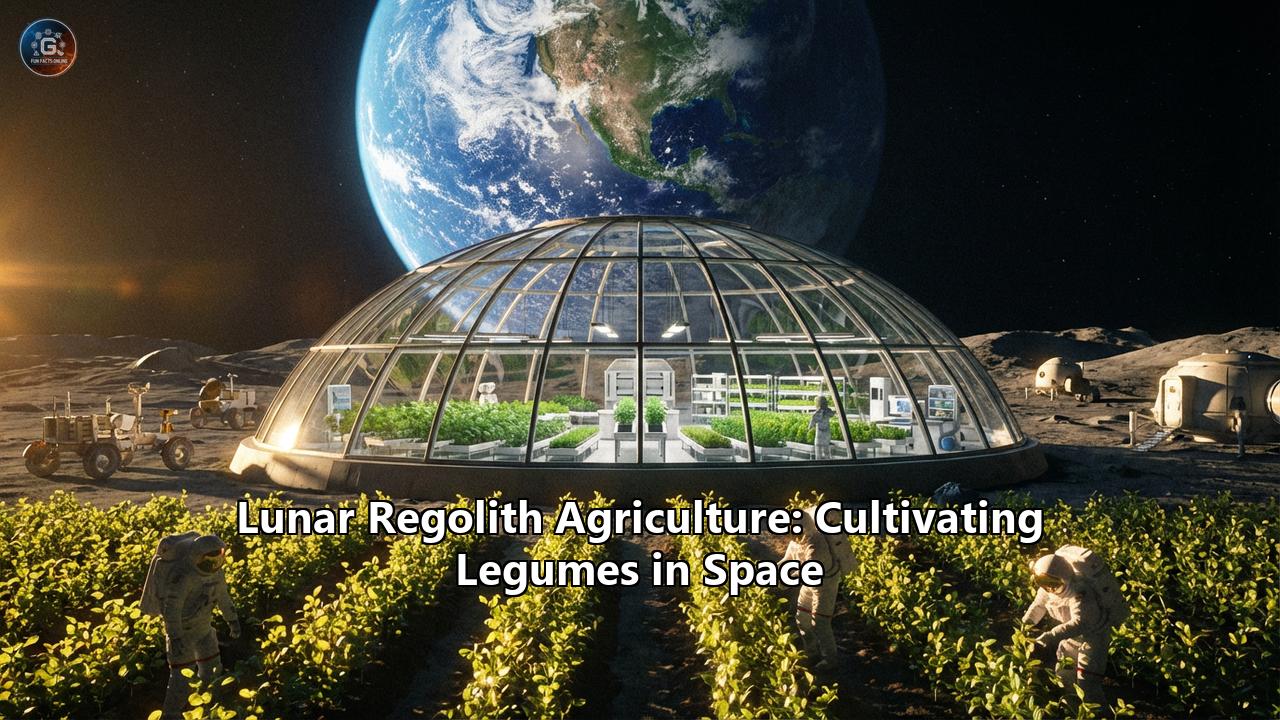
Imagine standing inside a pressurized, transparent dome on the edge of the Moon's Shackleton Crater. Outside, the lunar landscape is a desolate, monochrome expanse of ancient, pulverized rock bathed in the harsh glare of an unfiltered sun. But inside, the air is thick with the smell of damp earth and the vivid, unmistakable green of life. On vines and in neatly organized rows, green pods are swelling with the promise of tomorrow’s dinner. This isn’t science fiction anymore. The key to humanity’s sustained presence in the cosmos isn't just rocket fuel or titanium habitats; it is the humble legume.
For decades, the dream of establishing a permanent human presence on the Moon has been hampered by a seemingly insurmountable biological bottleneck: food. Transporting a single kilogram of payload to the lunar surface costs tens of thousands of dollars. Relying exclusively on pre-packaged, freeze-dried rations from Earth is financially unsustainable and psychologically draining for astronauts enduring long-duration missions. To truly settle the final frontier, we must learn to live off the land. We must master the art of lunar agriculture.
The Cruel Reality of Moon Dirt
To understand the monumental challenge of farming on the Moon, one must first understand the ground we are trying to farm. The lunar surface is covered in regolith, a layer of unconsolidated rocky material. But calling it "soil" would be a profound insult to the rich, living matrix we walk upon on Earth.
Earth's soil is a biological masterpiece, forged over millions of years by the weathering of rocks, the decay of organic matter, and the tireless work of trillions of microorganisms. It is spongy, nutrient-rich, and capable of holding water. Lunar regolith, by contrast, is a sterile, hostile wasteland.
Forged by billions of years of meteorite impacts, regolith is essentially microscopic, jagged shards of glass and rock. Because the Moon lacks an atmosphere and liquid water, there is no weathering to smooth these particles down. They remain razor-sharp, highly abrasive, and statically charged. When the Apollo astronauts returned to their lunar modules, they found this dark gray dust clinging to everything, creating micro-tears in their spacesuits and irritating their lungs.
From an agricultural perspective, regolith is a nightmare. It is highly hydrophobic, meaning it repels water and compacts into an impenetrable, concrete-like mass when wet. It is utterly devoid of organic matter and the essential microorganisms that drive the nutrient cycles on Earth. Worse still, while it contains some essential plant macronutrients like calcium and iron, it is completely devoid of reactive nitrogen—the fundamental building block of amino acids, proteins, and DNA. To compound the misery, regolith is laced with heavy metals and toxic elements, which, if absorbed by plants, could poison the astronauts who consume them.
In 2022, scientists at the University of Florida made a historic leap by successfully growing Arabidopsis thaliana—a small flowering plant related to mustard—in actual lunar regolith retrieved during the Apollo missions. While the plants did germinate, they exhibited severe physiological stress. They grew slowly, their roots were stunted, and their genetic expression revealed a massive defensive response against oxidative stress and heavy metal toxicity. The message was clear: you can force a plant to sprout in moon dust, but it will suffer.
Why Legumes? The Pioneer Species of the Cosmos
If Arabidopsis proved that lunar agriculture was possible, the next question was how to make it practical, nutritional, and sustainable. Enter the legume.
Legumes—a family of plants that includes chickpeas, soybeans, lentils, peas, and alfalfa—are uniquely equipped to serve as the pioneer crops of a lunar biosphere. Their secret weapon lies in an ancient evolutionary pact with the microscopic world.
Legumes form a symbiotic relationship with nitrogen-fixing bacteria known as rhizobia. These bacteria colonize the plant's root hairs, prompting the plant to form specialized structures called nodules. Inside these oxygen-controlled biological factories, the bacteria perform a chemical miracle: they take inert nitrogen gas from the air and convert it into ammonia, a bioavailable form of nitrogen that the plant can use to grow. In exchange, the plant provides the bacteria with carbohydrates synthesized through photosynthesis.
Because lunar regolith contains zero nitrogen, any non-leguminous crop would require massive, continuous infusions of synthetic nitrogen fertilizer shipped from Earth—a logistical impossibility. Legumes, however, can act as biological terraformers. They manufacture their own fertilizer, pulling nitrogen from the artificial atmosphere of the lunar greenhouse and pumping it into the lifeless regolith, slowly beginning the process of turning dead dust into living soil.
Furthermore, legumes are nutritional powerhouses. They are exceptionally dense in plant-based protein, dietary fiber, and essential micronutrients. In the high-stress, fractional gravity environment of space, maintaining muscle mass and bone density is a constant battle. The high protein content of soybeans or chickpeas makes them the perfect staple for an astronaut's diet.
The Breakthrough: Chickpeas in Simulated Moon Dirt
Theoretical advantages are one thing; empirical proof is another. The leap from theory to reality occurred in a series of groundbreaking experiments culminating in the spring of 2026, spearheaded by space biologist Jessica Atkin of Texas A&M University and fluid dynamicist Sara Oliveira Santos of the University of Texas at Austin.
Recognizing that actual lunar samples are too precious and scarce for large-scale agricultural trials, the researchers utilized a high-fidelity lunar regolith simulant known as LHS-1. Engineered to mimic the precise mineralogical and chemical properties of the lunar highlands—the planned landing site for NASA’s upcoming Artemis missions—LHS-1 is every bit as sharp, sterile, and problematic as the real thing.
The researchers chose the 'Myles' variety of chickpea (Cicer arietinum) for their trials. The Myles chickpea is highly prized for its compact architecture, rapid maturation, and robust stress tolerance—ideal traits for the tight, highly controlled confines of a space habitat. But Atkin and Santos knew that dropping a chickpea seed directly into the toxic glass powder of LHS-1 would be a death sentence. To give the plants a fighting chance, they looked to Earth's most ancient soil-regeneration strategies: worms and fungi.
The Fungal and Worm Allies
To detoxify and amend the regolith, the research team introduced two biological co-pilots: vermicompost and Arbuscular Mycorrhizal Fungi (AMF).
Vermicompost is the nutrient-rich excrement of earthworms—specifically red wiggler worms that digest organic waste. In a closed-loop life support system like a lunar base, waste management is a critical issue. Astronauts produce a steady stream of organic waste: food scraps, coffee grounds, biodegradable clothing, and cotton hygiene products. By utilizing worms to digest this waste, a lunar base can produce vermicompost, a powerful, biologically active fertilizer teeming with beneficial microbes.
Arbuscular Mycorrhizal Fungi, on the other hand, are ancient fungal networks that form symbiotic relationships with the roots of over 80% of terrestrial plant species. When AMF colonize a plant's roots, their microscopic threads (hyphae) extend far beyond the root zone, acting as a secondary, highly efficient root system. These hyphae secrete organic acids that dissolve tightly bound minerals, making them accessible to the plant.
But in the context of lunar agriculture, AMF serve an even more vital purpose: heavy metal sequestration. The fungi act as a biological filter. They bind to toxic elements present in the regolith—like aluminum and titanium—and trap them in their fungal tissues, preventing these toxins from traveling up the plant's vascular system and accumulating in the edible seeds. Furthermore, the sticky glycoproteins secreted by the fungi help bind the sharp, loose particles of regolith together, improving the structural integrity and water retention of the soil.
From Dust to Seed: The Results
In their controlled greenhouse experiments, Atkin and Santos planted the Myles chickpeas in varying ratios of lunar regolith simulant and vermicompost, all inoculated with AMF and rhizobia bacteria. The results were nothing short of spectacular.
In mixtures containing up to 75% lunar regolith simulant (and 25% vermicompost), the chickpeas didn't just survive; they thrived. Over a period of several weeks, the seeds germinated, developed robust stems, and unfurled their compound leaves. As the plants matured, they entered their reproductive phase, pushing out delicate, purple-veined flowers that eventually swelled into seed pods.
It was a monumental milestone: a crop grown to full seed-bearing maturity in such a high concentration of lunar simulant.
The plants grown in the 75% regolith mixture did exhibit signs of stress compared to the control group grown in earthly potting soil. They experienced "xenomorphism"—a stress response characterized by reduced leaf area and shorter shoot height. Their growth was delayed, taking longer to reach maturity. Yet, the biological amendments proved their worth. Chickpeas grown in pure 100% regolith without help ultimately perished, but those treated with the AMF lived a full two weeks longer than uninoculated plants, proving the fungi's remarkable ability to buffer extreme environmental stress. Even more promising, the fungi successfully colonized the roots, sporulated, and reproduced within the 100% simulant, indicating that future lunar farmers wouldn't need to import a continuous supply of fungal spores from Earth; the lunar soil could sustain its own microbiome.
Hydroponics vs. In-Situ Resource Utilization (ISRU)
Some space exploration enthusiasts might ask: why bother with the agonizingly difficult process of transforming toxic moon dirt into soil? Why not just use hydroponics?
Hydroponics—the practice of growing plants in nutrient-rich water without soil—is already being utilized on the International Space Station (ISS). Systems like the European Space Agency's exo-agriculture habitats have successfully produced lettuce, radishes, and even chili peppers in microgravity.
However, scaling hydroponics to feed an entire lunar colony presents distinct challenges. Hydroponic systems require massive amounts of water—a heavy, precious commodity in space. While water ice exists in the permanently shadowed craters of the lunar south pole, purifying it for delicate hydroponic pumps is energy-intensive. Furthermore, hydroponic systems require continuous inputs of concentrated, liquid, synthetic fertilizers, all of which must be manufactured on Earth and shipped via rocket.
Farming in regolith relies on a concept called In-Situ Resource Utilization (ISRU)—living off the land. By using the dirt that is already there, astronauts can massively reduce the mass and cost of agricultural payloads. The ultimate vision is a hybrid approach. Scientists are exploring ways to "beneficiate" lunar regolith—processing it mechanically and chemically to extract essential minerals, which are then dissolved into water for hydroponic systems. Simultaneously, the solid, detoxified regolith matrix can be amended with compost to grow deeply rooted, calorie-dense crops like legumes that require physical anchoring.
The Psychology of the Lunar Harvest
The cultivation of legumes in space is not just a triumph of biology and engineering; it is a profound psychological imperative.
The phenomenon of "food fatigue" is a well-documented hazard of spaceflight. Astronauts subjected to monotonous, pre-packaged diets often lose their appetite, leading to weight loss, nutritional deficiencies, and a decline in morale. In the isolated, high-stakes environment of a lunar base, mental health is just as critical as physical health.
The act of gardening—tending to a living, growing organism in a world of dead rock and cold machinery—offers immense psychological comfort. The sight of green leaves, the smell of damp earth, and the tactile sensation of harvesting a pod connect astronauts to the world they left behind.
And then, there is the culinary reward. Imagine the first batch of lunar hummus. Harvested by hand, mashed with a bit of rehydrated garlic and oil, and spread over a flatbread engineered in a habitat kitchen. It represents more than just a meal; it is a profound declaration of independence. It means that humanity is no longer just visiting the cosmos; we are moving in. We are taking the very essence of Earth's biosphere and seeding it among the stars.
Looking Ahead: The Road to Mars and Beyond
The success of the 2026 chickpea experiments serves as a vital stepping stone. But the work is far from finished.
Before these extraterrestrial legumes can be served on the Artemis basecamp dining table, rigorous biochemical analysis is required. Scientists must confirm that the heavy metals present in the regolith—despite the protective barrier of the mycorrhizal fungi—have not accumulated in the seeds to levels toxic for human consumption. Furthermore, the nutritional profile of these stressed plants must be evaluated to ensure they retain their high protein and micronutrient density.
In parallel, plant geneticists are looking to the future. With the advent of CRISPR and advanced gene-editing technologies, researchers are exploring the possibility of engineering "designer crops" specifically tailored for the lunar environment. By splicing in genes from extremophile organisms—such as plants that thrive in highly saline or metal-heavy soils on Earth—scientists hope to create super-legumes that can shrug off the stress of the lunar regolith.
As humanity sets its sights on Mars, the lessons learned from lunar agriculture will be paramount. Martian regolith poses its own unique set of horrors, notably high concentrations of toxic perchlorates. But the blueprint remains the same: harness the power of biology. Use the nitrogen-fixing magic of legumes, the detoxifying networks of fungi, and the composting power of worms to heal the alien dirt.
The Dawn of Interplanetary Agriculture
When humanity finally establishes its foothold on the lunar surface, the monumental achievements of rocketry and engineering will rightfully be celebrated. But the silent, unsung heroes of our cosmic expansion will be the biological ones. The microscopic bacteria breathing nitrogen into the dirt. The fungal threads weaving a safety net against toxic glass. And the resilient, determined chickpea, pushing a single green shoot through the gray dust of a foreign world.
Lunar regolith agriculture teaches us a profound lesson about life. It is fragile, yes. It requires coddling, protection, and the right mix of elements. But it is also devastatingly stubborn. Given half a chance—a handful of compost, a splash of water, and a companion fungus—life will find a way to take root in the most desolate corners of the solar system. The cultivation of legumes in space is not just a scientific experiment; it is the dawn of a new, interplanetary agriculture, proving that wherever humanity goes, the ancient, life-giving power of the Earth's soil will follow.
Reference:
- https://www.space.com/astronomy/moon/making-hummus-on-the-moon-scientists-just-grew-chickpeas-in-simulated-lunar-dirt
- https://astrobiology.com/2024/01/from-dust-to-seed-a-lunar-chickpea-story.html
- https://www.frontiersin.org/journals/astronomy-and-space-sciences/articles/10.3389/fspas.2025.1670807/full
- https://pmc.ncbi.nlm.nih.gov/articles/PMC4146463/
- https://www.sciencenews.org/article/chickpeas-moon-dirt-seeds-space-farming
- https://capitalpress.com/2025/09/04/researcher-raises-plants-in-material-that-mimics-lunar-dust/
- https://www.space.com/moon-farming-lunar-soil-nutrients
- https://activities.esa.int/4000140280
- https://www.eurekalert.org/news-releases/1118340
- https://www.ars.usda.gov/research/project/?accnNo=446031
- https://astrobiology.botany.wisc.edu/gilroy-lab-home/plants-on-the-moon
- https://biz.chosun.com/en/en-science/2026/03/06/3TCGX6SSEBFXFH4D4KNA2Y5FG4/