
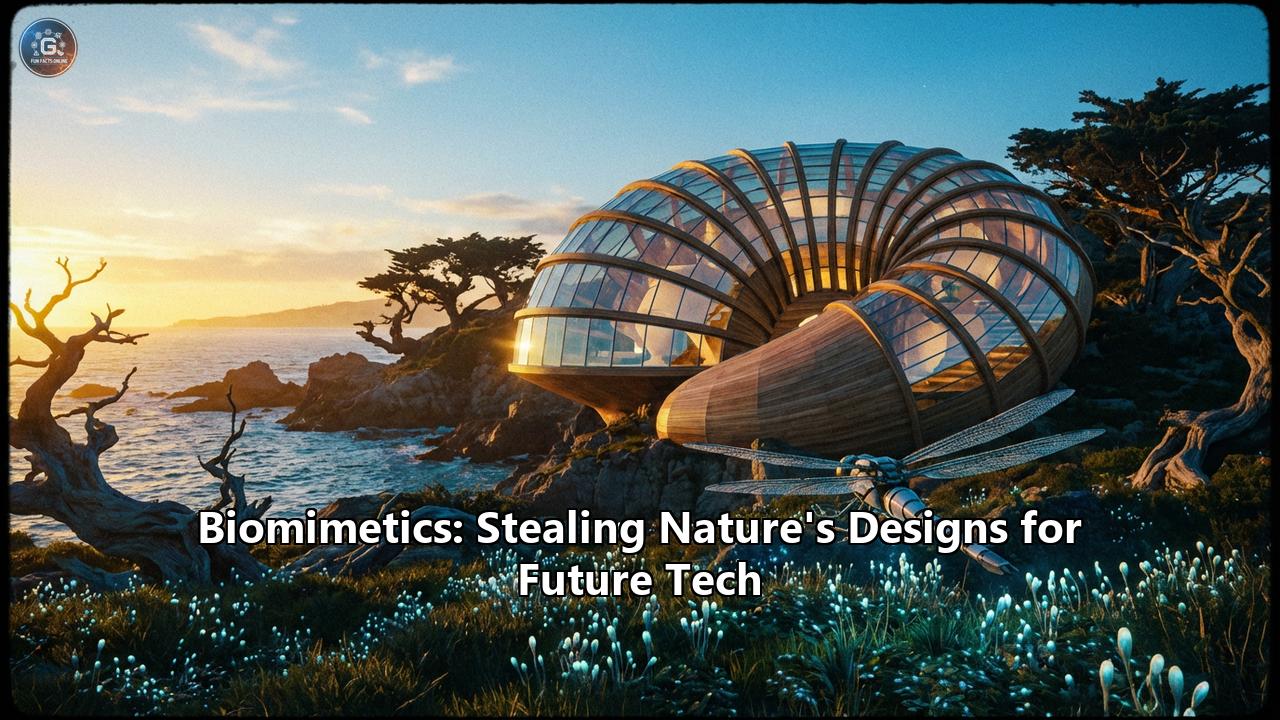
For 3.8 billion years, Earth has been conducting the most extensive research and development experiment in history. The laboratory is the biosphere, the researchers are the forces of evolution, and the prototypes are the millions of species that have survived the rigorous testing of natural selection. Every organism alive today is a masterclass in engineering, chemistry, and design—a survivor that has solved the problems of energy efficiency, waste management, locomotion, and structural integrity.
For centuries, humanity viewed nature primarily as a warehouse of raw materials—a pantry to be raided for wood, ore, and meat. But a profound shift is occurring in the scientific and industrial worlds. We are no longer just extracting from nature; we are learning from it. We are entering the age of Biomimetics—the discipline of stealing nature’s best ideas to power our future.
This is not simply about copying the shape of a leaf or the curve of a bird's wing. It is about decoding the deep principles of biological survival and translating them into synthetic technologies. It is about understanding how a spider spins silk stronger than steel at room temperature without toxic chemicals; how a mangrove desalination plant runs on sunlight; and how a human brain processes information with the energy consumption of a dim lightbulb.
The Philosophy of the Natural Blueprint
To understand biomimetics is to understand that human engineering and natural engineering have historically taken opposite paths. Human industry has been built on "heat, beat, and treat." We forge steel in blast furnaces, we crush rocks to make concrete, and we synthesize chemicals using high pressures and toxic solvents. Our systems are linear: we extract, manufacture, consume, and discard.
Nature, conversely, builds at ambient temperatures and pressures. Life uses water as a primary solvent. Most importantly, nature functions on a closed-loop system where waste does not exist; the byproduct of one organism is the feedstock for another. A cherry tree that drops thousands of blossoms is not being wasteful; it is enriching the soil for its own future growth.
The promise of biomimetics is not just cooler gadgets, but a fundamental overhaul of our industrial metabolism. By emulating life's design principles, we aim to move from an industrial age defined by brute force to one defined by elegant efficiency.
Materials Science: The Fabric of the Future
The most immediate and tangible revolution is happening in materials science. Our current strongest materials—steel, Kevlar, carbon fiber—require immense energy to produce. Nature, however, constructs high-performance materials from the bottom up, arranging atoms and molecules into hierarchical structures that baffle our best engineers.
The Holy Grail: Spider SilkConsider the dragline silk of the Golden Orb Weaver spider. Pound for pound, it is five times stronger than steel and tougher than Kevlar. But its true brilliance lies in its duality: it is both strong (resistant to breaking) and extensible (capable of stretching). Man-made materials usually sacrifice one for the other; glass is strong but brittle, while rubber is stretchy but weak. Spider silk achieves this balance through a complex arrangement of crystalline protein structures (which provide strength) embedded in a semi-amorphous matrix (which provides stretch).
For decades, we tried to farm spiders, but their territorial nature made this impossible. Today, biomimetic startups are bypassing the spider entirely. By inserting spider DNA into yeast, bacteria, and even goats, scientists are brewing liquid silk protein in vats, similar to brewing beer. This liquid is then spun into fibers that are being used to create biodegradable running shoes, lightweight ballistic armor, and surgical sutures that dissolve into the body.
Structural Color and the End of PaintLook at the shimmering blue wings of the Morpho butterfly. If you grind them into a powder, the blue disappears, revealing a dull brown dust. This is because the blue is not a pigment; it is "structural color." The wing is covered in microscopic scales shaped like Christmas trees. These nanostructures interfere with light waves, reflecting only the blue spectrum while canceling out the rest.
Human paints and dyes are toxic, fade over time, and require heavy chemical processing. Biomimetic researchers are now creating films and fabrics with nanostructures that mimic the Morpho butterfly. These materials produce brilliant, fade-proof colors without a single drop of dye. Imagine a car paint that never chips or fades because the color is built into the physical structure of the metal itself, or a screen display that uses a fraction of the power by manipulating ambient light rather than generating its own.
The Shark’s Paradox: Rough is SmoothFor years, we assumed that to move fast through water, a surface had to be perfectly smooth. Then we looked at the shark. Shark skin is covered in tiny, tooth-like scales called dermal denticles. These denticles are grooved and arranged to channel water efficiently, preventing the formation of turbulent eddies that create drag.
This counter-intuitive discovery—that a textured surface can be more aerodynamic than a smooth one—has revolutionized fluid dynamics. "Riblet" films mimicking shark skin have been applied to the hulls of ships and the wings of airplanes, reducing fuel consumption by reducing friction. Even competitive swimwear has utilized this technology, aiding swimmers in breaking world records before being regulated for providing too much of an advantage.
Furthermore, these denticles serve a second purpose: they are antifouling. Bacteria and barnacles struggle to latch onto the shark’s rough, shifting skin. This has led to the development of Sharklet patterns—micro-patterned surfaces for hospitals that physically inhibit bacterial growth without the use of antibiotics, a critical tool in the fight against superbugs.
Architecture: Breathing Buildings
Our modern buildings are sealed glass boxes fighting against the environment. We pump massive amounts of energy into HVAC systems to cool them down or heat them up. Nature builds structures that regulate their own climate passively.
The Termite LessonThe most famous example of architectural biomimicry is the Eastgate Centre in Harare, Zimbabwe, designed by architect Mick Pearce. Pearce faced a challenge: build a large office complex without expensive air conditioning. He turned to the mounds of the Macrotermes michaelseni termite.
These termites farm a fungus inside their mounds that requires a precise temperature of 87°F (30.5°C), while the outside African savannah fluctuates between 35°F and 104°F. The mound achieves this through a complex system of vents and tunnels. Cold air is drawn in at the base, and as it warms from the metabolism of the termites and the fungus, it rises and exits through the chimney, creating a continuous convective current. The termites constantly adjust the vents to regulate airflow.
The Eastgate Centre mimics this passive cooling. The building is constructed from materials with high thermal mass (like masonry) which absorb heat during the day and release it at night. A series of fans and vents circulate air through the building's "bones," mimicking the termite tunnels. The result? The building uses 90% less energy for ventilation than a conventional building of its size, saving millions in electricity costs and drastically reducing its carbon footprint.
The Venus Flower BasketIn the deep ocean, the Venus Flower Basket sponge withstands immense hydrostatic pressure. Its skeleton is a delicate-looking glass lattice. When engineers analyzed it, they found a hierarchy of structural reinforcements—diagonal ridges and spiral layers—that stop cracks from propagating.
This sponge inspired the design of "The Gherkin" (30 St Mary Axe) in London. The tower’s diagrid structure allows it to be incredibly strong yet lightweight, requiring less steel than a traditional skyscraper. The spiraling gaps in the floors allow air to flow through the building, reducing the reliance on air conditioning, much like the sponge allows water to flow through it to filter feed.
Self-Healing ConcreteConcrete is the second most consumed substance on Earth after water, but it is prone to cracking. When water enters these cracks, it rusts the steel reinforcement, leading to structural failure. To fix this, we usually patch it up—a temporary solution.
Biomimetic material scientists have developed "living concrete" infused with bacteria (specifically Bacillus strains) and starch. When the concrete cracks and water seeps in, the dormant bacteria wake up. They feed on the starch and excrete calcite (limestone), which fills the crack and seals it shut. The concrete effectively heals its own wounds, just like human skin. This innovation could extend the lifespan of bridges and roads by decades, saving billions in infrastructure costs and reducing the massive carbon emissions associated with cement production.
Robotics: The Soft Revolution
Traditional robots are rigid, jerky, and struggle with uncertain environments. They are made of metal and motors. Biological organisms are soft, compliant, and incredibly adaptable. This has given birth to "Soft Robotics."
The Octopus ArmAn octopus has no bones. It can squeeze through a hole the size of its beak, yet it is strong enough to crush a crab. Its arms have "infinite degrees of freedom"—they can bend, twist, and elongate at any point.
Engineers are building soft robotic arms made of silicone and powered by pneumatic or hydraulic fluids. These robots don't need complex joints; they move by inflating chambers within their soft bodies. A soft robotic gripper can pick up an egg, a wrench, or a live mouse with equal ease, simply by conforming its shape to the object. This is revolutionizing warehouse logistics and agricultural harvesting, where rigid robots often crush delicate fruits.
Swarm IntelligenceIt is not just the body of the robot that is being updated, but the brain. In nature, individual ants or bees are simple, but the colony is brilliant. They exhibit "swarm intelligence," solving complex routing problems to find food or build hives without a central commander.
Roboticists are programming "swarms" of simple drones that communicate locally with their neighbors. If one drone finds a target (like a survivor in a disaster zone), it signals its neighbors, and the information ripples through the swarm. This allows for robust systems; if one robot fails, the swarm continues. These swarms are being designed for search and rescue, environmental monitoring, and even construction, where flying drones work together to 3D print structures in flight.
Boston Dynamics and Animal LocomotionThe viral videos of Boston Dynamics’ robots—Spot and Atlas—show machines that can run, jump, and backflip. These feats are achieved by analyzing the dynamic stability of animals. A cheetah doesn't just use its legs; it uses its tail for balance and its flexible spine to store energy. Biomimetic robots are moving away from static stability (standing still without falling) to dynamic stability (falling continuously but catching oneself), allowing them to navigate rough terrain that would trap a wheeled vehicle.
Energy: Harvesting the Sun and Wind
Our energy systems are brute force. We burn dead plants (fossil fuels) or split atoms. Nature runs entirely on current sunlight.
Artificial PhotosynthesisA leaf is a masterpiece of energy conversion. It takes sunlight, water, and carbon dioxide and turns them into sugar and oxygen. The "Artificial Leaf" project aims to replicate this. Scientists have developed devices using silicon and catalysts (like cobalt and phosphate) that, when dropped in water and exposed to sunlight, split the water into hydrogen and oxygen. The hydrogen can be stored and used as a fuel.
More advanced versions are attempting to capture carbon dioxide from the air and convert it into liquid fuels (like ethanol), effectively reversing combustion. If scalable, this technology would not just be carbon neutral—it would be carbon negative.
Whale PowerHumpback whales are massive, yet they are incredibly agile swimmers. Marine biologists noticed that the leading edge of their pectoral fins is not smooth, but covered in bumpy tubercles. Fluid dynamics simulations revealed that these bumps channel water into rotating flows (vortices), which keep the water "attached" to the fin at steep angles. This prevents stalling and increases lift.
This discovery has been applied to wind turbines. Blades with "whale bumps" can operate at steeper angles and lower wind speeds, capturing more energy. They are also quieter. This same technology is being applied to industrial fans and helicopter blades, proving that sometimes, a bumpy ride is more efficient than a smooth one.
Fog CatchingIn the Namib Desert, one of the driest places on Earth, the Stenocara beetle survives by drinking fog. Its back is covered in a pattern of hydrophilic (water-loving) bumps on a hydrophobic (water-repelling) background. When fog rolls in, water condenses on the bumps. When the droplet gets heavy enough, it rolls off the waxy background and straight into the beetle's mouth.
Engineers have replicated this texture to create fog-harvesting nets and building facades. In arid regions like Chile and Morocco, these biomimetic nets are pulling thousands of liters of fresh water out of thin air every day, providing a lifeline to communities without access to groundwater.
Medicine: The Gentle Touch
Modern medicine often involves invasive procedures and chemical bombardments. Biomimicry offers a more targeted approach.
The Painless NeedleNo one likes getting a shot. But have you ever felt a mosquito bite you? often, you don't. The mosquito’s proboscis is not a single needle, but a fascicle of several jagged, vibrating stylets. It saws through the skin with minimal force, and it numbs the area with saliva.
Japanese engineers modeled a hypodermic needle on the mosquito’s proboscis. It is conical and works via a subtle vibration. It reduces the contact area with nerves and glides into the tissue with significantly less pain. This is a game-changer for diabetics who must inject insulin daily.
Surgical Glue from SlugsStitches and staples can damage delicate tissues like the heart or lungs. Medical researchers sought a glue that could work in the wet, bloody environment of the body. They found the Dusky Arion slug. The defensive slime of this slug is incredibly sticky and elastic.
By analyzing the proteins in the slime, scientists created a hydrogel adhesive that binds to wet tissues and can stretch with the beating of a heart without breaking. This bio-glue can seal holes in the heart or lungs, potentially replacing sutures in complex surgeries.
Tardigrade ToughnessVaccines usually require a "cold chain"—constant refrigeration from the factory to the patient. In developing nations, the lack of electricity breaks this chain, spoiling millions of doses. Enter the Tardigrade, or "water bear." These microscopic creatures can survive being dried out, frozen, boiled, and even irradiated. They do this by replacing the water in their cells with a sugar called trehalose, which turns into a protective glass, preserving their internal structures.
Biochemists are using this "xeropreservation" technique to dry-stabilize vaccines. Wrapped in a microscopic "sugar glass," these vaccines can be stored at room temperature for months. To use them, you simply add water. This could eradicate diseases in the most remote corners of the globe.
Computing: The Silicon Brain
Our computers use the von Neumann architecture: separate memory and processing units shuttling data back and forth. This is fast but energy-hungry. The human brain, however, integrates memory and processing in the synapse. It is slow, but massively parallel and incredibly efficient, running on about 20 watts.
Neuromorphic ComputingScientists are building chips that mimic the physical structure of the brain. These "neuromorphic" chips, like Intel's Loihi or IBM's TrueNorth, use "spiking neural networks." Instead of a constant flow of electricity, they send discrete spikes of information only when needed, just like neurons firing.
These chips are exceptionally good at pattern recognition and sensory processing. They are being used to give robots "reflexes" and to process visual data on the edge (like a security camera identifying a threat) without needing to send terabytes of video to the cloud.
DNA Data StorageWe are generating data faster than we can build hard drives. The world’s digital data is fragile; magnetic tape degrades in decades. Nature has stored the blueprint of life in DNA for billions of years. DNA is incredibly dense; all the data in the world could fit in a teaspoon of DNA.
Researchers are now encoding digital files (photos, movies, operating systems) into synthetic strands of DNA. It is slow to write and read, but it is the ultimate archival storage. Kept cold and dry, DNA can last for hundreds of thousands of years. We may soon see the "DNA drive"—a liquid vial replacing the server farm.
The Challenges of Translation
Despite the immense potential, biomimetics is hard. Nature is complex. A spider spins silk using a process that involves pH gradients, protein alignment, and water removal, all within a microscopic duct. Replicating that in a factory is an engineering nightmare.
Furthermore, nature designs for resilience, while humans design for efficiency. A bone is heavier than it "needs" to be to withstand daily walking, because it is designed to survive the occasional fall. Human engineering often strips away this redundancy to save cost, making our systems brittle. Adopting biomimicry requires a shift in mindset: valuing longevity and adaptability over short-term profit and speed.
There is also the "greenwashing" risk. Just because a shape looks like nature doesn't mean it is sustainable. A plastic chair shaped like a leaf is still a plastic chair. True biomimicry—"Level 3 Biomimicry"—emulates not just the form, but the process and the ecosystem. It asks: Is this made from life-friendly materials? Does it run on sunlight? Is it recyclable?
Conclusion: The Bio-Hybrid Horizon
We are standing on the precipice of a Bio-Hybrid future. The division between the "born" and the "made" is blurring. We will live in buildings that breathe, drive cars that heal their own scratches, wear clothes that harvest energy from our movement, and compute with machines that think like brains.
Biomimetics is more than a technological trend; it is a humbling correction to human hubris. It acknowledges that we are not the first inventors. We are the youngest apprentices in a workshop that has been operating for eons. The blueprints are all around us—in the forest floor, the coral reef, and the spider's web. All we have to do is quiet our machines long enough to listen, observe, and learn. The future of technology has been here all along.
Reference:
- https://www.mdpi.com/2313-7673/10/7/447
- https://afors.org/2024/07/24/inspiration-biomimicry-is-designing-our-future-with-natures-help/
- https://newatlas.com/science/biomimicry-developments-2025/
- https://www.learnbiomimicry.com/blog/best-biomimicry-examples
- https://www.youtube.com/watch?v=9FvKFA_-ylE
- https://foyr.com/learn/biomimicry-architecture-interior-design
- https://www.re-thinkingthefuture.com/rtf-fresh-perspectives/stunning-examples-of-biomimicry-in-architecture/
- https://newscenter.lbl.gov/2025/04/24/scientists-develop-artificial-leaf-that-uses-sunlight-to-produce-valuable-chemicals/
- https://www.meegle.com/en_us/topics/neuromorphic-engineering/biomimetic-computing