
Introduction: The Invisible Fabric of Nature
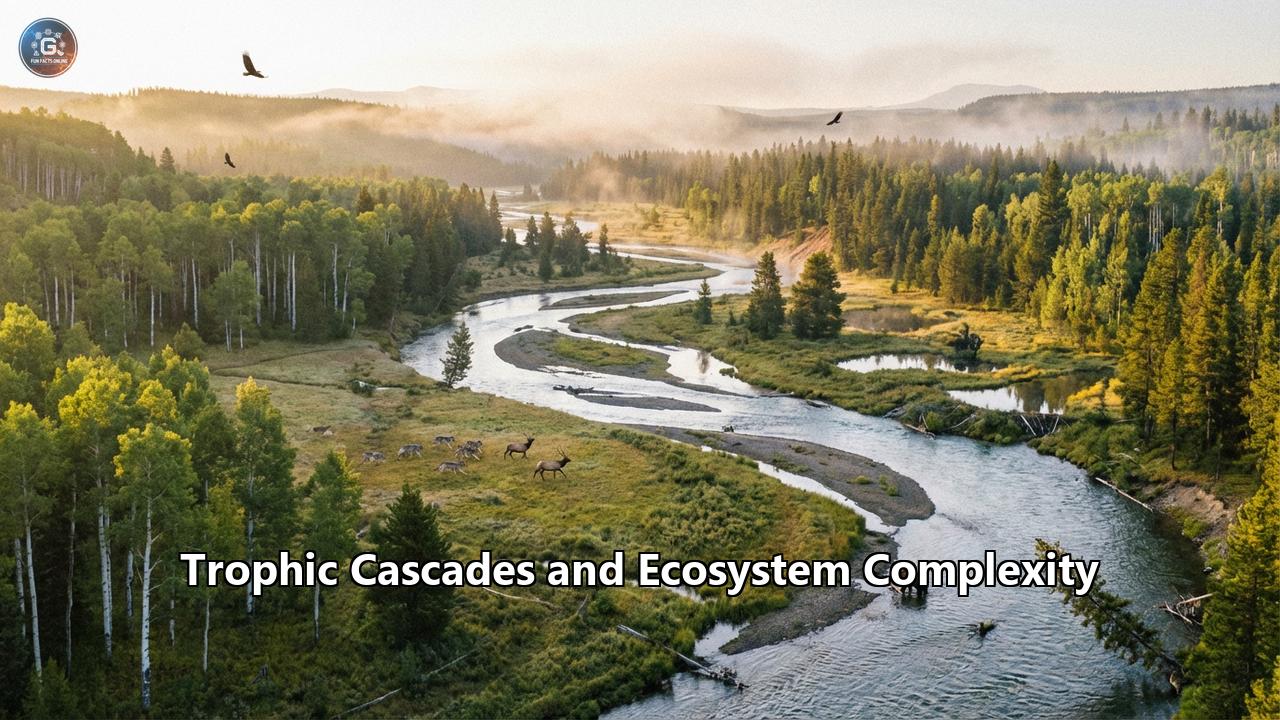
In 1995, fourteen gray wolves were released into the snowy wilderness of Yellowstone National Park. They were the first of their kind to set paw there in seventy years. What followed was an ecological domino effect so profound and unexpected that it stunned the scientific community and captured the public imagination. The wolves didn't just eat elk; they altered the behavior of the herds, forcing them out of the open valleys and into the cover of thickets. Released from the pressure of constant grazing, willow and aspen trees began to regenerate along the riverbanks. The renewed vegetation stabilized the soil, reducing erosion. Beaver populations, dependent on willow, rebounded, and their dams created ponds that supported fish, amphibians, and waterfowl. The river channels themselves deepened and stopped meandering as much. In a very literal sense, the wolves changed the rivers.
This phenomenon is known as a trophic cascade—an ecological process where a change at the top of the food chain triggers a series of alternating effects that ripple down through lower trophic levels, ultimately shaping the entire ecosystem. It is one of the most powerful and elegant concepts in ecology, revealing that nature is not merely a collection of isolated species but a tightly woven tapestry of interactions.
However, the "wolves changing rivers" story, while compelling, is a simplified narrative. Real-world ecosystems are messy, chaotic, and staggeringly complex. They are defined not just by who eats whom, but by the "landscape of fear," the strength of weak interactions, the architecture of food webs, and the physical geography of the land itself. Trophic cascades can alter the carbon cycle of the planet, reshape the physical structure of coastlines, and determine the resilience of life in the face of climate change.
To truly understand trophic cascades, we must look beyond the simple linear chains of predator and prey and dive into the labyrinth of ecosystem complexity. This article explores the science of these cascades, from the icy tundra of the Arctic to the coral reefs of the tropics, revealing how the invisible hand of predation sculpts the world we live in.
Part I: The Architecture of Life
1. The Trophic Ladder vs. The Food Web
Classically, ecology viewed nature as a "ladder" or chain. At the bottom are the primary producers (plants, algae) that convert sunlight into energy. Above them are primary consumers (herbivores) that eat the plants. Next come the secondary consumers (mesopredators) that eat the herbivores, and finally, the apex predators sit at the top.
In this linear view, two types of control dictate the system:
- Bottom-Up Control: The amount of energy available at the bottom (nutrients, sunlight, water) determines how much life the system can support. More grass means more gazelles, which means more lions.
- Top-Down Control: Predators limit the population of prey, which in turn releases the pressure on the level below. This is the mechanism of a trophic cascade.
However, nature rarely operates in a straight line. It operates as a network. A food web is a tangle of interactions where species operate at multiple levels (omnivory), consume each other (intraguild predation), and interact in non-lethal ways (competition, symbiosis).
Complexity in an ecosystem is often measured by connectance—the proportion of possible links between species that actually exist. Surprisingly, theoretical models suggest that highly complex webs with many strong interactions should be unstable; if one species fluctuates, the shockwave should shatter the whole system. Yet, nature persists. The secret lies in interaction strength.2. The Power of Weak Interactions
Ecologists have discovered that stable ecosystems are dominated by "weak" interactions. If every predator ate its prey to extinction, the system would collapse. Instead, most species have multiple weak links—a generalist predator might eat a little bit of Species A, a bit of Species B, and occasionally Species C. These weak interactions act as shock absorbers. When Species A has a bad year, the predator switches to Species B, allowing A to recover. This dampens the oscillations that would otherwise destabilize the web.
Trophic cascades are most dramatic in systems with strong interactions and low redundancy—often called "simple" food chains. This is why the sea otter/urchin/kelp cascade is so clear: otters are specialized urchin predators. In more complex systems, like a tropical rainforest, the cascade is often diffused through the "sponge" of biodiversity, making the effects harder to see but no less important.
3. The Landscape of Fear
Predators do not just kill; they terrify. The Ecology of Fear (or non-consumptive effects) posits that the mere presence of a predator causes prey to alter their behavior to stay alive. They spend more time vigilant and less time eating; they avoid high-risk areas (like open meadows or waterholes) and stick to cover.
This behavioral shift can trigger a cascade just as powerful as direct predation. In Mozambique’s Gorongosa National Park, the civil war decimated large carnivore populations. Without lions and wild dogs, the bushbuck—a shy, forest-dwelling antelope—began venturing out into the open floodplains to feast on nutrient-rich grasses. They had "forgotten" their fear. When researchers experimentally reintroduced predator cues (lion growls and synthetic urine), the bushbuck immediately retreated to the woods. The restoration of the "landscape of fear" is now allowing the floodplain vegetation to recover, proving that the psychology of prey is a structural force in ecosystems.
Part II: Architects of the Earth (Biogeomorphology)
One of the most fascinating frontiers in ecology is biogeomorphology—the study of how organisms shape the physical landforms of the Earth. Trophic cascades can literally move mountains, or at least, riverbanks and sand dunes.
1. Wolves and the Meandering Rivers
As mentioned, the Yellowstone wolves reduced elk grazing on riparian (riverbank) willows. But the physics of this is fascinating. Willow roots bind soil. Without them, stream banks crumble and widen, making the water shallow and warm—poor habitat for trout. With the return of the willows, the banks stabilized. The rivers deepened and flowed faster, creating cold, oxygen-rich pools. The recovery of beavers amplified this; their dams trapped sediment, raising the water table and creating wetlands. The wolf, a terrestrial predator, effectively engineered the hydrology of the park.
2. Arctic Foxes and the Green Tundra
In the Aleutian Islands, a different kind of cascade transformed the landscape. Historically, these islands were lush grasslands with no terrestrial predators, inhabited by millions of seabirds. The seabirds foraged in the ocean and brought massive amounts of marine nutrients (nitrogen and phosphorus) back to land in the form of guano. This "marine subsidy" fueled the tall, nutrient-hungry grasses.
Then, fur traders introduced Arctic foxes to the islands. The foxes decimated the seabird populations. With the birds gone, the nutrient pipeline from the ocean was shut off. The nutrient-hungry grasses collapsed and were replaced by slow-growing, low-nutrient maritime tundra (mosses and dwarf shrubs). The introduction of a single predator changed the chemical composition of the soil and the entire botanical face of the archipelago.
3. Parrotfish and Coral Reef Bioerosion
On coral reefs, the physical structure of the reef is maintained by a delicate balance between calcification (coral growth) and bioerosion (wear and tear). Parrotfish are key players here. They graze on algae that competes with coral, but they also bite off chunks of dead coral skeleton, grinding it up and excreting it as sand. A single large parrotfish can produce hundreds of pounds of sand per year.
Overfishing of sharks and large groupers releases mesopredators, which may hunt parrotfish more intensively, or conversely, fishing pressure directly removes parrotfish. When parrotfish populations crash, algae overgrows the coral (a phase shift), killing the polyps. Without the "gardening" and sand-producing activity of the parrotfish, the reef structure degrades, and the very beaches we walk on—often made of parrotfish poop—begin to erode.
Part III: The Carbon Cascade
Perhaps the most critical relevance of trophic cascades today is their link to the global carbon cycle. We often think of carbon sequestration in terms of trees and technology, but animals play a massive, overlooked role.
1. Sea Otters and the Blue Carbon Bank
Kelp forests are some of the most productive ecosystems on Earth, sucking up vast amounts of CO2. However, they are constantly under siege by sea urchins. In the absence of sea otters, urchins can mow down entire kelp forests, creating "urchin barrens"—underwater deserts with almost no carbon storage.
When otters are present, they keep urchins in check. Studies have shown that kelp forests protected by sea otters can store 12 times more carbon than those without. This "blue carbon" is eventually sequestered in deep ocean sediments. The recovery of sea otters along the North American coast is not just a conservation success; it is a climate mitigation strategy.
2. The Whale Pump and Iron Fertilization
Great whales act as mobile geo-engineers. They feed in the deep, nutrient-rich waters and return to the surface to breathe—and defecate. Their iron-rich fecal plumes fertilize the surface waters, triggering massive blooms of phytoplankton. These microscopic plants absorb CO2 from the atmosphere. When they die, they sink, locking that carbon away in the deep sea.
Commercial whaling decimated these populations, likely reducing the ocean's ability to sequester carbon significantly. Furthermore, the bodies of whales themselves represent a massive store of carbon. When a whale dies naturally and sinks (a whale fall), it transports tons of carbon to the abyssal floor, keeping it out of the atmosphere for centuries. The restoration of whale populations is, in effect, a restoration of the ocean's biological carbon pump.
3. Wildebeest and the Fire Trap
In the Serengeti, the wildebeest migration is a force of nature. In the mid-20th century, the wildebeest population was decimated by rinderpest, a viral disease. With fewer grazers, the grass grew tall and dry. This fuel load led to massive, frequent wildfires that scorched the savanna, preventing trees from growing and releasing tons of stored carbon into the atmosphere.
When rinderpest was eradicated in the 1960s, the wildebeest population rebounded from 300,000 to over 1.2 million. They grazed the grass down, creating natural firebreaks. The frequency of wildfires dropped, allowing acacia seedlings to survive and grow into woodlands. The Serengeti shifted from being a net carbon source (due to fires) to a net carbon sink, sequestering vast amounts of CO2 in the soil and woody biomass—all thanks to the appetite of the wildebeest.
Part IV: Rewilding and the Future of Conservation
Understanding trophic cascades has revolutionized conservation. It has shifted the focus from saving single species to rewilding—restoring the functional roles of apex predators to heal broken ecosystems.
1. Jaguars in the Wetlands (Argentina)
In the Iberá Wetlands of Argentina, a bold project is underway to reintroduce the jaguar, which had been extinct in the region for 70 years. The ecosystem is currently dominated by capybaras (the world's largest rodent) and caimans. Without a top predator, capybaras have become overabundant, overgrazing vegetation and altering the wetland structure.
The return of the jaguar is expected to trigger a cascade. By predating on capybaras and caimans, jaguars will likely restore the vegetation diversity and structure. Early signs suggest that the "landscape of fear" is already returning, with prey animals becoming more alert and altering their usage of the marshes, which may allow for the recovery of sensitive plant species and ground-nesting birds.
2. The Dingo Debate (Australia)
Australia offers a complex case study. The dingo is the continent's top predator, but it is also persecuted as a pest by sheep farmers. Ecologists argue that the dingo plays a crucial role in suppressing mesopredators—the feral cats and red foxes that have devastated Australia’s unique small mammal populations (like bilbies and wallabies).
The "mesopredator release hypothesis" suggests that where dingoes are persecuted, foxes and cats thrive, driving native extinctions. Where dingoes are stable, they kill or intimidate foxes and cats, providing a safety umbrella for small native species. While the evidence is debated and context-dependent (dingoes sometimes coexist with cats), there is a growing consensus that the dingo is a guardian of biodiversity, acting as a buffer against invasive killers.
3. Rebuilding Gorongosa
Gorongosa National Park is a living laboratory for restoration. After the reintroduction of wild dogs and the recovery of lions, scientists are documenting the reassembly of the food web in real-time. They are finding that the recovery of predators is helping to balance the herbivore guild. Smaller ungulates are being naturally regulated, preventing them from outcompeting other species. The park is moving from a "broken" state, dominated by a few booming herbivore species, to a complex, resilient web of high biodiversity.
Conclusion: The Complexity of Hope
Trophic cascades teach us that humility is essential in our stewardship of the planet. For centuries, humans have systematically removed apex predators, viewing them as competitors or threats. In doing so, we unwittingly pulled the keystones out of the arches of nature, causing collapses we are only just beginning to understand—from the erosion of riverbanks to the release of soil carbon.
But the science of cascades also offers hope. It tells us that nature is resilient. If we can restore the missing pieces—the wolves, the otters, the jaguars, the wildebeest—ecosystems can heal themselves. The vegetation can return, the carbon can be sequestered, and the rivers can find their natural courses once again.
Ecosystem complexity is not a barrier to understanding; it is the mechanism of survival. By protecting the tangled, intricate, and often invisible web of life, we protect the very systems that sustain us. The wolf does not just hunt the elk; in its own way, it tends the forest, guards the river, and cools the climate. We are all connected in the cascade.
Reference:
- https://www.researchgate.net/publication/368966816_Gorongosa_National_Park_Wilderness_War_and_Wildlife_Recovery
- https://study.com/academy/lesson/arctic-tundra-ecosystem-food-chains.html
- https://www.researchgate.net/figure/How-introduced-arctic-foxes-on-arctic-islands-with-sea-bird-colonies-can-bring-about-a_fig4_23184500
- https://www.mozambiquetravel.com/blog/the-wildlife-conservation-of-gorongosa-national-park-in-mozambique/
- https://psmag.com/environment/how-the-loss-of-large-carnivores-cascades-through-ecosystems/
- https://www.proquest.com/openview/740fb528abece2657affa7dc42241d79/1?pq-origsite=gscholar&cbl=1256
- https://www.scienceintheclassroom.org/research-papers/predator-prey-dynamics-transform-tundra
- https://english.elpais.com/science-tech/2022-06-07/jaguars-return-to-argentina-in-south-americas-most-complete-species-reintroduction-project.html
- https://www.andbeyond.com/impact/coalitions/jaguar-reintroduction-project/
- https://news.mongabay.com/2021/01/big-cat-comeback-jaguars-prowl-argentinas-ibera-wetlands-after-70-years/
- https://warwick.ac.uk/fac/arts/schoolforcross-facultystudies/gsd/engagement/studentresearch/nicola_-_biodiversity.pdf
- https://www.researchgate.net/publication/336605120_Do_introduced_apex_predators_suppress_introduced_mesopredators_A_multiscale_spatiotemporal_study_of_dingoes_and_feral_cats_in_Australia_suggests_not