
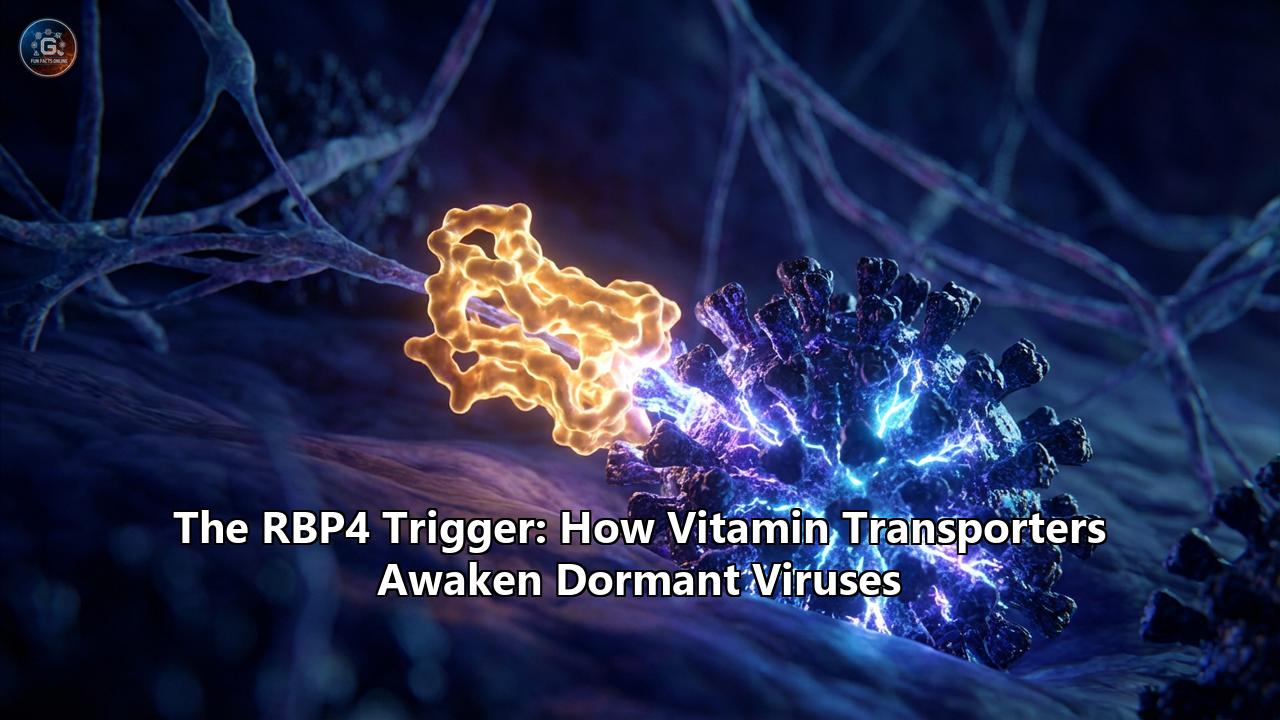
For decades, virologists and immunologists have been haunted by a singular, frustrating phenomenon: viral latency. It is the biological equivalent of a sleeper cell—a state in which a virus enters the human body, inserts its genetic code into the host's DNA, and then goes silent. It stops replicating. It stops producing proteins. It becomes invisible to the immune system and impervious to antiviral drugs. It waits.
For millions of people living with chronic viral infections like HIV, Herpes Simplex, and Epstein-Barr, this dormancy is not a cure; it is a stalemate. The virus is still there, lurking in the "reservoirs" of the body—deep in the bone marrow, the lymph nodes, or the brain—waiting for the right signal to wake up and strike again.
For years, science has searched for the alarm clock. What wakes these viruses up? Is it stress? Is it another infection? Is it random chance?
In a stunning breakthrough that bridges the gap between metabolism and virology, researchers have finally identified a specific, natural "alarm clock" circulating in our own blood. It isn't a toxin, and it isn't a foreign invader. It is a protein we rely on every day to survive.
It is Retinol Binding Protein 4 (RBP4), the molecular taxi responsible for transporting Vitamin A.
This discovery changes everything we thought we knew about the relationship between nutrition, metabolism, and chronic viral disease. It suggests that the very mechanism that feeds our cells vitamins may also be the key that unlocks the door for dormant viruses. This is the story of the RBP4 Trigger.
Part 1: The Hidden Reservoir
The Problem with "Curing" Viruses
To understand the magnitude of the RBP4 discovery, one must first understand the enemy it exposes. When a person is infected with a virus like Influenza, the body mounts a "hot" war. The immune system identifies the invader, fever spikes, antibodies are forged, and eventually, the virus is eliminated.
But retroviruses (like HIV) and herpesviruses (like HHV-6, EBV, and CMV) play a different game. They are masters of stealth.
The Mechanism of Latency
Upon entering a cell, these viruses integrate their genetic blueprint directly into the host's chromatin. In HIV, this is called the provirus. Once integrated, the virus can turn off its own gene expression. To the immune system's T-cells, the infected cell looks perfectly normal. Antiretroviral therapy (ART) works by stopping the virus from replicating, but it cannot touch the silent provirus hidden in the DNA.
As long as the patient takes their medication, the virus sleeps. But if therapy stops, or if a specific biological trigger occurs, the virus wakes up. It begins transcribing its RNA, manufacturing viral proteins, and bursting forth from the cell to infect new targets. This is known as reactivation.
The Holy Grail of virology has been to find a "Latency Reversing Agent" (LRA)—a chemical or protein that can force all the dormant viruses to wake up at once while the patient is on strong medication. If you can wake them up, the immune system can see them. If the immune system can see them, it can kill them. This is the "Shock and Kill" strategy.
Until now, most experimental LRAs were toxic chemotherapy drugs or harsh epigenetic modifiers. No one suspected that the answer might be hiding in a vitamin transporter.
Part 2: The Ulm Discovery
A Needle in the Bloodstream
The breakthrough came from an unlikely source: the Institute of Molecular Virology at Ulm University Hospital in Germany. A team led by Professor Frank Kirchhoff, a renowned figure in HIV research, wasn't initially looking for vitamin transporters. They were conducting a massive, unbiased screen of the human "peptidome."
The human blood is a soup of millions of peptides and proteins. The Ulm researchers took hemofiltrate—essentially blood fluid filtered from patients with renal failure, which contains a high concentration of peptides—and fractionated it into thousands of tiny samples. They then applied these samples to J-Lat cells.
J-Lat cells are a laboratory model of latent HIV. They are T-cells that carry the HIV virus, but the virus is genetically modified to glow green (using Green Fluorescent Protein, or GFP) when it wakes up. If the cells stay dark, the virus is asleep. If they turn green, the virus has been triggered.
For months, the researchers tested fraction after fraction. Most did nothing. Some killed the cells. But one specific fraction caused the J-Lat cells to light up like a Christmas tree.
Identifying the Culprit
When they analyzed the chemical composition of this potent fraction using mass spectrometry, they didn't find a cytokine or a stress hormone. They found RBP4.
This was baffling. RBP4 is a lipocalin—a transport protein. Its only known job is to grab Retinol (Vitamin A) from the liver and ferry it through the bloodstream to tissues that need it for vision, skin health, and immunity. Why would a vitamin delivery truck wake up a deadly virus?
To confirm their findings, the team ran a crucial experiment. They tested two forms of the protein:
- Apo-RBP4: The "empty" transporter (without Vitamin A).
- Holo-RBP4: The "loaded" transporter (carrying Vitamin A).
The result was undeniable. Only Holo-RBP4 triggered the virus. The empty protein did nothing. It wasn't just the protein, and it wasn't just the vitamin (pure Vitamin A added to the cells didn't work either). It was the complex—the specific 3D shape formed when RBP4 locks onto a molecule of retinol—that acted as the key.
Part 3: The Signaling Cascade
How the Key Turns the Lock
The discovery of the "what" was exciting, but the "how" is where the science becomes revolutionary. How does a nutrient transporter communicate with a dormant virus hidden inside the nucleus?
The researchers mapped the pathway, revealing a complex chain of custody that connects our diet to our viral reservoirs.
1. The Surface Receptor
When Holo-RBP4 arrives at a cell (typically a T-cell or macrophage), it doesn't just dump its cargo. It interacts with surface receptors, primarily STRA6 (Stimulated by Retinoic Acid 6) and occasionally TLR4 (Toll-Like Receptor 4). These receptors are designed to receive Vitamin A, but when RBP4 docks, it also sends a vibration—a signal—through the cell membrane.
2. The Cytoplasmic Relay
This surface event triggers a phosphorylation cascade inside the cell. The study identified three major signaling highways that get activated:
- NF-κB (Nuclear Factor kappa B): This is the master regulator of inflammation. When NF-κB is activated, it moves into the nucleus to turn on genes related to stress and immunity. Crucially, the HIV promoter (the genetic switch that starts viral replication) has specific binding sites for NF-κB. It is designed to hijack this pathway.
- JAK/STAT5: The Janus Kinase/Signal Transducer and Activator of Transcription pathway. This is usually involved in cell growth and division.
- JNK (c-Jun N-terminal Kinase): A pathway often linked to stress responses.
3. The Awakening
When these signaling molecules storm the nucleus, they bind to the viral promoter. The virus, sensing the high levels of NF-κB and STAT5, interprets this as a signal that the host cell is active, inflamed, or under stress—an ideal time to replicate.
The viral enzyme RNA Polymerase II is recruited, and the silence is broken. The cell begins churning out viral RNA. The sleeper awakes.
Part 4: Beyond HIV – The Universal Trigger?
The Broad Implications for Human Health
While the Ulm study focused on HIV, the implications of the "RBP4 Trigger" extend far beyond AIDS research. The signaling pathways utilized by RBP4 (NF-κB and JAK/STAT) are not unique to HIV. They are the same pathways used by Herpesviruses to sense the status of the host.
HHV-6 and Chronic Fatigue
Human Herpesvirus 6 (HHV-6) is found in nearly 100% of the human population. It usually infects us in childhood and then goes dormant. However, in a subset of people, HHV-6 refuses to stay asleep. It smolders, constantly reactivating and suppressing the immune system. This phenomenon is heavily implicated in Myalgic Encephalomyelitis/Chronic Fatigue Syndrome (ME/CFS) and Long COVID.
We know that HHV-6 reactivation causes mitochondrial fragmentation and severe metabolic dysfunction. The RBP4 discovery provides a potential "missing link" in this chain.
- The Vicious Cycle: In inflammatory states (like obesity or chronic infection), RBP4 levels rise.
- The Trigger: High levels of Holo-RBP4 may constantly "poke" the dormant HHV-6 reservoirs, causing low-level reactivation.
- The Result: The immune system remains in a state of constant, exhausting warfare, leading to the "crash" and fatigue seen in CFS patients.
The Autoimmune Connection
RBP4 is already known as an "adipokine"—a signaling hormone released by fat cells. High levels of RBP4 are associated with insulin resistance, Type 2 Diabetes, and obesity.
This creates a terrifying synergy:
- Metabolic Syndrome: A patient gains weight, leading to higher RBP4 levels.
- Viral Waking: The excess RBP4 acts as a systemic LRA, waking up dormant viruses (EBV, CMV, HIV) in tissues across the body.
- Chronic Inflammation: The waking viruses trigger the immune system, causing more inflammation, which leads to more RBP4, and the cycle continues.
This could explain why patients with metabolic diseases are often more susceptible to severe viral outcomes and why "inflammaging" (aging caused by chronic inflammation) is so destructive.
Part 5: The "Shock and Kill" Revolution
A New Hope for a Cure
For the HIV community, the RBP4 discovery is not just interesting biology; it is a tactical weapon.
Current "Shock and Kill" trials have failed because the agents used to shock the virus (like HDAC inhibitors) were too weak to wake up all the virus, or too toxic to be safe for humans. RBP4 is different.
- It is Endogenous: Our bodies make it naturally. It is less likely to cause catastrophic organ failure than a synthetic chemical.
- It is Potent: The study showed that RBP4 concentrations found in normal human blood are sufficient to trigger reactivation.
- It is Targeted: Because it requires the Vitamin A payload, we can potentially engineer synthetic versions of RBP4 that are "super-activators" to flush the virus out of hiding completely.
The Strategy
Imagine a future therapy:
- The patient is placed on enhanced Antiretroviral Therapy (to protect uninfected cells).
- The patient is infused with a modified Holo-RBP4 agonist.
- The RBP4 floods the viral reservoirs, tricking the dormant HIV into thinking the cell is under metabolic stress.
- Every hidden copy of the virus wakes up and presents itself on the surface of the cell.
- The immune system (boosted by a therapeutic vaccine) or the drugs kill the now-visible infected cells.
- The reservoir is drained. The patient is cured.
Part 6: The Nutritional Paradox
Should We Fear Vitamin A?
This discovery inevitably leads to a practical question: If Vitamin A transport triggers viruses, should I stop taking Vitamin A?
The answer is an emphatic NO.This is the paradox of biology. Vitamin A is essential for the immune system to fight viruses. Without it, your T-cells cannot function, and your mucosal barriers (the lining of your lungs and gut) degrade, letting viruses in.
- Deficiency: Leads to immune collapse and susceptibility to infection.
- Transport (RBP4): Acts as a signal for viral reactivation.
The problem is not the vitamin; it is the balance. The danger likely lies in dysregulated RBP4 levels—which are common in obesity, diabetes, and renal disease—rather than in dietary Vitamin A.
However, this does suggest that for patients with chronic viral conditions (like HIV or severe Long COVID), monitoring RBP4 levels might become a new standard of care. It opens the door to metabolic immunomodulation—treating viral diseases by tweaking the body's fat and vitamin transport systems.
Part 7: Conclusion
The dawn of Metabolic Virology
The identification of the RBP4 Trigger is a watershed moment in medicine. It shatters the silo between nutrition and virology. We can no longer look at a virus as an isolated invader; we must look at the host's metabolic environment.
The "sleeping enemy" within our DNA has been listening to our blood for millennia, waiting for the signal carried by a simple vitamin transporter. Now that we have intercepted that signal, we have the chance to turn the tables.
We can use this knowledge to drive viruses out of hiding and destroy them. We can understand why metabolic health is the foundation of immune resilience. And, perhaps, we are one step closer to finally curing the incurable.
Key Takeaways:- RBP4 (Retinol Binding Protein 4) is the newly discovered trigger for waking dormant viruses like HIV.
- Only the Retinol-bound (Holo) form acts as a trigger; the empty form does not.
- The mechanism involves the NF-κB and JAK/STAT signaling pathways.
- This offers a promising new avenue for "Shock and Kill" HIV cures.
- It links metabolic health (obesity/diabetes) directly to viral persistence and chronic inflammation.
Frequently Asked Questions (FAQ) regarding RBP4 and Viral Latency
Q: Does having high RBP4 mean I will get sick?A: Not necessarily. RBP4 is necessary for life. However, chronically elevated levels (often seen in Type 2 Diabetes) may contribute to a state of chronic low-level inflammation and viral reactivation.
Q: Can I lower my RBP4 levels naturally?A: Yes. RBP4 levels are strongly linked to insulin resistance and visceral fat. Exercise, weight loss, and improving insulin sensitivity are the most effective ways to normalize RBP4 levels.
Q: Is this a cure for HIV?A: Not yet. It is a tool that could lead to a cure. Researchers are currently investigating how to use RBP4 safely in clinical trials to flush out the viral reservoir.
Q: Does this apply to Herpes or Shingles?A: While the primary study was on HIV, the signaling pathways RBP4 activates are also used by Herpesviruses. It is highly probable that RBP4 plays a role in the reactivation of these viruses as well.
Reference:
- https://www.imrpress.com/journal/RCM/26/9/10.31083/RCM40127
- https://pubmed.ncbi.nlm.nih.gov/41038866/
- https://www.researchgate.net/publication/361035721_Interplay_of_retinol_binding_protein_4_with_obesity_and_associated_chronic_alterations_Review
- https://pmc.ncbi.nlm.nih.gov/articles/PMC9185696/
- https://www.frontiersin.org/journals/physiology/articles/10.3389/fphys.2021.659977/full
- https://scitechdaily.com/natural-human-protein-reactivates-dormant-hiv-bringing-scientists-one-step-closer-to-a-cure/
- https://medtigo.com/news/holo-rbp4-identified-as-potent-trigger-of-latent-hiv-1/
- https://www.researchgate.net/publication/389630438_Retinol_Binding_Protein_4_reactivates_latent_HIV-1_via_the_JAKSTAT5_and_JNK_pathways
- https://www.biorxiv.org/content/10.1101/2025.02.26.640366v1
- https://pmc.ncbi.nlm.nih.gov/articles/PMC12491451/
- https://journals.plos.org/plospathogens/article?id=10.1371/journal.ppat.1013623
- https://pmc.ncbi.nlm.nih.gov/articles/PMC10812991/
- https://pmc.ncbi.nlm.nih.gov/articles/PMC11538477/
- https://pubmed.ncbi.nlm.nih.gov/32327453/