
For over half a century, psychiatry was dominated by a single story: the Monoamine Hypothesis. It was a simple, elegant narrative that suggested depression was caused by a deficiency in "feel-good" chemicals like serotonin, norepinephrine, and dopamine. The solution, therefore, was equally simple—boost these levels using SSRIs (Selective Serotonin Reuptake Inhibitors) like Prozac or Zoloft. For millions of people, this story held true, and these medications provided a lifeline.
But for approximately one-third of patients diagnosed with Major Depressive Disorder (MDD), this story was incomplete. These individuals, suffering from Treatment-Resistant Depression (TRD), found no relief in the standard pharmacy aisle. Their depression wasn't just a mood slump; it was a neurobiological rigidity, a brain locked in a cycle of despair that serotonin alone could not unlock.
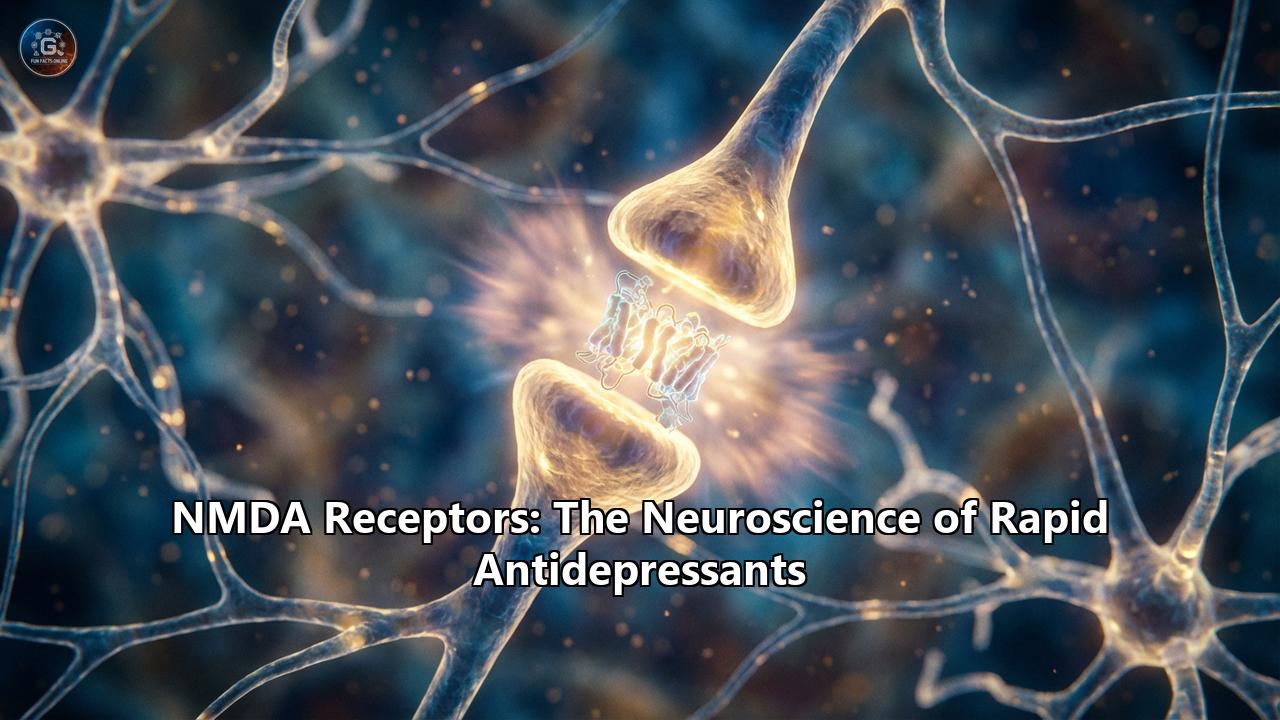
Enter the glutamate revolution. In the early 2000s, a paradigm shift occurred that would shake the foundations of biological psychiatry. Researchers discovered that a drug once dismissed as a "horse tranquilizer" or a club drug—ketamine—could lift the fog of severe depression not in weeks, but in hours. This discovery turned the spotlight onto a complex, butterfly-shaped protein sitting on the surface of neurons: the NMDA receptor.
This article explores the intricate neuroscience behind this revolution. We will journey into the microscopic gap of the synapse to understand how blocking a receptor can paradoxically "wake up" the brain, explore the controversies of whether the "trip" is necessary for the cure, and look ahead to the next generation of "psychoplastogens" that promise to rewire the depressed brain.
Part 1: The Hardware of Sadness – From Serotonin to Glutamate
To understand why NMDA receptors are such a powerful target, we must first understand the landscape of the brain's communication network.
The Monoamine Limit
Traditional antidepressants work on the brain’s neuromodulatory systems. Serotonin and dopamine are essentially the brain's volume knobs; they adjust the "tone" of neural activity. Increasing them is like turning up the brightness on a TV screen—it makes everything a bit more vivid, but it doesn't necessarily change the picture itself. If the picture (the neural circuit) is broken or wiring is faulty, turning up the brightness won't fix the image. This explains why SSRIs take weeks to work; they initiate a slow cascade of downstream effects that eventually lead to small structural changes.
The Glutamate Ocean
If serotonin is the volume knob, glutamate is the power cord and the signal cable combined. Glutamate is the primary excitatory neurotransmitter in the mammalian brain. It is responsible for over 90% of the synaptic traffic. Every thought, movement, and sensation you experience relies on glutamate firing across synapses.
In the depressed brain, particularly in cases of chronic stress and trauma, the glutamate system falls out of balance. Chronic stress floods the brain with cortisol, which acts like a toxin to the delicate branches of neurons (dendrites) in the prefrontal cortex and hippocampus—areas responsible for mood regulation and memory. Under this chemical assault, neurons physically shrivel. They lose their dendritic spines, the tiny receivers that catch chemical signals. The brain’s "hardware" literally disconnects.
This is where the NMDA receptor enters the stage.
Part 2: The NMDA Receptor – The Brain’s Gatekeeper
The N-methyl-D-aspartate (NMDA) receptor is one of the most sophisticated machines in biology. It is an ion channel—a pore in the cell membrane that lets charged particles (ions) flow in and out to create an electrical signal. But unlike other channels that open simply when a key (neurotransmitter) is inserted, the NMDA receptor is a "coincidence detector."
The Magnesium Block
Under normal resting conditions, the NMDA receptor is blocked by a magnesium ion ($Mg^{2+}$). Think of this magnesium ion as a cork in a bottle. Even if glutamate binds to the receptor, the channel remains closed because the magnesium cork is stuck in the hole.
For the channel to open, two things must happen simultaneously:
- Chemical Signal: Glutamate (along with a co-agonist like glycine or D-serine) must bind to the receptor.
- Electrical Signal: The neuron must be electrically activated (depolarized) by other receptors (specifically AMPA receptors).
Only when both happen—strong activity plus the chemical signal—does the electrical charge pop the magnesium cork out. This allows calcium ($Ca^{2+}$) to rush into the cell. This calcium surge is the biological signal for neuroplasticity. It tells the cell, "This connection is important. Strengthen it."
The Glitch in Depression
In depression, this system malfunctions. There is often an accumulation of ambient glutamate outside the cells, leading to "tonic" (constant, low-level) activation of extra-synaptic NMDA receptors. This constant background noise essentially exhausts the neurons, causing them to shrink and stop communicating effectively. The brain loses its ability to adapt; it becomes stuck in a negative rut.
Part 3: The Ketamine Key – Mechanisms of Action
Ketamine is an NMDA receptor antagonist. It works by sitting inside the channel and blocking it. At first glance, this seems counterintuitive. If depression involves a loss of synaptic connections, why would blocking the receptor responsible for connection (plasticity) help?
This paradox is explained by the "Disinhibition Hypothesis" and the "Glutamate Burst."
1. The Disinhibition Hypothesis
The brain is a balance of gas pedals (excitatory neurons) and brake pedals (inhibitory GABA interneurons).
- Step 1: Ketamine enters the brain. It preferentially binds to NMDA receptors on the inhibitory GABA interneurons first.
- Step 2: By blocking the NMDA receptors on these "brake" cells, ketamine stops them from firing.
- Step 3: With the brakes cut, the excitatory neurons (the gas pedals) are suddenly "disinhibited." They fire rapidly.
- Step 4: This causes a massive, transient surge of glutamate release in the prefrontal cortex.
2. The AMPA Surge
This sudden flood of glutamate looks for receptors to bind to. Since the NMDA receptors are blocked by ketamine, the glutamate binds to the AMPA receptors instead. AMPA receptors are the workhorses of fast signaling.
- The activation of AMPA receptors causes a strong depolarization of the neuron.
- This depolarization opens distinct voltage-gated calcium channels, allowing calcium to rush in through a "back door," bypassing the blocked NMDA receptor.
3. The Fertilizer: BDNF and mTOR
This calcium influx triggers the release of BDNF (Brain-Derived Neurotrophic Factor). Think of BDNF as "Miracle-Gro" for the brain.
- BDNF activates a protein kinase called mTOR (mammalian target of rapamycin).
- mTOR is a master switch for protein synthesis. When flipped, it orders the cell to build new synaptic proteins immediately.
Part 4: The Metabolite Mystery – HNK vs. The Receptor
While the NMDA blockade theory is the leading explanation, science is rarely settled. A competing theory emerged from the University of Maryland (the Zanos and Gould labs) suggesting that NMDA blockade might just be a side effect, not the main event.
They discovered that when ketamine breaks down in the body, it turns into a metabolite called (2R,6R)-hydroxynorketamine (HNK). In mouse models, HNK appeared to produce antidepressant effects without blocking the NMDA receptor and without causing the dissociative side effects (the "high").
The HNK theory suggests that this metabolite acts directly on AMPA receptors to increase their activity, bypassing the complex disinhibition step. This has sparked a "gold rush" to develop drugs that mimic HNK—antidepressants that work rapidly but don't cause you to hallucinate or dissociate. However, clinical trials are still ongoing, and for now, the NMDA receptor remains the primary proven target in humans.
Part 5: Clinical Reality – From Spravato to Auvelity
The neuroscience of NMDA receptors has graduated from the lab to the pharmacy. Currently, there are distinct ways patients access this biology.
1. IV Ketamine (Racemic)
- Status: Off-label for depression (FDA approved for anesthesia).
- Composition: A 50/50 mixture of "S-ketamine" and "R-ketamine."
- The Experience: Administered via an intravenous drip over 40 minutes. It has 100% bioavailability. Patients often enter a dissociative state.
- Efficacy: Generally considered the "gold standard" in terms of potency, with response rates often exceeding 60-70% in treatment-resistant populations.
2. Spravato (Esketamine)
- Status: FDA Approved (2019) for Treatment-Resistant Depression (TRD) and Major Depressive Disorder with Suicidality.
- Composition: Only the "S-ketamine" molecule (the left-handed mirror image). S-ketamine binds to the NMDA receptor about four times more tightly than R-ketamine.
- Administration: A nasal spray administered in a certified clinic.
- Logistics: Because of the dissociation risk, it requires a REMS (Risk Evaluation and Mitigation Strategy) protocol. Patients must stay in the clinic for 2 hours after dosing for monitoring.
3. Auvelity (Dextromethorphan + Bupropion)
- Status: FDA Approved (2022).
- Mechanism: Dextromethorphan (DXM) is a cough suppressant that, like ketamine, is an NMDA receptor antagonist. However, the body metabolizes DXM very quickly. By combining it with Bupropion (Wellbutrin), which inhibits the liver enzyme that eats DXM, the drug stays in the system long enough to block NMDA receptors in the brain.
- Advantage: It is an oral pill, requires no in-clinic monitoring, and causes no dissociation. It represents the "mildest" entry into NMDA therapy.
Part 6: The "Trip" Controversy – Feature or Bug?
One of the most heated debates in modern neuropsychiatry is the role of dissociation.
When patients take a sufficient dose of ketamine, they experience a separation of mind and body. Time dissolves; the ego (the sense of "I") may fragment or vanish; they may feel a sense of floating or oceanic boundlessness.
- The "Bug" Argument: Pharmaceutical companies view this as a side effect (a "psychotomimetic" effect) to be eliminated. It makes the drug harder to administer (requiring 2-hour monitoring) and limits scalability. This is why researchers are desperate to find "non-hallucinogenic" psychoplastogens.
- The "Feature" Argument: Many clinicians and therapists argue that the dissociation is therapeutic in itself. It provides a "time out" from the relentless, rumination-heavy narrative of the depressed brain. This "psychological reset" allows patients to view their trauma from a detached, objective perspective.
Phenomenology:* Patients often report a "lifting of the heavy blanket" of depression. This subjective experience of relief often correlates with the biological repair of the synapse.
Current data is mixed. Some studies show that masking the trip (via anesthesia) blocks the antidepressant effect, suggesting the conscious experience matters. Others show that HNK (which doesn't cause a trip) works in mice. The consensus is likely in the middle: the biological repair works regardless, but the psychological experience may enhance and sustain the recovery.
Part 7: The Opioid Twist
In 2018, a study out of Stanford threw a wrench in the gears. Researchers administered naltrexone (an opioid blocker used for addiction) to patients before giving them ketamine.
- The Result: The naltrexone blocked the antidepressant effect of the ketamine.
- The Implication: This suggested that ketamine's magic might not be purely NMDA/Glutamate-based, but could rely on the brain’s endogenous opioid system.
This caused a stir, raising fears that ketamine was just a "fancy opiate." However, subsequent research (including from Johns Hopkins) clarified that while ketamine does interact with opioid receptors, it is not an opioid in the traditional sense (it doesn't depress respiration). The opioid system interaction may be a necessary cofactor for the NMDA mechanism to engage the plasticity machinery.
Part 8: Safety and The Future of "Psychoplastogens"
As we move forward, the focus is on Psychoplastogens—a new term coined to describe drugs that produce rapid and sustained neural plasticity.
The Risks
- Bladder Toxicity: Heavy, recreational abuse of ketamine destroys the bladder lining (ketamine cystitis). While rare in therapeutic doses, it is a risk factor monitored in long-term maintenance.
- Cognition: While low doses improve cognition by lifting depression, there is concern about what years of NMDA blockade might do to memory, as the receptor is critical for learning.
- Addiction: Ketamine has abuse potential. The medical model (in-clinic use) acts as a safeguard, but the rise of "at-home" ketamine telehealth services has raised ethical and safety concerns regarding unsupervised use.
The Pipeline
The future is bright and crowded.
- NRX-101: A combination of D-cycloserine (a partial NMDA agonist) and lurasidone, aiming to treat Bipolar Depression with Suicidality without the trip.
- GluN2B Selective Antagonists: Drugs that target specific subunits of the NMDA receptor (the GluN2B unit) to try and separate the antidepressant effect from the dissociative effect.
- Nitrous Oxide: "Laughing gas" is also an NMDA antagonist and is being investigated for rapid antidepressant effects.
Conclusion
The discovery of NMDA receptors' role in depression is arguably the most significant breakthrough in psychiatry since the 1950s. It has moved us from a model of "chemical imbalance" (low serotonin) to a model of "circuit failure" (synaptic disconnection). By targeting the NMDA receptor, we are not just treating symptoms; we are effectively jump-starting the brain's natural ability to heal and rewire itself. Whether through the dissociation of a ketamine infusion or the silent plasticity of future pills, the glutamate revolution has finally given the depressed brain a way to reconnect with the world.
Reference:
- https://www.resetketamine.com/blog/ketamine-isnt-an-opioid
- https://www.hopkinsmedicine.org/news/newsroom/news-releases/2019/07/ketamine-isnt-an-opioid-and-treats-depression-in-a-unique-way
- https://med.stanford.edu/news/all-news/2024/02/ketamine-sex-opioid.html
- https://interventionalpsychiatry.org/how-ketamines-antidepressant-effects-may-involve-the-brains-opioid-system/
- https://www.feldmanlegaladvisors.com/news/ketamine-for-mental-health-treatment-from-in-clinic-to-at-home-treatment
- https://axismh.com/spravato-vs-ketamine-infusions-which-is-better-for-treatment-resistant-depression/
- https://innerbloomketamine.com/blog/is-ketamine-covered-by-insurance-what-you-need-to-know-in-2025/
- https://helloinnerwell.com/ketamine-therapy/ketamine-laws-by-state
- https://neuroglow.com/spravato-and-iv-ketamine-insurance-coverage/
- https://marpaminds.com/blog/best-ketamine-therapy/
- https://www.spravatorems.com/
- https://relevancerecovery.com/the-spravato-rems-program-understanding-eligibility-and-benefits/
- https://www.spravatohcp.com/files/lu_dig_rems_leave_behind.pdf
- https://healingmaps.com/october-2025-roundup-what-ketamine-treatment-costs-across-the-united-states/
- https://www.spravatorems.com/pdfs/REMSProgramOverview
- https://www.spravatorems.com/pdfs/SPRAVATO_REMS_Fact_Sheet
- https://www.youtube.com/watch?v=w4epSOnHNdQ
- https://www.principiumpsychiatry.com/blog/ketamine-and-dissociation-what-is-it/
- https://www.healthcarelawinsights.com/2025/11/deas-pending-telemedicine-rule-what-ketamine-clinics-need-to-know/
- https://pmc.ncbi.nlm.nih.gov/articles/PMC7755908/
- https://ma1.mdedge.com/index.php/content/ketamine-may-rely-opioid-receptors-antidepressive-effect
- https://www.transcendketamine.com/blog-posts/at-home-ketamine-why-safety-ethics-and-medical-oversight-must-come-first