
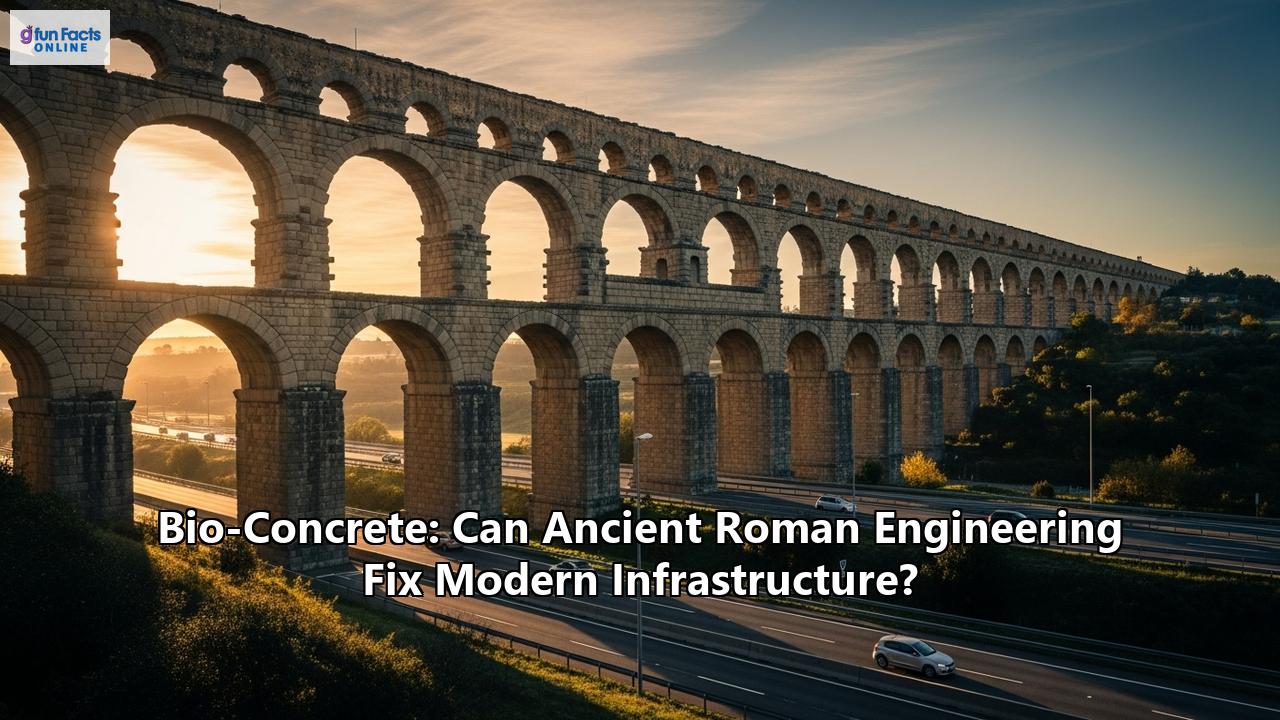
In a world grappling with crumbling bridges, deteriorating roads, and a constant cycle of costly infrastructure repair, could the secret to a more durable future lie buried in the past? For millennia, Roman structures like the Pantheon and the Colosseum have withstood the ravages of time, earthquakes, and the elements, standing as silent testaments to an engineering prowess that modern technology has yet to fully replicate. The question that has long puzzled scientists and historians is: what makes Roman concrete so resilient? Recent discoveries have not only unlocked the secrets of this ancient super-material but have also inspired a revolutionary new technology: bio-concrete. This innovative building material, which has the remarkable ability to heal itself, may hold the key to solving our modern infrastructure crisis, drawing a direct line from the genius of ancient Rome to the cutting edge of 21st-century science.
The Enigma of Roman Concrete: A Recipe Lost in Time
For centuries, the incredible longevity of Roman concrete was a profound mystery. Structures that are two thousand years old remain standing, while modern concrete buildings often show signs of decay after just a few decades. The primary suspect behind this ancient engineering marvel was long thought to be a special ingredient: pozzolanic ash. This volcanic ash, sourced from the region of Pozzuoli near Naples, was transported across the vast Roman Empire and was believed to be the key component in creating such durable concrete.
However, a closer look at samples of ancient Roman concrete revealed a curious anomaly: small, white, millimeter-scale mineral chunks, known as lime clasts, were embedded throughout the material. For years, these were dismissed as evidence of sloppy mixing or poor-quality raw materials. But to researchers like Admir Masic, a professor at MIT, this explanation didn't sit right. "If the Romans put so much effort into making an outstanding construction material, following all of the detailed recipes that had been optimized over the course of many centuries, why would they put so little effort into ensuring the production of a well-mixed final product?" he pondered.
This question led to a groundbreaking discovery that has reshaped our understanding of Roman engineering. The research team, which included experts from MIT, Harvard, and laboratories in Italy and Switzerland, found that the Romans likely employed a technique called "hot mixing." This process involved using quicklime—a more reactive, unslaked form of lime—in their concrete mixture. When quicklime is mixed with water, it creates an exothermic reaction that heats the entire mixture to extreme temperatures.
This "hot mixing" process had two significant benefits. Firstly, it allowed for chemical reactions that wouldn't have been possible with slaked lime, creating high-temperature compounds that made the concrete stronger. Secondly, the intense heat significantly reduced the curing and setting times, allowing for much faster construction.
But the most astonishing revelation was the role of the lime clasts. These were not a sign of poor craftsmanship but a cleverly integrated self-healing mechanism. The brittle nature of the lime clasts meant that when tiny cracks began to form in the concrete, they would preferentially travel through these easily fractured calcium sources. When water inevitably seeped into these cracks, it would react with the lime clasts, creating a calcium-saturated solution. This solution would then recrystallize as calcium carbonate, effectively filling the crack and preventing it from spreading further. This spontaneous, automatic healing process is what has allowed Roman structures to endure for millennia. To validate their findings, the research team created their own samples of Roman-style concrete. When they deliberately cracked the samples and ran water through them, the cracks healed completely within two weeks.
In some cases, particularly in marine environments, Roman concrete demonstrated an even more remarkable ability to strengthen over time. When seawater would percolate through the concrete, it would react with the volcanic material to form new minerals, such as aluminous tobermorite, which would further reinforce the structure.
The Modern Malaise: Why Today's Concrete is Crying Out for Help
While Roman concrete was designed to interact with its environment and grow stronger, modern concrete is created to be inert and, as a result, is more susceptible to degradation over time. Concrete is the most widely used man-made material in the world, forming the backbone of our modern infrastructure. However, it has an Achilles' heel: its susceptibility to cracking.
These cracks, which can be caused by a variety of factors including stress, weather, and the natural expansion and contraction of the material, create a pathway for water and other harmful substances to penetrate the concrete. This moisture can then corrode the steel rebar that reinforces most modern concrete structures, leading to further cracking and eventual structural failure.
The economic and environmental consequences of this are staggering. The constant need for maintenance and repair of concrete structures is a major expense. In the European Union alone, the annual cost of maintaining bridges, tunnels, and retaining walls is estimated to be between four and six billion euros. Furthermore, the production of cement, the key ingredient in concrete, is a significant contributor to global carbon emissions, accounting for up to 11% of the world's total. The continuous cycle of producing new concrete to replace and repair damaged structures exacerbates this environmental impact.
Bio-Concrete: A Living Solution to a Modern Problem
Inspired by the self-healing properties observed in nature, as well as the enduring legacy of Roman engineering, scientists have developed a groundbreaking solution: bio-concrete. This innovative material incorporates dormant bacteria into the concrete mix, which act as microscopic masons, ready to repair cracks as they appear.
The development of bio-concrete is largely credited to Dutch microbiologist Hendrik Jonkers, who began his research in 2006. After years of experimentation, he identified specific strains of bacteria, typically from the Bacillus genus, that could survive the harsh, alkaline environment of concrete. These bacteria are added to the concrete mix along with a food source, usually calcium lactate, which is encapsulated in biodegradable plastic.
The bacteria remain dormant until a crack forms in the concrete, allowing water to enter. The water dissolves the capsules, releasing the food source and activating the bacteria. As the bacteria consume the calcium lactate, they precipitate calcium carbonate, or limestone, which fills the crack and seals it from further water ingress. This process not only repairs the damage but also prevents the corrosion of the steel reinforcement within the concrete. The bacteria can remain viable for up to 200 years, offering a long-term solution to the problem of cracking.
The Science Behind the Self-Healing
The mechanism at the heart of bio-concrete is known as Microbially Induced Calcite Precipitation (MICP). This process relies on the metabolic activity of the bacteria to create the calcium carbonate that heals the cracks. The bacteria are chosen for their ability to form endospores, a dormant, protective state that allows them to survive the stressful conditions of the concrete mixing process and the highly alkaline environment within the set concrete.
When a crack appears and water enters, the bacteria are reactivated and begin the process of ureolysis, which is the hydrolysis of urea. This metabolic process produces carbonate ions, which then combine with calcium ions present in the concrete to form calcium carbonate crystals. These crystals grow and expand, eventually filling the crack and restoring the structural integrity of the concrete.
One of the key advantages of this biological approach is that the bacteria consume oxygen in the process, which helps to prevent the corrosion of the steel rebar inside the concrete. Furthermore, the bacteria used are not harmful to humans and can only survive in the specific alkaline conditions of the concrete.
Bio-Concrete in Action: From the Lab to the Real World
The potential applications for bio-concrete are vast, and the technology has already been tested in a variety of real-world scenarios. Researchers have developed different forms of the technology, including self-healing concrete, a repair mortar, and a liquid repair system that can be applied to existing structures. Endurance tests have been conducted on a dedicated testing building in the Netherlands, and there are plans to bring the material to the commercial market.
Beyond the direct application of bacterial concrete, the broader field of bio-fabrication is also gaining traction in the construction industry. Projects like BioMason are using bacteria to "grow" bricks by cementing loose aggregate together, a process that mimics the formation of coral reefs. This method produces bricks with comparable strength to traditional clay or concrete masonry units in a fraction of the time and with a significantly lower carbon footprint.
Another inspiring example is the Hy-Fi tower, a temporary installation in New York that was constructed from 10,000 compostable bricks grown from mycelium, the root network of fungi. This project demonstrated that biologically derived materials can be used for structural purposes and can be fully biodegradable, resulting in a nearly zero-carbon footprint.
Challenges and the Road Ahead
Despite its immense potential, bio-concrete still faces some challenges before it can be widely adopted. One of the main hurdles is the cost. The addition of the bacteria and their food source makes bio-concrete more expensive than traditional concrete. However, researchers are actively working on finding more cost-effective alternatives to the calcium lactate, such as sugar-based nutrients. When considering the long-term savings in maintenance and repair costs, the initial investment in bio-concrete may prove to be economically viable.
Another area of ongoing research is the long-term performance and durability of bio-concrete in various environmental conditions. While lab tests and initial field trials have been promising, more data is needed to fully understand how the material will behave over decades of use in real-world infrastructure projects.
A Sustainable Future Built on Ancient Wisdom
The development of bio-concrete represents a remarkable convergence of ancient wisdom and modern science. By understanding and replicating the self-healing mechanisms that have preserved Roman structures for millennia, we have the potential to revolutionize the way we build our modern world.
Bio-concrete offers a multi-faceted approach to sustainability. By extending the lifespan of our infrastructure, it reduces the need for costly and resource-intensive repairs. This, in turn, lessens the demand for new concrete production, leading to a significant reduction in carbon emissions. The use of bio-concrete aligns with the principles of green building, which prioritize durability, resource efficiency, and the use of innovative, low-carbon materials.
The journey from the hot-mixed concrete of ancient Rome to the living concrete of the 21st century is a testament to the enduring power of innovation. It is a story that reminds us that sometimes, the solutions to our most pressing modern problems can be found in the ingenuity of the past. As we continue to grapple with the challenges of a changing climate and aging infrastructure, the lessons of Roman engineering, embodied in the remarkable technology of bio-concrete, offer a hopeful glimpse into a more resilient and sustainable future.
Reference:
- https://dailygalaxy.com/2025/02/we-finally-know-the-mystery-behind-romes-millennia-old-concrete-durability/
- https://news.mit.edu/2023/roman-concrete-durability-lime-casts-0106
- https://www.timesofisrael.com/still-standing-researchers-crack-secret-of-ancient-romes-self-healing-concrete/
- https://thelab.brookesbell.com/about/news/has-the-secret-of-self-healing-roman-concrete-been-revealed-158344/
- https://www.dezeen.com/2023/01/17/self-healing-roman-concrete-mit-harvard/
- https://www.sciencealert.com/we-finally-know-why-ancient-roman-concrete-was-able-to-last-thousands-of-years
- https://bigthink.com/hard-science/why-ancient-roman-concrete-lasts-for-millenia-but-ours-crumbles-in-decades/
- https://www.bath.ac.uk/case-studies/using-bacteria-to-create-spontaneous-self-healing-concrete/
- https://www.lorman.com/resources/what-is-self-healing-concrete-17376
- https://www.generalkinematics.com/blog/what-is-bio-concrete/
- https://blog.bulldozair.com/concrete-that-heals-itself
- https://voiceof.vegas/columns/science/concrete-reimagined-with-bioconcrete/
- https://www.giatecscientific.com/education/bio-concrete/
- https://www.researchgate.net/publication/387949695_Bio-Concrete_and_Its_Self-Healing_Capacity_to_Next-generation_Sustainable_Architecture_A_Comprehensive_Review
- https://injarch.com/bio-concrete-bacterial-based-self-healing-concrete-in-sustainable-construction/
- https://pmc.ncbi.nlm.nih.gov/articles/PMC11730074/
- https://www.ijbbku.com/assets/custom/journals/2018/4/BIO%20CONCRETE%20AN%20OVERVIEW.pdf
- https://pmc.ncbi.nlm.nih.gov/articles/PMC11299504/
- https://tecscience.tec.mx/en/biotechnology/self-healing-concrete/
- https://basiliskconcrete.com/en/how-does-it-work/