
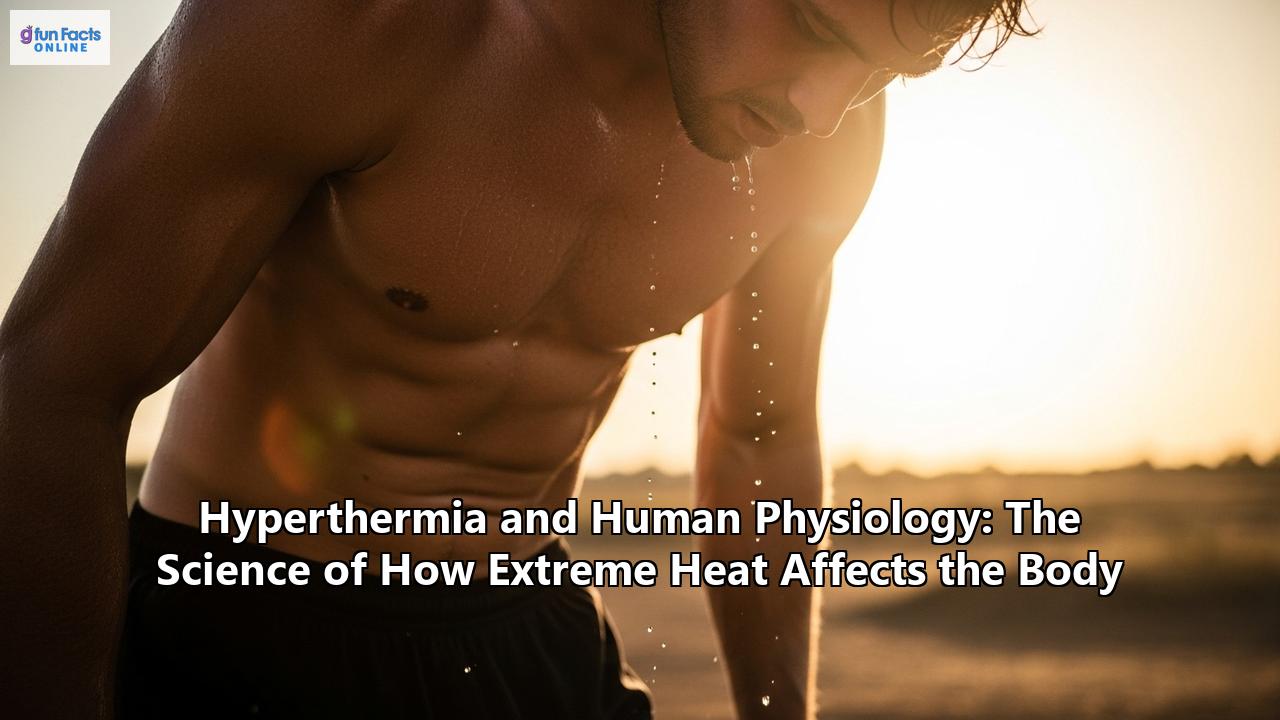
The Unseen Siege: How Extreme Heat Mounts a Cellular and Systemic Attack on the Human Body
Our bodies are remarkable machines, finely tuned to operate within a narrow, stable temperature range. This delicate balance, known as thermoregulation, is a constant, unconscious effort orchestrated by our internal thermostat. But as our planet warms and extreme heat events become more frequent and intense, this sophisticated system is being pushed to its limits. When the external heat load overwhelms our capacity to cool down, a dangerous condition known as hyperthermia sets in. This is not merely a feeling of being too hot; it is a physiological crisis that can trigger a cascade of damaging events, from the cellular level to the catastrophic failure of entire organ systems. Understanding the science of how extreme heat wages this war on our bodies is critical to recognizing its dangers and protecting ourselves and the most vulnerable among us.
The Body's Thermostat: A Precisely Regulated System
At the heart of our temperature control system lies the hypothalamus, a small region at the base of the brain that acts as the body's central thermostat. A healthy human body aims to maintain a core temperature around 37°C (98.6°F). This temperature is crucial for the optimal function of enzymes and metabolic processes that sustain life. The hypothalamus receives constant updates from two sets of sensors: central thermoreceptors in the viscera and spinal cord that monitor the core temperature, and peripheral thermoreceptors in the skin that sense external conditions.
When the body starts to get too warm, the hypothalamus initiates a series of cooling responses. It sends signals via the nervous system to dilate blood vessels near the skin, a process called vasodilation. This increases blood flow to the surface, allowing heat from the blood to radiate into the cooler environment. Simultaneously, sympathetic nerves stimulate sweat glands to produce perspiration. The evaporation of this sweat from the skin is a powerful cooling mechanism, as the process of turning liquid into vapor extracts significant heat energy from the body. Together, these mechanisms are incredibly effective at shedding excess heat under normal conditions.
When the Defenses Are Breached: From Heat Exhaustion to Heatstroke
Hyperthermia describes a spectrum of heat-related illnesses that occur when the body's thermoregulatory mechanisms are overwhelmed. These conditions are not defined by a fever, where the hypothalamic set-point itself is raised in response to an infection, but by an uncontrolled rise in body temperature due to external heat and the failure of our cooling systems.
The journey into hyperthermia often begins with milder conditions like heat cramps or heat rash, but can escalate into two more serious stages: heat exhaustion and heatstroke.
Heat Exhaustion: The Warning ShotHeat exhaustion is the body's response to an excessive loss of water and salt, typically through heavy sweating. It serves as a critical warning sign that the body is struggling to cope. Symptoms can appear suddenly and include:
- Heavy sweating with cool, pale, and clammy skin.
- Dizziness, fatigue, and weakness.
- Headache and nausea, sometimes with vomiting.
- A rapid but weak pulse.
- Muscle cramps.
At this stage, the central nervous system is still functioning, and the person, though feeling very unwell, is generally coherent. If action is taken promptly by moving to a cool place, rehydrating with water or electrolyte drinks, and actively cooling the skin, heat exhaustion can usually be resolved within about 30 minutes without the need for emergency medical help.
Heatstroke: A Full-Blown Medical EmergencyIf the warning signs of heat exhaustion are ignored and the body's temperature continues to climb, it can progress to heatstroke. This is the most severe form of heat illness and is a life-threatening emergency. Heatstroke occurs when the core body temperature rises to 40°C (104°F) or higher, and the body's thermoregulatory system completely fails. The longer the body remains at this high temperature, the greater the risk of permanent disability or death.
The two cardinal signs that distinguish heatstroke from heat exhaustion are:
- A core body temperature of 40°C (104°F) or higher.
- Central nervous system dysfunction. This manifests as confusion, agitation, slurred speech, delirium, seizures, or loss of consciousness (coma).
In classic, non-exertional heatstroke, the skin may be hot and dry as the sweating mechanism fails. However, in exertional heatstroke, which occurs during intense physical activity, the person may still be sweating profusely. Any individual showing signs of confusion or altered mental status in a hot environment should be treated as a heatstroke emergency, regardless of whether they are sweating.
The Systemic Assault: How Heat Overwhelms the Body's Organs
The damage from severe hyperthermia is not localized; it is a multi-system assault that can lead to a cascade of catastrophic failures.
The Cardiovascular System Under Siege
The cardiovascular system is on the front lines of the battle against heat. To cool the body, the heart must pump significantly more blood to the skin. In healthy individuals, cardiac output can increase from a resting rate of about 6 liters per minute to as high as 13-20 liters per minute. This is achieved primarily by increasing the heart rate.
This increased workload places immense strain on the heart. Simultaneously, profuse sweating leads to dehydration, which reduces the volume of blood plasma. This makes the blood thicker and harder to pump, forcing the heart to work even harder to maintain blood pressure. If dehydration becomes severe, blood pressure can drop precipitously, compromising blood flow to vital organs. For individuals with pre-existing cardiovascular conditions, this strain can be fatal, triggering arrhythmias, heart failure, or a heart attack. In fact, the majority of excess deaths during heat waves are cardiovascular in origin.
The Renal System in Crisis
To divert blood to the skin for cooling, the body constricts blood vessels supplying internal organs, including the kidneys. This shunting of blood, combined with the low blood pressure and reduced blood volume from dehydration, severely diminishes renal perfusion. This state of hypoperfusion can lead to acute kidney injury (AKI). The high core temperatures can also directly damage kidney cells. Furthermore, in severe cases, particularly exertional heatstroke, skeletal muscle tissue can break down in a process called rhabdomyolysis, releasing a protein called myoglobin into the bloodstream. This myoglobin is toxic to the kidney tubules and can cause them to fail.
The Nervous System's Meltdown
The brain is profoundly vulnerable to heat. Hyperthermia is directly neurotoxic, with the cerebellum—a region crucial for coordination and balance—being particularly sensitive. When the core temperature rises above 40°C (104°F), the blood-brain barrier, which normally protects the brain from harmful substances in the bloodstream, can begin to break down. This allows unwanted proteins and ions to enter the brain tissue, triggering inflammation (neuroinflammation) and swelling (cerebral edema), leading to the neurological symptoms that define heatstroke. Prolonged high temperatures cause direct cellular damage and can lead to the death of neurons, potentially resulting in permanent neurological deficits like personality changes, poor coordination, or cognitive impairment in survivors.
The Respiratory System Under Strain
The effects of heat on the respiratory system are often underappreciated. Inhaling hot, humid air can irritate and inflame the airways, causing them to narrow (bronchoconstriction) and leading to symptoms like coughing and shortness of breath. This is especially dangerous for people with chronic respiratory conditions like asthma or COPD. As the body's metabolic rate increases in its effort to cool down, the demand for oxygen rises, forcing a faster breathing rate (hyperpnea). High humidity exacerbates the problem by making the air feel denser and trapping pollutants, which further irritates the lungs.
The Invisible War: Damage at the Cellular and Molecular Level
The organ-level dysfunction seen in hyperthermia is rooted in a war being waged at the microscopic level. The intense heat initiates a destructive cascade that dismantles the very machinery of our cells.
Protein Denaturation and Cellular ChaosProteins are the workhorses of the cell, folded into precise three-dimensional structures to perform their functions. Heat provides the energy to break the delicate bonds holding these structures together, causing the proteins to unfold, or denature. These misshapen proteins can then clump together into useless aggregates, disrupting critical cellular processes. This includes enzymes involved in DNA replication and repair, leading to DNA damage and stalling the cell cycle.
Cell membranes, composed of lipids and proteins, also lose their integrity, becoming excessively fluid and leaky, which disrupts the transport of essential molecules and ions.
The Oxidative Stress OnslaughtHyperthermia triggers a massive increase in the production of reactive oxygen species (ROS), also known as free radicals. This happens in part because the mitochondria—the cell's powerhouses—become inefficient at high temperatures, leaking these damaging molecules. This surge in ROS overwhelms the body's antioxidant defenses, leading to a state of oxidative stress. These free radicals attack and damage all major cellular components: lipids, proteins, and DNA, contributing to widespread cellular injury.
The Inflammatory "Cytokine Storm"Perhaps the most devastating molecular event in heatstroke is the triggering of a Systemic Inflammatory Response Syndrome (SIRS), a widespread and uncontrolled inflammatory reaction similar to that seen in severe sepsis. This is a two-pronged attack. First, the direct heat-induced cellular injury releases damage-associated molecular patterns (DAMPs) that signal danger to the immune system. Second, the reduced blood flow to the gut and direct heat damage to the intestinal lining cause it to become permeable, or "leaky." This allows bacteria and their toxic components, particularly lipopolysaccharide (LPS) or endotoxin, to leak from the intestines into the bloodstream.
This flood of DAMPs and endotoxins triggers an overwhelming activation of immune cells, which release a massive cascade of pro-inflammatory cytokines like TNF-α, IL-1β, and IL-6. This "cytokine storm" perpetuates a vicious cycle of inflammation, causing widespread damage to the vascular endothelium (the lining of blood vessels), promoting blood clotting (coagulopathy), and ultimately driving the multi-organ dysfunction that makes heatstroke so deadly.
Heat Shock Proteins: Cellular BodyguardsIn response to the stress of heat, cells activate a protective mechanism by rapidly synthesizing a family of molecules called Heat Shock Proteins (HSPs). These proteins act as "molecular chaperones," working to refold denatured proteins, prevent them from aggregating, and transport them to be repaired or degraded. The induction of HSPs is a key factor in the development of thermotolerance, the physiological state where a person who has been exposed to heat can better withstand subsequent heat challenges. However, in the rapid and overwhelming onslaught of heatstroke, this protective response can be insufficient.
Who is Most at Risk? Understanding Vulnerability
While everyone is susceptible to extreme heat, certain groups are at a much higher risk due to a combination of physiological, health, and behavioral factors.
- The Elderly: Older adults are consistently the most vulnerable. Their thermoregulatory systems are less robust; they have a reduced ability to sweat, impaired blood flow to the skin, and often a diminished sense of thirst. They are also more likely to have chronic health conditions and be on medications that interfere with cooling.
- Infants and Young Children: Children are not just "little adults." Their bodies are physiologically different in ways that increase their risk. They have a larger surface area to body mass ratio, which makes them absorb heat more readily. Their sweat glands are not fully developed, and they have a higher metabolic rate, meaning they generate more heat internally. Crucially, they are dependent on caregivers to keep them cool and hydrated, and they may not be able to recognize or articulate their discomfort.
- Individuals with Chronic Illnesses:
Cardiovascular Disease: People with heart failure or coronary artery disease have a compromised ability to increase cardiac output to meet the demands of heat stress, making them highly susceptible to complications.
Obesity: Excess adipose tissue acts as an insulator, making it harder to dissipate heat. Individuals with obesity also have a higher metabolic heat production and a lower surface-area-to-mass ratio, further impairing cooling.
Diabetes: Diabetes can damage blood vessels and nerves, impairing control over circulation and sweating.
- Those on Certain Medications: A wide range of common medications can disrupt the body's ability to handle heat.
Diuretics: Promote dehydration.
Beta-blockers: Limit the increase in heart rate and blood flow needed for cooling.
Antihistamines and some antidepressants: Can reduce sweating.
* Stimulants: Increase the body's metabolic heat production.
- Outdoor Workers and Athletes: These groups are at high risk for exertional heatstroke due to high internal heat production from physical activity, often combined with prolonged sun exposure.
Acclimatization: The Body's Remarkable Adaptation
Fortunately, the human body has a remarkable capacity to adapt to hot environments through a process called heat acclimatization. With repeated exposure—typically over 7 to 14 days—a series of physiological changes occur that significantly enhance thermoregulatory efficiency and reduce the risk of heat illness.
The key adaptations include:
- Improved Cardiovascular Stability: One of the earliest and most important adaptations is an expansion of plasma volume by 10-12%. This increases total blood volume, which helps maintain blood pressure and stroke volume even with increased blood flow to the skin, thus reducing heart rate and cardiac strain during exercise in the heat.
- Enhanced Sweating: The body becomes a more efficient sweating machine. Sweating begins earlier, at a lower core temperature, and the maximum sweat rate increases significantly. This allows for more effective evaporative cooling from the onset of heat stress.
- Electrolyte Conservation: The sweat becomes more dilute. The body gets better at conserving vital electrolytes, primarily by increasing the reabsorption of sodium and chloride in the sweat glands, a process aided by the hormone aldosterone.
- Lower Core Temperature: As a result of these adaptations, an acclimatized individual can perform the same work in the heat with a lower core body temperature, a lower heart rate, and a lower perception of effort.
These adaptations are transient and must be maintained through continued heat exposure. Much of the benefit can be lost within a week or two of returning to a cool environment.
Diagnosis and Treatment: From First Aid to Critical Care
Recognizing and responding to heat illness quickly is paramount, as the progression from heat exhaustion to life-threatening heatstroke can be rapid.
Diagnosing the DangerThe critical diagnostic difference lies in brain function. A person with heat exhaustion may be dizzy and weak but is mentally intact. A person with heatstroke will show signs of CNS dysfunction, such as confusion, agitation, or loss of consciousness. A core body temperature measured rectally above 40°C (104°F) is the definitive sign of heatstroke. In a hospital, blood and urine tests can confirm the diagnosis and assess for organ damage.
First Aid: Immediate Action is Key- For Heat Exhaustion: The goal is to cool the body down within 30 minutes.
1. Move the person to a cool, shaded area.
2. Loosen or remove excess clothing.
3. Cool the skin with a spray or sponge of cool water and fan them.
4. Offer sips of cool water or an electrolyte drink.
5. If symptoms don't improve or worsen, seek medical help.
- For Heatstroke (A 911 Emergency):
1. Call for emergency medical services immediately.
2. Do not wait for help to arrive. Begin cooling instantly. The duration of severe hyperthermia is the single most important factor determining the outcome.
3. Move the person out of the heat.
4. Cool the person with any means available: douse them with cool water from a hose, apply cold, wet towels or ice packs to the head, neck, armpits, and groin where major blood vessels are close to the surface.
Advanced Medical TreatmentIn a hospital setting, the number one priority is rapid, aggressive cooling.
- Cold Water Immersion: Considered the gold standard, especially for exertional heatstroke, immersing the person's body in an ice water bath can lower core temperature quickly and effectively.
- Evaporative Cooling: An alternative method involves spraying the skin with lukewarm water and using large fans to promote evaporation.
- Internal Cooling: In severe cases, doctors may use internal cooling methods such as infusing cold IV fluids.
- Supportive Care: Once cooling is underway, treatment focuses on managing the systemic complications. This involves intensive monitoring and support for organ systems, including IV fluids for rehydration, medications to control seizures or shivering (which counteracts cooling), and potentially mechanical ventilation to support breathing.
The Long Road to Recovery and the Importance of Prevention
Surviving a severe bout of heatstroke is not always the end of the story. Up to 20% of survivors may experience permanent central nervous system injury. Other long-term complications can include lasting damage to the kidneys or heart and an increased sensitivity to future heat-related illnesses.
Given the profound and potentially devastating impact of hyperthermia, prevention is unequivocally the best strategy. This involves a multi-layered approach:
- Individual Actions: Staying hydrated, wearing lightweight and light-colored clothing, avoiding strenuous activity during the hottest parts of the day, and seeking out air-conditioned spaces are fundamental.
- Community Support: Checking on vulnerable neighbors, especially the elderly and those who live alone, is a critical community function during heat waves.
- Public Health Strategies: The implementation of public heat-health warning systems, the establishment of public cooling centers, and educational campaigns to raise awareness about the risks and symptoms of heat illness are essential for protecting populations on a larger scale.
As our world continues to warm, the silent siege of extreme heat on human physiology will become an ever-more-present threat. By understanding the intricate science of how our bodies fight—and sometimes fail—to cope with this environmental stress, we arm ourselves with the knowledge needed to respect its power, recognize its danger, and take the necessary actions to safeguard human health in a hotter future.
Reference:
- https://nnnurse.com/hyperthermia/
- https://www.artemishospitals.com/blog/hyperthermia-symptoms-and-causes
- https://www.mayoclinic.org/diseases-conditions/heat-stroke/diagnosis-treatment/drc-20353587
- https://www.maxhealthcare.in/blogs/heat-stroke-symptoms-causes-and-types
- https://emsaok.gov/resource-library/summer-safety-tips/heat-stroke/
- https://my.clevelandclinic.org/health/diseases/21812-heatstroke
- https://www.mayoclinic.org/first-aid/first-aid-heatstroke/basics/art-20056655
- https://stjohnnsw.com.au/guides-heat-exhaustion
- https://www2.hse.ie/conditions/heat-exhaustion-heatstroke/
- https://www.ncbi.nlm.nih.gov/books/NBK537135/
- https://emedicine.medscape.com/article/166320-treatment
- https://www.healthline.com/health/heat-stroke-vs-heat-exhaustion
- https://www.nhs.uk/conditions/heat-exhaustion-heatstroke/
- https://www.mayoclinic.org/first-aid/first-aid-heat-exhaustion/basics/art-20056651
- https://www.msdmanuals.com/professional/injuries-poisoning/heat-illness/heat-exhaustion
- https://www.cdc.gov/niosh/heat-stress/about/illnesses.html
- https://www.anzcor.org/home/new-guideline-page-3/guideline-9-3-4-heat-induced-illness-hyperthermia/
- https://www.moh.gov.sa/en/HealthAwareness/EducationalContent/Firstaid/Pages/012.aspx
- https://en.wikipedia.org/wiki/Hyperthermia
- https://www.aafp.org/pubs/afp/issues/2005/0601/p2133.html/1000
- https://mdsearchlight.com/therapeutics/cooling-techniques-for-hyperthermia-cooling-therapy/
- https://ncdc.mohfw.gov.in/wp-content/uploads/2024/03/Emergency-Cooling-for-Severe-Heat-Related-Illnesses_March2024_NPCCHH.pdf
- https://pmc.ncbi.nlm.nih.gov/articles/PMC6956553/
- https://www.osha.gov/heat-exposure/illness-first-aid
- https://emcrit.org/ibcc/hyperthermia/
- https://www.droracle.ai/articles/93879/hyperthermia-cooling-protocol
- https://gcmgm.moh.gov.sa/en/HajjUmrah/Pages/003.pdf