
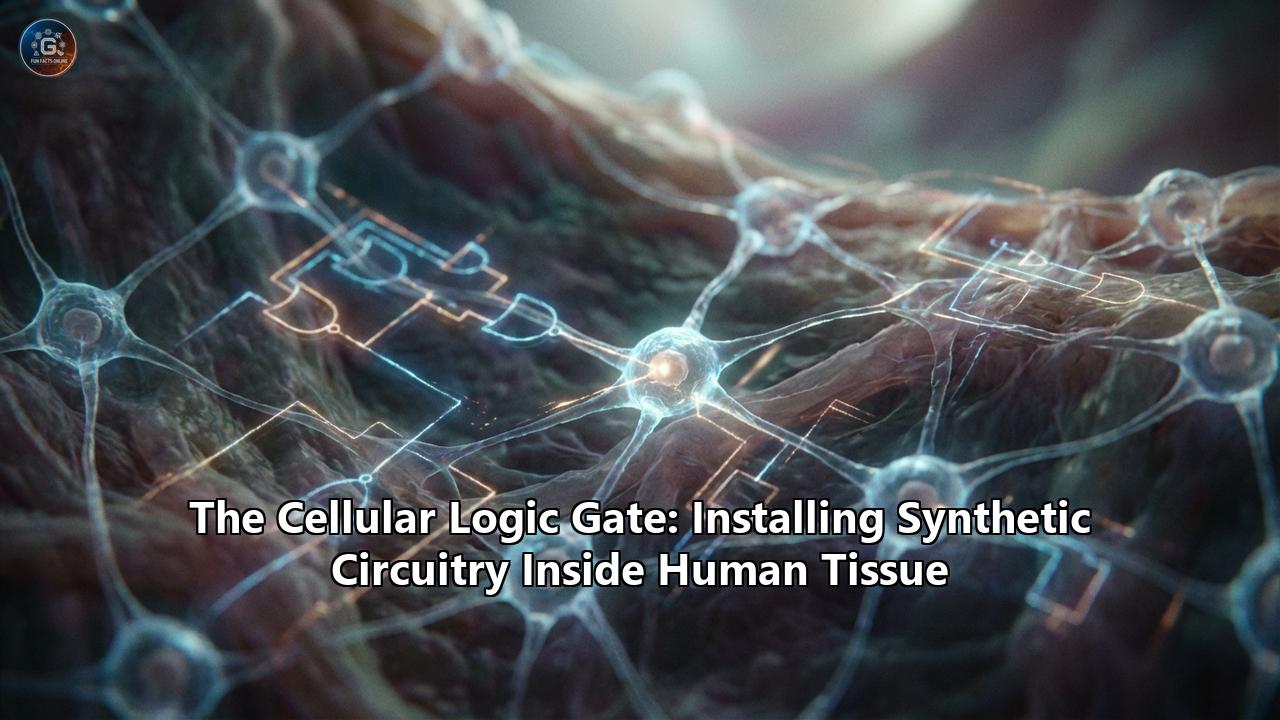
The human body is often described as a machine, but for most of history, it was a machine with a sealed hood. We could observe its gears—cells, proteins, and genes—churning away, and occasionally we could throw a wrench (drugs) into the works to jam a broken part or grease a squeaky wheel. But we could not fundamentally rewire the engine. We could not install new software.
That era is over. We have entered the age of the "programmable human."
As of early 2026, synthetic biology has moved beyond the simple "cut and paste" of early genetic engineering. We are no longer just editing genes; we are installing circuits. By borrowing the Boolean logic that powers silicon computers—AND, OR, NOT, NAND—and translating it into the wet, squishy language of DNA and protein, scientists are transforming human tissue into biological hardware. We are teaching immune cells to run "if/then" algorithms before opening fire. We are installing "chronogenetic" patches into cartilage that release drugs in sync with the sun. We are, quite literally, downloading apps into our organs.
This is the story of the cellular logic gate: how it works, how it is installed, and how it is rewriting the operating system of human life.
Part I: The Wetware Revolution
From Observation to EngineeringTo understand the magnitude of this shift, we must first understand the "hardware" of the cell. For decades, biology was a descriptive science. Biologists were akin to naturalists cataloging the flora of a strange island. They identified the Central Dogma: DNA makes RNA, and RNA makes protein. This flow of information was viewed as a fixed river, guided by evolution.
Synthetic biology, a field that coalesced in the early 2000s, asked a different question: What if we treated the Central Dogma not as a river, but as a circuit board?
In a silicon computer, a transistor controls the flow of electrons. It has an input and an output. If the input voltage is high, the current flows (1). If it’s low, it stops (0). By arranging these transistors, you build logic gates. An AND gate requires two inputs to be "on" for the output to activate. An OR gate needs only one.
In a cell, the "electrons" are RNA polymerase molecules (the enzymes that transcribe DNA), and the "transistors" are promoters—sequences of DNA that tell the cell when to start reading a gene. By engineering these promoters to respond to specific chemical signals, synthetic biologists created the first biological switches.
The Early Days: The Toggle SwitchThe field’s "Hello World" moment came in 2000 with the construction of the genetic toggle switch in E. coli. It was a simple memory unit: two genes that repressed each other. If Gene A was on, it shut off Gene B, and vice versa. It was bistable, meaning it could hold a "state," just like a bit of computer memory.
For twenty years, these circuits were largely toys for bacteria. They were slow, "noisy" (prone to random firing), and notoriously difficult to transfer to the complex, cluttered environment of a mammalian cell. A circuit that worked perfectly in a Petri dish of bacteria would fail miserably inside a human T-cell, confused by the cell’s thousands of native signaling pathways.
But in the last five years, and specifically through breakthroughs culminating in 2025, the "compatibility issues" have been solved. We have moved from simple toggle switches to multi-core processing inside human tissue.
Part II: The New Architecture (2020–2026)
The Three Generations of Cellular LogicThe circuits being installed in human tissues today are lightyears ahead of their bacterial ancestors. They generally fall into three architectures, each with different "clock speeds" and capabilities.
1. Transcriptional Logic (The "Slow" Processor)This is the classic approach. It relies on controlling the production of RNA.
- How it works: You engineer a gene that only turns on if two specific proteins (transcription factors) bind to its promoter. This is an AND gate.
- The Pros: It is incredibly versatile. You can wire it to almost any gene.
- The Cons: It is slow. Biology takes time. Transcription (making RNA) and translation (making protein) can take hours. If you need a cell to react to a sudden drop in blood sugar or a rapidly appearing toxin, this lag is dangerous.
- State of the Art: In 2024, researchers perfected "multi-input" transcriptional gates that can integrate up to four different signals—such as pH, oxygen level, and two different tumor biomarkers—before making a decision.
This was the major leap of 2025. Instead of waiting for new genes to be expressed, these circuits use proteins that are already made but sitting dormant, waiting for a signal to snap into action.
- The Mechanism: These circuits rely on phosphorylation—the rapid addition of a phosphate group to a protein—or proteolysis (cutting a protein).
- The Breakthrough: A landmark 2025 study introduced "logic-gate proteins" designed with "smart tails." These are synthetic proteins that float in the cytoplasm. When they detect a specific input (like a drug or a disease marker), they physically change shape in seconds.
- The Speed: These circuits react in minutes, not hours. This "real-time" processing is crucial for applications like "smart insulin," where a delay could lead to a diabetic coma.
If proteins are the transistors, CRISPR is the operating system.
- The Mechanism: We typically know CRISPR as a gene-editing tool (molecular scissors). But a "broken" version of Cas9 (dCas9) can be used as a traffic cop. It sits on a gene and blocks it (CRISPRi) or recruits activators to turn it on (CRISPRa).
- The Breakthrough: In late 2025, ETH Zurich researchers demonstrated a "dual-core" processor in human cells. They used two orthogonal CRISPR systems (from different bacteria) inside a single human cell. One core handled "metabolic inputs" (sensing nutrients), while the other handled "therapeutic outputs" (releasing drugs). This parallel processing prevents the circuit from getting "bogged down" by too many tasks.
Part III: Installation Day
How to Upload an App to an OrganYou have designed a brilliant genetic circuit. It’s an AND gate that detects cancer and releases a toxin. Now, how do you get it into the patient’s liver? You cannot simply ask them to swallow a disk drive.
The "delivery problem" has been the bottleneck of gene therapy for decades. The solutions developed by 2026 have shifted from crude viral infection to sophisticated chemical packaging.
The Old Way: Viral VectorsHistorically, scientists stripped the replication genes out of viruses (like HIV or Adeno-Associated Virus, AAV) and stuffed them with the synthetic circuit. The virus would then "infect" the patient’s cells, injecting the circuit.
- The Limit: Viruses are tiny. A complex logic gate with multiple sensors and processors requires a lot of DNA code—often too much to fit inside a viral shell. It’s like trying to fit the Windows OS onto a floppy disk.
This is the technology that gave us the COVID-19 vaccines, but by 2026, it has been turbocharged.
- The Payload: 2025 research into "payload heterogeneity" revealed that standard LNPs were often 50% empty. New "turbulent mixing" manufacturing techniques have created ultra-dense LNPs that can carry massive genetic payloads—enough for complex, multi-gene circuits.
- The Mechanism: These fat bubbles fuse with the cell membrane, dumping the circuit (encoded in mRNA or DNA plasmids) into the cytoplasm. Because they are synthetic, there is no limit to the "file size" other than the physical stability of the nanoparticle.
For immune cells (like T-cells), we often install the circuits ex vivo (outside the body). Doctors harvest the patient’s blood, isolate the T-cells, and use a technique called electroporation—zapping them with electricity to open pores—to slide the circuit in. A 2022-2025 optimized protocol now allows for "non-viral CRISPR insertion" of massive DNA sequences, effectively rewriting the T-cell’s genome without using a single virus. This makes the "drug" cheaper, safer, and faster to manufacture.
Part IV: The Killer App—Oncology
Logic-Gated CAR-T CellsThe most immediate and life-saving application of this technology is in cancer treatment.
The Problem with Version 1.0The first generation of CAR-T therapy was a "dumb" missile. It targeted a single antigen (like CD19 on B-cells). If the cancer had CD19, it died. But if healthy B-cells also had CD19, they died too. This "on-target, off-tumor" toxicity could be lethal. Furthermore, solid tumors are tricky; they often don't have one unique flag. They have a messy combination of markers that also appear on healthy heart or lung tissue.
The Solution: The Boolean AssassinIn 2026, clinical trials are underway for "Logic-Gated CAR-T." These cells don't just look for one target; they compute a decision.
- The AND Gate: The T-cell is programmed to kill ONLY if it detects Antigen A AND Antigen B.
Example: A tumor might express both Her2 and Mesothelin. Healthy heart tissue has Her2, and healthy lung lining has Mesothelin. A standard therapy attacking either would kill the patient. The Logic-Gated T-cell ignores the heart (only A) and the lung (only B). It only activates when it sees the specific combination found on the tumor.
- The NOT Gate: The Safety Switch.
The Logic: Attack Antigen A UNLESS Antigen B is present.
Scenario: You target a general cancer marker, but you program the T-cell to shut down if it sees a "healthy" marker (like a protein found only on normal liver cells). This allows for aggressive treatment with a built-in emergency brake.
Solid Tumor BreakthroughsOne of the most exciting developments of late 2025 was the application of OR logic to combat "antigen escape." Tumors are notorious shapeshifters; if you target Protein X, the tumor simply stops making Protein X and survives.
New synthetic circuits allow T-cells to recognize Protein X OR Protein Y. If the tumor hides one, the T-cell switches targeting modes instantly, preventing relapse. This "multi-spectral" targeting is making previously untreatable solid tumors (like glioblastoma) vulnerable for the first time.
Part V: The Guardian—Chronic Disease
Chronogenetics and Smart TissuesWhile cancer gets the headlines, the application of synthetic circuits to chronic disease is perhaps more profound. This is where we move from "killing bad cells" to "regulating good ones."
The "Chronogenetic" JointRheumatoid arthritis is a painful, degenerative condition. Curiously, it follows a clock: inflammation spikes in the early morning. Taking a pill at 8 AM is often too late; the damage is done while you sleep.
In early 2025, researchers unveiled a "chronogenetic" circuit. They engineered cartilage cells derived from stem cells to contain a circadian clock.
- The Circuit: They linked the promoter of the Per2 gene (a core component of the body’s circadian rhythm) to a therapeutic gene (an anti-inflammatory drug called IL-1Ra).
- The Result: When implanted into a joint, these cells "wake up" in the pre-dawn hours, sensing the body’s natural rhythm, and release a pulse of anti-inflammatory medication before the patient wakes up. The circuit then turns off during the day. This is "temporal targeting"—delivering the drug not just to the right place, but at the exact right time.
Diabetes management has long relied on external pumps and sensors. Synthetic biology aims to internalize this.
"Smart Beta Cells" are being engineered with a closed-loop logic gate.
- Input: High Glucose.
- Logic: IF Glucose > 150 mg/dL, THEN transcribe Insulin.
- Safety: IF Glucose < 70 mg/dL, THEN secrete Glucagon (to raise sugar).
- The 2026 Edge: The new "protein-level" logic gates mentioned earlier are critical here. Old genetic circuits took too long to produce insulin after a meal. The new phosphorylation-based switches release stored insulin instantly, mimicking a healthy pancreas almost perfectly.
Part VI: The Glitch—Challenges and Bugs
Why We Aren't All Cyborgs YetIf this technology is so powerful, why isn't it in every hospital? The answer lies in the "bugs" of biological programming.
1. Cellular Burden (The "RAM" Limit)A cell has a finite amount of energy, ribosomes, and amino acids. It is trying to survive and replicate. When we force it to run a complex synthetic circuit (like a massive dual-core CRISPR processor), we are stealing its resources.
- The Consequence: The cell grows slowly or dies. This is known as "metabolic burden."
- Evolutionary Drift: Because these engineered cells are "less fit" than their non-engineered neighbors, nature hates them. Over time, the cells will mutate to "break" the circuit. They literally delete the app to save energy.
- The Fix: 2025 modeling papers proposed "Punisher Circuits." These are genetic kill-switches linked to the circuit's function. If the cell tries to delete the therapeutic circuit, the Punisher activates a toxin and kills the cell. Only the "obedient" cells survive.
The human body is paranoid. It scans constantly for "non-self" proteins. Many synthetic circuits use proteins derived from bacteria (like Cas9 or the TetR repressor). If the immune system spots these, it will destroy the therapeutic cells.
- The Fix: The field is moving toward "humanized" parts. New "Zinc Finger" transcription factors are built entirely from human protein sequences, making the circuit invisible to the immune system.
In electronics, connecting a wire to a voltmeter doesn't change the voltage. In biology, "measuring" a molecule usually means binding to it, which consumes it. This "retroactivity" means that your sensor can accidentally drain the very signal it is trying to detect, disrupting the cell’s natural functions. Engineers are currently designing "insulated" buffers to prevent this crosstalk.
Part VII: The Future—Organoid Intelligence
Blurring the Line Between Silicon and CarbonAs we look toward 2030, the field is taking a turn into the truly sci-fi. If we can make cells compute, can we make computers out of cells?
Organoid Intelligence (OI)Silicon chips are hitting physical limits. They overheat and consume vast amounts of energy. The human brain, however, has more processing power than a supercomputer and runs on the energy equivalent of a dim lightbulb.
Researchers are now growing "brain organoids"—tiny, lab-grown spheres of human neurons—and wiring them into biocomputers.
- The Concept: Instead of simulating a neural network on a GPU, we use* a biological neural network.
- The 2026 State: These systems can already play simple games (like Pong) and perform speech recognition. The vision is to use these "living processors" for tasks where silicon fails, such as complex pattern recognition with minimal power consumption.
Imagine a future where your logic-gated liver cells communicate with your smartwatch.
- The Interface: "Cybergenetics" is the interface between digital and biological. Scientists have already built circuits that respond to specific wavelengths of light or magnetic fields. A wearable device could detect a fever, send a digital signal to an implant, trigger a red LED, and activate a light-sensitive gene circuit to release ibuprofen directly into your bloodstream.
Part VIII: The Terms of Service—Ethical Implications
The Code of ConductWith the power to program life comes the responsibility of the programmer.
Dual UseA circuit that detects a tumor and releases a cure is a medical miracle. A circuit that detects a specific genetic ancestry marker and releases a toxin is a bioweapon. The "modularity" of synthetic biology means that the same "chassis" can be loaded with a "good" or "bad" payload. Regulating the distribution of these "biological apps" is a nightmare for biosecurity experts.
The Definition of "Human"If a patient has 50% of their liver replaced with synthetic, computing cells that are smarter than the original organ, are they still fully human? Or are they a bio-hybrid? As we integrate more "intelligence" into our tissues—potentially even enhancing cognitive functions via neural implants—we will have to redefine the biological self.
The "Kill Switch" DebateShould every synthetic circuit have a remote-controlled off switch? If a gene therapy goes wrong and starts overproducing insulin, doctors need a way to stop it. Current ethics guidelines suggest that "emergency brakes" (like a drug-inducible suicide gene) should be mandatory for all high-level synthetic circuits installed in humans.
Conclusion: The Programmable Epoch
The installation of synthetic circuitry inside human tissue is not just a new medical treatment; it is a fundamental shift in our relationship with nature. We are transitioning from the "User" of the human body to the "Administrator."
The cellular logic gate represents the ultimate convergence of biology and engineering. It turns the chaotic, noisy reality of life into a computable, solvable problem. In 2026, we are just installing the first few apps—the cancer hunters, the arthritis soothers, the insulin regulators. But the operating system is live. The hardware is ready. And the update is downloading.
Reference:
- https://steel.ac/wp-content/uploads/2025/02/sechkar-steel-2025-model-guided-gene-circuit-design-for-engineering-genetically-stable-cell-populations-in-diverse.pdf
- https://pure.johnshopkins.edu/en/publications/payload-distribution-and-capacity-of-mrna-lipid-nanoparticles/
- https://pmc.ncbi.nlm.nih.gov/articles/PMC10054295/
- https://pmc.ncbi.nlm.nih.gov/articles/PMC6500048/
- https://pmc.ncbi.nlm.nih.gov/articles/PMC6041164/
- https://www.mdpi.com/1420-3049/30/3/542
- https://pubmed.ncbi.nlm.nih.gov/40661480/
- https://pmc.ncbi.nlm.nih.gov/articles/PMC9508184/
- https://gtr.ukri.org/projects?ref=BB%2FM009769%2F1
- https://www.biorxiv.org/content/10.1101/2025.06.11.659145v1.full-text
- https://www.prnewswire.com/news-releases/a-cellular-engineering-breakthrough-high-yield-crispr-without-viral-vectors-301612302.html
- https://pubmed.ncbi.nlm.nih.gov/39920119/