
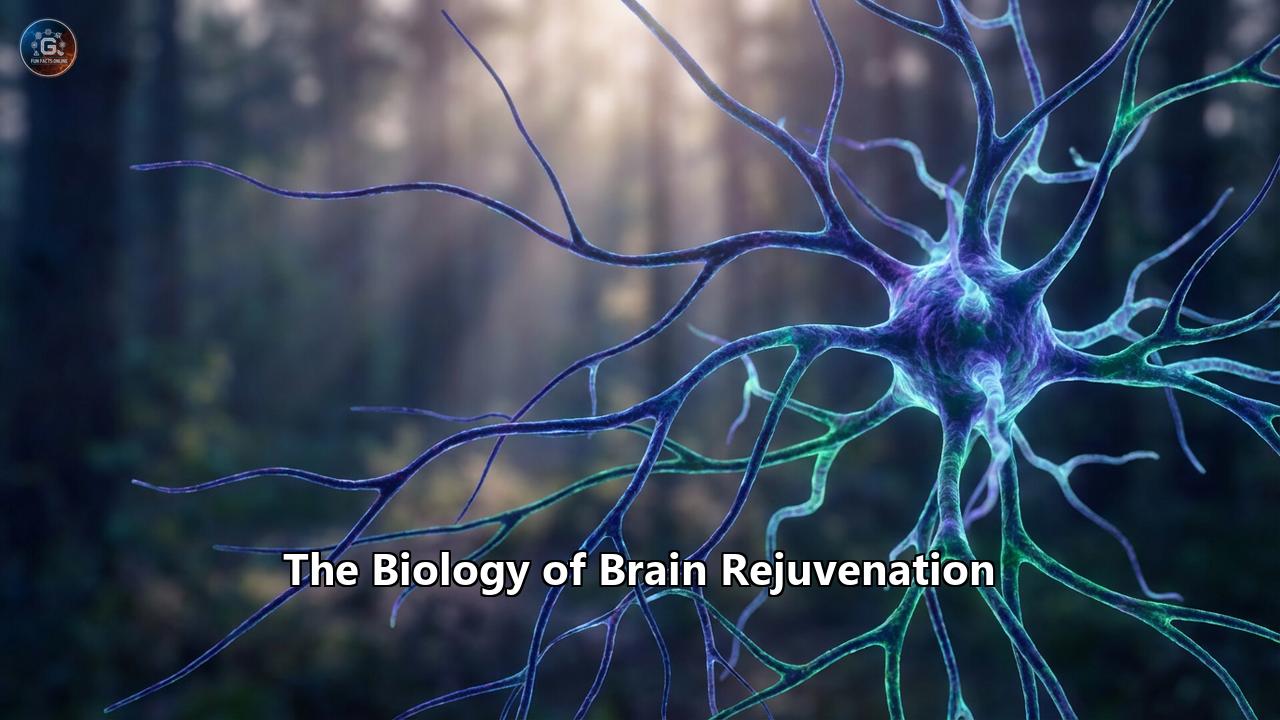
The quest to reverse the aging of the human brain has moved from the realm of science fiction into the rigorous laboratories of molecular biology. By 2026, we stand on the precipice of a new era where "neuro-rejuvenation" is not just about treating disease, but about restoring the structural and functional integrity of the aging central nervous system. This deep dive explores the biology of brain rejuvenation, dissecting the molecular mechanisms, cellular transformations, and systemic interventions that are redefining what it means to grow old.
Introduction: The Plasticity of Time
For decades, the central dogma of neurobiology held that the adult brain was a static, slowly decaying organ. We believed that once development ceased, the neural circuitry was fixed, and the only trajectory was a gradual decline in synaptic density, neurogenesis, and cognitive sharpness. That dogma has been shattered. The biology of brain rejuvenation is predicated on a single, powerful concept: malleability.
The aging brain is not an irreversibly broken machine; it is a machine where the maintenance signals have gone quiet, and the repair protocols have been corrupted. By decoding the signals that instruct a neuron to remain "young," scientists have begun to manually reboot these programs. From the editing of the epigenome to the infusion of systemic "youth factors," we are learning that the biological age of the brain is fluid.
Part I: The Molecular Engines of Rejuvenation
To understand how to rejuvenate the brain, we must first understand the molecular erosion that characterizes aging. The rejuvenation strategies currently showing the most promise target four core molecular pillars: epigenetic drift, proteostatic collapse, metabolic exhaustion, and inflammatory dysregulation.
1. Epigenetic Reprogramming: The "Ctrl+Z" for Neurons
Perhaps the most revolutionary advance in the last decade is the application of partial epigenetic reprogramming. Every cell in the body contains the same DNA; what makes a neuron a neuron and not a skin cell is the "epigenome"—the system of chemical tags (methylation marks and histone modifications) that turn genes on or off.
As neurons age, this epigenetic landscape becomes "noisy." Genes that should be silent (like those for other cell types or pro-inflammatory cytokines) start to leak expression, while genes critical for synaptic function and DNA repair are silenced. This is known as epigenetic drift.
The Yamanaka Intervention:In 2006, Shinya Yamanaka discovered four transcription factors (Oct4, Sox2, Klf4, and c-Myc—collectively "OSKM") that could revert an adult cell back to an embryonic stem cell. While full reversion is dangerous (it wipes the cell's identity and causes cancer), researchers found that pulsing these factors—expressing them for short bursts—can polish the epigenome without erasing the cell's identity.
In the context of the brain, this "partial reprogramming" has shown stunning results. When applied to the retinal ganglion cells of aged mice, OSKM factors successfully restored the DNA methylation patterns to a youthful state. The result was not just molecular; the blind mice regained their vision. The neurons literally "forgot" they were old.
The mechanism relies on a family of enzymes called TET methylcytosine dioxygenases (TET1, TET2, TET3), which actively remove the "aging" methylation marks. When these enzymes are engaged by the Yamanaka factors, they specifically target the hypermethylated regions associated with age-related decline, resetting the clock.
The Danger of Identity Loss:The challenge in 2026 remains precision. If you reprogram a neuron too far, it forgets it is a neuron and stops transmitting signals. If you don't reprogram it enough, the rejuvenation doesn't stick. The current frontier involves "cocktail refinement"—using subsets of factors (like OSK without the oncogenic c-Myc) or chemical substitutes to induce a safer, more controlled reset.
2. Proteostasis and Autophagy: The Cleanup Crew
A hallmark of an aged brain is the accumulation of "molecular trash"—misfolded proteins like amyloid-beta, tau, and alpha-synuclein. A young brain produces these proteins too, but it clears them efficiently using a system called autophagy (literally "self-eating") and the ubiquitin-proteasome system.
In aging, these disposal systems jam. The lysosomes, the cell's recycling centers, become acidic and sluggish. Rejuvenation therapies aim to supercharge these systems.
The Ketone Connection:Recent breakthroughs have revealed that beta-hydroxybutyrate (BHB), a ketone body produced during fasting or exercise, is not just a fuel; it is a signaling molecule that directly assists proteostasis. BHB has been shown to bind to misfolded proteins, altering their solubility and tagging them for autophagic clearance. It also upregulates the expression of Lamp2a, a gene critical for "chaperone-mediated autophagy."
By shifting the brain's metabolism toward ketosis (via diet, exogenous ketones, or drugs that mimic the fasting state), we can reactivate the lysosomal networks, effectively taking out the trash that has accumulated over decades.
3. Metabolic Revival: NAD+ and Mitochondria
Neurons are energy hogs. They consume 20% of the body's energy while representing only 2% of its mass. This energy is generated by mitochondria, the power plants of the cell. With age, mitochondrial efficiency plummets, leading to "bioenergetic deficit."
Central to this failure is the decline of NAD+ (Nicotinamide Adenine Dinucleotide), a co-enzyme essential for converting nutrients into ATP. NAD+ levels in the brain can drop by 50% or more in old age. This decline cripples the activity of Sirtuins (specifically SIRT1 and SIRT3), a family of "longevity proteins" that repair DNA and maintain mitochondrial health.
The NAD+ Boost:Therapies that replenish NAD+—using precursors like Nicotinamide Riboside (NR) or Nicotinamide Mononucleotide (NMN)—have moved from mouse models to human application. In the brain, restoring NAD+ levels re-engages SIRT1, which then deacetylates (activates) PGC-1α, the master regulator of mitochondrial biogenesis.
This creates a virtuous cycle: more NAD+ leads to more active Sirtuins, which leads to more (and healthier) mitochondria, which produce more energy, allowing the neuron to sustain high-maintenance activities like synaptic plasticity and DNA repair.
Part II: Cellular Rejuvenation
Moving up from the molecular level, we encounter the cellular players. Brain rejuvenation is not just about fixing neurons; it is about managing the ecosystem of support cells—glia—that keep neurons alive.
1. The Senolytic Revolution: Clearing Zombie Cells
Not all cells die when they are damaged. Some enter a state of suspended animation called cellular senescence. These "zombie cells" stop dividing but remain metabolically active, churning out a toxic soup of inflammatory cytokines called the SASP (Senescence-Associated Secretory Phenotype).
In the brain, two major cell types are prone to senescence: Microglia (immune cells) and Oligodendrocyte Progenitor Cells (OPCs).
- Senescent Microglia: Instead of cleaning up debris, they become hyper-inflammatory, attacking healthy synapses and chronically inflaming the neural environment.
- Senescent OPCs: These cells lose their ability to produce myelin, the insulating sheath around nerve fibers. This leads to slower signal transmission and cognitive "sluggishness."
2. Microglial Reprogramming: From Foe to Friend
Rather than killing microglia, some researchers aim to "civilize" them. Microglia exist on a spectrum between "M1" (pro-inflammatory/neurotoxic) and "M2" (anti-inflammatory/neuroprotective). Aging pushes microglia toward a "primed" M1-like state, where they overreact to minor stressors.
New therapeutic approaches target the NLRP3 inflammasome inside microglia. By inhibiting NLRP3, we can block the transition to the toxic M1 state, forcing microglia back into their housekeeping M2 role. This restores their ability to prune dead synapses and clear amyloid plaques without causing collateral damage to healthy neurons.
3. Neurogenesis: Waking Sleeping Giants
For a long time, it was believed that humans stopped growing new neurons in adulthood. We now know that neurogenesis persists in at least two regions: the hippocampus (memory) and the subventricular zone. However, the rate of new neuron birth drops precipitously with age.
The decline is largely due to the exhaustion of the Neural Stem Cell (NSC) pool. These stem cells become quiescent (dormant) due to age-related inflammation and lack of growth factors.
DMTF1 and the Stem Cell Wake-Up Call:A breakthrough identified in the mid-2020s involves a protein called DMTF1. Researchers found that DMTF1 is a "master switch" for NSC activity. In aged brains, DMTF1 levels drop. Restoring DMTF1 expression in aged stem cells can loosen the chromatin structure, allowing growth genes to turn on. This effectively wakes the stem cells from their deep sleep, restarting the production of fresh neurons that integrate into existing circuits to support new memory formation.
Part III: Systemic Rejuvenation (The Blood-Brain Connection)
The brain is not an island. It is constantly bathed in blood, and the composition of that blood dictates the age of the brain. This realization stems from the somewhat macabre experiments of heterochronic parabiosis—stitching a young mouse to an old mouse so they share a circulatory system.
1. The Vampiric Factors: GDF11, PF4, and Young Plasma
When an old mouse shares blood with a young one, its brain rejuvenates. New neurons grow, inflammation subsides, and memory improves. Conversely, the young mouse suffers rapid brain aging. This proved that there are "pro-youth" factors in young blood and "pro-aging" factors in old blood.
Platelet Factor 4 (PF4):One of the star molecules identified in recent years is PF4. Released by platelets, PF4 calms the aging immune system and reduces neuroinflammation. It acts as a cognitive enhancer by targeting the hippocampus. Crucially, PF4 levels drop with age, but systemic administration can mimic the effects of young blood / exercise.
GDF11 (Growth Differentiation Factor 11):Another controversial but pivotal factor is GDF11. While its exact role has been debated, evidence suggests it helps remodel the cerebral vasculature.
2. Rebuilding the Blood-Brain Barrier (BBB)
The Blood-Brain Barrier is the castle wall that protects the brain. It consists of endothelial cells tightly stitched together by "tight junctions." In aging, this barrier becomes leaky. Toxins, immune cells, and pathogens from the blood seep into the brain, causing chronic inflammation.
Young blood factors appear to directly repair the BBB. They upregulate the proteins (like Claudin-5 and Occludin) that seal the gaps between endothelial cells. Furthermore, they stimulate angiogenesis—the growth of new capillaries. An aged brain is often hypoxic (starved of oxygen) because its capillary network has thinned out (microvascular rarefaction). Rejuvenating the blood vessels restores oxygen supply, which is a prerequisite for any neuronal repair.
3. The "Klotho" Hormone
Named after the Greek Fate who spun the thread of life, Klotho is a hormone produced primarily in the kidneys that circulates in the blood and crosses into the brain. It is a potent neuroprotector.
Klotho enhances the function of NMDA receptors, which are critical for Long-Term Potentiation (LTP)—the cellular basis of learning. It essentially makes synapses more "plastic," allowing them to strengthen connections more easily. Klotho levels decline naturally with age and stress. Therapies that deliver Klotho (or its fragment) have been shown to boost cognition instantly, independent of neurogenesis, by essentially "lubricating" the machinery of synaptic transmission.
Interestingly, Estrogen regulates Klotho production. The sharp decline in estrogen during menopause correlates with a drop in Klotho, which may explain the increased vulnerability of the female brain to Alzheimer's. Estrogen replacement therapy (if started early) can maintain Klotho levels, offering a gender-specific avenue for brain rejuvenation.
Part IV: The Gut-Brain Axis
We cannot talk about brain biology without talking about the "second brain" in our intestines. The microbiome—the trillions of bacteria in the gut—changes predictably with age. Beneficial species (like Bifidobacteria and Lactobacillus) decline, while pro-inflammatory "pathobionts" take over.
This "dysbiosis" sends distress signals to the brain via the Vagus Nerve and by releasing inflammatory metabolites that cross the leaky gut barrier and then the leaky blood-brain barrier.
The Metabolite Messengers:Healthy gut bacteria produce Short-Chain Fatty Acids (SCFAs) like butyrate, propionate, and acetate. These are small enough to travel to the brain. Butyrate, in particular, is an epigenetic modifier—it acts as a Histone Deacetylase Inhibitor (HDAC inhibitor). By doing so, it keeps chromatin open and promotes the expression of BDNF (Brain-Derived Neurotrophic Factor).
Rejuvenating the gut microbiome (through fecal transplants from young donors or targeted "psychobiotics") has been shown to reverse microglia activation in the brain. The "young" microbiome produces the right mix of SCFAs to tell the brain's immune system to stand down.
Part V: Lifestyle as Medicine
While drugs and gene therapies are exciting, the most robust "rejuvenation" data we have currently comes from lifestyle interventions. We now understand the molecular reasons why.
1. Exercise and the "Irisin" Hormone
When muscles contract during endurance exercise, they release a protein called FNDC5, which is cleaved into a hormone called Irisin. Irisin travels through the blood, crosses the BBB, and induces the expression of BDNF in the hippocampus.
BDNF is often called "Miracle-Gro for the brain." It supports the survival of existing neurons and encourages the growth of new synapses. This is the direct link between a morning run and a sharper memory. In aging models, blocking Irisin negates the cognitive benefits of exercise, proving it is a key mediator.
2. Intermittent Fasting (IF)
Fasting does two things relevant to brain rejuvenation:
- Ketogenesis: As mentioned, it produces BHB, which cleans up protein aggregates.
- Hormesis: It imposes a mild stress on neurons. This stress activates the Nrf2 pathway, the body's master antioxidant response. Neurons that are mildly stressed by hunger toughen up—they produce more antioxidants, more mitochondria, and repair their DNA more aggressively. It’s a "use it or lose it" signal magnified.
Part VI: Emerging Therapies & The Future (2026 and Beyond)
As we look at the landscape of 2026, several cutting-edge therapies are moving into clinical focus.
1. Gamma Entrainment (Sensory Rejuvenation)
It turns out that brain waves matter. Fast-spiking interneurons (parvalbumin neurons) generate Gamma waves (40 Hz), which coordinate high-level cognitive processing. In Alzheimer's and aging, these gamma rhythms disrupt.
Exposure to flickering lights and sound pulses at exactly 40 Hz can "entrain" the brain, forcing it back into rhythm. Surprisingly, this rhythm does more than just organize electrical activity; it activates microglia. The microglia change shape and begin aggressively devouring amyloid plaques. This is "non-invasive" rejuvenation—fixing the biology of the brain using only light and sound.
2. Bio-Electric Medicine
Beyond chemical drugs, we are seeing the rise of bio-electronics. Devices that stimulate the Vagus Nerve are being used to hack the "Inflammatory Reflex." By electrically stimulating the vagus nerve, we can send a signal to the spleen and immune system to stop producing inflammatory cytokines (like TNF-alpha). This calms the systemic inflammation that drives brain aging.
3. Synthetic "Young Blood"
Rather than relying on human donors, biotech companies are synthesizing the "cocktail" of youth. By mixing recombinant PF4, Klotho, and GDF11, they aim to create an injectable serum that mimics the parabiosis effect without the risks of blood-borne diseases or rejection.
Part VII: Challenges and Ethical Considerations
The ability to rejuvenate the brain brings profound questions.
The Identity Problem:Our memories are stored in the physical structure of synaptic connections. If we "rejuvenate" a brain—stimulating neurogenesis and synaptic remodeling—do we risk overwriting the archives of the self? Experiments suggest that while reconsolidation of memory is improved, extreme plasticity could theoretically destabilize long-term memories. "Young" brains learn fast but also forget fast. An "old" brain is a stable repository of wisdom. Striking the balance between "fluid intelligence" (youth) and "crystallized intelligence" (age) is a delicate biological tightrope.
The Tumor Risk:The very mechanisms that make cells young—high growth factors, active telomerase, stem cell proliferation—are the same mechanisms cancer uses to thrive. "Ramping up" the brain's growth potential carries the inherent risk of glioblastoma. Safety protocols in 2026 are heavily focused on "kill switches"—genetic modifications that allow us to instantly shut down the rejuvenation therapy if a cell starts dividing too aggressively.
Equity:Will brain rejuvenation be a luxury good? A cognitive gap between the rich (who can afford synthetic Klotho and NAD+ drips) and the poor could lead to a new form of biological inequality.
Conclusion
The biology of brain rejuvenation is a testament to the resilience of life. The brain is not a static sculpture chipping away in the wind; it is a dynamic, living forest. It can regrow, replant, and revitalize itself given the right signals. From the "epigenetic reboot" of Yamanaka factors to the "systemic sweetening" of young blood, we are assembling the toolkit to keep that forest vibrant well into our final decades. We are no longer just observing the sunset of the mind; we are learning how to turn back the clock to high noon.
Reference:
- https://www.preprints.org/manuscript/202212.0211/v1/download
- https://www.sciencedaily.com/releases/2024/12/241202123528.htm
- https://neurosciencenews.com/ketone-bodies-autophagy-28154/
- https://pmc.ncbi.nlm.nih.gov/articles/PMC1782770/
- https://www.mdpi.com/2076-3417/11/15/7120
- https://pmc.ncbi.nlm.nih.gov/articles/PMC9862442/
- https://www.sciencedaily.com/releases/2013/10/131010124555.htm
- https://www.eurekalert.org/news-releases/624921
- https://pmc.ncbi.nlm.nih.gov/articles/PMC12094564/