
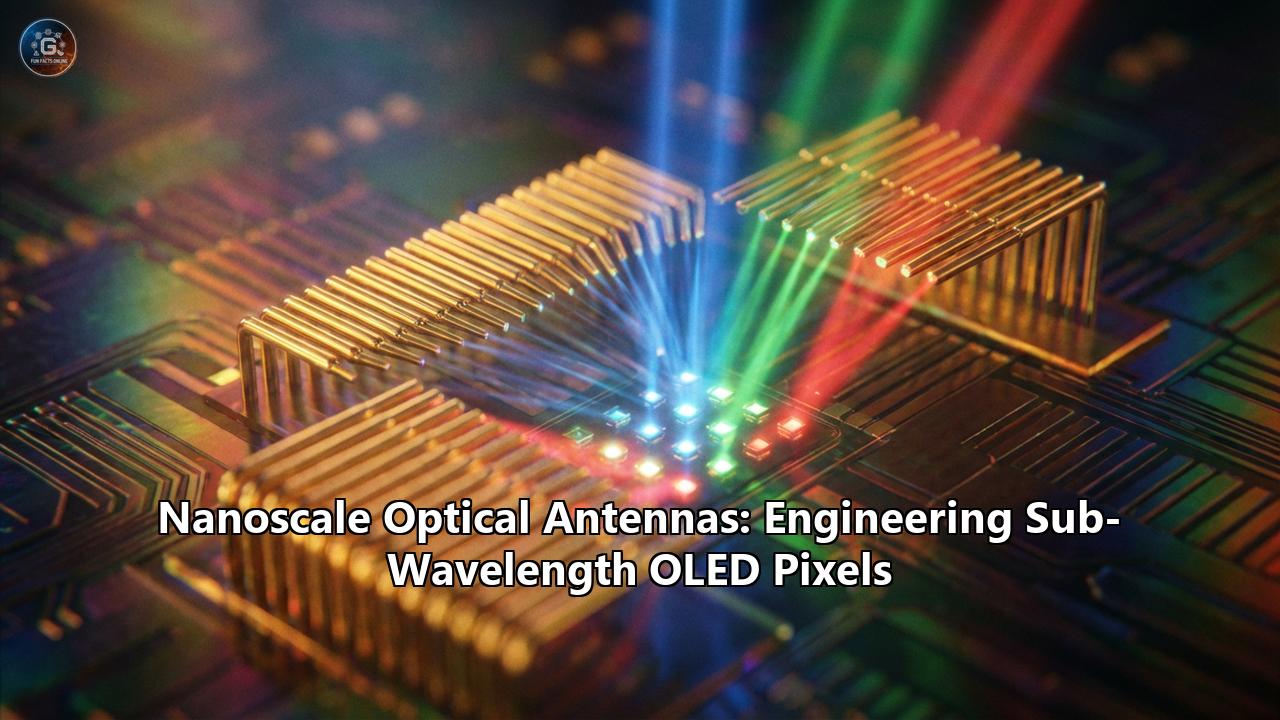
For decades, the trajectory of display technology has been defined by a relentless drive toward miniaturization. From the bulky cathode-ray tubes of the 20th century to the razor-thin organic light-emitting diode (OLED) screens that currently dominate the smartphone and television markets, the objective has remained consistent: pack more pixels into a smaller area to produce images indistinguishable from reality. However, as the tech industry pivots toward next-generation applications—such as fully immersive virtual reality (VR), augmented reality (AR) smart glasses, holographic projections, and contact-lens displays—traditional manufacturing and optical paradigms have collided with a fundamental barrier: the physical limits of light itself.
Standard high-end smartphones today boast pixel densities of around 400 to 500 pixels per inch (PPI). While this is sufficient for a screen held at arm’s length, placing a display mere millimeters from the human eye in a VR or AR headset magnifies the image to the point where the gaps between individual pixels become jarringly visible. This phenomenon, known as the "screen-door effect," breaks immersion and causes visual fatigue. To achieve a "flawless" near-eye visual experience that perfectly matches the visual acuity of the human eye, engineers calculate that display densities must exceed 5,000 to 10,000 PPI.
At these ultra-high densities, pixels must be shrunk to dimensions smaller than a single micrometer—pushing them below the wavelength of visible light (which ranges from approximately 400 to 700 nanometers). When optoelectronic components are scaled down to these sub-wavelength realms, conventional OLED architectures break down. Light begins to diffract unpredictably, materials fail due to intense localized electric fields, and light extraction efficiency plummets.
To overcome this seemingly insurmountable barrier, physicists and materials scientists have turned to the field of nanophotonics, specifically leveraging nanoscale optical antennas and metasurfaces. By engineering optical properties at the scale of molecules and utilizing plasmonic resonances, researchers are successfully redefining how light is generated, amplified, and directed, paving the way for sub-wavelength OLED pixels that are smaller than a single bacterium.
The Physics of the Sub-Wavelength Bottleneck
To appreciate the sheer ingenuity of nanoscale optical antennas, one must first understand why simply "shrinking" a standard OLED does not work.
A traditional OLED consists of a stack of ultra-thin organic semiconductor layers—including hole injection, hole transport, emissive, and electron transport layers—sandwiched between two electrodes. When a voltage is applied, electrons and holes migrate toward the emissive layer and recombine to form excitons, which subsequently decay and release photons. In large, macroscopic pixels, these layers form a clean, two-dimensional planar geometry.
However, as pixel sizes are aggressively scaled down to the nanometer regime, this 2D planar geometry evolves into a highly complex, three-dimensional topological landscape dominated by the sharp contours of nanoscale electrodes.
This transition introduces catastrophic failure modes:
- Spatially Imbalanced Charge Carrier Transport: The sharp edges and corners of nano-electrodes inherently possess higher electric field concentrations. This causes electrons and holes to be injected unevenly, leading to chaotic recombination zones.
- Filament Growth and Rapid Device Failure: Because current preferentially flows through the high-field sharp edges of the nanostructure, massive localized current densities occur. This triggers the growth of conductive filaments through the fragile organic layers, causing catastrophic short circuits and rapid device death—often within milliseconds of powering on.
- The Diffraction Limit: In standard optics, the Abbe diffraction limit dictates that light cannot be easily confined or manipulated in spaces smaller than half its wavelength. Traditional optical cavities and color filters fail at these scales, resulting in severe optical crosstalk between neighboring sub-pixels and a catastrophic drop in external quantum efficiency (EQE).
To break through this barrier, light and electricity must be corralled using entirely different physical mechanisms.
Enter Nanoscale Optical Antennas
In the macroscopic world, radio and television antennas are used to convert freely propagating electromagnetic waves into localized electrical currents, and vice versa. An antenna's size is typically proportional to the wavelength of the radiation it interacts with (e.g., a radio antenna might be meters long to match radio wavelengths).
Nanoscale optical antennas operate on the exact same principle, but they are scaled down by a factor of a million to interact with the extremely short wavelengths of visible light. Fabricated from noble metals like gold (Au) and silver (Ag), these nanoantennas harness a phenomenon known as surface plasmon polaritons (SPPs).
When light strikes or is generated near a metallic nanostructure, the electromagnetic field interacts with the free conduction electrons on the metal's surface, causing them to oscillate collectively. This collective oscillation creates a hybrid state of light and matter—a plasmonic resonance. Plasmonic nanoantennas can concentrate optical energy into heavily localized "hot spots" with volumes vastly smaller than the diffraction limit. Furthermore, by engineering the exact geometry, size, and material of the nanoantenna, scientists can precisely tune its resonance to specific colors (wavelengths) of light.
When an organic light-emitting material is coupled with a plasmonic nanoantenna, the spontaneous emission rate of the excitons is drastically accelerated—a phenomenon governed by the Purcell effect. The antenna extracts the energy from the organic layer and efficiently radiates it into the far-field, simultaneously amplifying the light and directing it with high precision.
The 300-Nanometer Paradigm: The "Insulating Nanoaperture"
A defining breakthrough in the realization of practical, sub-wavelength OLEDs was recently achieved by a team of physicists led by Jens Pflaum and Bert Hecht at the Julius-Maximilians-Universität (JMU) Würzburg. They successfully engineered the world's smallest individually addressable light pixel, measuring a mere 300 by 300 nanometers. To put this into perspective, this surface area is roughly the size of a single bacterium, and its volume is more than 100 times smaller than standard OLED pixels.
Despite its microscopic footprint, this nano-pixel emits orange light with a brightness of up to 3000 candela per square meter, rivaling the luminance of conventional, macroscopic displays.
The JMU Würzburg team utilized a cuboid gold patch antenna as the bottom anode, which supported the critical plasmonic modes needed to extract light from the sub-wavelength structure. But how did they prevent the catastrophic edge-effect failures associated with scaling down?
Their genius lay in a concept termed the "insulating nanoaperture". Instead of simply shrinking the electrode and hoping for the best, the team intentionally passivated the sharp edges and corners of the gold nanoelectrode by depositing a precision-engineered insulating layer (using hydrogen silsesquioxane, or HSQ) over them. They left only a tiny, 200-nanometer-wide circular aperture completely flat in the center.
By forcing the electrical current to bypass the sharp, field-enhancing edges and flow exclusively through this flat, homogenous central aperture, they achieved strictly controlled charge carrier injection. This stabilized the emission, entirely suppressed the deadly filament growth, and resulted in a highly robust device. The Würzburg team demonstrated that even these early prototype nanopixels could operate stably for weeks under ambient conditions, boasting an external quantum efficiency (EQE) in the 1% range and response times fast enough to exceed standard video rates.
Pushing the Limits: 100,000 PPI and Metasurface OLEDs
While the 300 nm pixel represents a massive leap for individually addressable bottom-up OLED architectures, parallel research vectors have approached the sub-wavelength challenge through the lens of optical metasurfaces.
A metasurface is an ultrathin, artificial planar material constructed from millions of sub-wavelength meta-atoms (nanoscale pillars, ridges, or corrugations) arranged in a specific, calculated pattern. These structures alter the phase, amplitude, and polarization of light upon reflection or transmission, acting as a flat, nanoscopic lens or optical cavity.
In a landmark development pursued by researchers at Stanford University and Samsung Advanced Institute of Technology, metasurfaces were integrated directly into the OLED architecture, leading to proof-of-concept displays exceeding 10,000 pixels per inch.
Conventional high-resolution OLEDs typically rely on one of two flawed methods:
- Fine Metal Masks (FMM): Red, green, and blue organic materials are evaporated through a physical mesh mask. However, FMM technology hits a manufacturing wall around 600 to 1,000 PPI; the masks simply cannot be fabricated with finer holes without sagging or breaking.
- White OLEDs with Color Filters: White light is generated across the entire screen, and sub-pixels are defined by placing red, green, and blue optical filters over them. While this allows for higher densities, the filters physically block and absorb roughly 70% of the generated light, ruining energy efficiency and drastically reducing brightness.
The Stanford/Samsung metasurface OLED architecture completely circumvents both limitations. The researchers replaced the standard flat metal electrode with a base layer of reflective metal featuring nanoscale corrugations—a reflective optical metasurface. When white-emitting organic layers are deposited uniformly over this metasurface, the nano-corrugations act as highly specific optical antennas. By manipulating the resonant properties of light locally, the metasurface forces specific colors (red, green, or blue) to resonate and extract at specific pixel locations.
Because the pixel color is determined entirely by the physical geometry of the nano-pillars beneath it, there is no need for precise FMM deposition or light-absorbing color filters. All organic layers can be deposited uniformly across the entire chip. The result is an ultra-high-resolution pixel array that boasts higher color purity and up to double the luminescence efficiency of a standard color-filtered white OLED.
Taking the miniaturization extreme even further, research teams from ETH Zurich, the University of Alberta, and other international institutions have utilized single-step nanomaterial engineering to create OLED pixels measuring just 100 nanometers in diameter. By controlling the interaction of these pixels at the very edges of the diffraction limit of visible light, the researchers estimate that maximum pixel density could be pushed to an astonishing 100,000 PPI. At these scales, the display pixels literally approach the size of a human cell.
Organic Light-Emitting Antennas (OLEA) and Tunable Nanophotonics
As optical antennas scale down into the deep sub-wavelength regime, they cease to be mere static emitters; they become dynamic, tunable sources of light. This has given rise to the concept of the Organic Light-Emitting Antenna (OLEA).
In standard displays, a sub-pixel is fixed. A red pixel is always red, and a blue pixel is always blue. But at the nanoscale, the boundaries of materials science allow for unprecedented versatility. A recent study detailed the creation of an OLEA acting as a color- and directionality-switchable point source.
The architecture consists of laterally arranged, electrically contacted gold nanoantennas separated by a microscopic gap. This gap is filled with an organic semiconductor material known as zinc phthalocyanine (ZnPc). ZnPc exhibits preferred hole conduction when coupled with gold. Because of this property, the physical location of the exciton recombination zone within the nanoscopic gap shifts depending on the polarity of the applied electrical voltage.
If the voltage is positive, the recombination zone couples selectively to the left antenna; if negative, it couples to the right antenna. Because these antennas can be shaped differently to support different plasmonic modes, shifting the recombination zone dynamically alters the color of the emitted light and the spatial direction in which the light is beamed into the far-field.
This renders traditional transparent electrodes (like Indium Tin Oxide, or ITO) obsolete, as the metallic antenna efficiently radiates the light outward. This tunability points to a future where a single nanoscale sub-pixel could function as a full-color, wavelength-scale pixel, capable of steering light directionally for advanced 3D or holographic display applications.
Furthermore, researchers are exploring high-index dielectric nanoparticles (such as structured phase-change alloys like Ge2Sb2Te5) to achieve multipolar Mie resonances. By manipulating active nanophotonic states like the optical anapole—a peculiar, low-radiating state formed by the interference of electric and toroidal dipole moments—scientists can actively switch the optical properties of the metasurface with high extinction contrasts. This allows for the creation of ultra-compact, non-local metasurfaces that provide deep spectral control over light-matter interaction.
Real-World Applications: From AR/VR to Quantum Computing
The engineering of sub-wavelength OLED pixels via nanoscale optical antennas is not merely an academic exercise; it represents a foundational enabling technology for a massive array of next-generation devices.
1. Flawless VR/AR and Smart Eyewear
The most immediate commercial impact will be felt in the extended reality (XR) space. With pixel densities reaching 10,000 PPI, the screen-door effect is mathematically eradicated. Headsets will become dramatically lighter, as complex, bulky magnification optics can be simplified. The sheer brightness of plasmonically amplified OLEDs (maintaining 3000 cd/m2 or higher) is critical for Augmented Reality (AR) smart glasses, which must project digital images bright enough to be visible against glaring daylight. Eventually, this technology is the key to producing displays small enough to be integrated invisibly into standard prescription eyeglasses or even directly onto smart contact lenses.
2. Advanced Scientific Imaging and Microscopy
The ultra-compact, high-intensity nature of nano-OLEDs opens revolutionary doors in biological and scientific imaging. A dense array of 100-nanometer nano-pixels could act as an individually controllable, programmable light source to illuminate the most minute areas of a biological sample. In Tip-Enhanced Raman Spectroscopy (TERS), optical antennas with multiple plasmonic nanoparticles can dramatically amplify the extremely weak Raman scattering signals of single molecules, allowing scientists to spectrally map chemical compositions at a 20-nanometer spatial resolution.
3. On-Chip Optical Communication and Lidar
As computer chips reach the limits of Moore's Law, transitioning from electrical interconnects to optical (light-based) data transfer on-chip is paramount. Sub-wavelength OLEDs and highly directional nanoantennas can function as ultra-compact laser sources and optical switches. They can transmit data across a silicon substrate with minimal heat generation and at the speed of light. Moreover, dynamic metasurface flat-optics driven by these nanoscale emitters can achieve high-speed beam steering (solid-state scanning speeds above 10 kHz), proving vital for ultra-compact Lidar systems used in autonomous vehicles and robotics.
4. Quantum Information Processing
The marriage of plasmonic patch antennas with quantum dots and other single-photon emitters offers a scalable platform for quantum plasmonics. By engineering the exact spontaneous emission rate and directionality of single photons, these nanostructures will form the backbone of integrated quantum photonic circuits, which are necessary for unhackable quantum communication networks and room-temperature quantum computing.
The Manufacturing Horizon: Challenges and Scale
Despite the breathtaking lab results, transitioning nanoscale optical antennas from petri dish to mass production entails substantial manufacturing hurdles. The fabrication of high-aspect-ratio 3D multimaterial nanostructures with precise dimensional control is notoriously difficult.
Currently, many prototypes rely on Electron-Beam Lithography (EBL)—a process that traces patterns with an electron beam. While EBL offers phenomenal precision down to a few nanometers, it is painfully slow and completely unsuited for commercial mass production.
However, solutions are emerging. The Stanford/Samsung metasurface architecture utilizes nanoimprint lithography (NIL). NIL operates similarly to a physical stamp; a master mold of the metasurface corrugations is created and then physically pressed into a resin over a large area. This technique is already highly scalable and is actively used in the manufacturing of advanced solar cells, suggesting that high-throughput production of 10,000 PPI metasurfaces is economically viable.
Another challenge is metallic absorption. While noble metals like gold and silver enable magnificent plasmonic resonances, they also inherently absorb a fraction of the visible light as heat. To push the External Quantum Efficiency (EQE) of nano-OLEDs well beyond the current 1% benchmarks toward the 20-30% seen in macroscopic OLEDs, scientists are exploring hybrid material systems, all-dielectric high-index nanoparticles (which minimize absorption losses), and highly engineered 3D nanoprinting techniques. Recent breakthroughs in 3D nanoprinting have allowed for the single-step fabrication of vertically standing, high-aspect-ratio hybrid Au/Ag nanoantennas with feature sizes below 80 nm on silicon substrates, vastly reducing substrate losses and broadening the operational bandwidth across the entire visible spectrum.
Conclusion
The fusion of nanoscale optical antennas with organic light-emitting diodes represents one of the most exciting frontiers in modern applied physics. By abandoning the brute-force approach of simply shrinking macroscopic planar designs, and instead embracing the complex, sub-wavelength realm of plasmonics, metasurfaces, and nanoapertures, scientists have successfully shattered the diffraction limit of pixel density.
From the 300-nanometer, individually addressable "insulating nanoaperture" pixels pioneered at JMU Würzburg, to the 10,000 PPI filter-less metasurface displays developed by Stanford and Samsung, these innovations are systematically dismantling the barriers to flawless, hyper-realistic digital optics. As manufacturing techniques like nanoimprint lithography mature, these sub-wavelength light engines will move from cleanrooms into our daily lives, permanently altering how we visualize data, interact with augmented worlds, and peer into the microscopic fabric of reality itself.
Reference:
- https://www.researchgate.net/publication/396791460_Individually_addressable_nanoscale_OLEDs
- https://www.researchgate.net/publication/363592166_ARVR_light_engines_perspectives_and_challenges
- https://pubs.acs.org/doi/10.1021/acsphotonics.2c01539
- https://www.engineering.org.cn/engi/EN/10.1016/j.eng.2021.06.002
- https://www.electronics-lab.com/new-oled-architecture-has-10000-ppi-resolution/
- https://www.science.gov/topicpages/n/nano-strip+antennas+investigated
- https://profiles.stanford.edu/mark-brongersma
- https://www.reddit.com/r/hardware/comments/jihqdq/samsung_stanford_make_a_10000ppi_display_that/
- https://www.researchgate.net/figure/A-schematic-diagram-of-the-nano-OLED-and-the-molecular-structure-of-the-light-emitting_fig1_7419178
- https://www.science.gov/topicpages/n/nanoscale+imaging+spectroscopy
- https://www.researchgate.net/scientific-contributions/Monika-Emmerling-8446397
- https://www.researchgate.net/publication/7419178_Nanoscale_Organic_Light-Emitting_Diodes
- https://www.researchgate.net/scientific-contributions/Maximilian-Roedel-2179063282
- https://opg.optica.org/aop/abstract.cfm?uri=aop-14-4-783